Hello everyone! I have some solid internet access, and it’s time to cram my whole incredible Alaskan summer into one blog post!
I don’t even know where to start – the Ketchikan climate was the extreme opposite of Catalina. Even after visiting delightfully rainy Seattle, I was overwhelmed by the lushness of the temperate rainforest of Southeast Alaska.
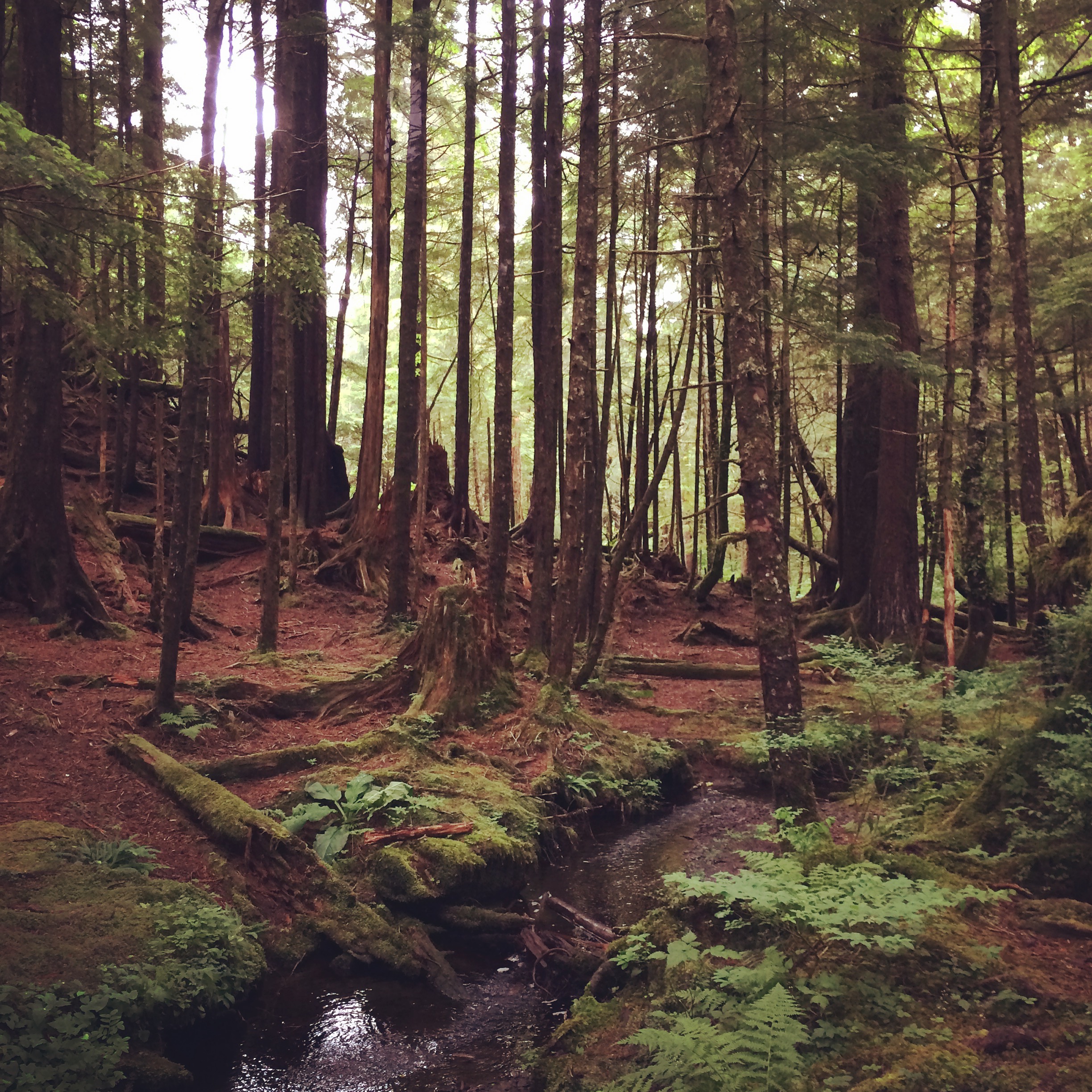 Rainforest at Ward Lake
As you walk through the rainforest, the rich, loamy ground and plethora of needles and leaf litter beneath your feet softly give way, with the impression that you’re almost walking on something very much alive. And that you are – moss covers the ground, and saplings sprout wherever light peaks through the canopy.
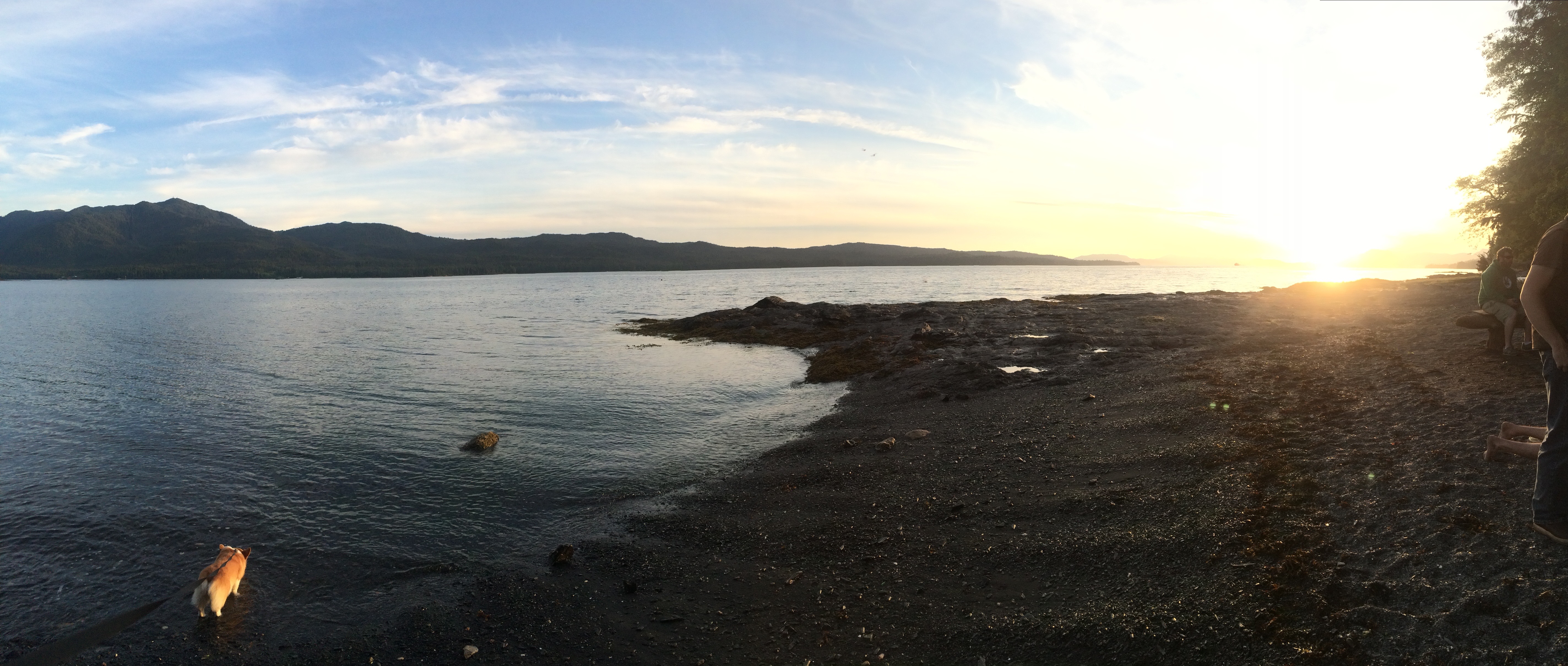
Refuge Cove sunset
The shoreline is also stunning – the magnificent Alaskan Inside Passage surrounds Ketchikan, located on Revillagigedo Island. Most of the beaches are pebbly or rocky, and experience tidal swings upward of 18 feet – more on the magnificent tidepools and creatures later! These beaches also set the scene for many a barbecue and bonfire at lowtide, nestled in among the logs that had washed ashore. Logging and salmon are at the heart of Ketchikan – the town would have never existed without the incredible natural resources of the archipelago.
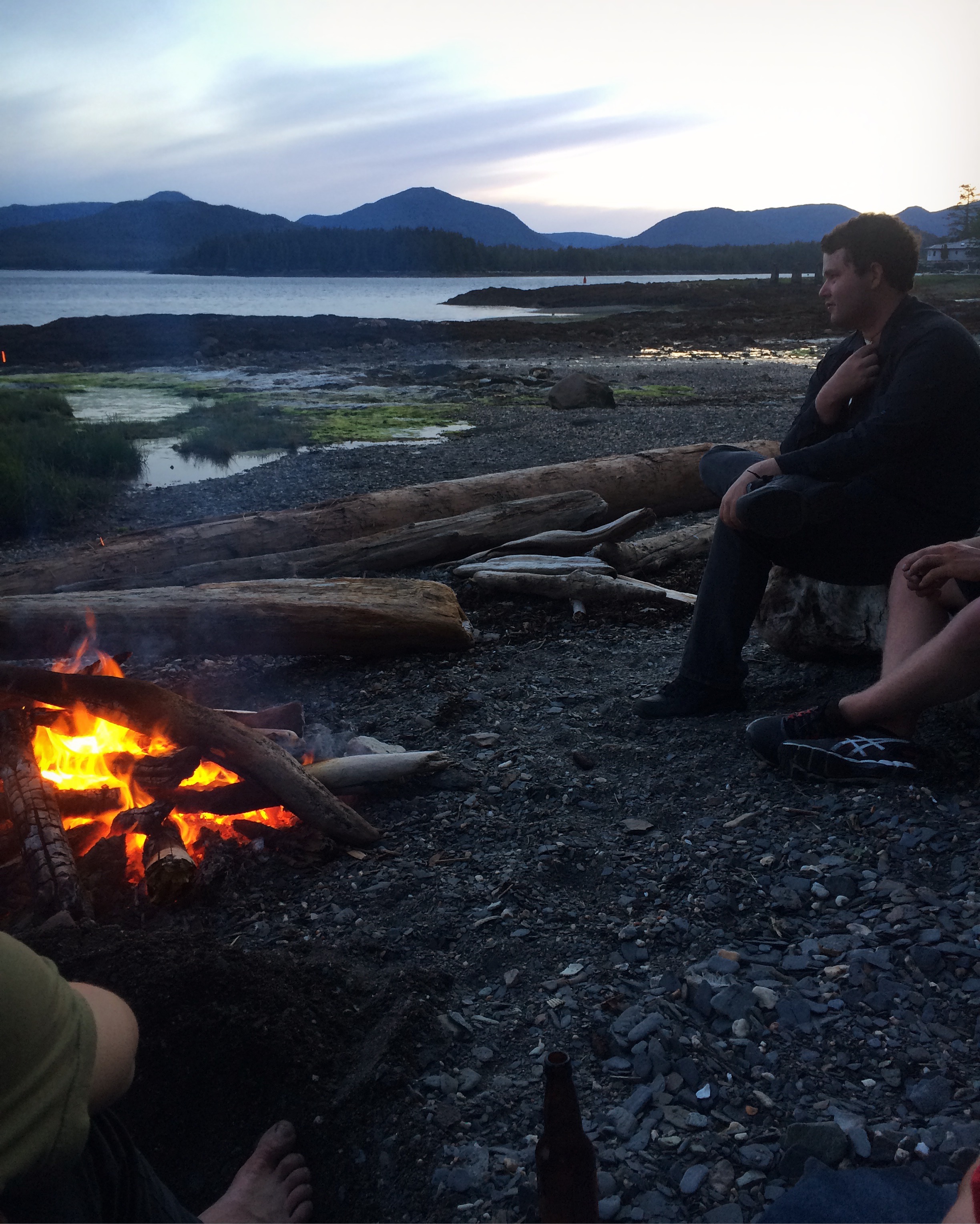
Campfire at Bugges Beach
During one of these beach bonfire gatherings shortly after my arrival, I saw my first humpback whale surfacing a few hundred yards off shore… It was cruising slowly along, blasting plumes of water in the air as it exhaled, dipping back under, only to create another awesome blast a few minutes later. Finally, it took one last deep breath, raised its fluke in the air, and slid down deep beneath the surface. I was overwhelmed by the presence of such a massive, mysterious creature, and my friend Shelby captured the range of feelings I experienced as it graced us with its brief foray to the surface:
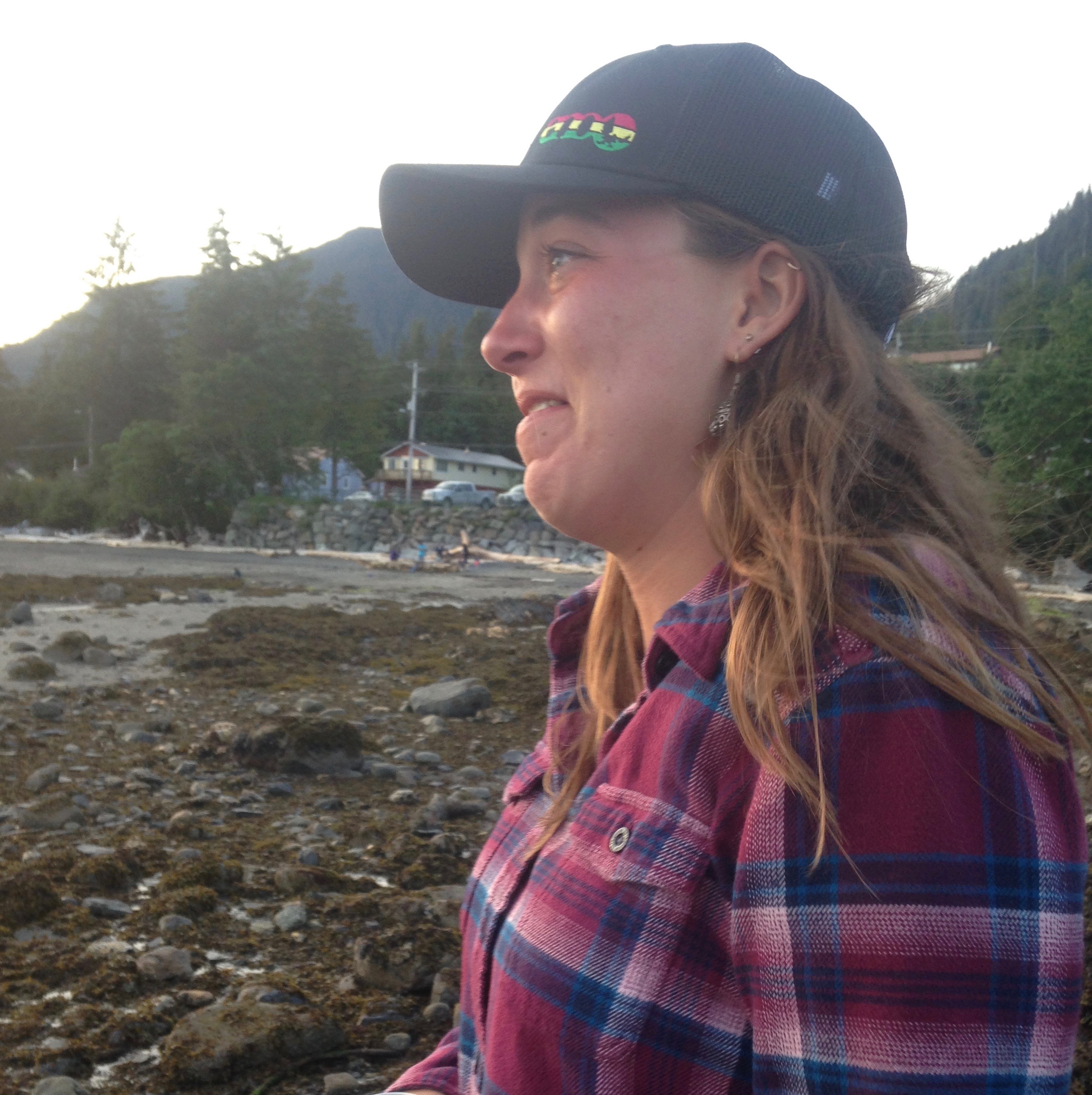
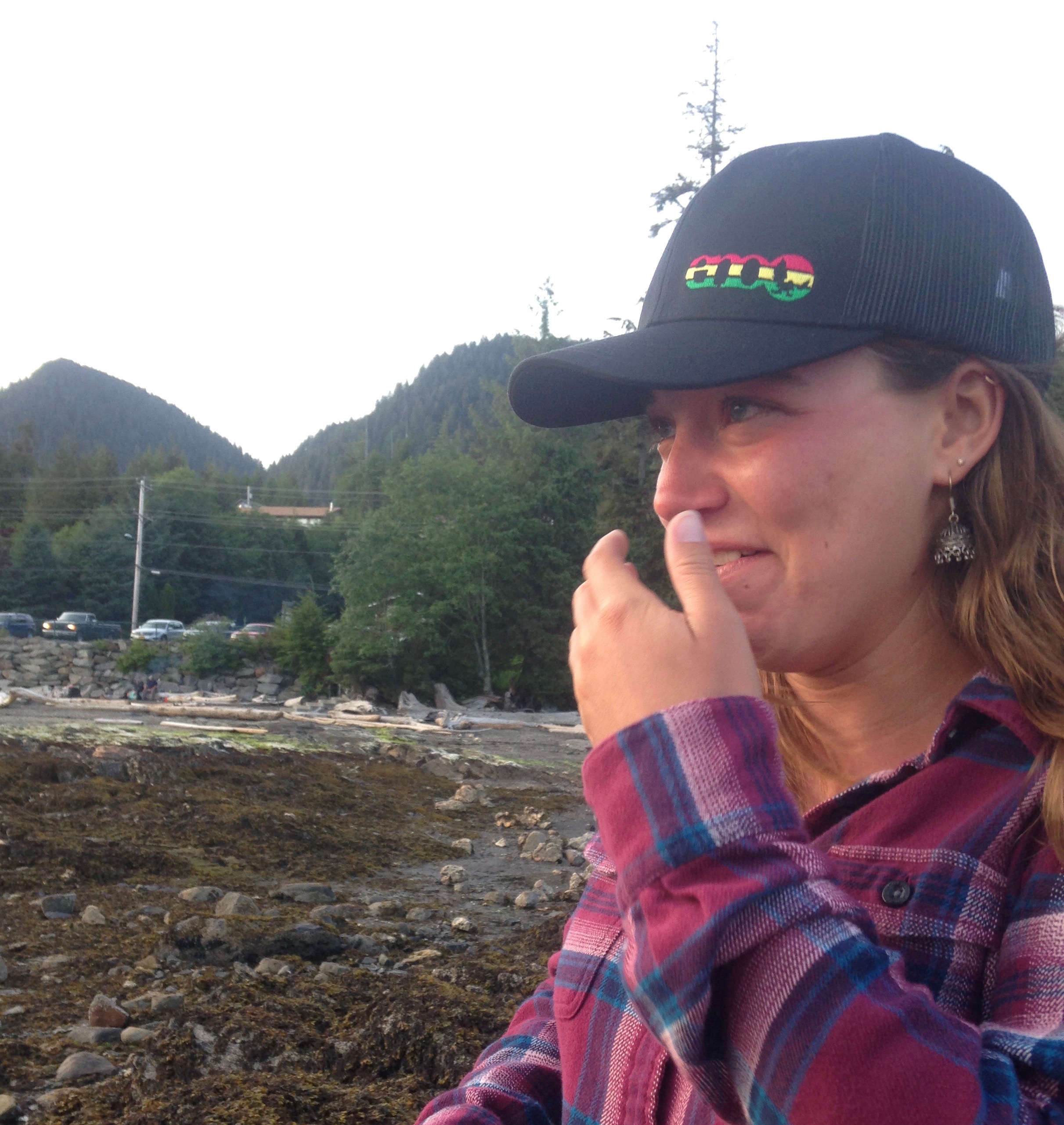
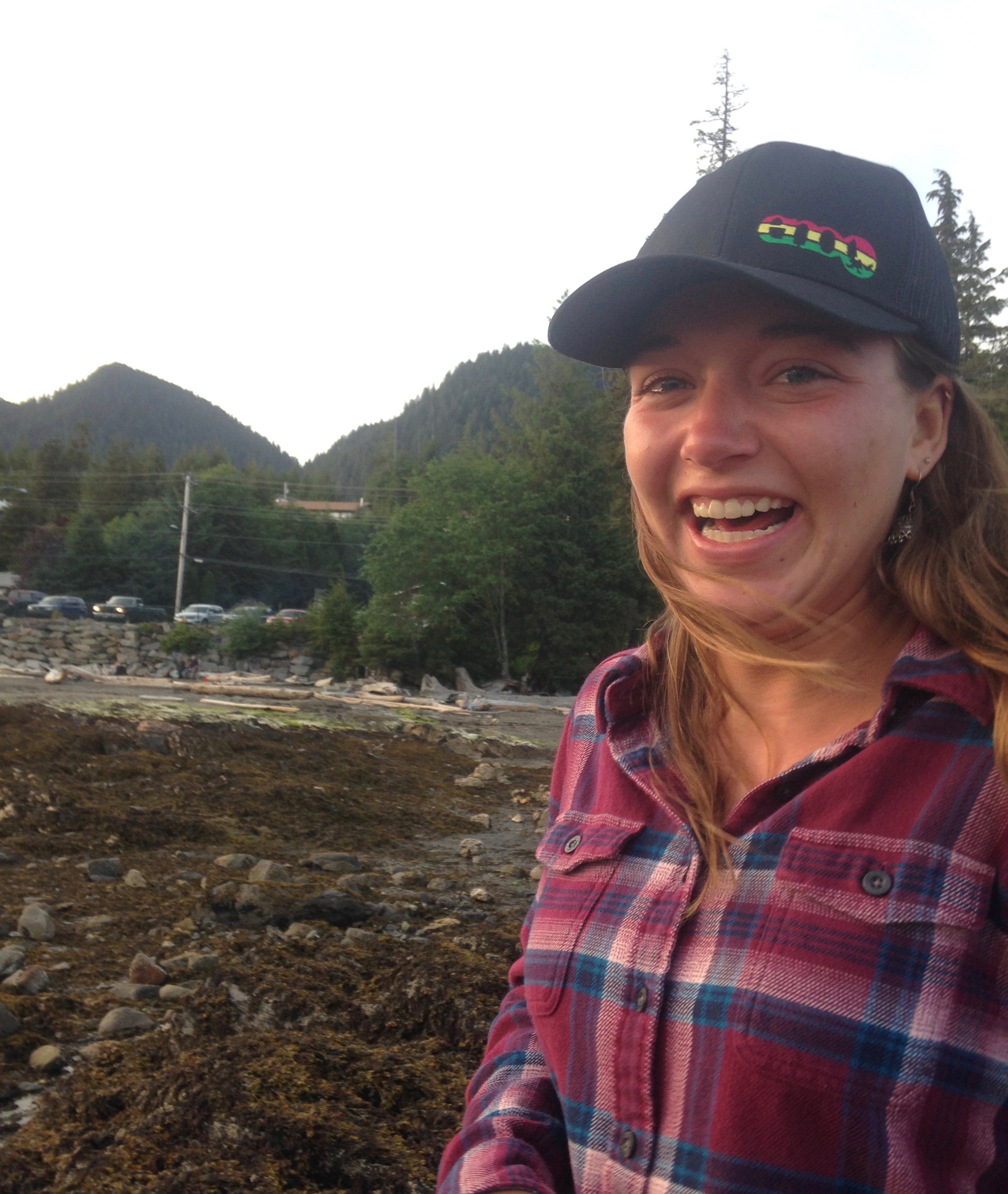
The many emotions of seeing my first humpback whale. Photo credit: Shelby P.
Speaking of humpbacks… A few weeks later I was graced with the best day of my life thus far: we were preparing to lead a tour, when we got word that a humpback was steadily cruising towards our snorkel site. We hustled our guests down to the shore, and hopped into the water just in time to have a humpback surface about 20-30 ft away. Though the visibility underwater that day was equivalent to pea soup, as it came up for a quick breath, we were able to see it’s massive rostrum (snout) surface. I could see every sensitive hair, its baleen, eye, and blowhole as it took a quick look at us and disappeared beneath the surface. And I. Totally. Lost. It. It was an out of body experience, I was high on adrenaline and endorphins. I kicked out as fast as I could, screaming “THIS IS THE BEST DAY OF MY LIFE” at the top of my lungs and crying. I almost lost my voice. I was on a high of the rest of the day; I almost couldn’t function I was so enthralled. And a few moments later, we were blessed by the acrobatics of the whale as it breached over and over out of the water. My boss captured the moment:
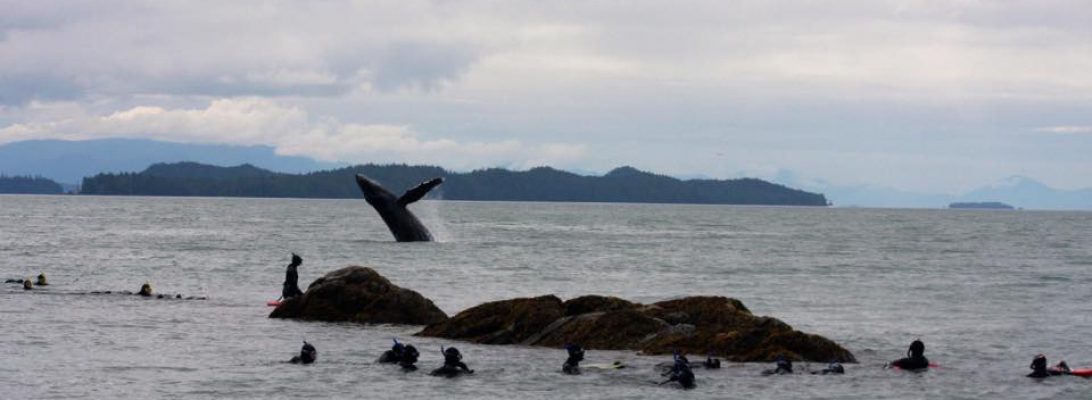
The best day of my life. Just look at that humpback. I’m to the far right with my hand on the red lifeguard tube.
Photo credit: Fred D.
I was also lucky enough to see orcas twice during my time in Ketchikan, but both while I was sadly stuck on solid ground (the joys of bipedalism). The first orcas I sighted during my lunch break at the snorkel shop – jumping and playing as they headed out to sea. My second orca sighting was a few weeks later when my dad came to visit. During the summer the sun rises around 4 am, and we had woke up before dawn to look for bears and eagles catching salmon at low tide. On our way back to town, as we were passing Bugges Beach, I saw a massive dorsal fin slicing through the water out of the corner of my eye. We immediately turned around, hopped out of the car, and watched silently as a pod of about 8 orcas cruised past, and then began to slap their pectoral fins and breach and play as they headed out to sea. It was another blessing to see these incredibly intelligent creatures in the wild.
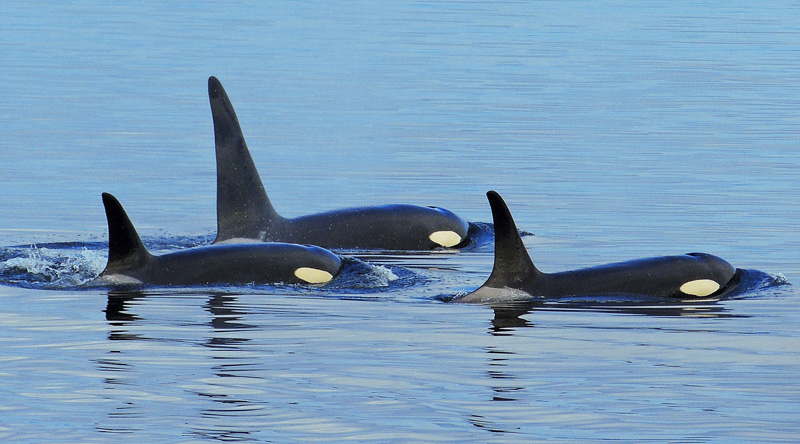 Photo credit (I wish I had the opportunity to photograph these incredible animals up close)
If you want to learn more about orcas, their intellegence, and their imprtance to the ecosystem, I highly recommend reading Listening to Whales. I just finished this book a couple months ago, and it was life-changing. An incredible memoir of a woman’s life with whales.
Going from some of the biggest creatures on earth to some of the smallest – the cold Alaskan waters are perfect for many interesting marine invertebrates. One of my personal favorites that we often found on tour and when I went tidepooling is the humble leather chiton. These little critters are one of many species of chitons, and belong to a grouping of animals known as molluscs. They’re related to snails, octopus, sea slugs, mussels, and abalone, just to name a few.
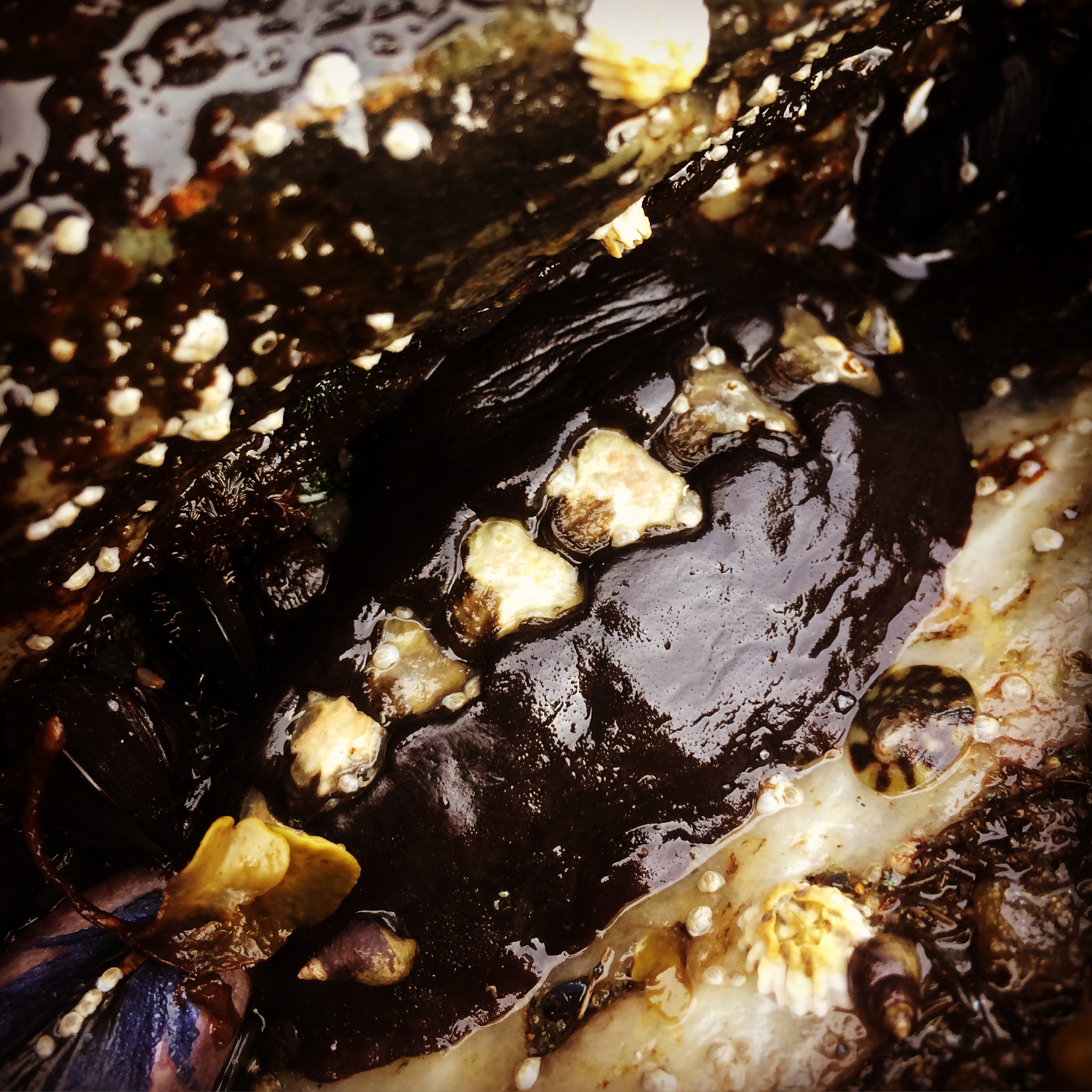
A leather chiton patiently waiting for high tide
Now, the reason I think chitons are so cool is because inside their little mouths, there is a tongue-like organ called a radula covered in rows and rows of little teeth that they use to scrape algae off rocks. The crazy thing is, their teeth are covered in magnetite, an iron-based material that makes them extremely strong. Thus far, they are the only animal we know of that has metal teeth. Pretty hardcore! Some scientists think they may even be able to use this magnetite to sense the earth’s geomagnetic field in order to navigate among the rocks and tidepools. Along with other intertidal creatures, chitons have adapted to being submerged half the time, and high and dry the other half. Southeast Alaska’s extreme tides mean that twice a day, the waterline drops up to about 18 feet. Creatures like chitons, mussels, and even sea anemones have either adapted to seal in water or to carefully select a place to attach where they’ll stay submerged in a tidepool.
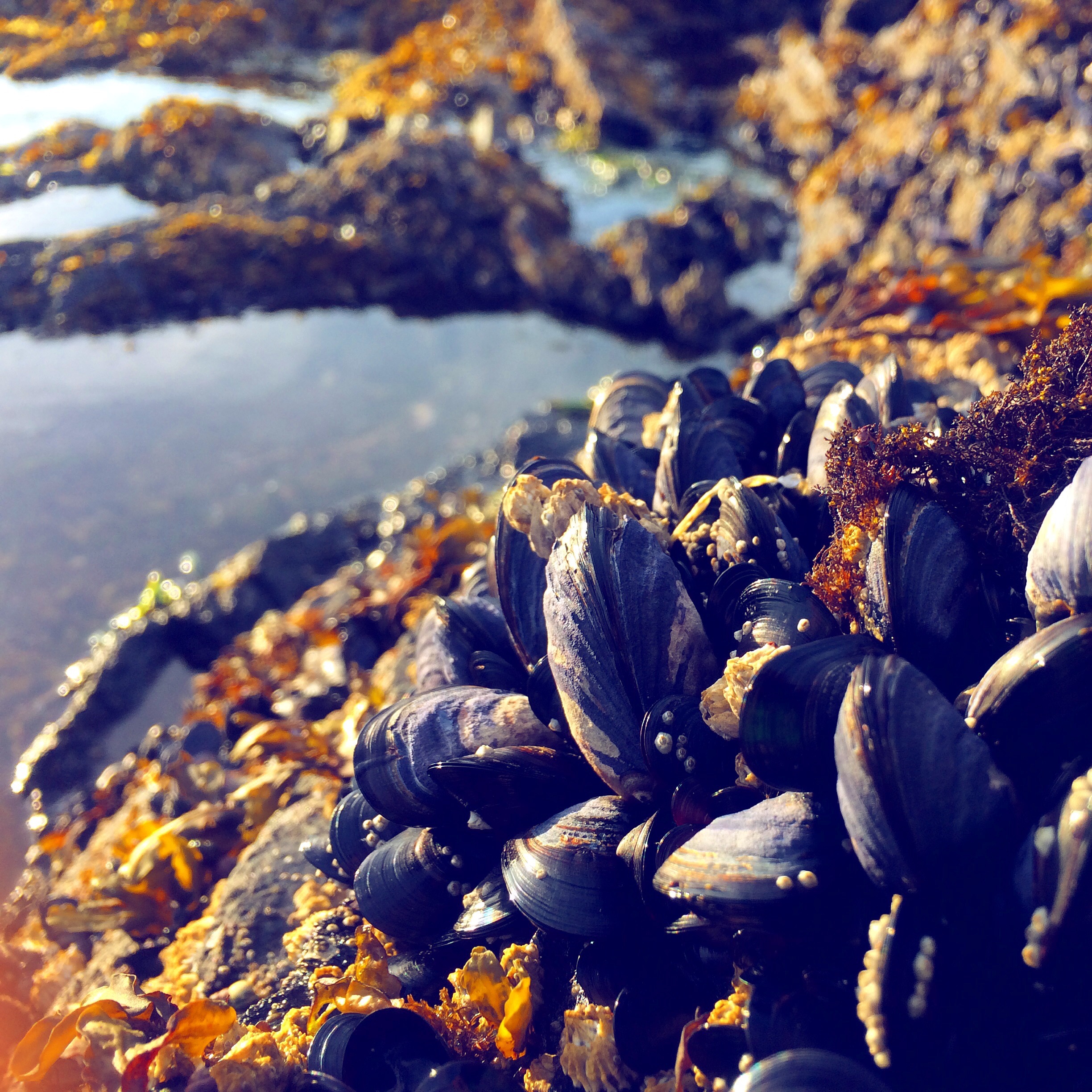
Mussels at Bugges Beach during low tide
Of course, I couldn’t spend time in Southeast Alaska without doing some fishing! Ketchikan is the salmon capital of the world, after all, but there is also a bounty of halibut, rockfish, and many other tasty critters too. Choose sustainable seafood – catch it yourself, don’t eat farmed salmon, and most of all, check out the sustainable seafood guide (updated regularly) to protect our oceans!
My boss, Fred, generously took my coworkers and I out fishing on his boat. I didn’t get the big ‘but, but I did snag a tasty quillback rockfish! These guys are a lot of work to filet, but still delicious. They also look a little alien, or as my grandma referred to them, “those big ugly fish” (don’t worry rockfish, I still think you’re beautiful).
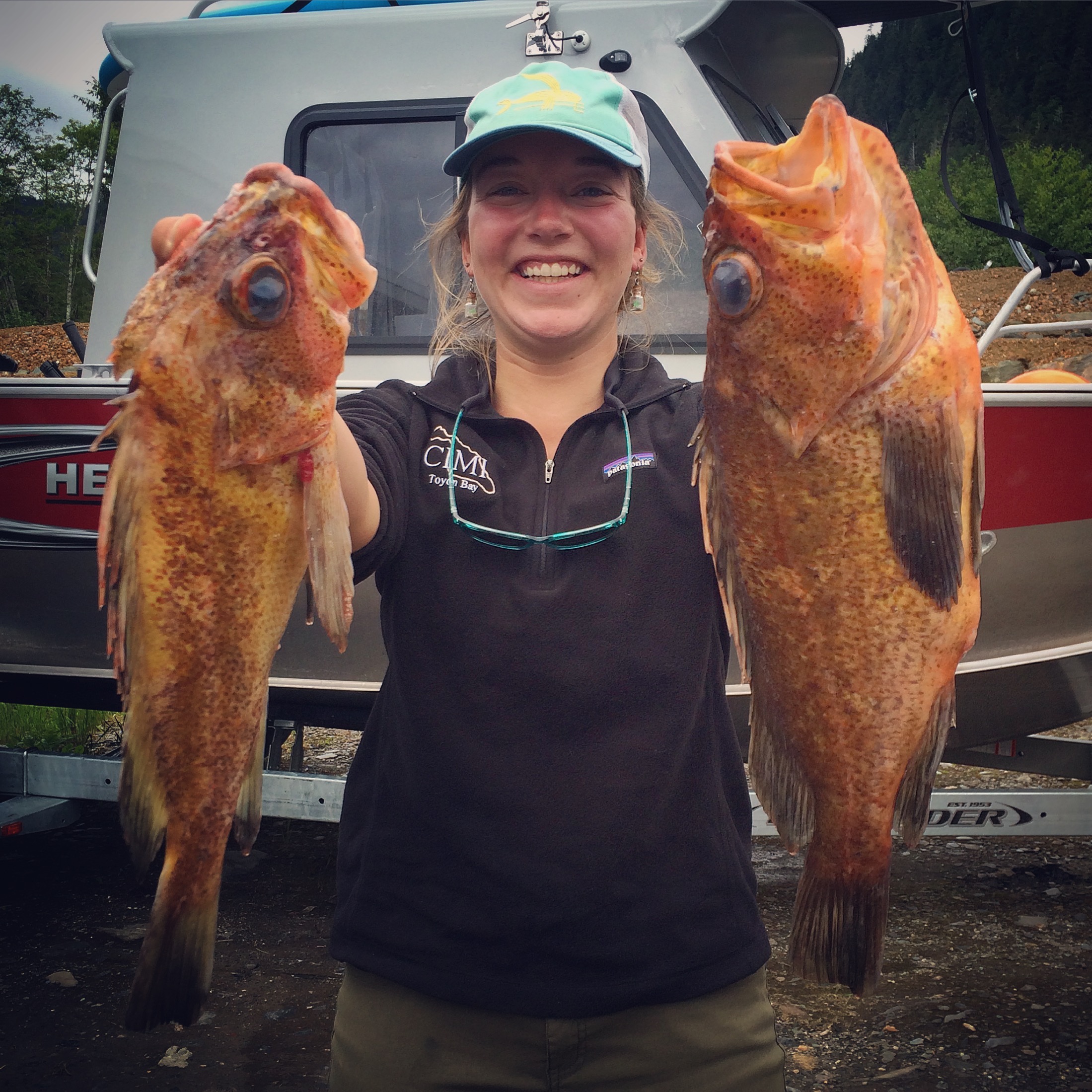
Me and my two quillback rockfish! To be fair, I only hooked and reeled one, the other one I just reeled up.
Photo credit: Fred D.
Fred had a little more luck and hooked a nice halibut, which he then skillfully showed us how to filet. Here he’s just cut out the cheeks of the halibut, a local delicacy:
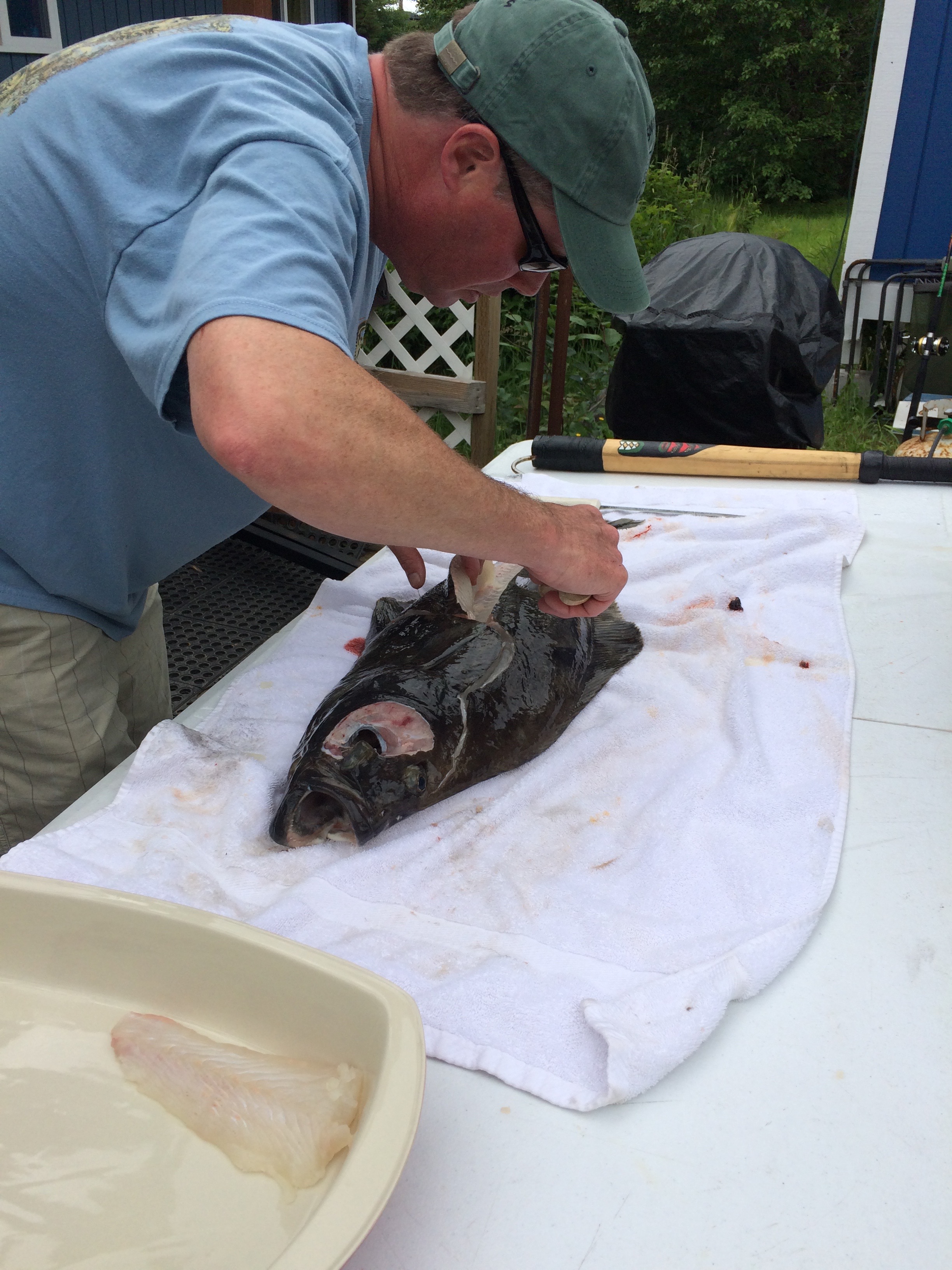
Fred expertly filleting a halibut
This was the first time I caught my own fish, filleted it, and it cooked it myself. I’m pretty proud of the result – rockfish parmesan!
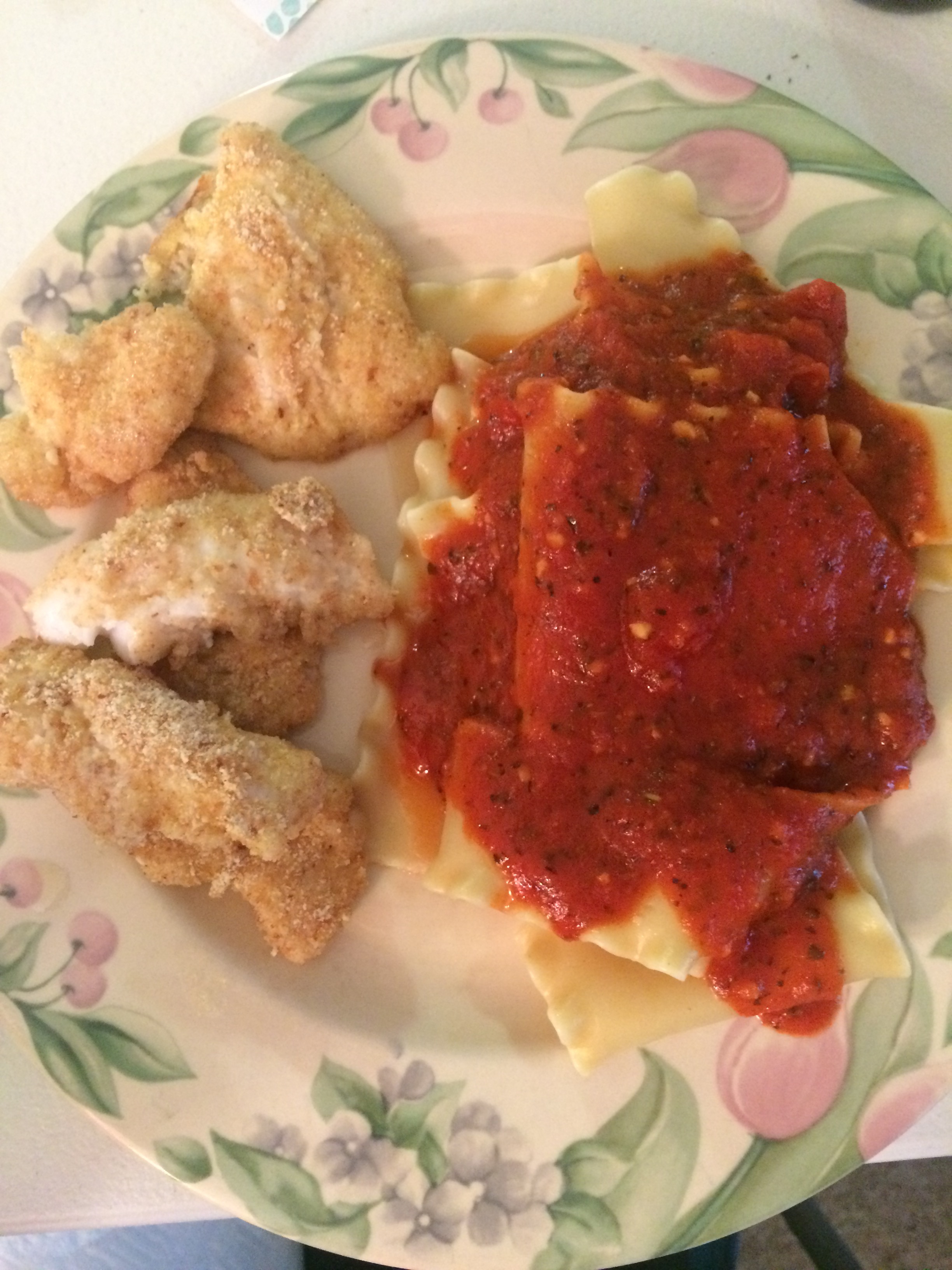
The final result of my rockfish: rockfish parmesan!
In addition to all the animals in the sea, the sky and forest hosted quite a collection too! All around Ketchikan, you can see the influence of these creatures on the local culture and industry. Murals and artwork inspired by nature abound, but the traditional artwork of the indigenous peoples of Southeast Alaska were what struck me the most. In the heart of downtown stands the Chief Johnson totem pole, which tells the story of Fog Woman, the mother of salmon, and is topped by a mythical bird, Kajuk, who overlooks the town:
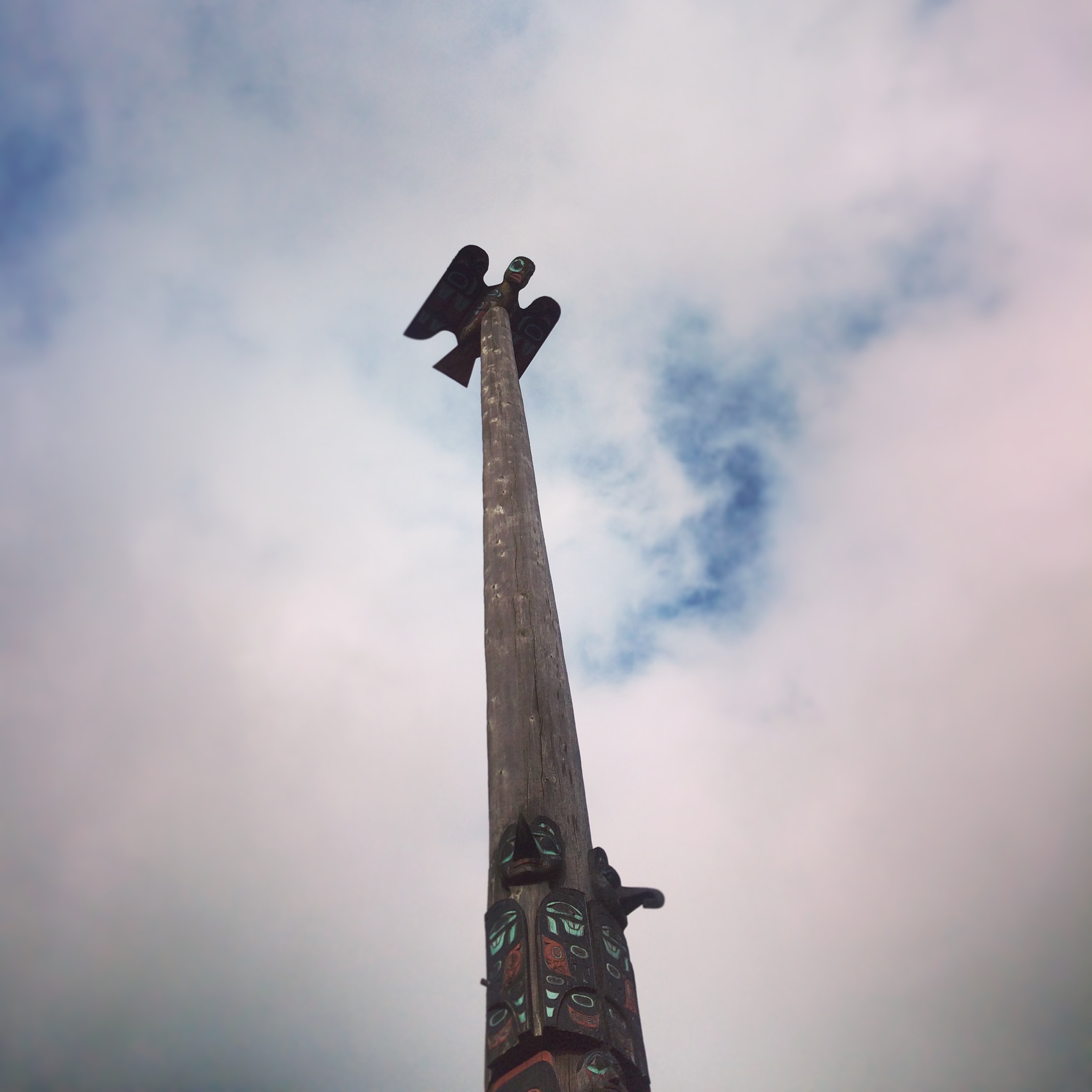
Kajuk, a mythical bird of local legend overlooking downtown Ketchikan
You don’t have to look to legends to see incredible feathered creatures though! Here, bald eagles are aptly referred to as “Alaskan pigeons”, and at any given time, you can hear them whistling to one another or see them gliding over head. On tour, we could get within a few feet of them as they scrounged for tasty bites on the rocks at low tide. These incredible birds have a 6-7 ft wingspan and are incredible to watch as they dive and swoop within inches of one another when scrabbling over fish.
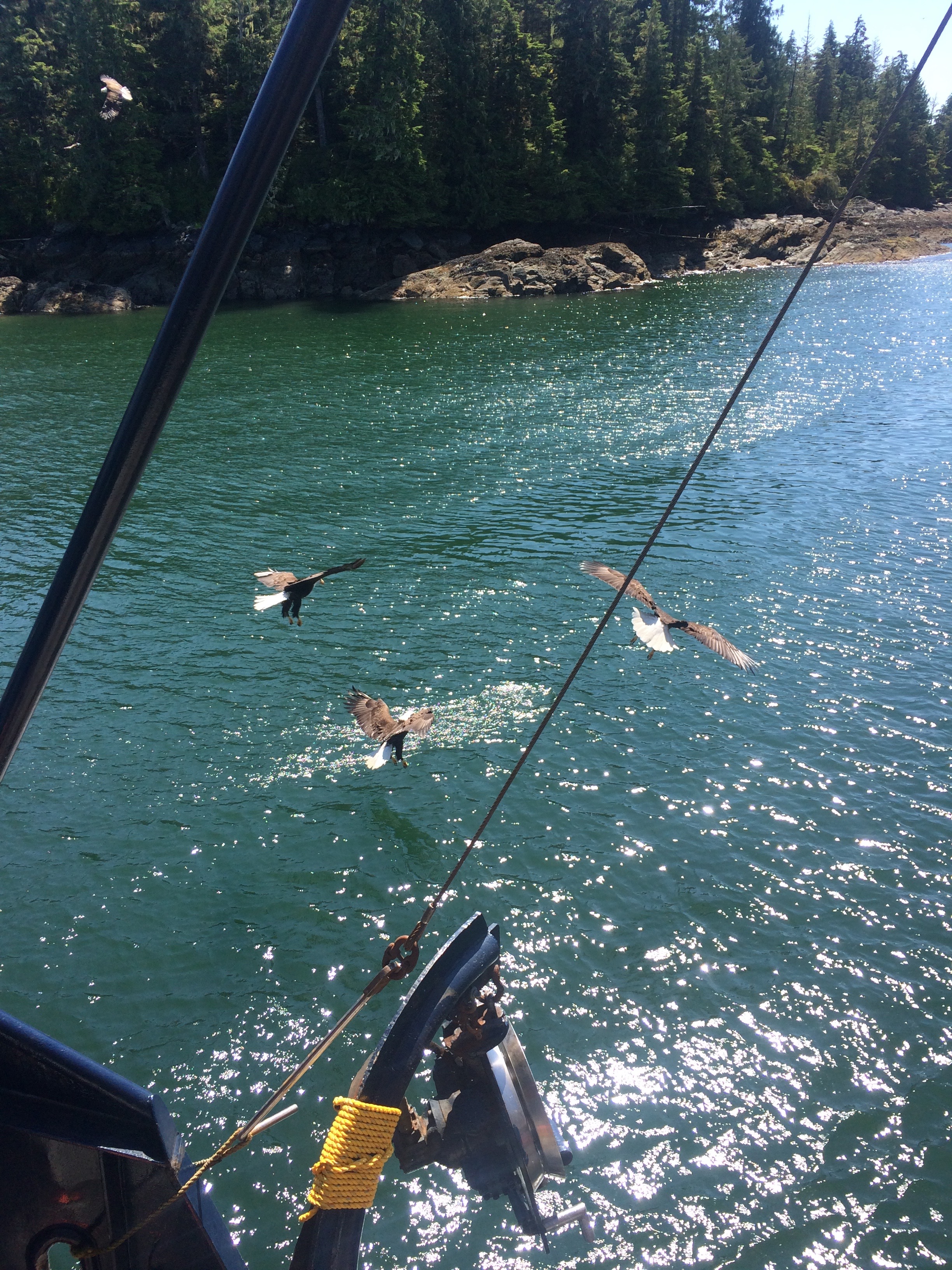
Bald eagles chasing herring scraps from the Aleutian Ballad
Shelby and I had to do the most touristy thing before we left Ketchikan – take a tour on the Aleutian Ballad, of the show Deadliest Catch fame. It was a nice cruise along the calm Inside Passage where we learned a lot about the commercial fisheries for halibut, crab, and prawns in the region. I do have to say, my favorite part was when they tossed out herring for the bald eagles (permission for this was granted by the local tribes), and dozens of bald eagles burst out of the forest to grab up the tasty (to them) fish.
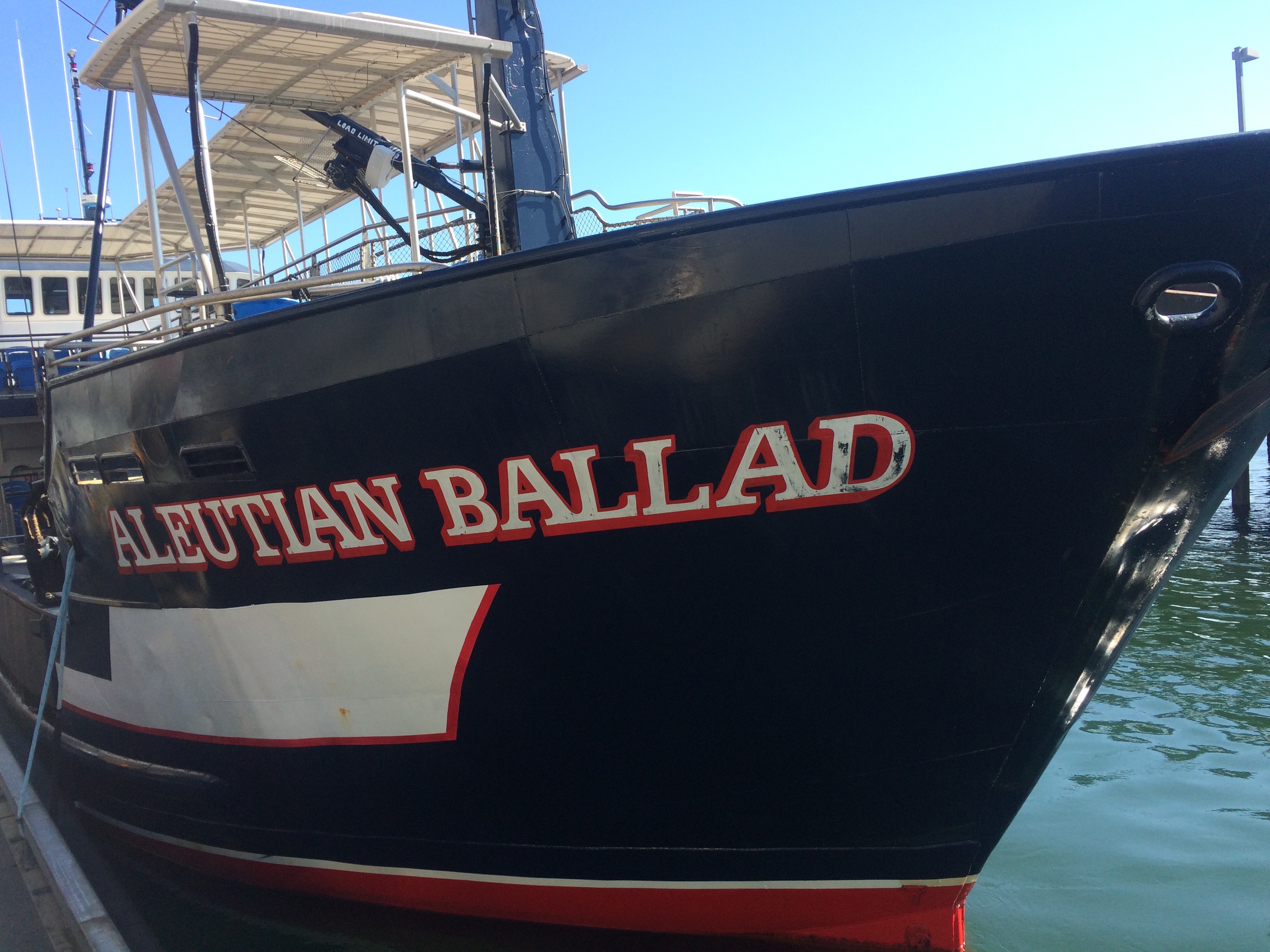
The ship of “Deadliest Catch” fame
The Aleutian Ballad also had a touch tank on board with a few local creatures. However, in my opinion, the touch tanks can’t beat the natural beauty and diversity of the tidepools on the shoreline! I did get to get up close and personal with a live prawn for the first time though! Fun fact: shrimp are omnivorous, prawns are carnivorous.
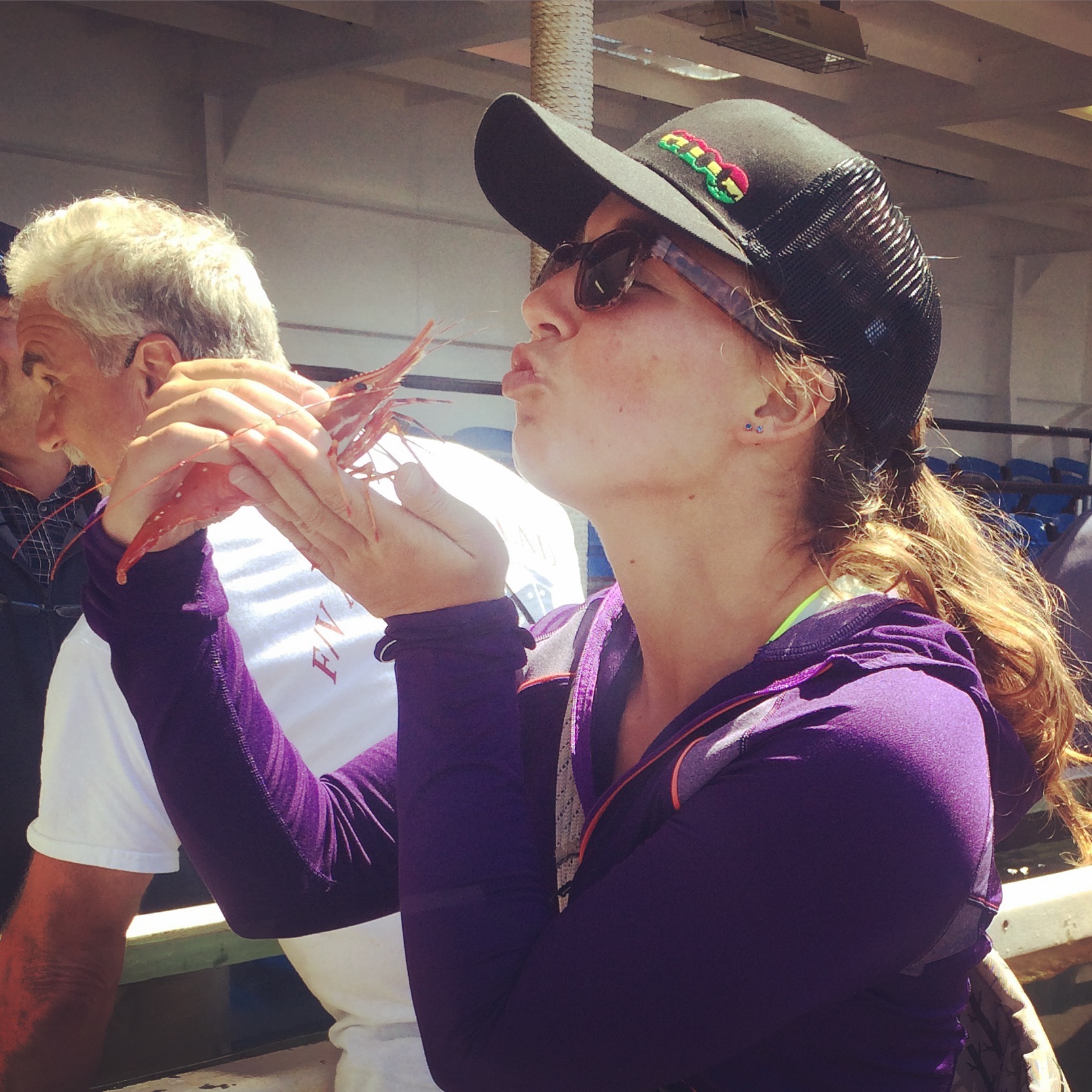
Prawns are friends, not food!
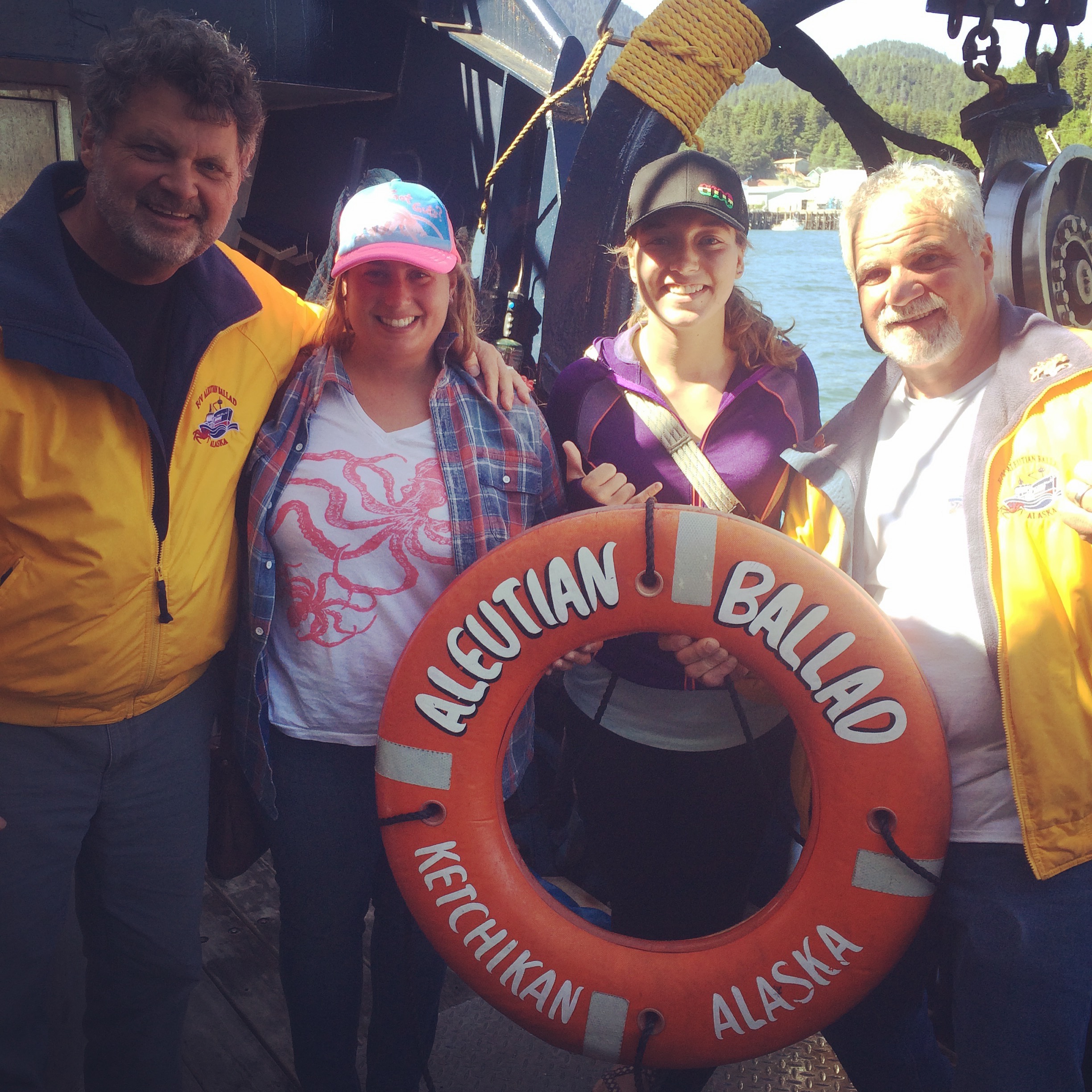
Shelby and I with the “Deadliest Catch” crew
As I mentioned earlier, my dad also got the chance to come visit me and see the great state of Alaska himself! It was awesome to be able to share this experience with my adventure partner from day 1!
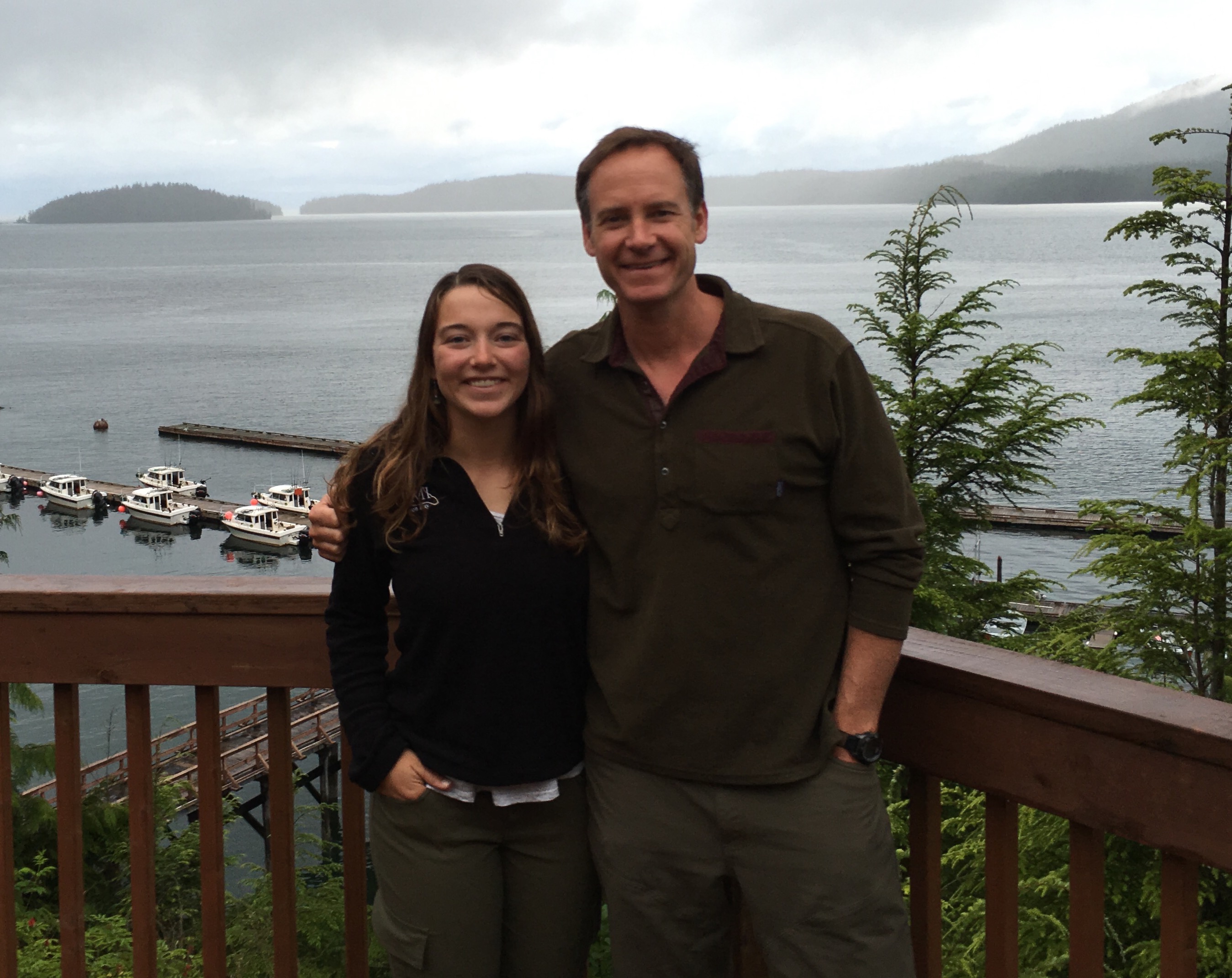
Dad and I at Salmon Falls
I even managed to squeeze him into a wetsuit and take him on tour in our chilly waters! We had a ton of fun as it was a small, relaxed tour group that morning, and I think he gained a new appreciation for how much work it is to get people into super thick wetsuits and into that chilly water!
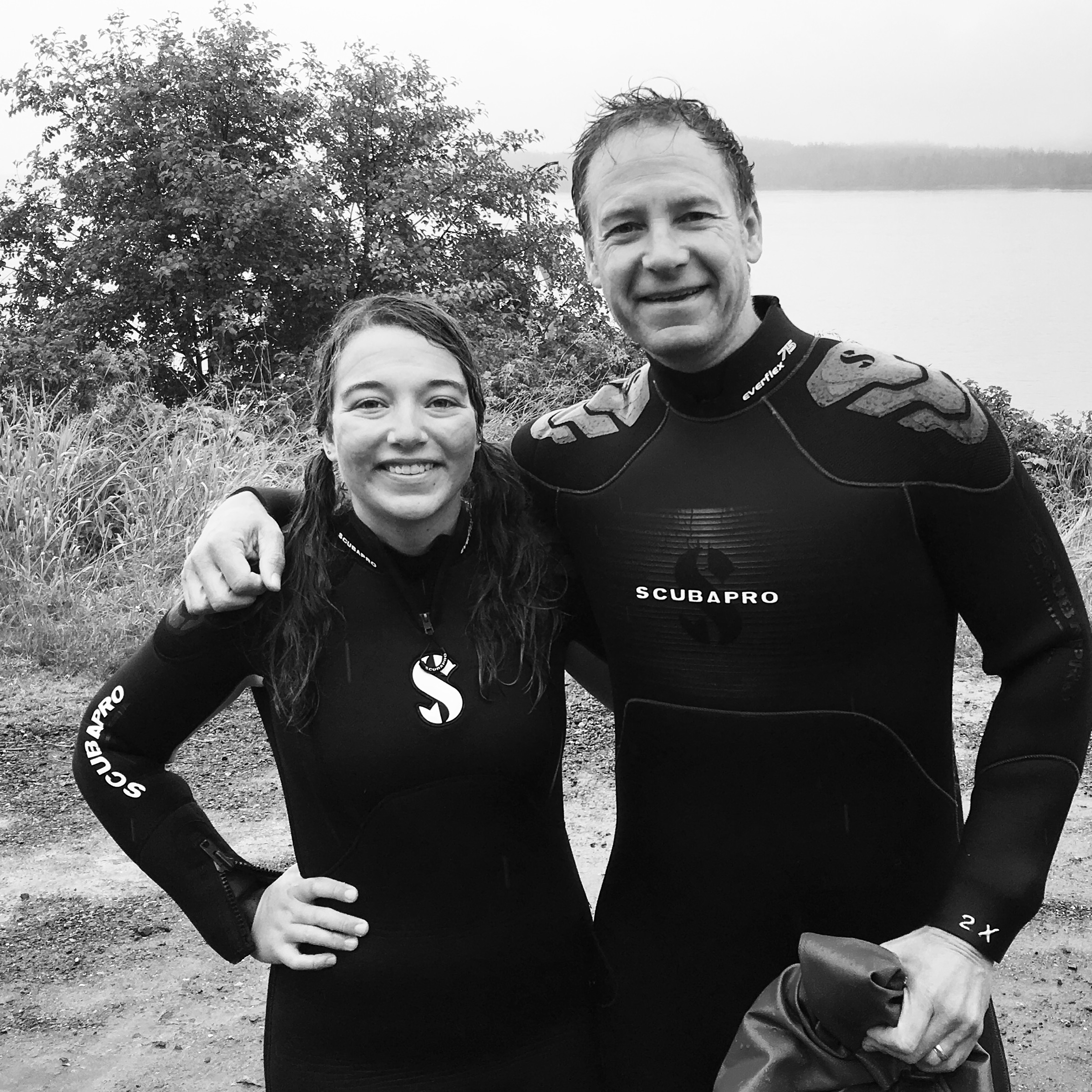
The two of us post-snorkeling, all cozy in our 7 mm thick suits!
Since I was always leading tours, I didn’t get the chance to photograph the unbelievable life beneath the surface. But, later that week, we took a trip to Knudson Cove and I spotted one of my favorite sea creatures on a pier piling – a nudibranch! There are over 2000 unique species of these flamboyant sea slugs, and the Alaskan species are some of the largest.
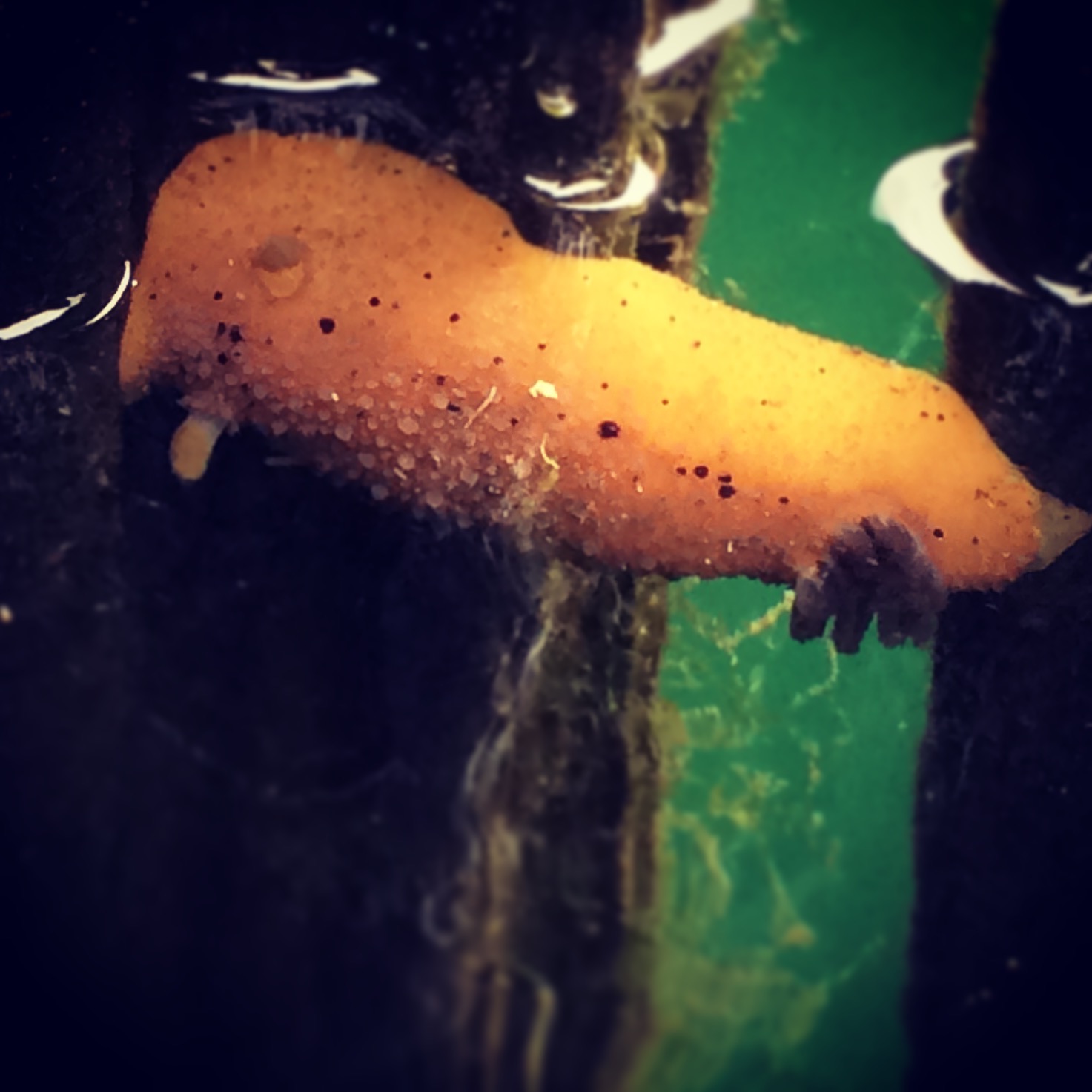
False lemon peel nudibranch at Knudson Cove
Dad’s Alaskan adventure wouldn’t be complete without some fishing, so we braved one of the rainiest, nastiest days of the summer to fish for some halibut and salmon.
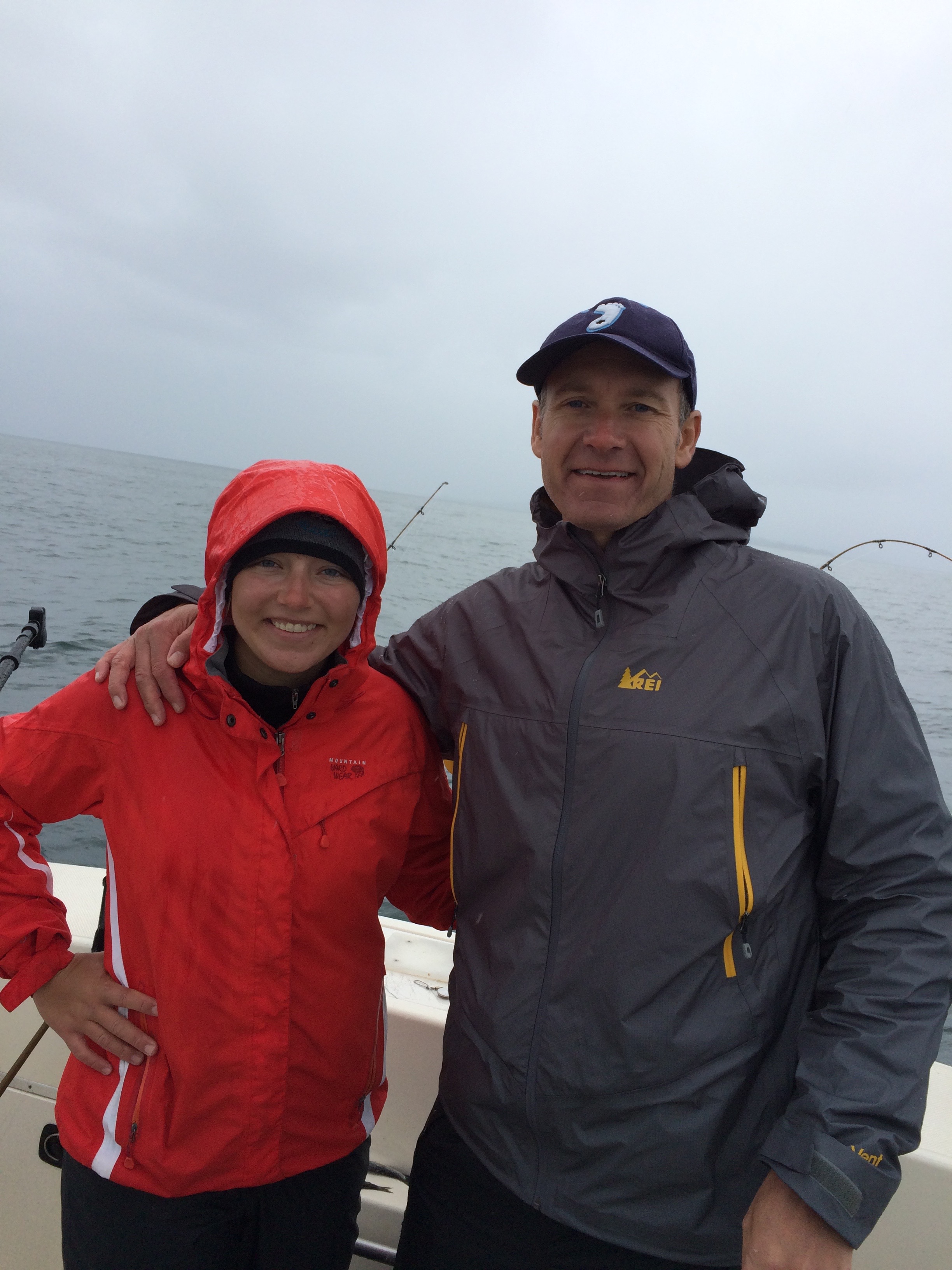
Braving some gnarly weather for father-daughter bonding
Now, there’s a reason why they call it fishing and not catching. Either the gnarly weather or our determination drove the fish away, but we did emerge victorious with one salmon!!! I turned it into a tasty sauteed filet with chickpea curry and rice.
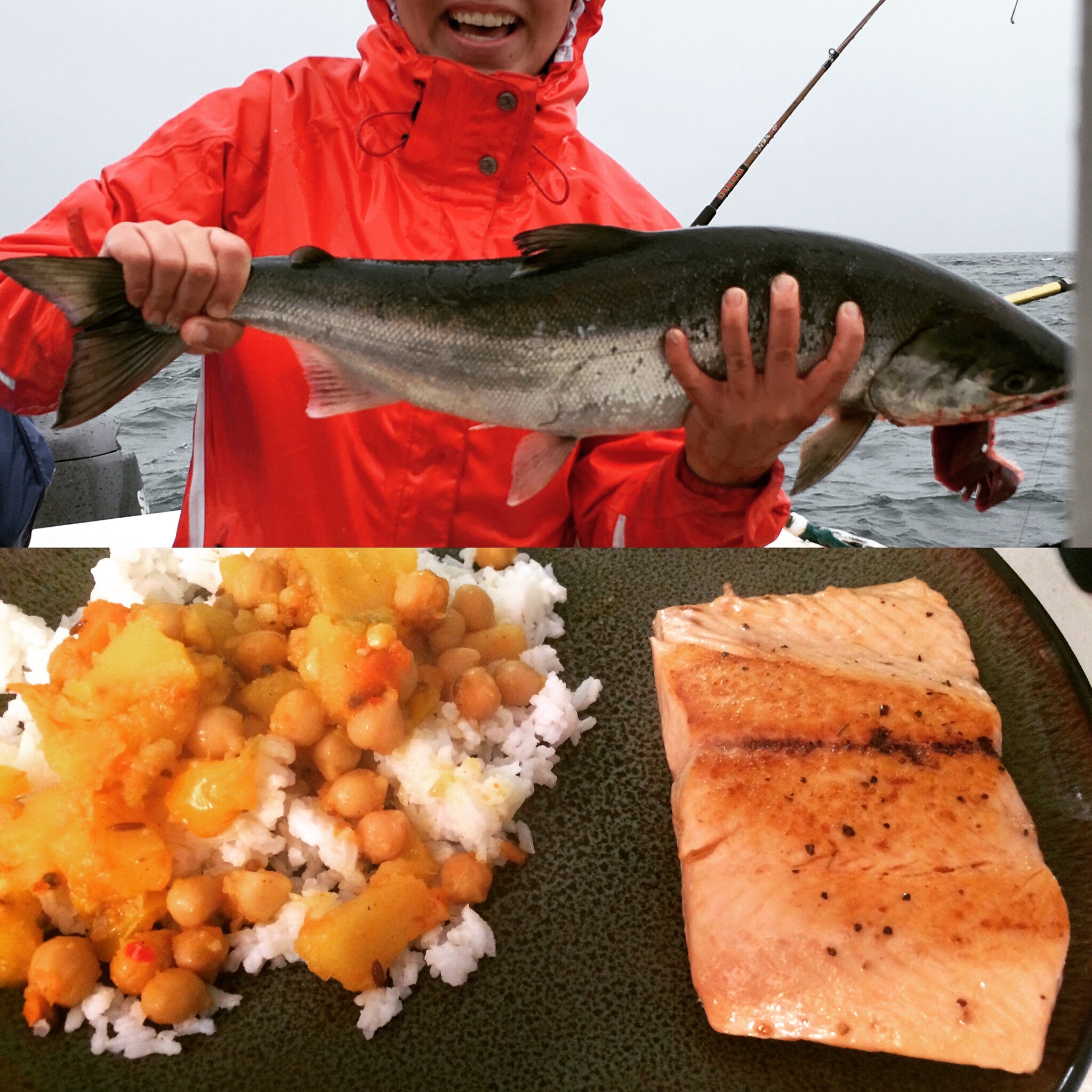
Salmon, sea –> table!
At the same time, some salmon were already making their way up the creek in the center of town to their birth sites, where they would ultimately spawn and die. A salmon has to overcome many obstacles to reach it’s final destination, journeying from the sea to calm headwaters requires most of their strength and energy, and predators lurk around every rock and eddy. In the sea, humans, seals, sharks, orcas, and birds are always hunting for these nutrious creatures. In the streams, they still can’t escape! Though legally protected from humans once they’re in the creek, seals will still hunt them at high tide, and bears and eagles are always eager to catch them. Natural predators aren’t the only threats to these fish however – construction and logging have created barriers like dams that the fish can not pass, and runoff into the streams can be extremely harmful to the fish and their fry (young fish). Fish ladders are a creative engineering solution to allow fish to get past some of these barriers while conserving their energy.
Why is it so important for these fish to reach their headwaters? Salmon will typically only spawn where they were spawned, and they are essential to the ecosystem, as well as a major food source for humans. After they spawn and die, their bodies are reabsorbed by the forest, providing essential nutrients to the plants and animals around the streams. You can actually look at the tree rings in these forests and tell which years had good salmon runs – more salmon = a bigger growth ring. Once the young salmon grow large enough, they head downstream, into the ocean, where they will grow and act as a major part of the marine food web – feeding humans and other large predators such as orca.
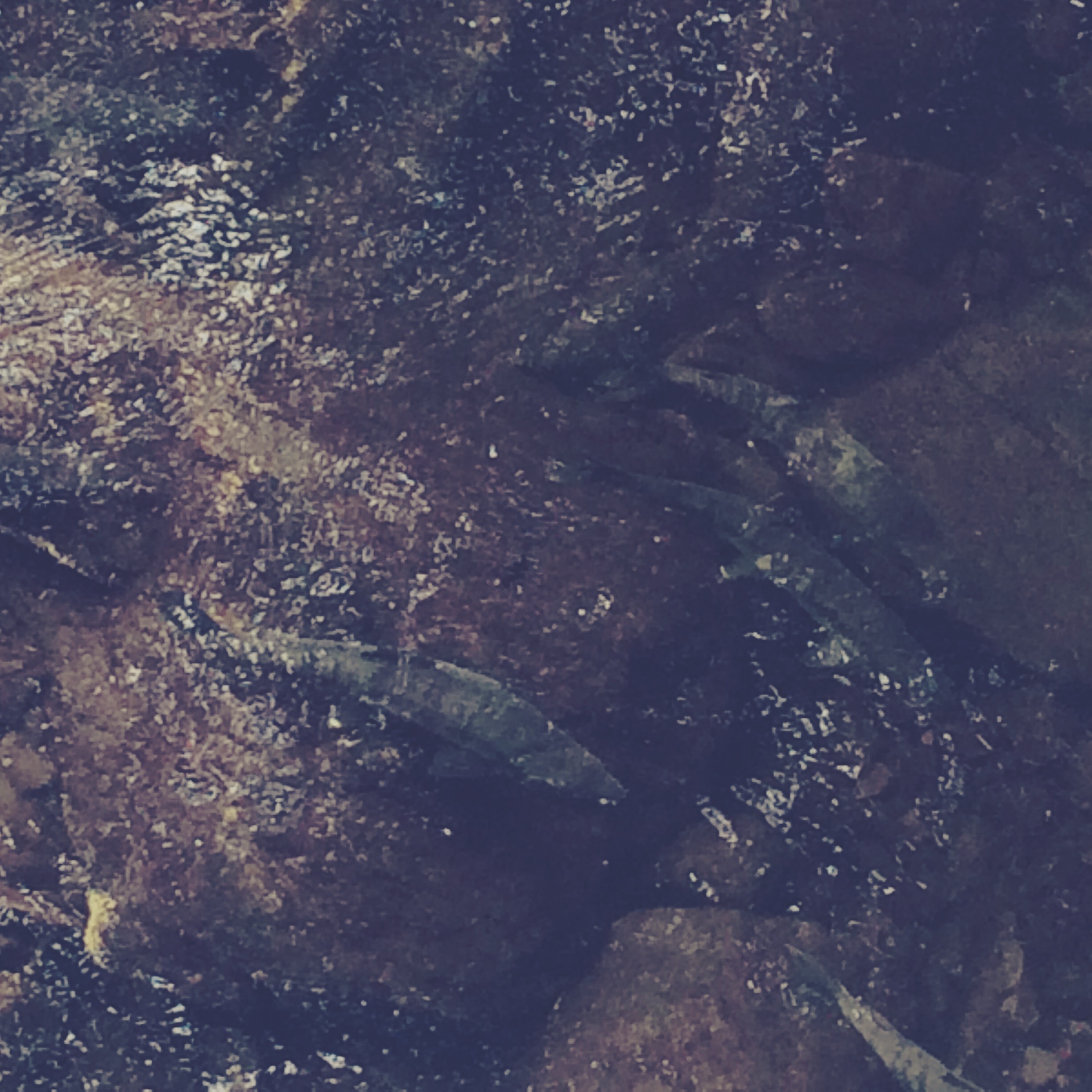
Salmon heading up Ketchikan Creek to spawn
Dad and I also explored many other parts of the island…

Thunderbird, whale, father, daughter at the entrance to Totem Bight State Park.
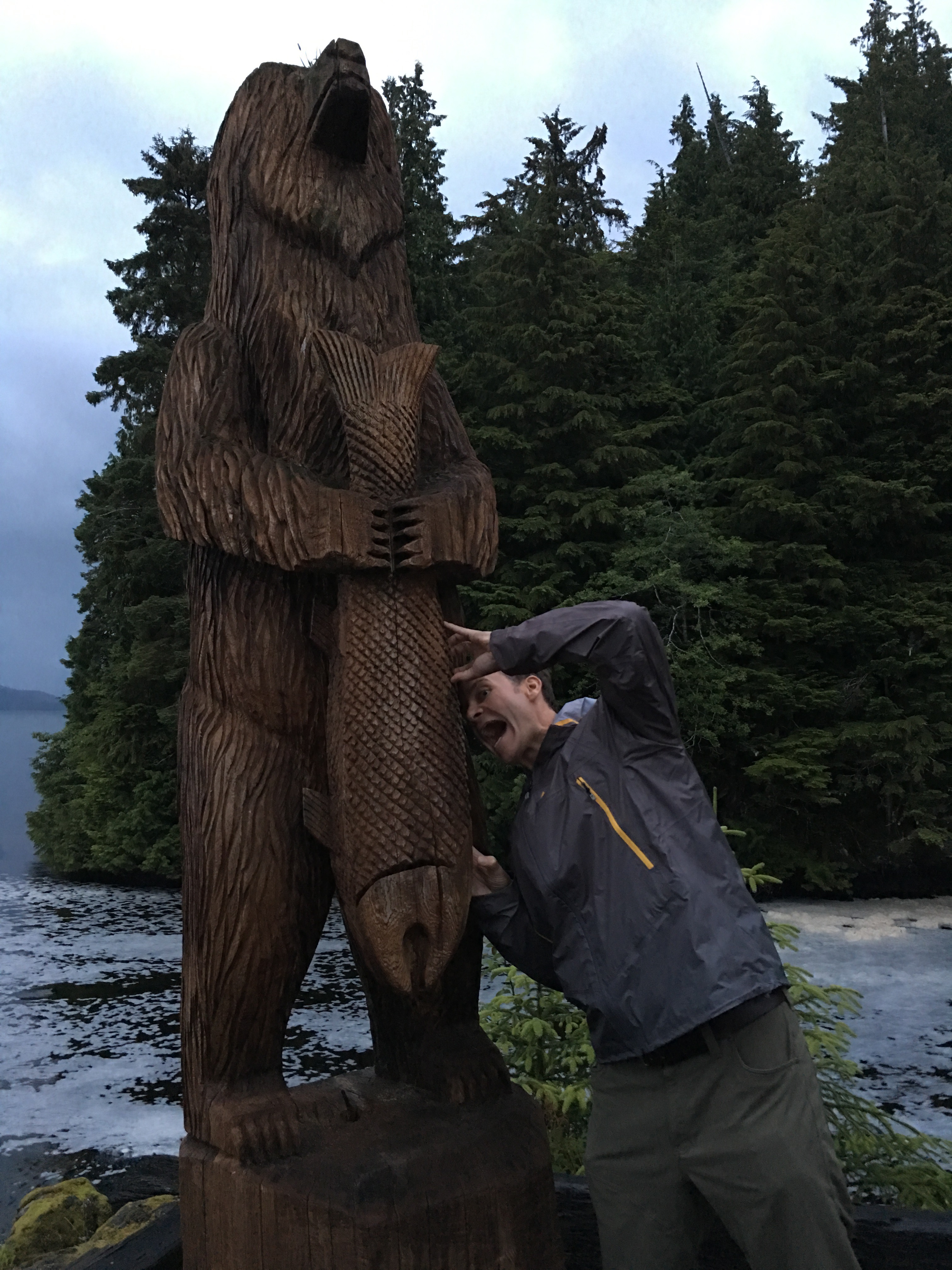
Dad was really hungry… Trying to steal a bear’s salmon at Salmon Falls Resort.
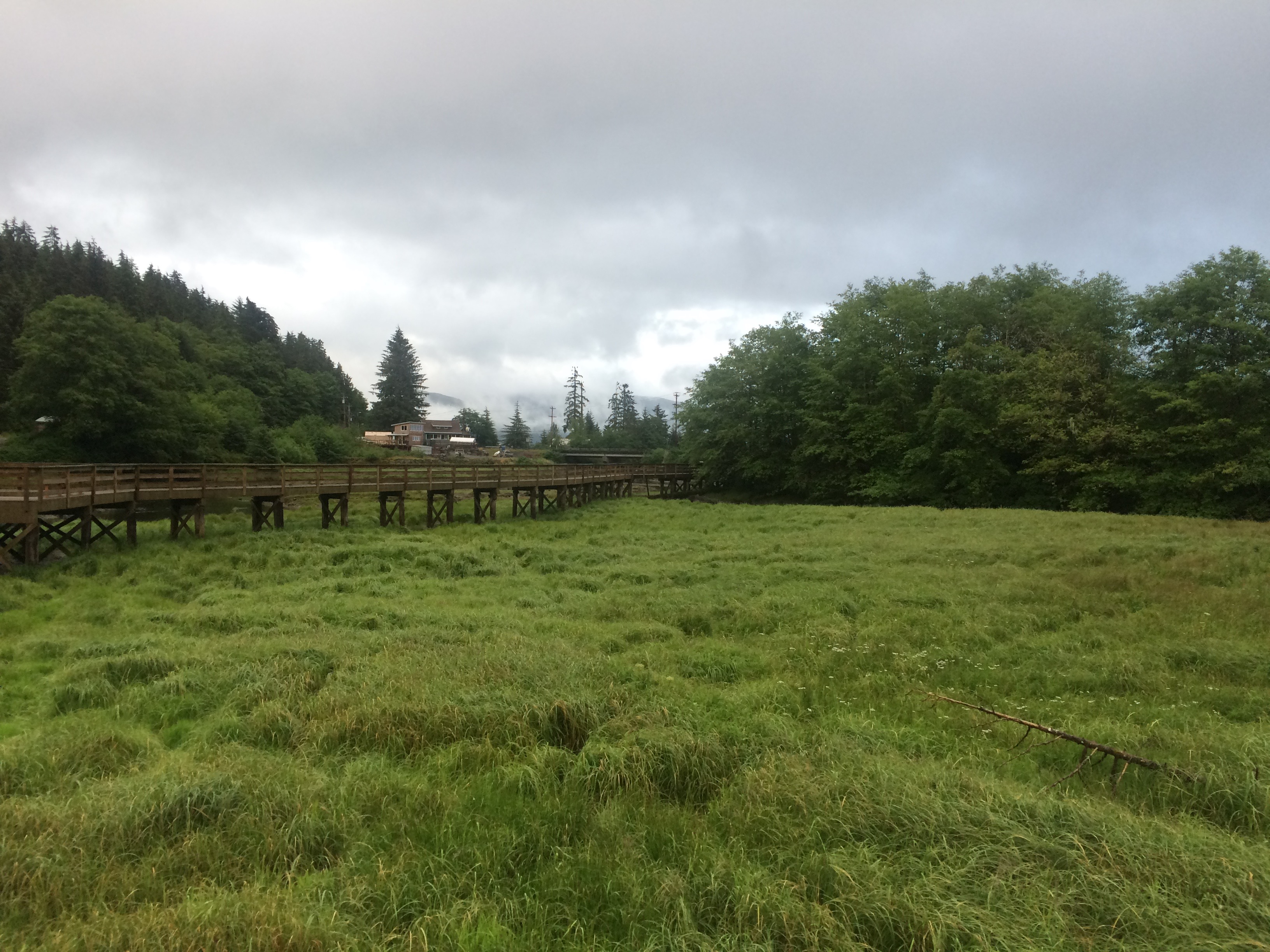
Not pictured: a handful of blackbears and dozens of bald eagles. About 4:30 am, a few miles north of Ketchikan.
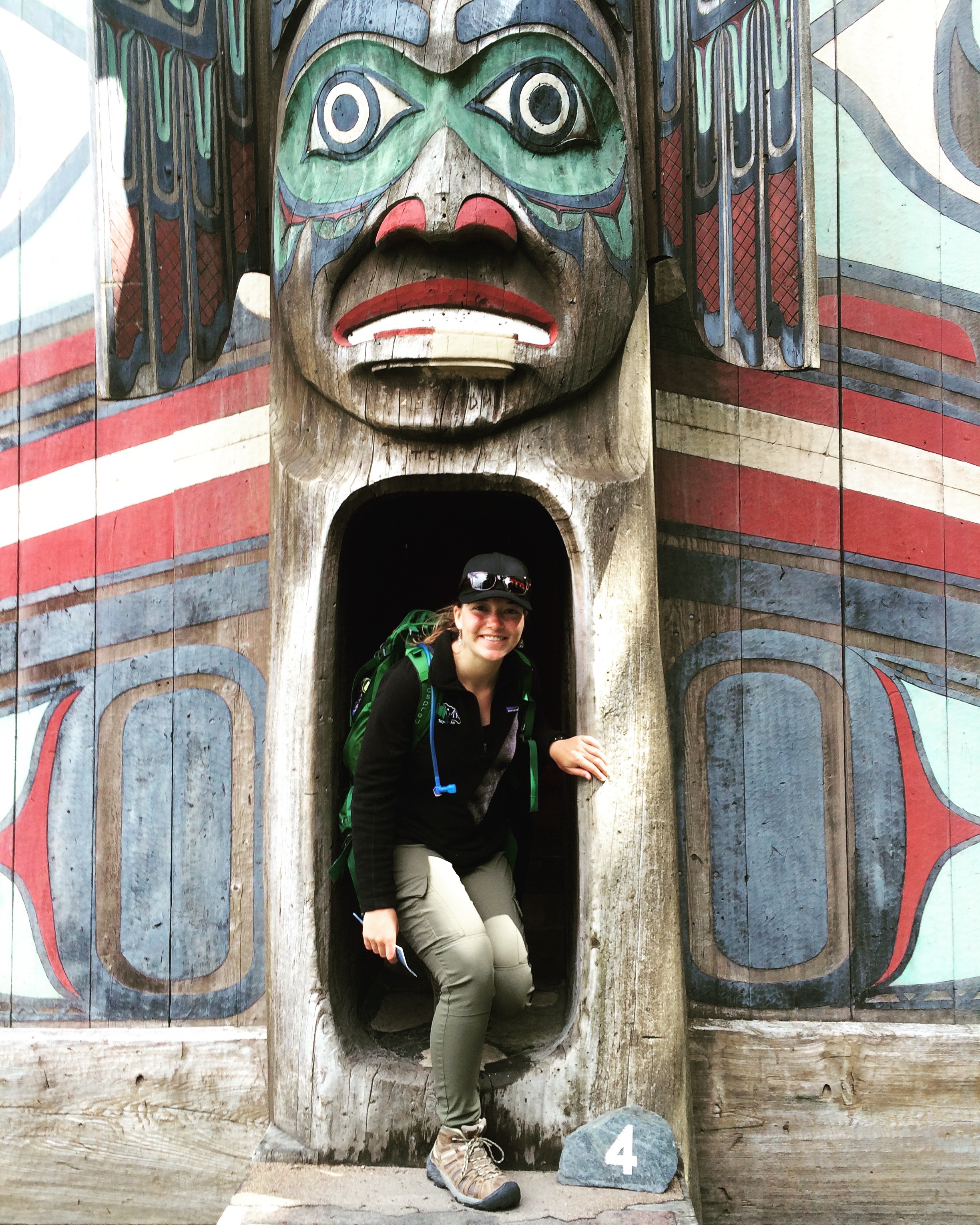
The entrance to the communal house at Totem Bight State Park. These homes had only one small doorway that served as both the entrance and exit to protect it’s residents from attack.
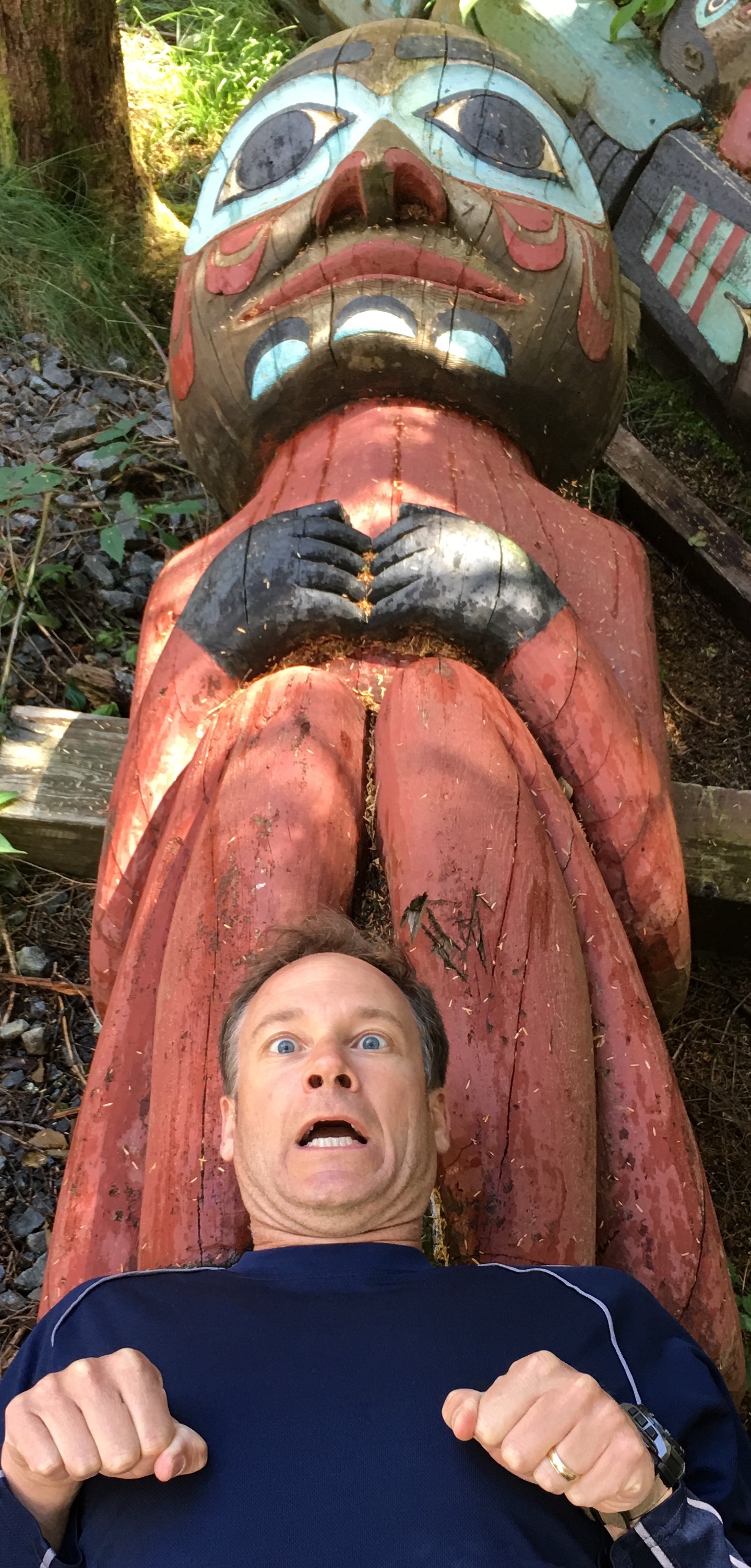
Dad got really into the totem poles.
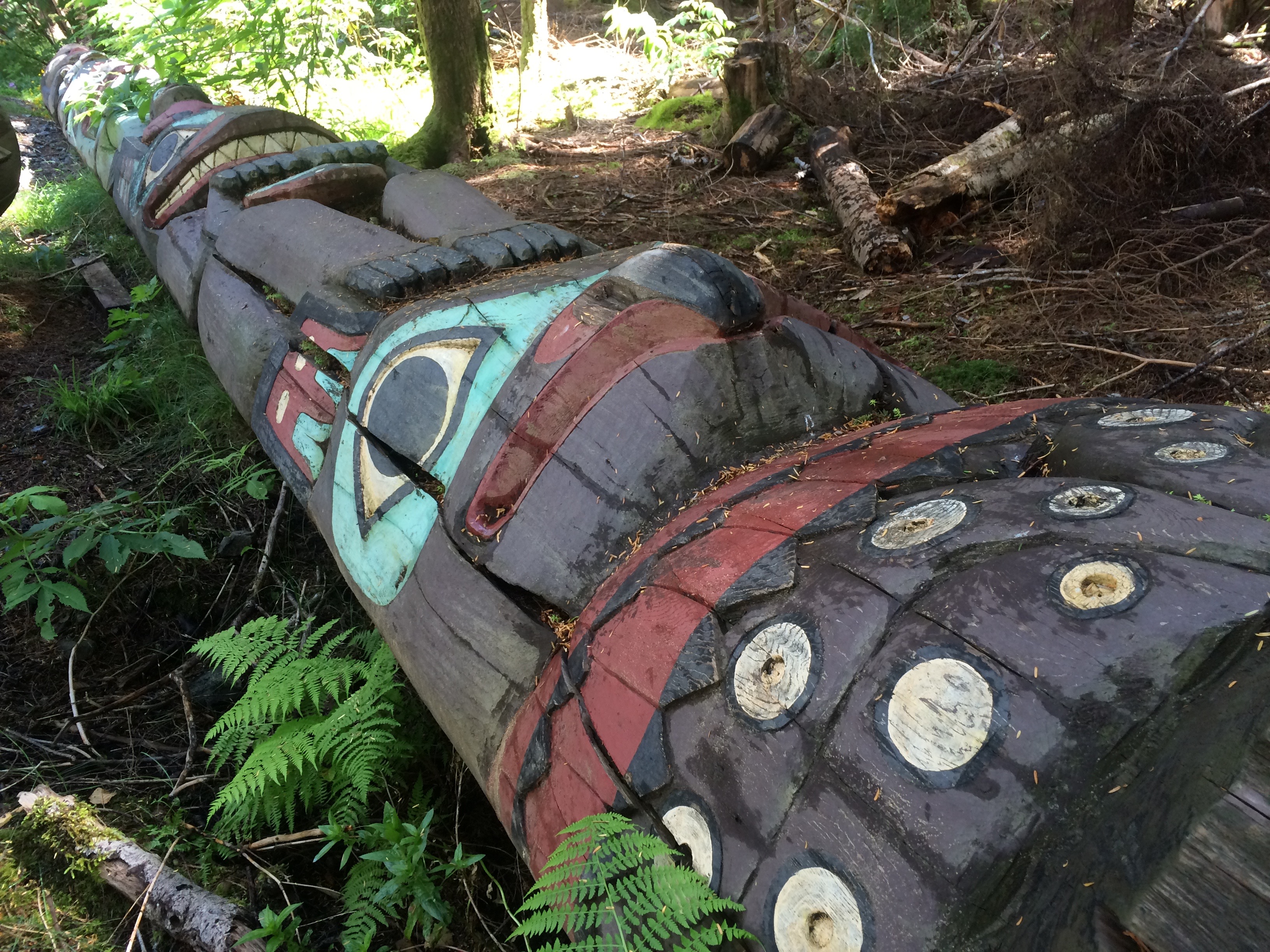
Totem poles returning to the earth. This is a tradition among the tribes in the region – once a pole rots and falls, it is left to return it’s nutrients to the forest. In order to preserve these precious windows into history, native carvers now create accurate replicas once a pole falls. This also supports the continuance of this traditional art form.
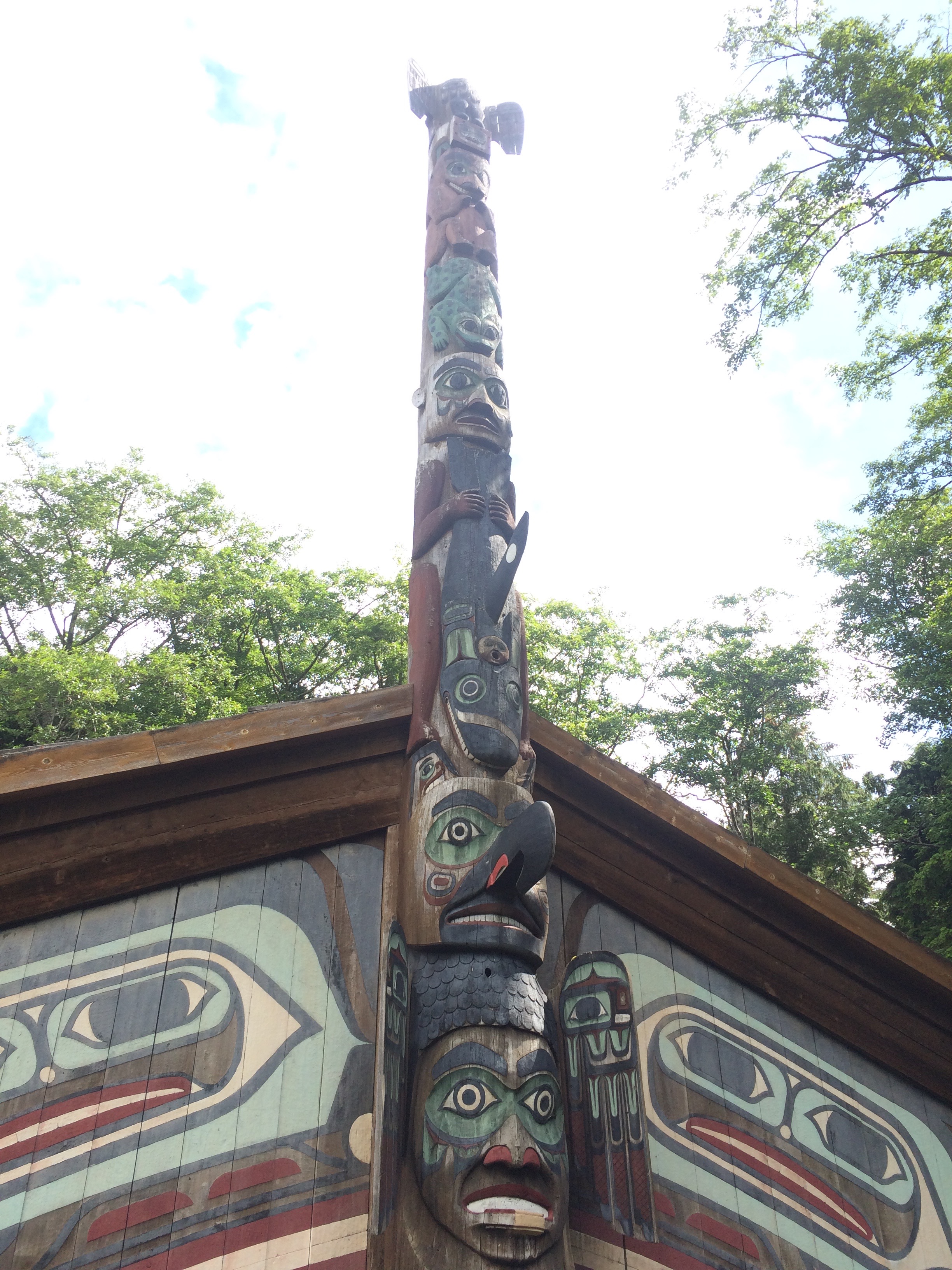
Communal house with totem pole (I have to say the orca is my favorite part)
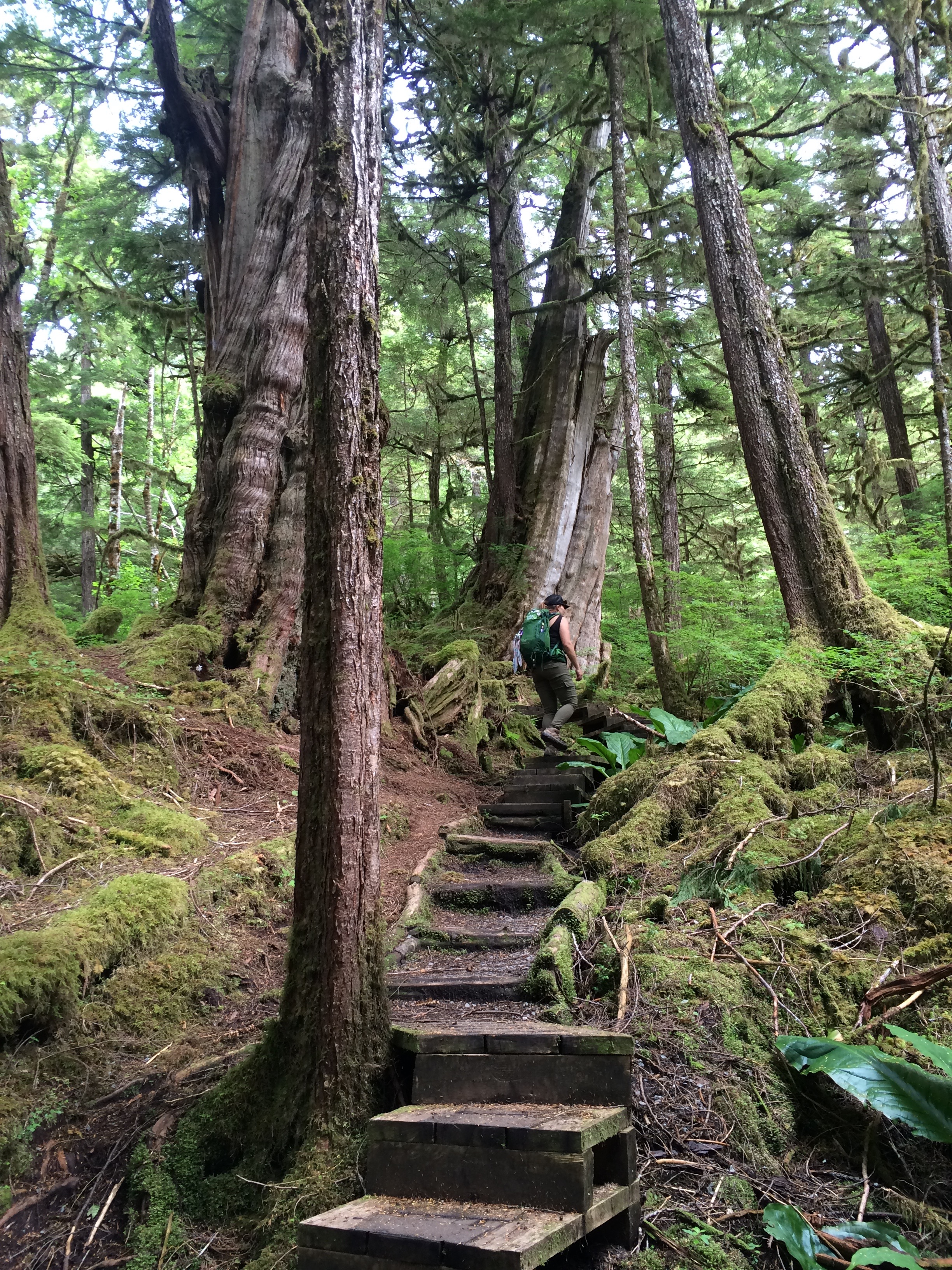
Hiking among the giants of the forest at the north end-of-the-road

Pictures truly can’t capture how massive these ancient trees are
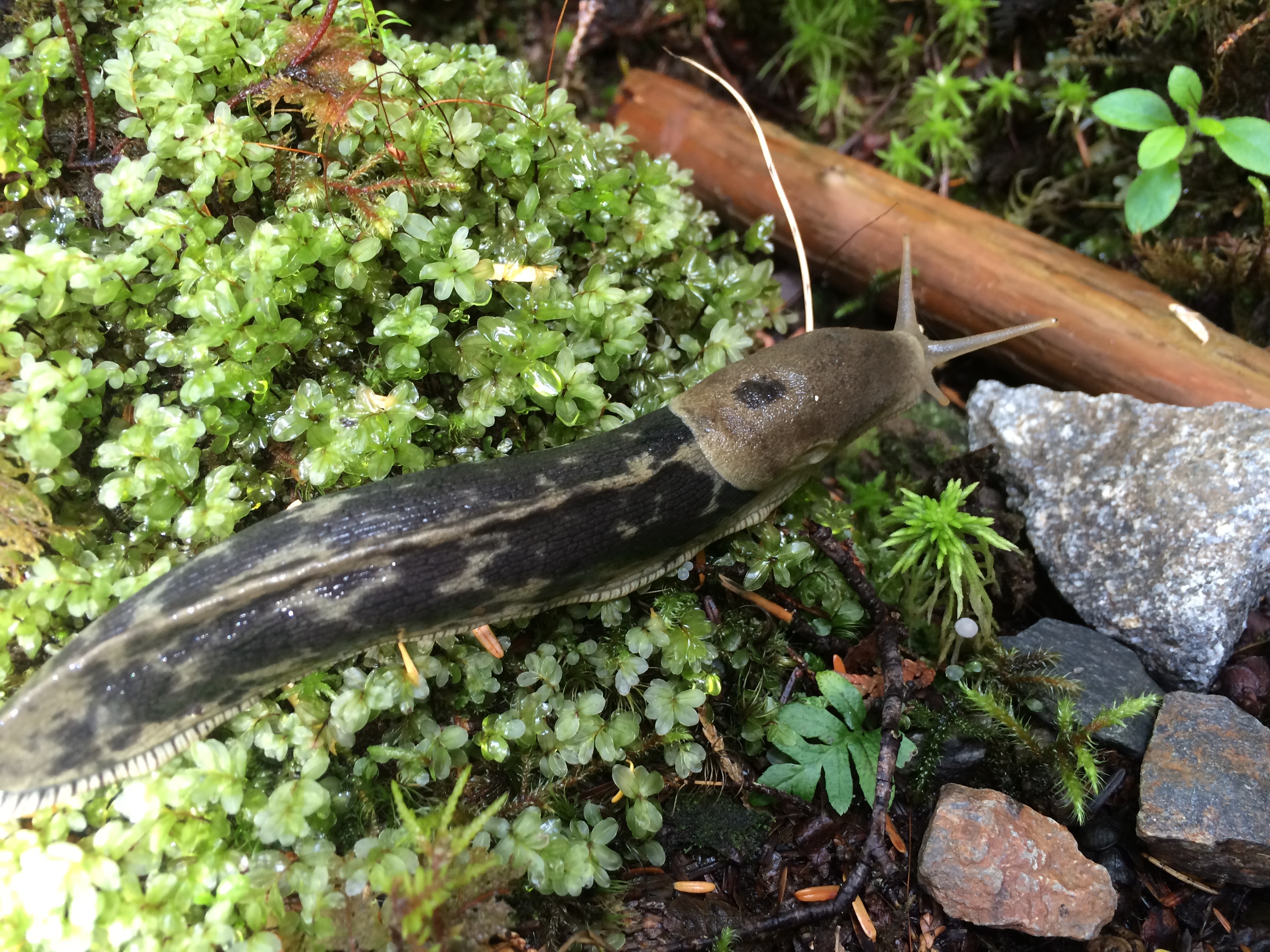
The rainforest is full of slippery slugs
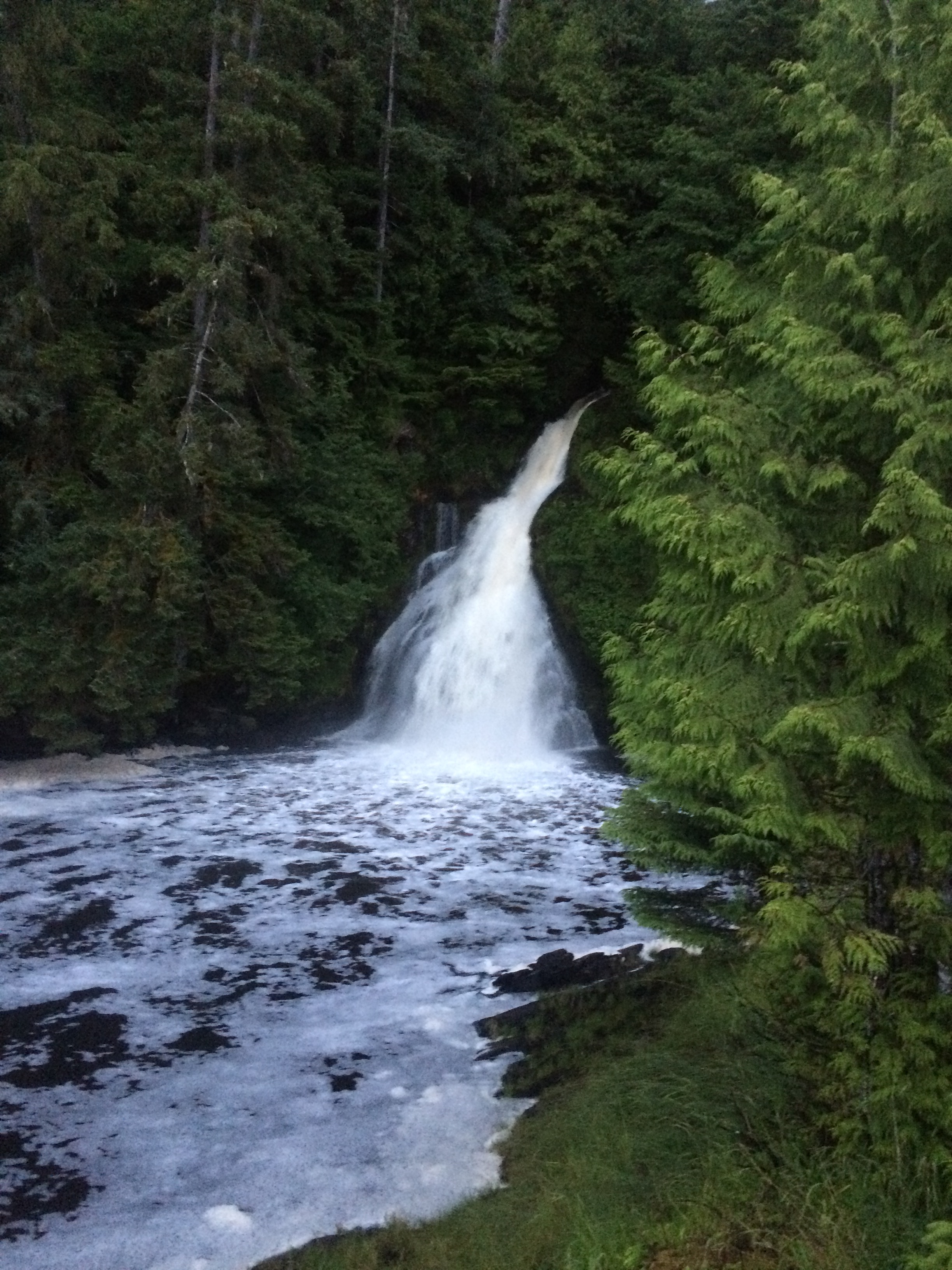
Salmon Falls
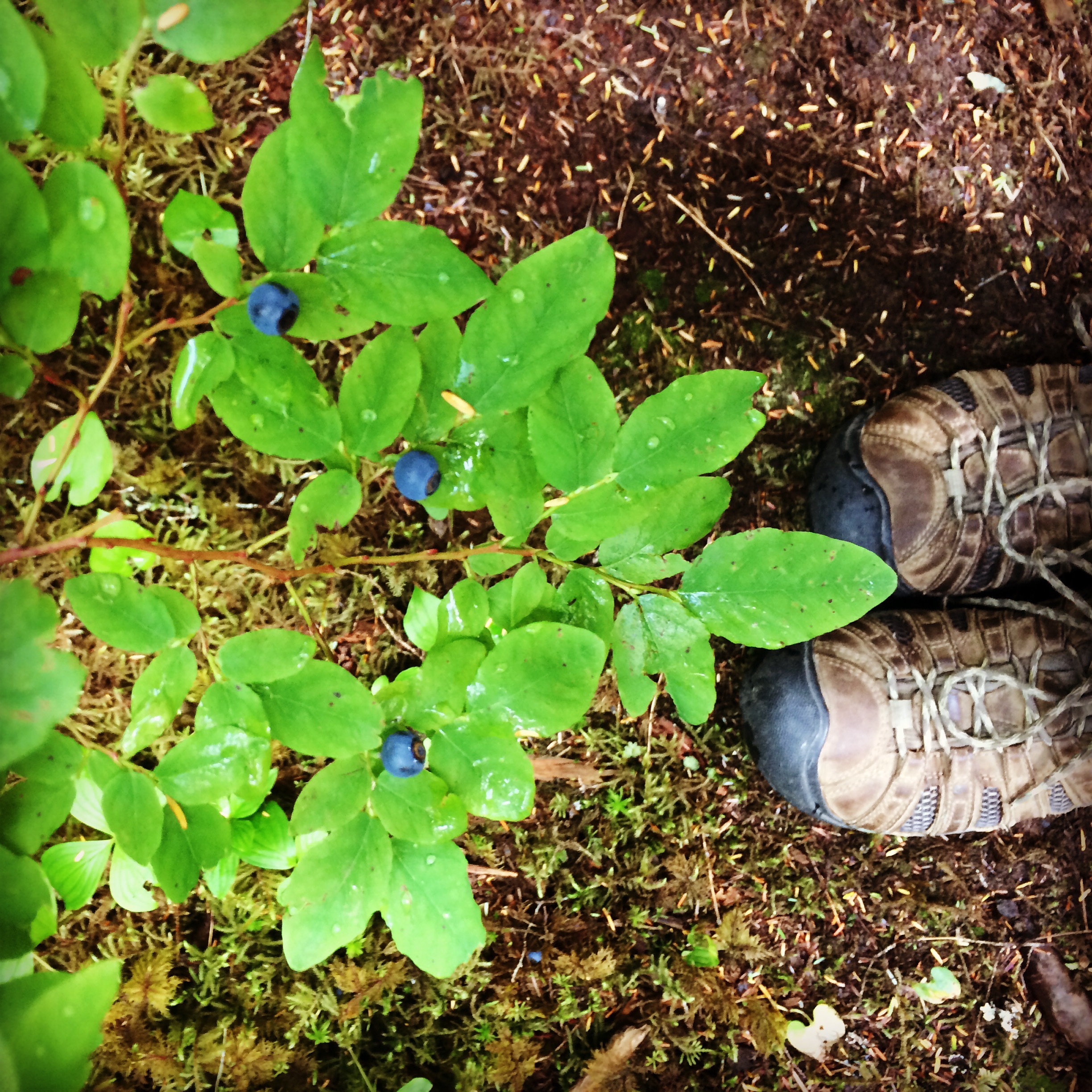
Wild blueberries abound! I gorged myself on fruit every time I hiked…
I was sad to see my dad go, but glad that we got to explore the island from end to end together. With only a few precious weeks in Alaska left, I started doing a lot more adventuring on my own, hiking trails like the Rainbird Trail:
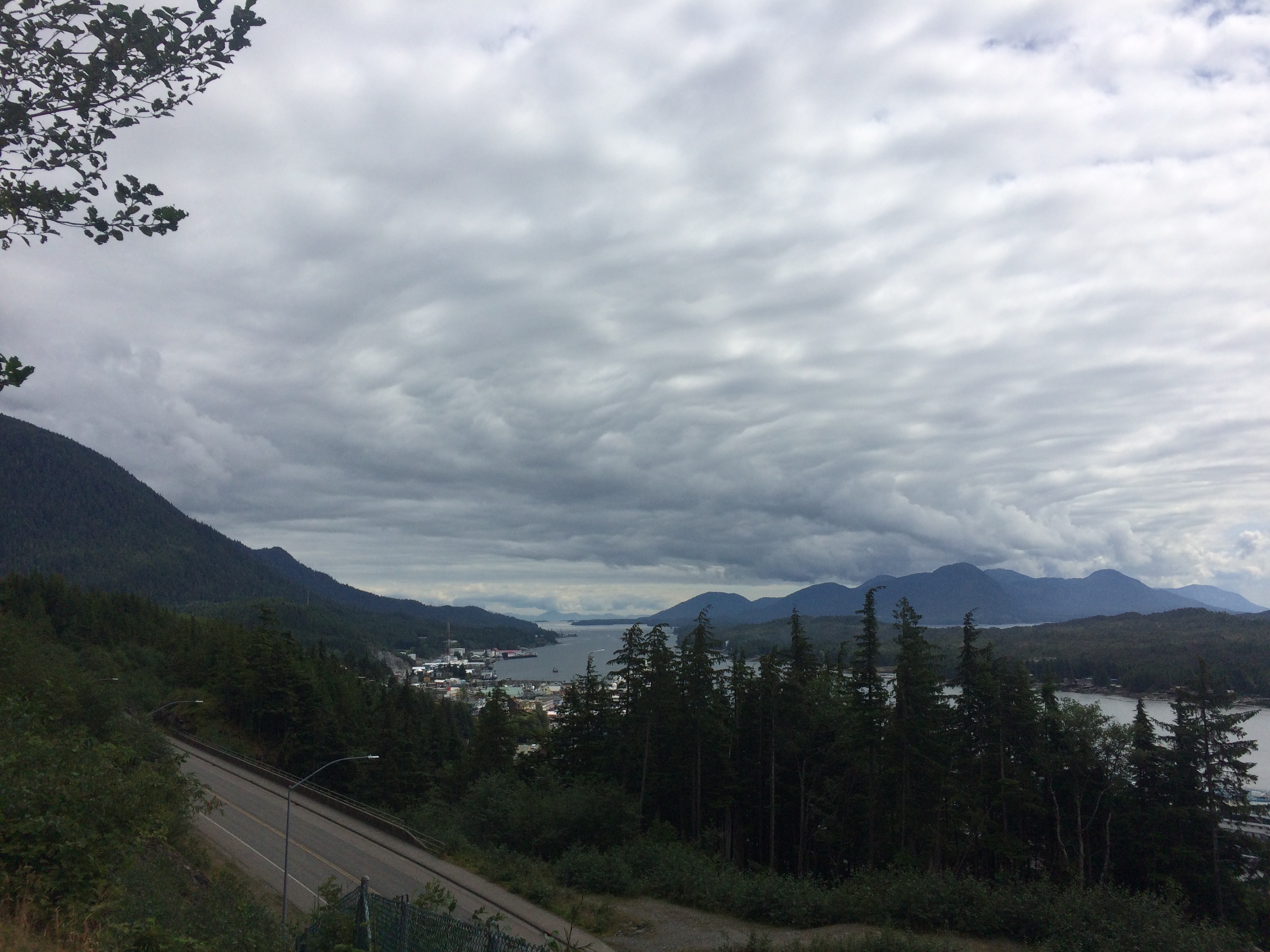
The view from the start of the Rainbird Trail, overlooking Ketchikan and the Inside Passage
This trail meanders through the edge of the dense forest, while offering some fantastic views of the town below. Since one of my friends started working in trail maintenance and construction, I’ve taken care to examine the work that goes into the creation of these trails. The Rainbird Trail was cut from the hillside and forest by hand, and all the logs, steps, and fences on the trail are constructed from the trees cut down when the trail was being cleared. All of the stone was locally quarried, and the trail is art in itself:
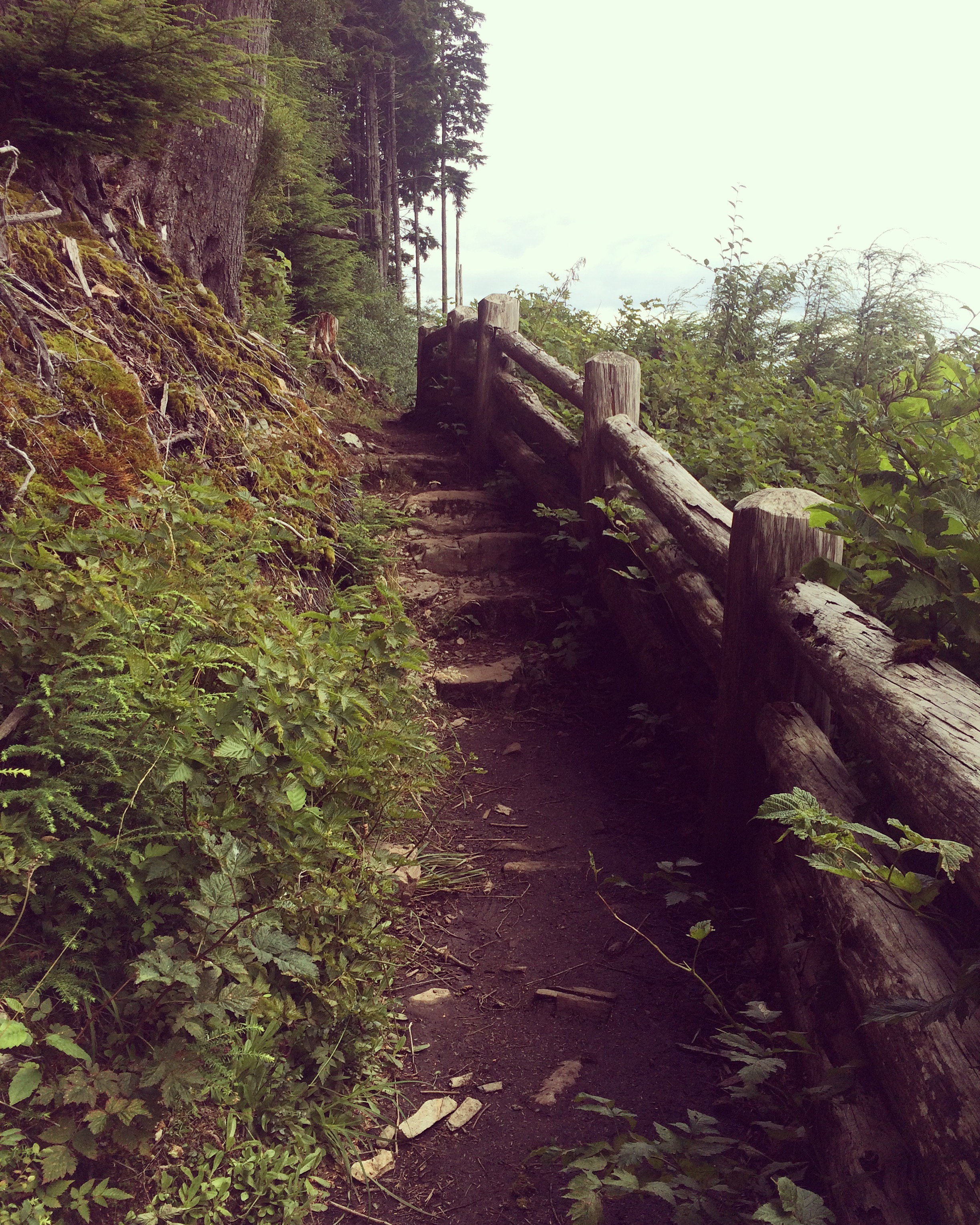
The trail is composed of locally quarried stone, and red cedar harvested during the construction of the trail
To my delight, the Rainbird Trail is also home to bushels of my new favorite fruit, thimbleberries! These delicious berries are extremely delicate, and are more flavorful than raspberries or strawberries. If you try to pick them or take them with you they instantly become squashed to oblivion, so I took a 25 minute break (no exaggeration) to feast on these natural delicacies. I’m glad there were plenty of salmon in the streams – I didn’t have to worry about surprising a bear in the berry patch!
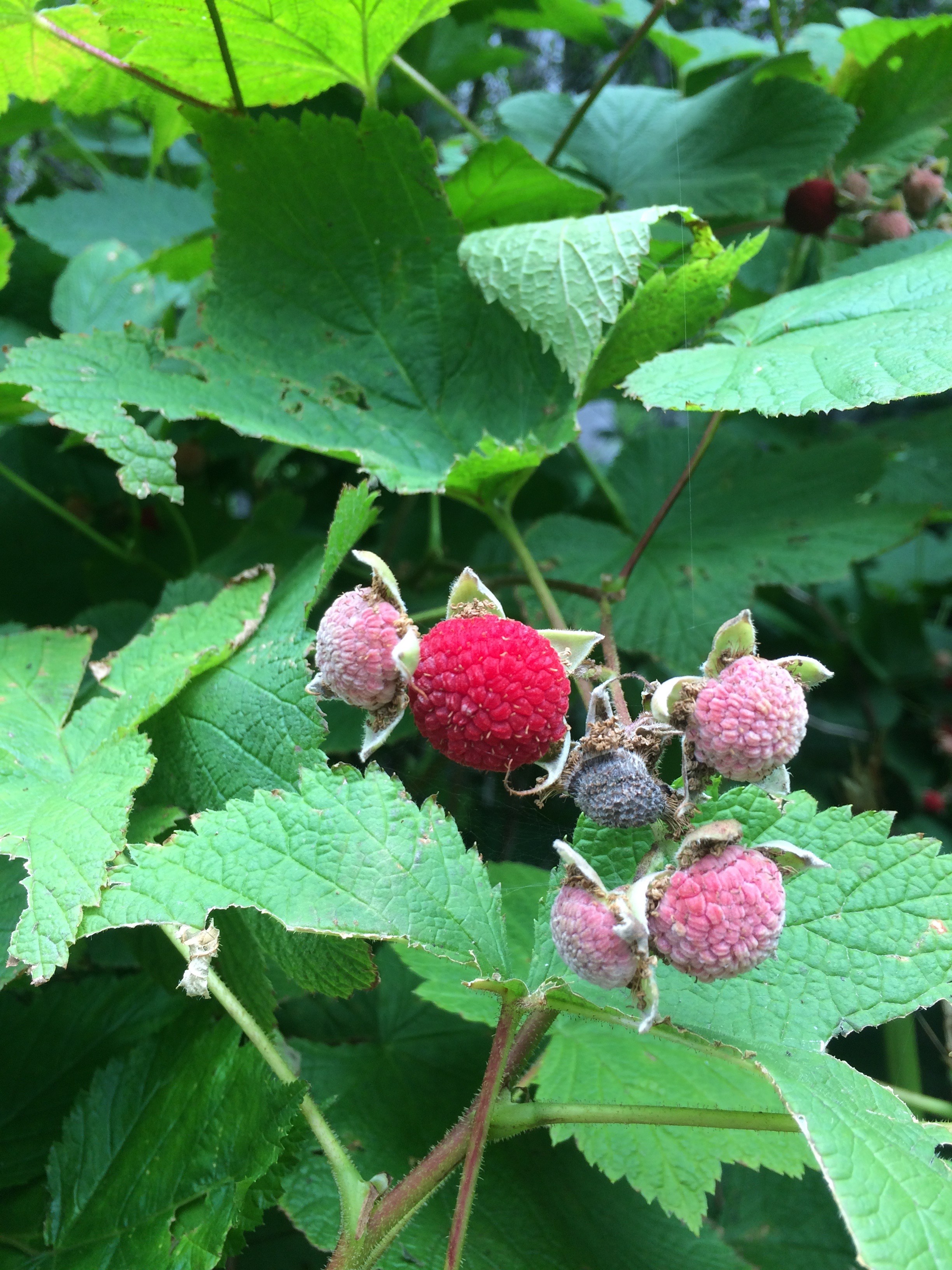
Thimbleberries, incredible bursts of deliciousness
One of my friends from Catalina, Chris, also visited me in Ketchikan during my last week of work. We took on the oceans – blessedly clear and calm this time – and went for a day of fishing with friends old and new.
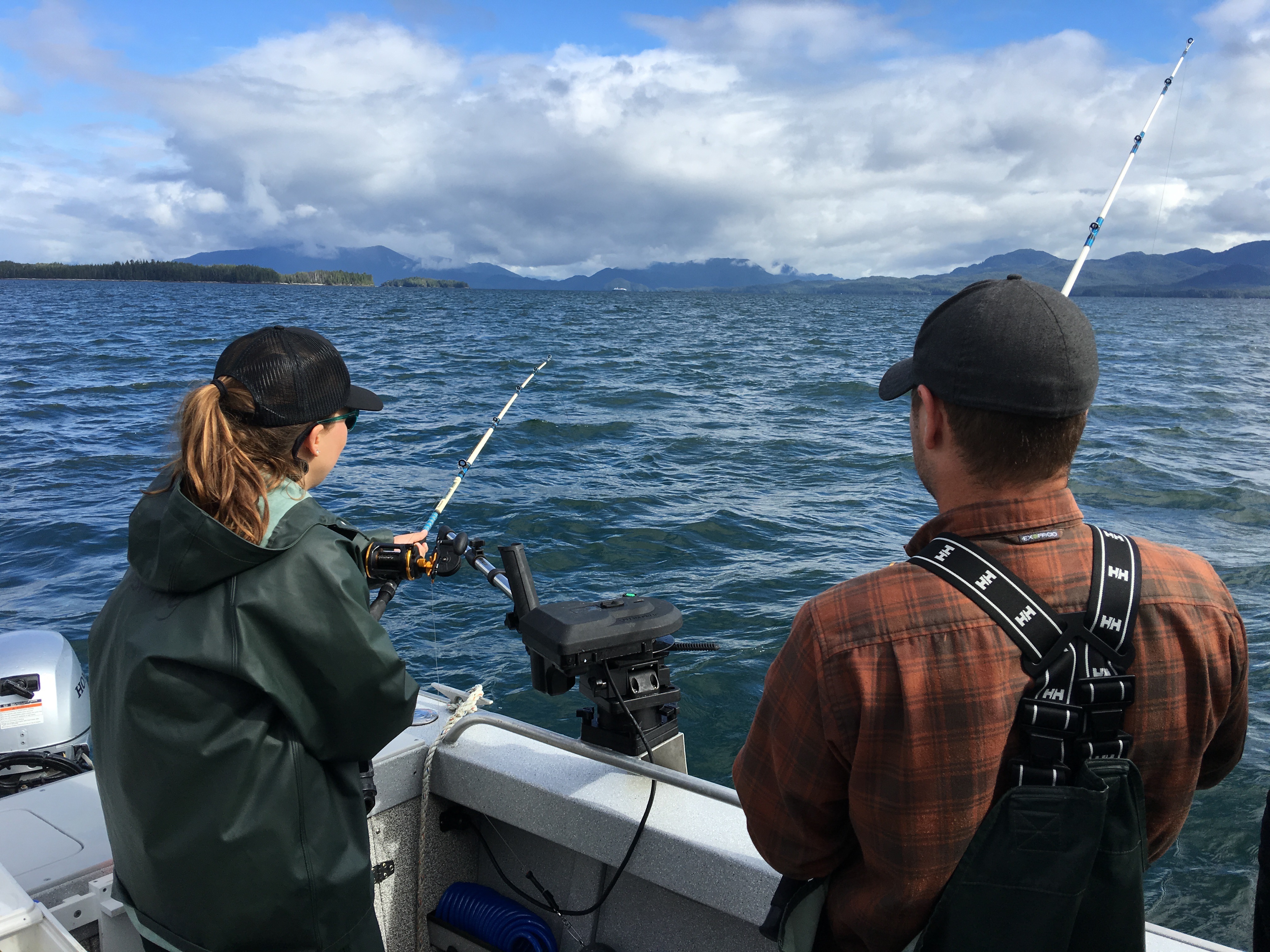
Gone fishin’
Our boat came out with a pretty solid catch! Guess who caught a rockfish? Yours truly! Chris managed to snag a big ‘ol halibut.
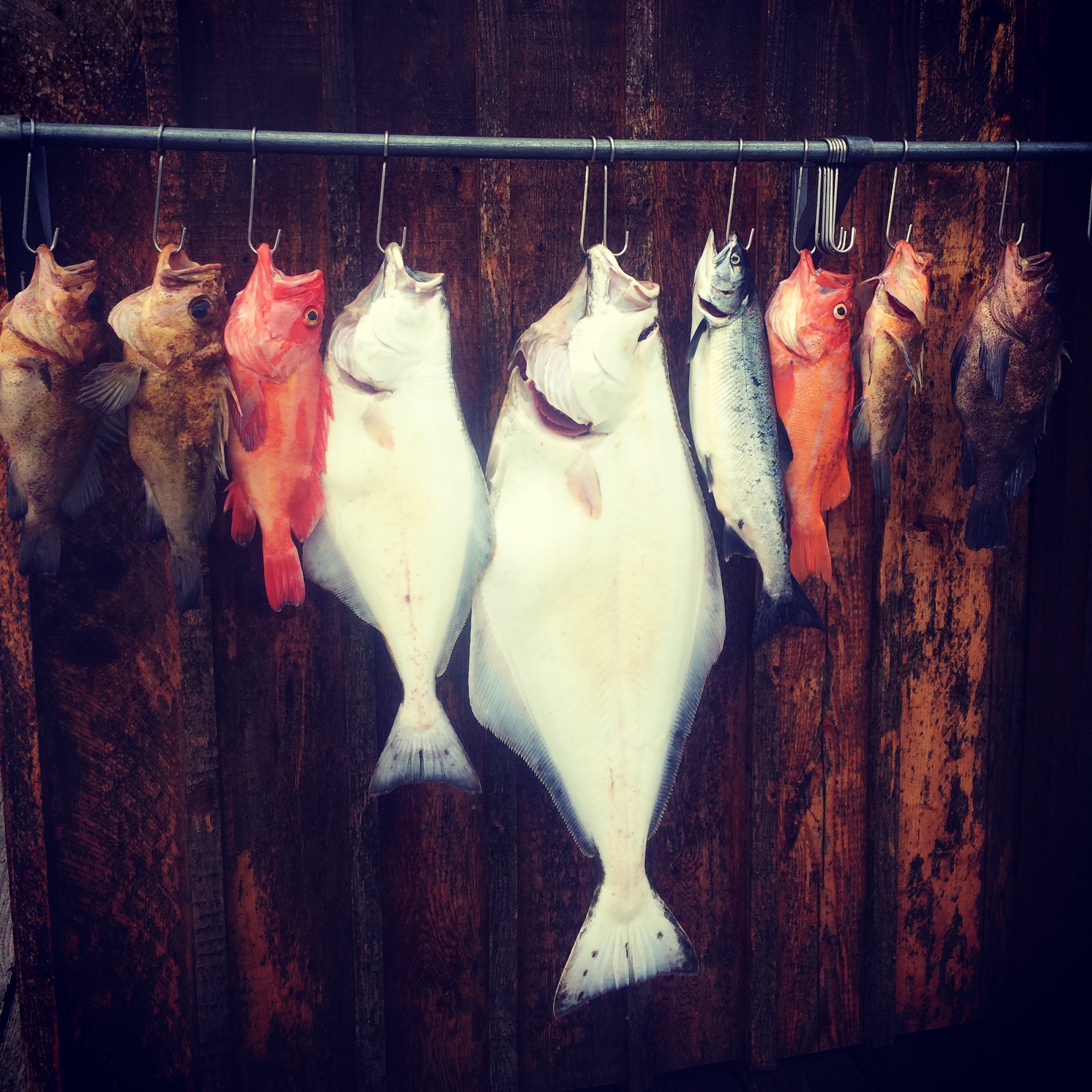
The combined catch of the day
While the guys filleted the fish, I raced around the docks with our guide’s son – he was tough as could be and zoomed through all the splinters in his bare feet!
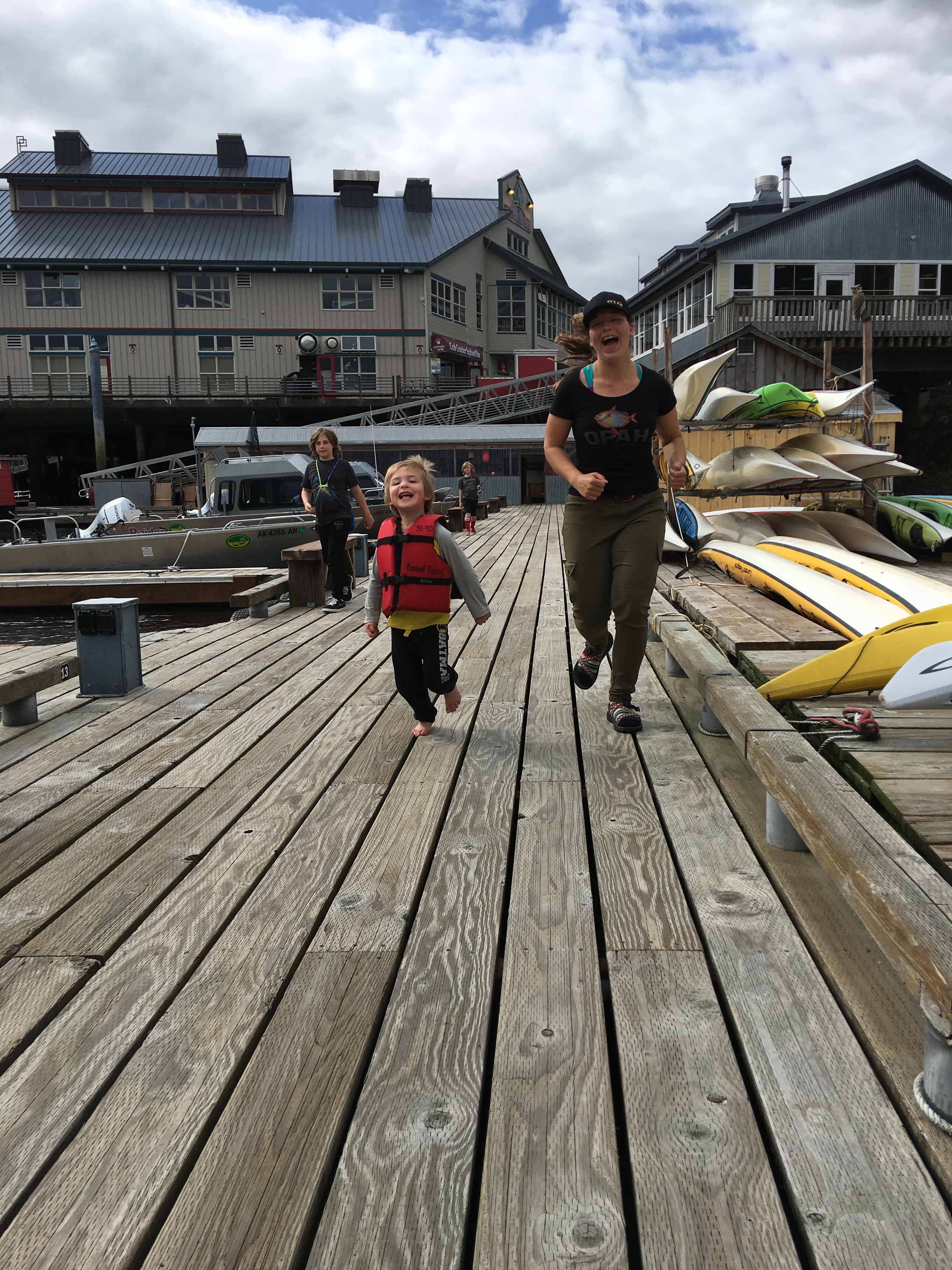
Racing Wolf around the docks in the Ketchikan Marina
We also got this young soul to take a picture of the fishing crew – excuse the 5-year-old thumb taking up most of the picture. Chris and I are on the right.
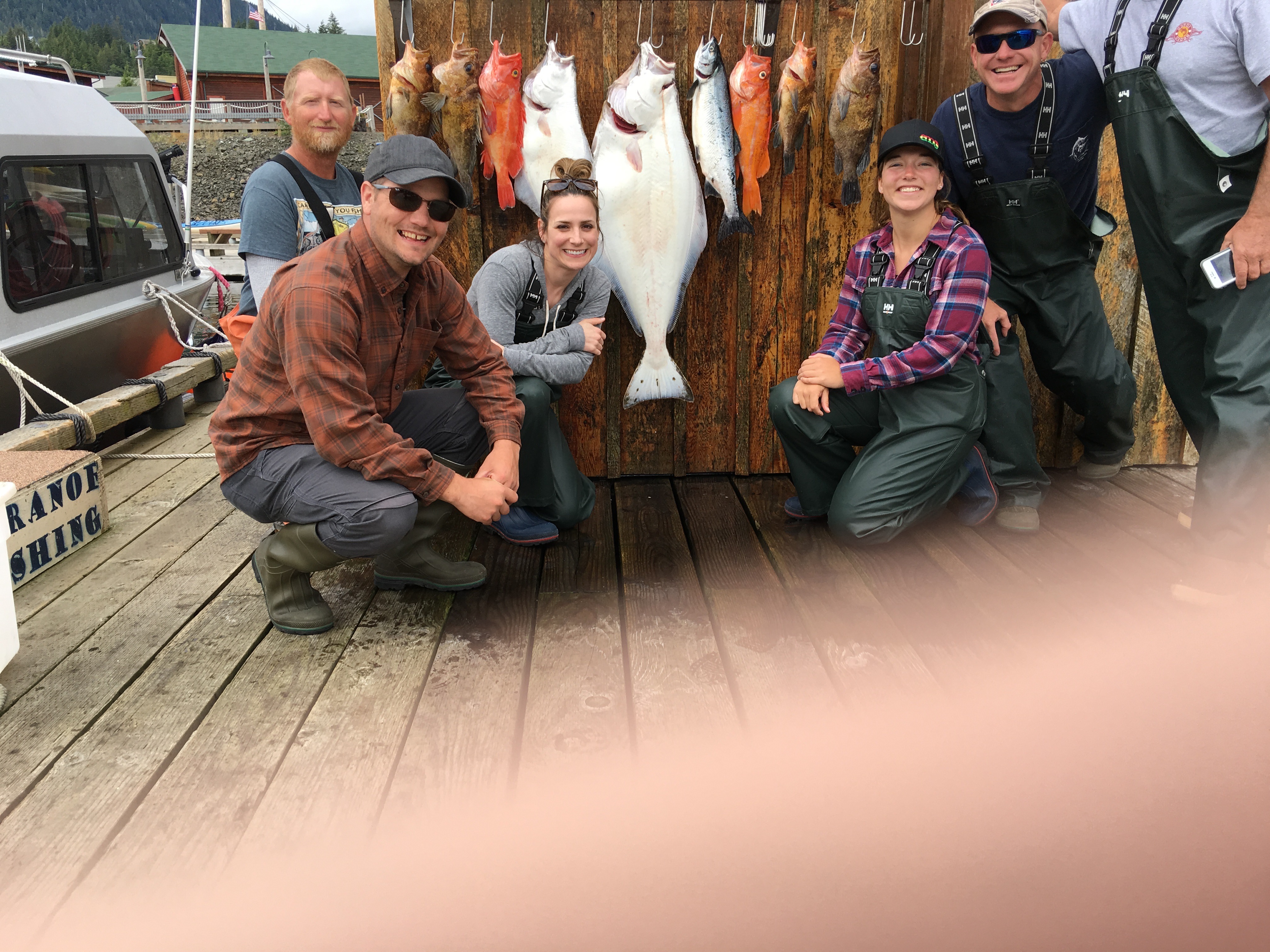
The result of asking a 5-year-old to take a picture
Chris and I jammed in a ton of geocaching, fishing, and adventuring in his short visit, but we still hadn’t conquered the ultimate goal: hiking Deer Mountain. This beautiful mountain overlooked Ketchikan, and I had a perfect view of it out my bedroom window. Most days, the peak was buried deep in clouds and rain, but Chris and I got a perfect clear day to hike it. Though the trail was only about 2.5 miles to the summit, that distance included 3000 ft of elevation gain and the potential for sudden storms and dramatic changes in weather. The whole trail was basically stairs, but even after an 8 hour day of leading snorkel tours, I couldn’t resist the chance to hike the mountain!

The rainforest gave way to alpine varities as we hiked uphill
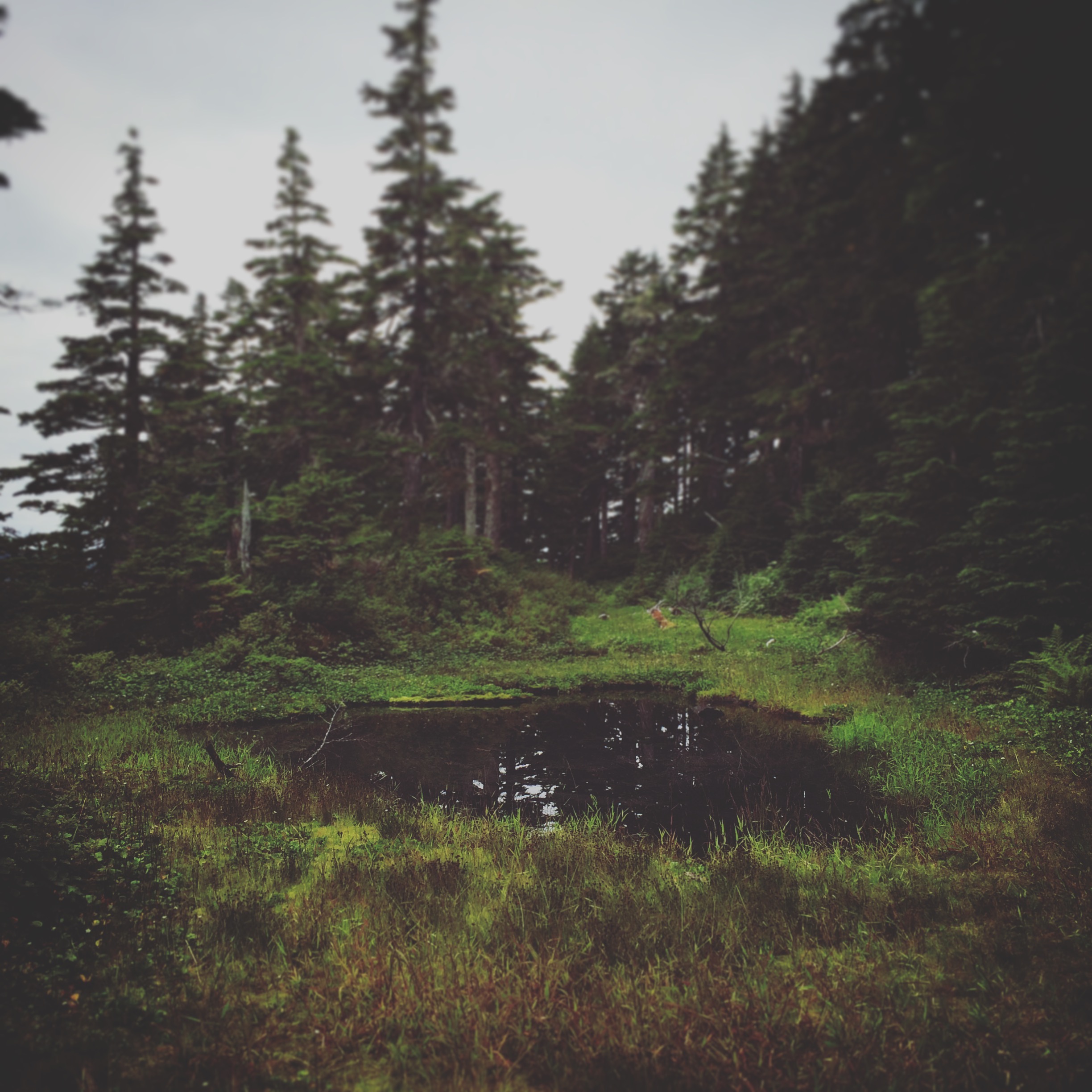
Fairy pool near the peak of Deer Mountain
The hike was intense, but full of breathtaking views of Ketchikan, remote glacial lakes, and the Inside Passage. Chris and I were loaded up with water, snacks, waterproofs, and all sorts of layers in case the weather made a sudden shift. I was most impressed by a few locals we ran into when we were hiking back down – an elderly man and his two sons steadily making their way down the trail with nothing but tennis shoes, a walking stick, and a branch of wild blueberries for a snack.
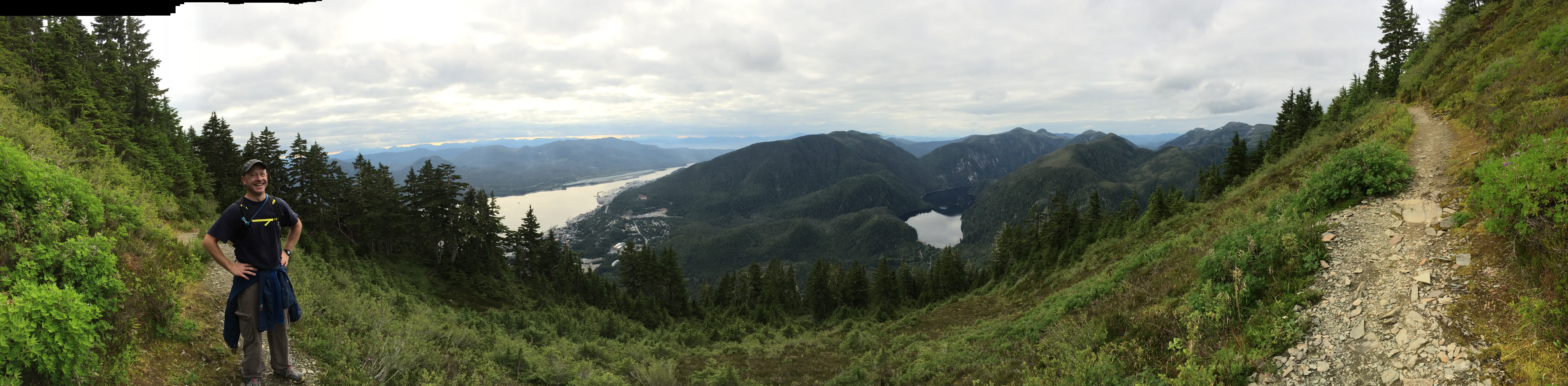
Chris near the peak of Deer Mountain, with a view of Ketchikan, the Inside Passage, and glacial lakes
Overall, Ketchikan was an incredible experience. I have no regrets for moving out to such a unique, remote environment unlike any other for the summer. If you can, take some time to visit this beautiful corner of our country – you won’t regret it!
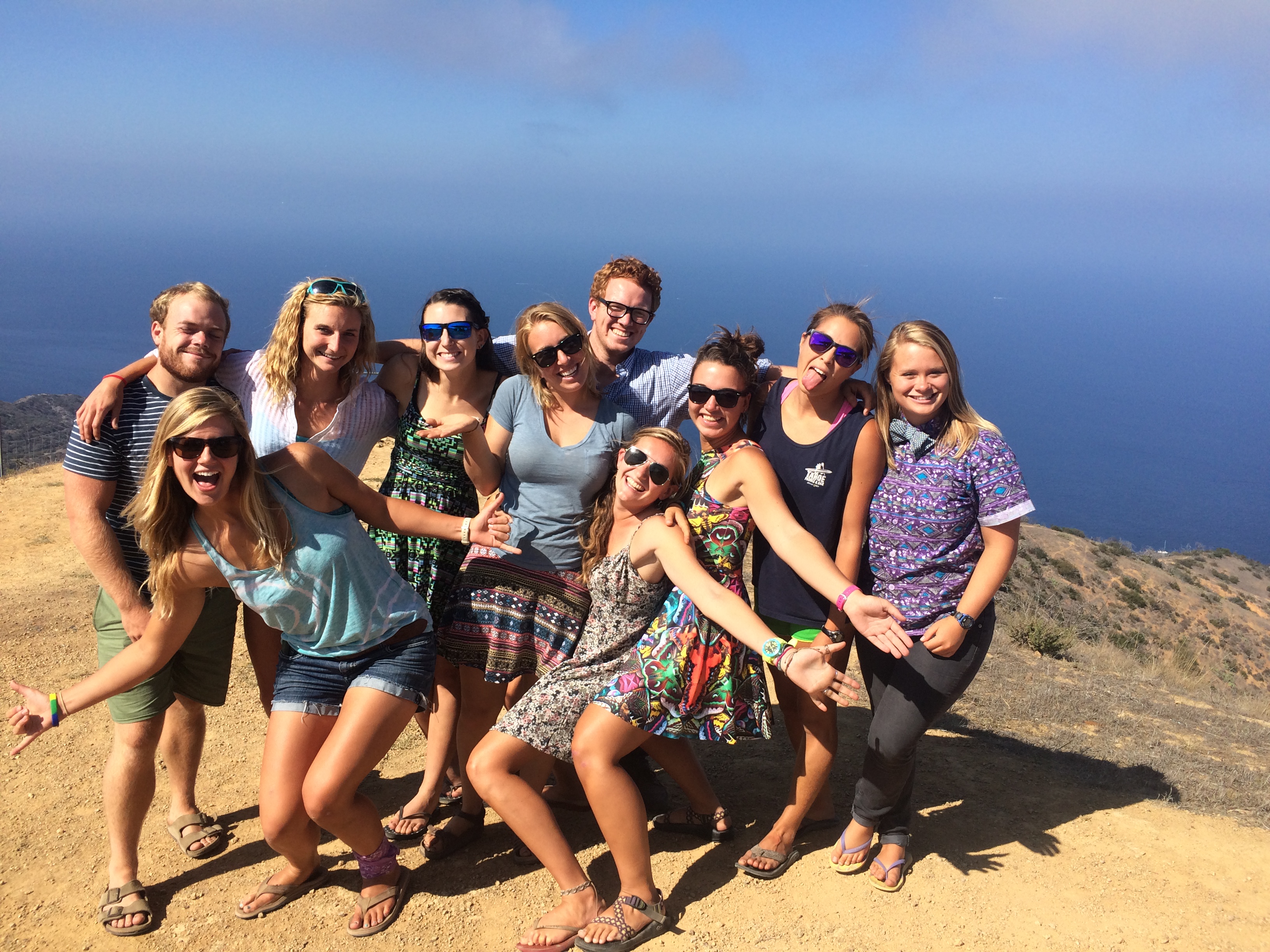

 Hello world! Welcome to my personal blog, which I’ll fill with thoughts, pictures, and updates as I make the leap from a land-locked undergraduate experience to a dream job on beautiful Catalina Island in California.
 Wandering Fins
