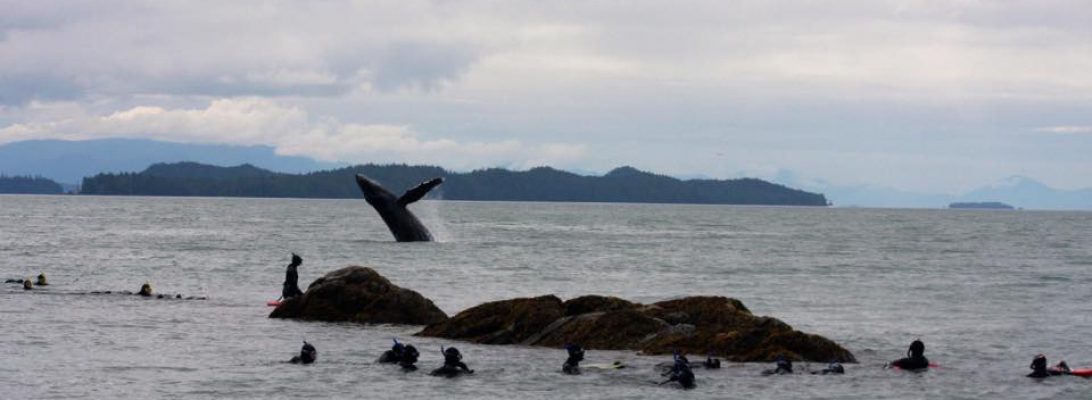
A brief history of a small island – Santa Catalina Island, CA

I’ve made it to beautiful Catalina Island, 26 miles across the sea! Catalina Island has a very interesting past, so here’s a brief history of the island for you to enjoy!

CatalinaIslandWest

The west side of Santa Catalina Island; from www.catalinachamber.com

Now, lets go back. Way back. As in about 119 million years ago, when the Farallon plate collided with the North American continental plate, a process known as subduction (I swear this isn’t all a geology lesson, bear with me).

https://i0.wp.com/stream1.gifsoup.com/view2/1369132/subduction-o.gif

 Now, you see right where those two plates are meeting? Right where there’s a greenish line between them? All that geologic material scraped off from the collision of the plates are the foundation of Catalina Island. And all that mountainous volcanic action happening to the right? Those are the Sierra Nevada mountains, also formed by the collision of these plates. This scraping and subduction continued until about 20 million years ago, when the last of the Fallon plate was subducted. At this point, igneous volcanic material made its way into the rocks of Catalina, and formed a volcanic archipelago off what is now the California coast. The late Miocene Epoch (23.7-5.3 million years ago) ushered in an intense period or extensional and wrench faulting that moved the island about 156 miles north, and also rotated it by about 60 degrees. This also resulted in major shifts in sea level and vertical movement, some of which are still occurring today.

These dramatic forces resulted in a dramatic landscape and a beautiful array of geological structures and life on the island. Fun fact: There are 8 plant species that exist only on Santa Catalina Island.
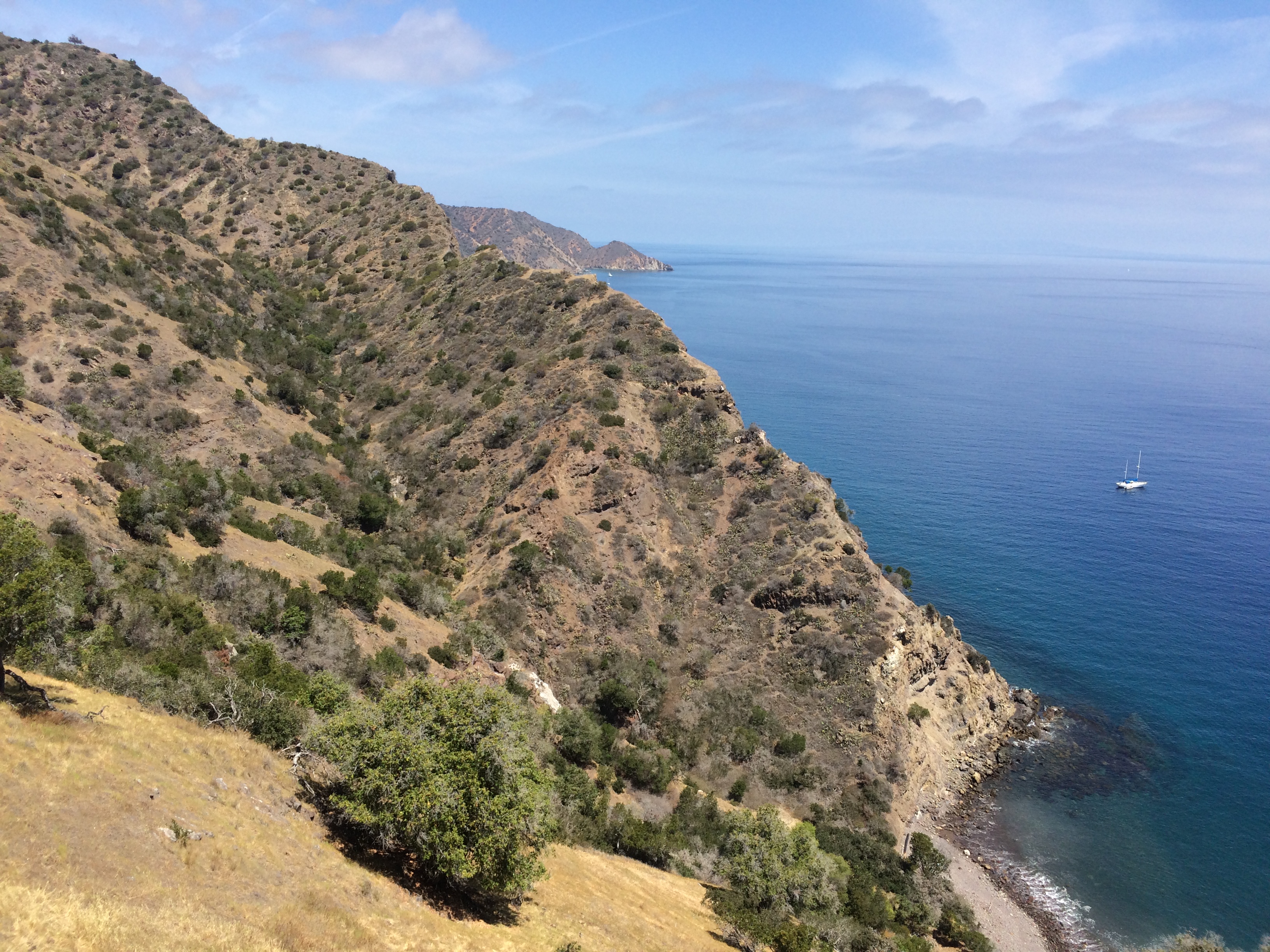
IMG_5376

Lets fast forward a bit. People have been living on the island for over 7000 years. The indigenous people, later dubbed the Gabrielino, survived on the island by gathering plants and sea life. This harmonious lifestyle supported a population of about 1500 people on the island. The island was a trade and religious center, and the trade of soapstone and soapstone goods supported a trading network all along the California coast. I have found it difficult to find other information about the native peoples of Catalina.

In 1542 the explorer Juan Rodriguez Cabrillo “discovered” and claimed the island for Spain, naming it San Salvador. In 1602 Sebastian Viscaino reclaimed the island, naming it Santa Catalina in honor of St. Catherine’s Feast Day. Under Spanish control, the indigenous peoples were forcibly removed to the mainland in the 1820’s to Mission San Gabriel, ranchos, and other missions farther south.

In 1822 Mexico revolted against Spain and Californian territories, including Catalina, came under Mexican control. In 1846 the island was awarded in a land grant by the governor to its first private owner. The ownership of the island changed hands several times and was eventually taken over by the army during 1864 during the Civil War. Barracks were built, but the island never saw any action. Eventually the army left the island to an absentee owner and the island was used primarily for ranching.

Another major shift in Catalina’s history occurred in 1887 when the island was purchased by the entrepreneur George Shatto, who planned to turn the island into a resort community with other areas utilized for ranching and mining.

https://i0.wp.com/upload.wikimedia.org/wikipedia/commons/thumb/d/d5/George_Shatto.jpg/220px-George_Shatto.jpg

George Shatto; wikimedia commons

Shatto and his team planned the town of Avalon – which his sister-in-law named after a Lord Alfred Tennyson poem – and constructed the Hotel Metropole. completed in 1888. He also purchased a steamer which made daily passenger runs to and from the island. Eventually financial troubles forced Shatto to turn over the island to the Banning Brothers, who had operated the cross-channel transportation to the island for many years.

https://i0.wp.com/www.postcardroundup.com/wp-content/uploads/2011/01/hotel-metropole.jpg

The Hotel Metropole circa 1902 after renovations by the Banning Brothers; source

The Banning Brothers continued to renovate and improve the island, filling the hotel and campgrounds around Avalon in the summers. Several families also moved to the island as permanent residents; consequently the island’s first public school was constructed in 1902. This was also a time of growth for tourist attractions, including glassbottom boats, sportfishing, an incline railway, stagecoaching, public bath houses, and even early aviation.

https://i0.wp.com/ecx.images-amazon.com/images/I/51mrbjltumL.jpg

Catalina Island may have had the first documented glass-bottom boats in the world, recorded as early as 1899; source

A severe fire, started near the back of the Hotel Metropole, cause unknown, in 1915 destroyed half of Avalon. Though devastating, it provided a clean slate for the construction of new buildings and attractions.

In 1919, William Wrigley Jr., of Wrigley’s Chewing Gum, decided to purchase stock in the island with several other investors. After visiting the island himself and envisioning the massive tourism potential Catalina had, he bought out all of the other investors and began to transform the island. He improved the infastructure on the island, created a new steamship line, and built several beautiful buildings that are still in use, including the famous Casino:
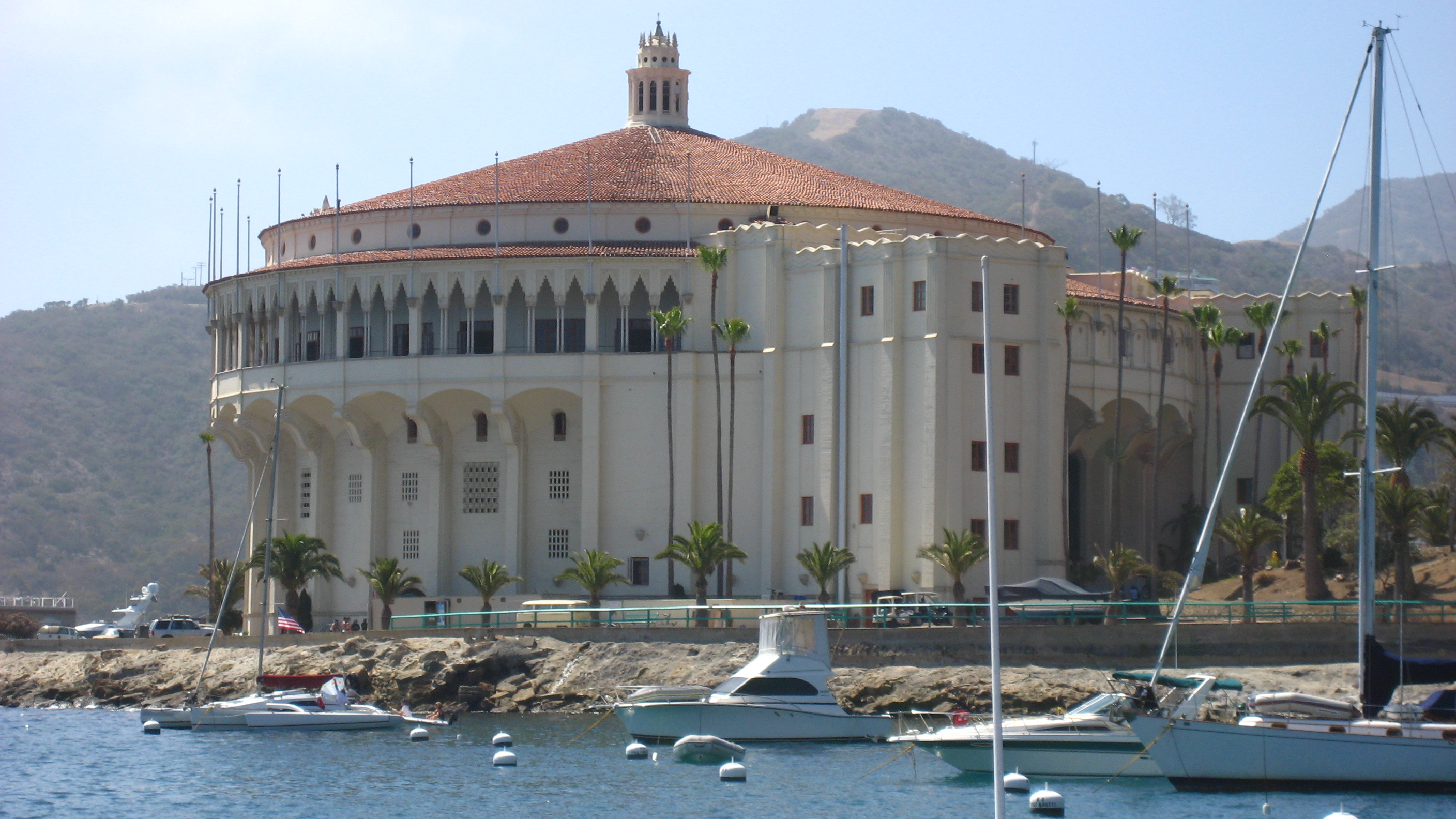


Catalina_160 From wikimedia commons

The island remained a bustling tourist attraction until the start of World War II.
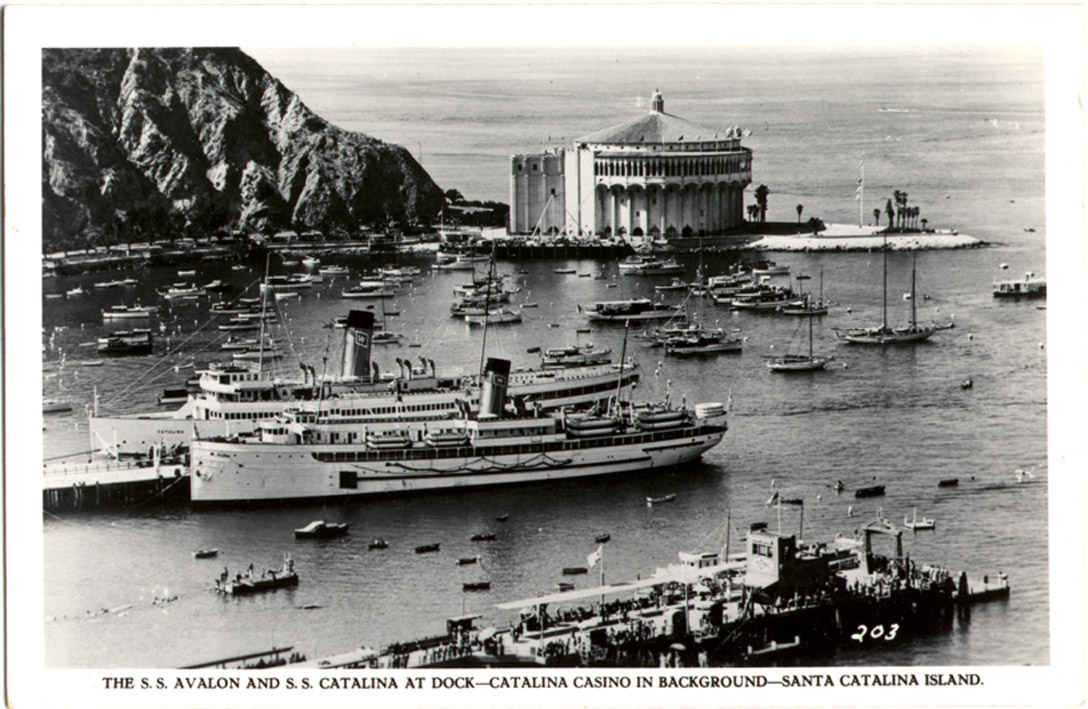
 

avalon

Source

At this time the Federal Government took over the island in 1943, transforming the island to a strategic base in case of an attack by Japanese forces on the west coast. But, really, if you look at a lot of the pictures from that time period, it really looks like all the soldiers were having a grand ol’ time on the island! The place where I’m situated on the island, Toyon Bay, was the home base for the Office of Strategic Services (now known as the CIA) at this time.

After WWII, Catalina returned to its role as a tourist mecca. The CIMI facilities at Toyon Bay, originally constructed as a private boarding school for boys in 7-12th grade in the 1920’s, was reestablished as two separate resorts and later returned to being a boy’s school in the 1960’s. In the 1980’s, it was bought by Guided Discoveries and transformed into the camp it now is. These nearly 100-year-old beautiful facilities are now my home and work place.
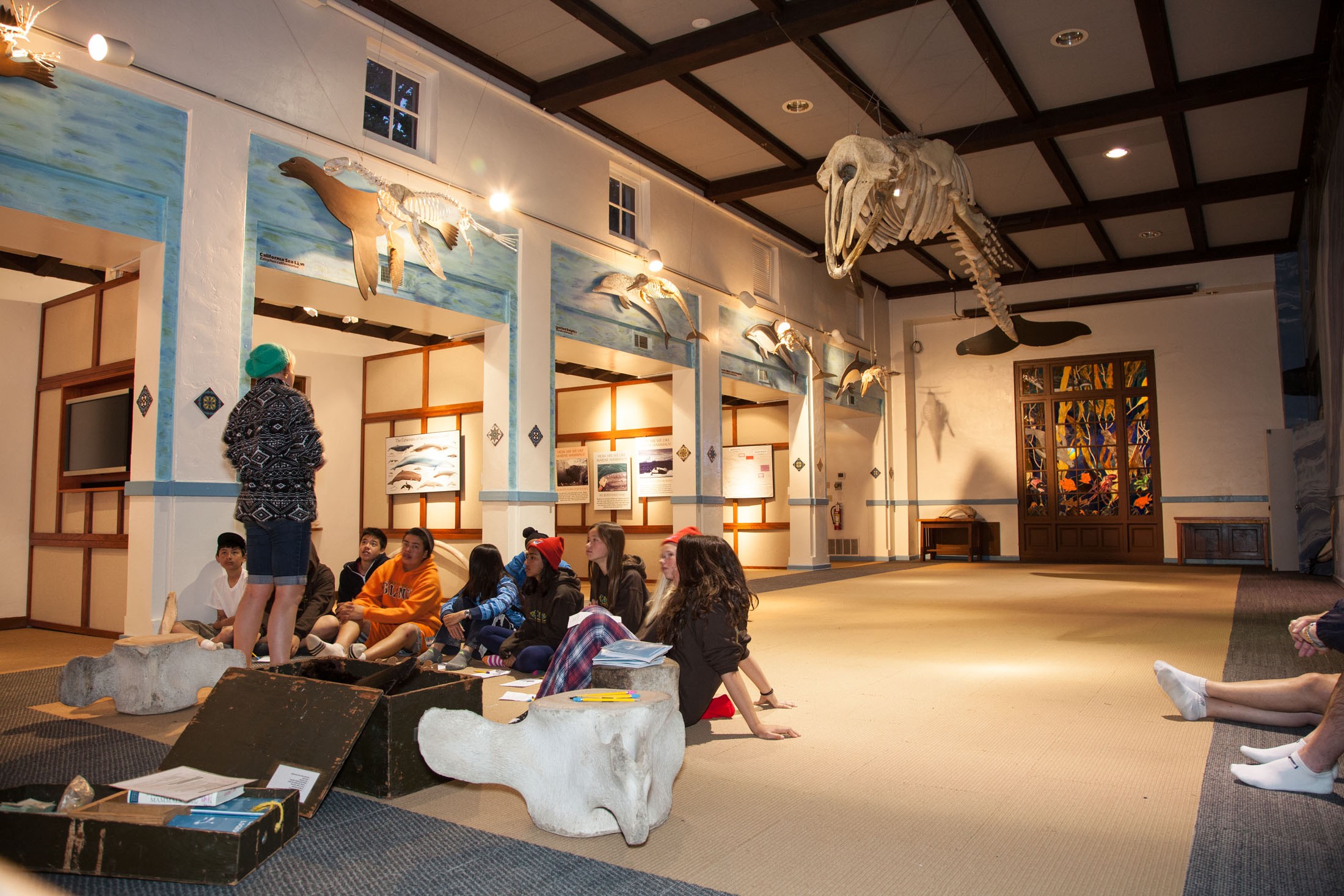
Marine-Mammals-Toyon-e1403024314284

The Marine Mammal Hall at CIMI Toyon Bay. Source
Elephant seals, art, architecture, and Venice Beach – Los Angeles
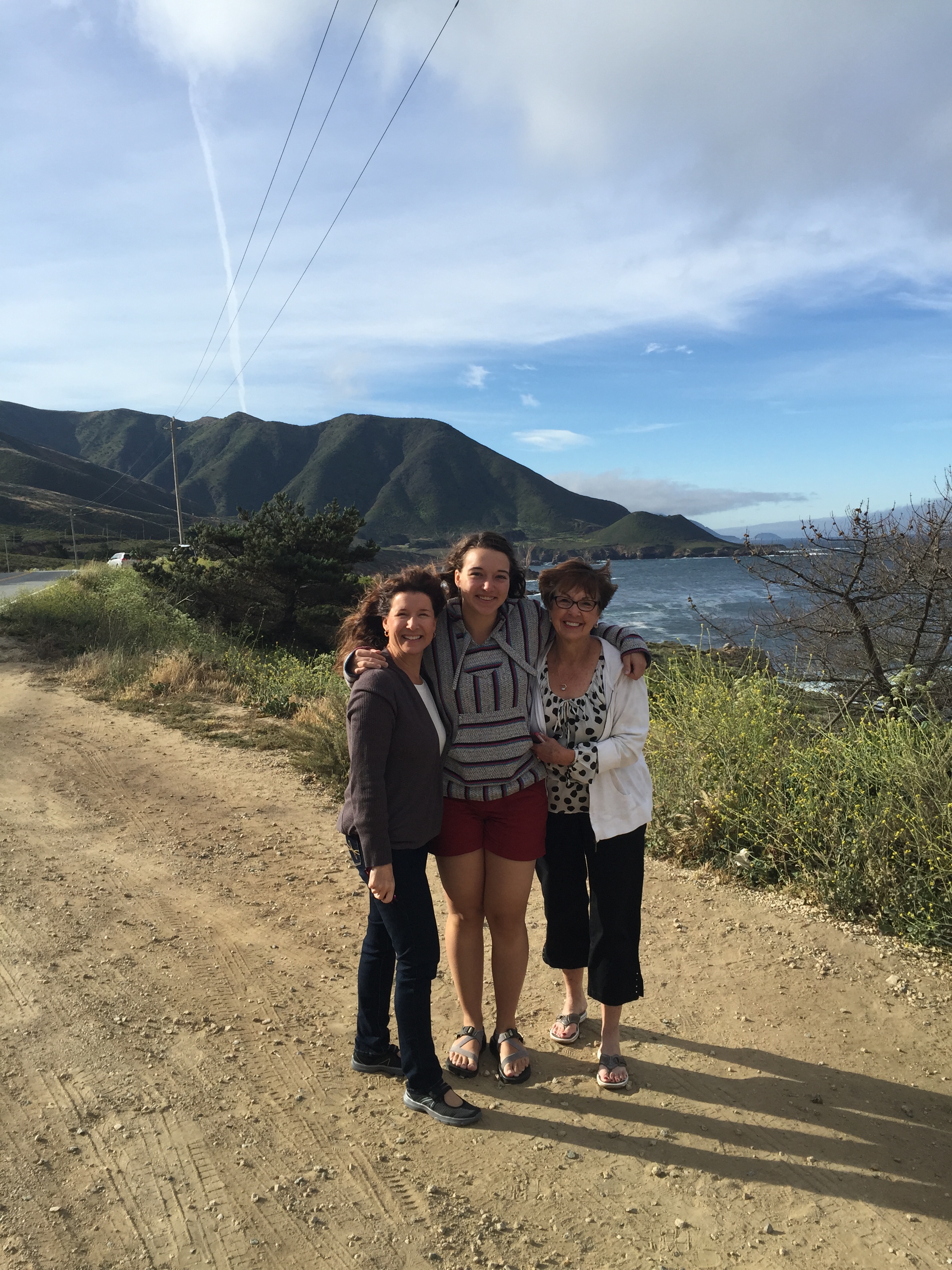
The end of our whirlwind California adventure took us down another stretch of Highway 1 (the PCH), as we headed south from Carmel. The drive was BEAUTIFUL.
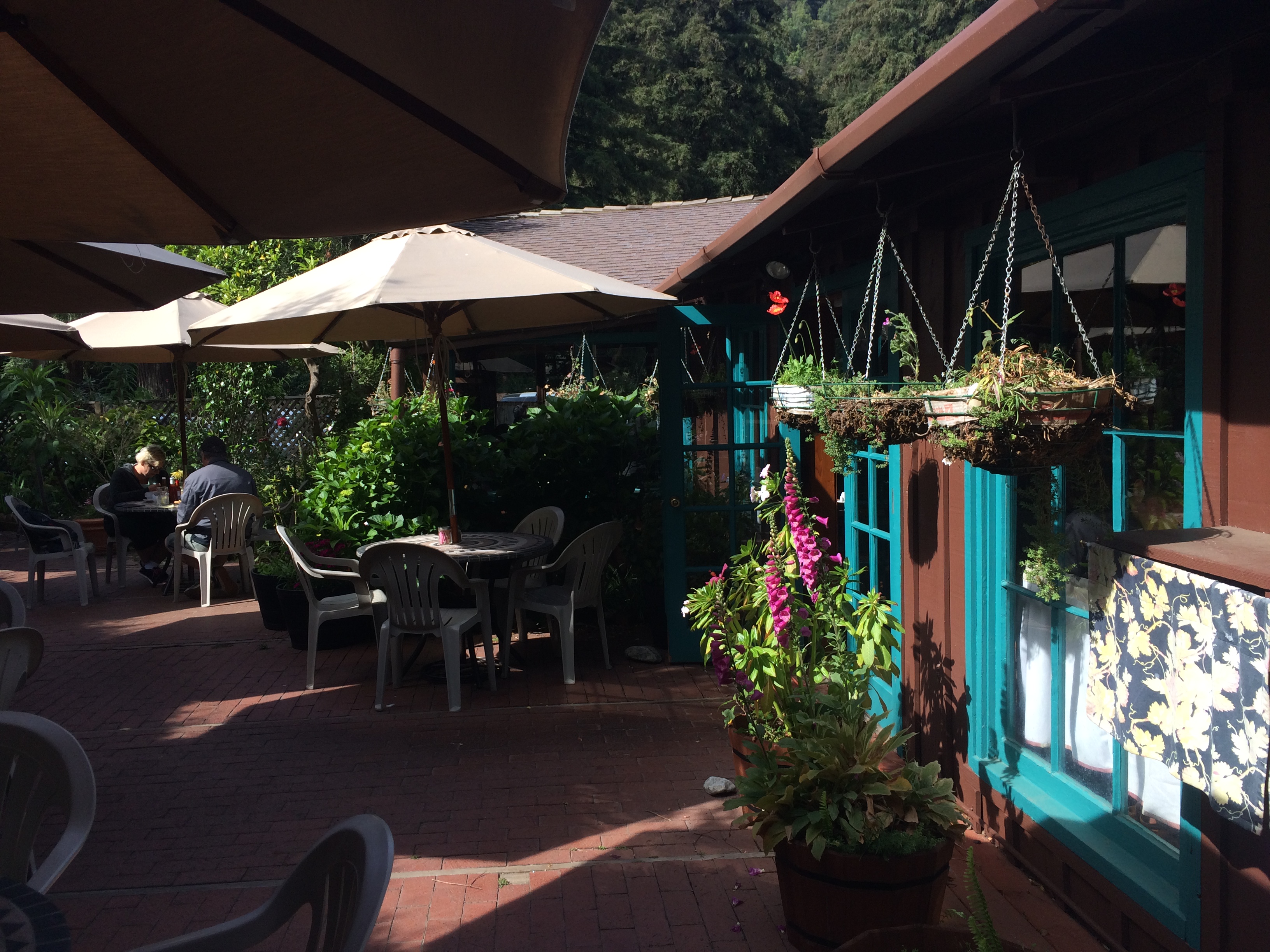
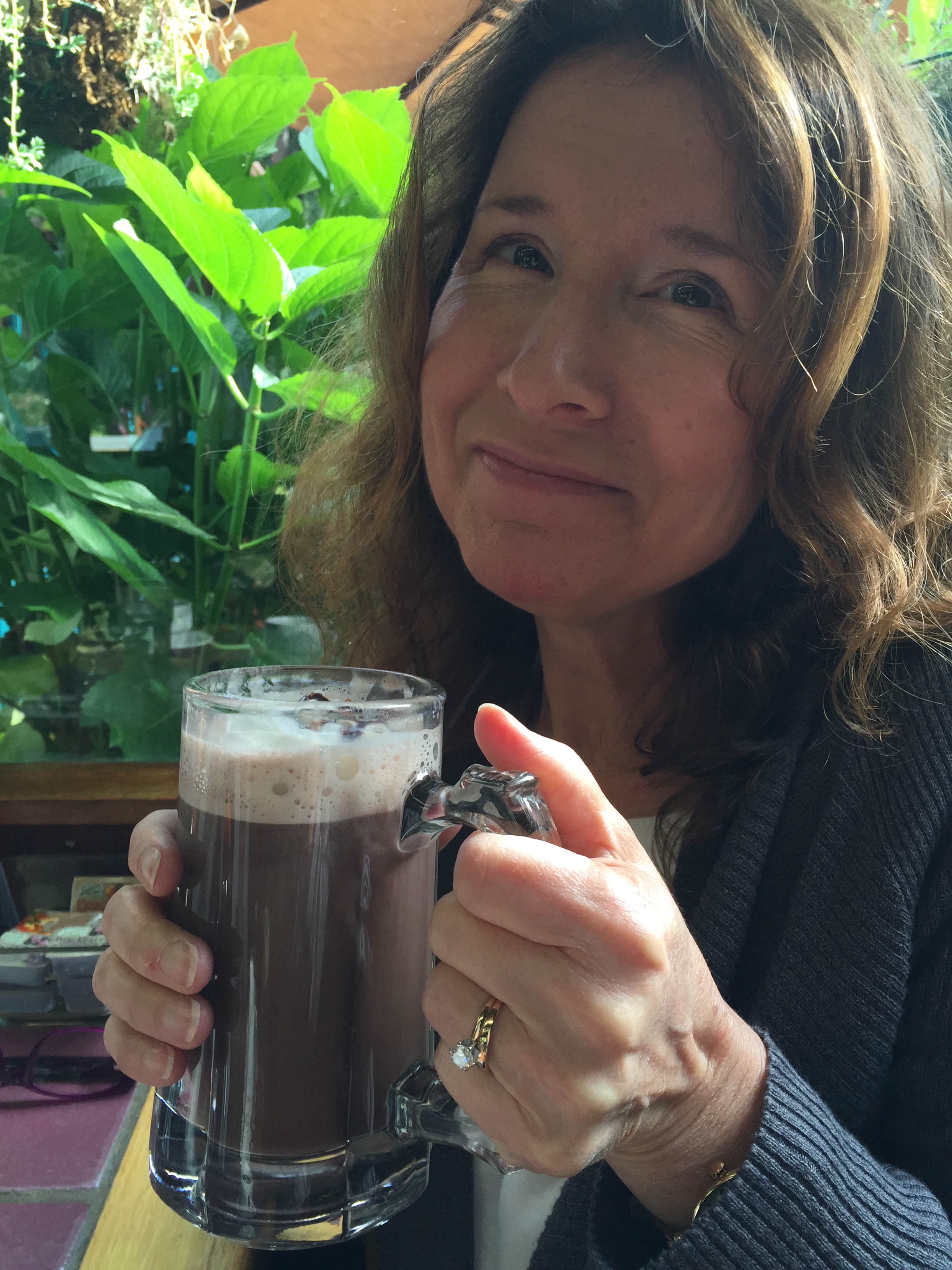
IMG_5234We stopped at a charming little place called Ripplewood in Big Sur for breakfast. Nestled in the forest of redwoods and wildflowers, this combination restaurant/campground/general store was obviously a hit with all the locals and backpackers in the area. Breakfast was amazing, and my mom had “the best hot chocolate of [her] life”.

IMG_5183    IMG_5236   IMG_5198

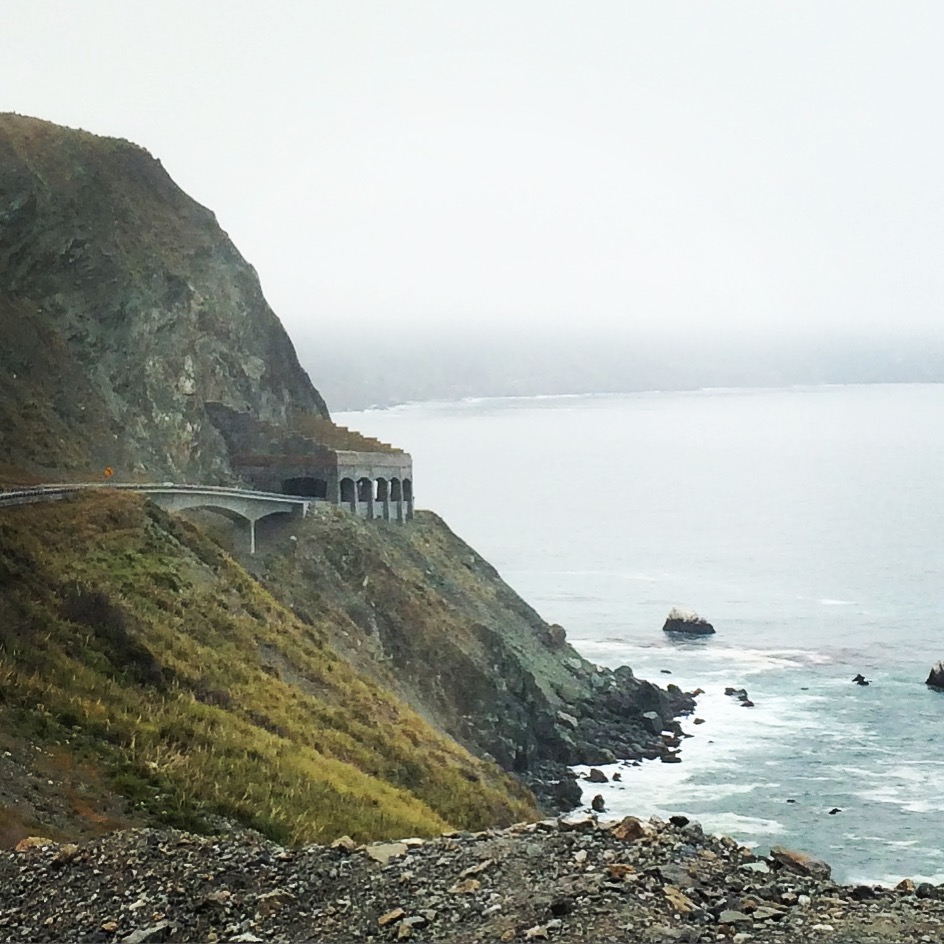
Next, we hopped back on the PCH and soon ascended into fog, catching occasional glimpses of the ocean below – far, far below down the steep cliffside.

IMG_5201

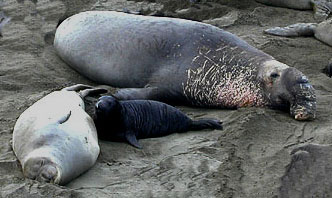
A little while later we came upon an elephant seal vista. Elephant. Seals. I had no idea they were one of my favorite animals before, but now they definitely are. Fun fact: not all these bad boys actually have the proboscis that is their namesake. None of the females do, and it takes several years for the males’ characteristic nose to fully develop. The males grow to be up to 5000 lbs. – more than twice the size of the 1800 lb. females. When the pups are birthed, they weigh a whopping 60-80 lbs., and will gain approximately 275 lbs. over the first 28 days of their lives. Here’s a picture for size comparison:

4266Mature female (left), pup (middle), and mature male (right); from www.marinebio.net

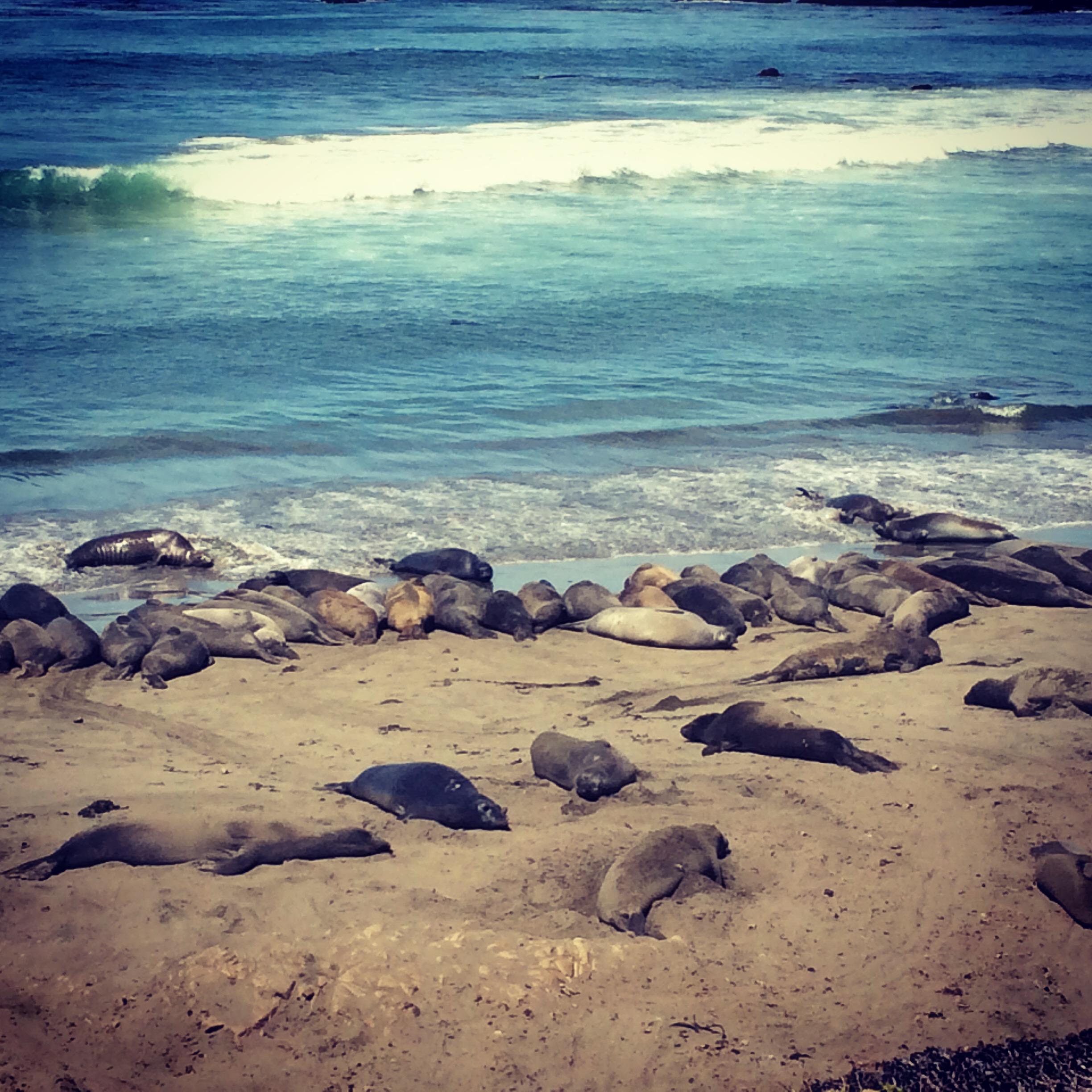
See all those scars on the male? That’s from the intense battling with other males during the mating season (January-February). It being late May when we were at the elephant seal rookery, all the adult males were far away at the Aleutian Islands (Alaska) feeding as part of their annual migration. There were hundreds of females and juvenile males all across the beach:

IMG_5202

You can see how many of the seals have thrown sand onto their backs to act as a natural “sunscreen”. The more raggedy-looking seals are actually molting their outer layer or skin and fur. To conserve energy when they are at sea, the blood-flow to the seals’ extremities, including their skin, is restricted. This keeps them from constantly regenerating new skin and hair like we do. Once a year, when the seals return to the rookery, they shed this outer layer, revealing fresh new shiny skin and hair beneath. Another fun fact: whenever the elephant seals are on land, they don’t eat or drink at all. This is why they’re all lazing around in the sun, conserving energy by warming in the sun and minimizing movements. The only seals really doing much of anything were the juvenile males, who were play-sparring in the surf. From January to February when the seals return to the rookery, the intense fighting and lack of nutrition causes the males to lose hundreds of pounds, ending up emaciated by the time they finally return to the sea.

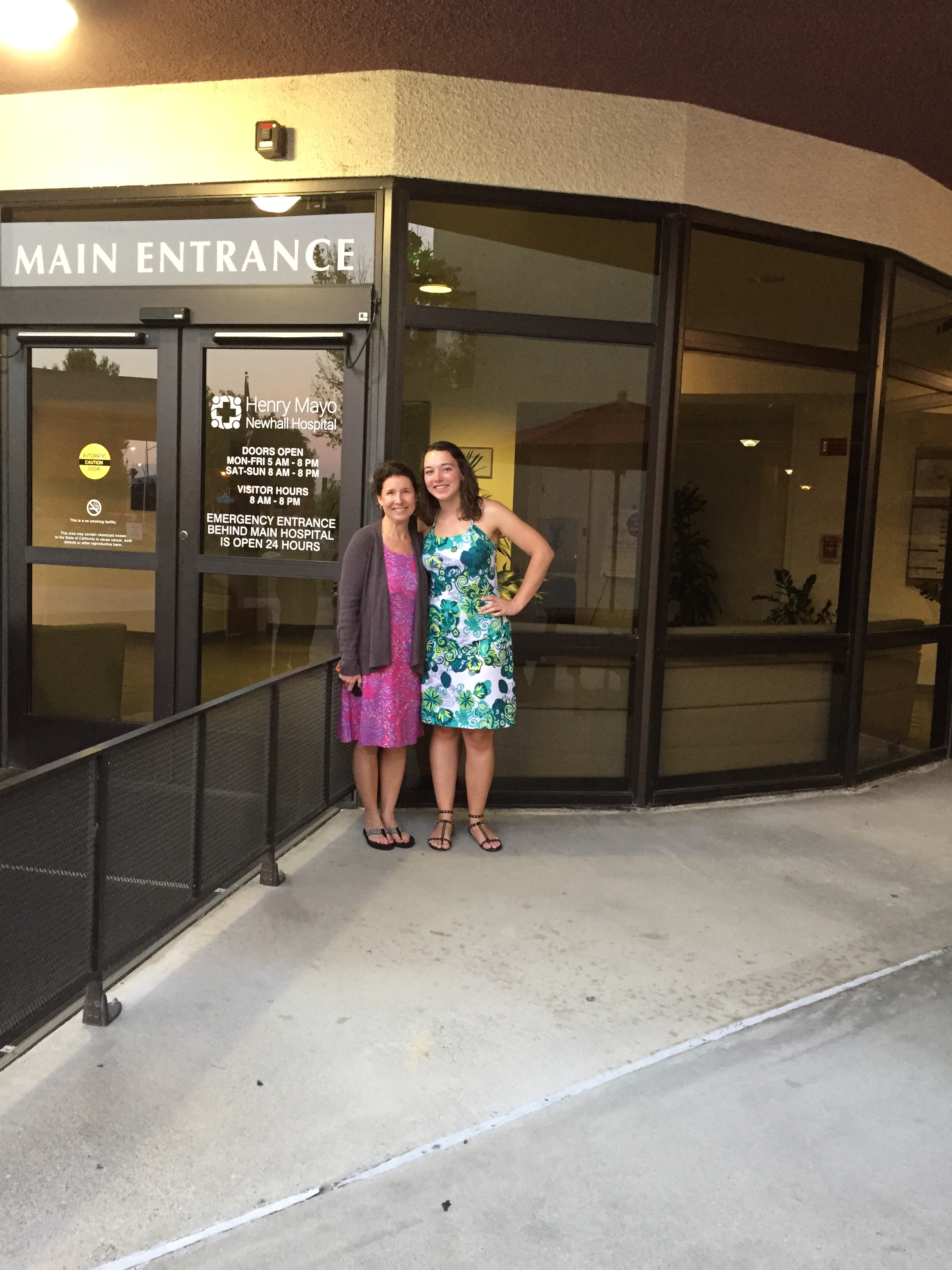
After our elephant seal adventure we hopped back on the highway and crossed into Los Angeles County for the tour a la 1993. I was born in Valencia, in the valley over from LA proper, and this was the first time my mom, Grammie, and I had returned since a few months after I was born. Of course we had to stop by the hospital I was born in:

IMG_5241

Apparently everything around Valencia had changed dramatically in 22 years… And then we ate at the same restaurant, a Marie Callendar’s, which was the first sit-down restaurant my parents had ever taken baby Emily to, and which apparently hadn’t changed a bit in 22 years.

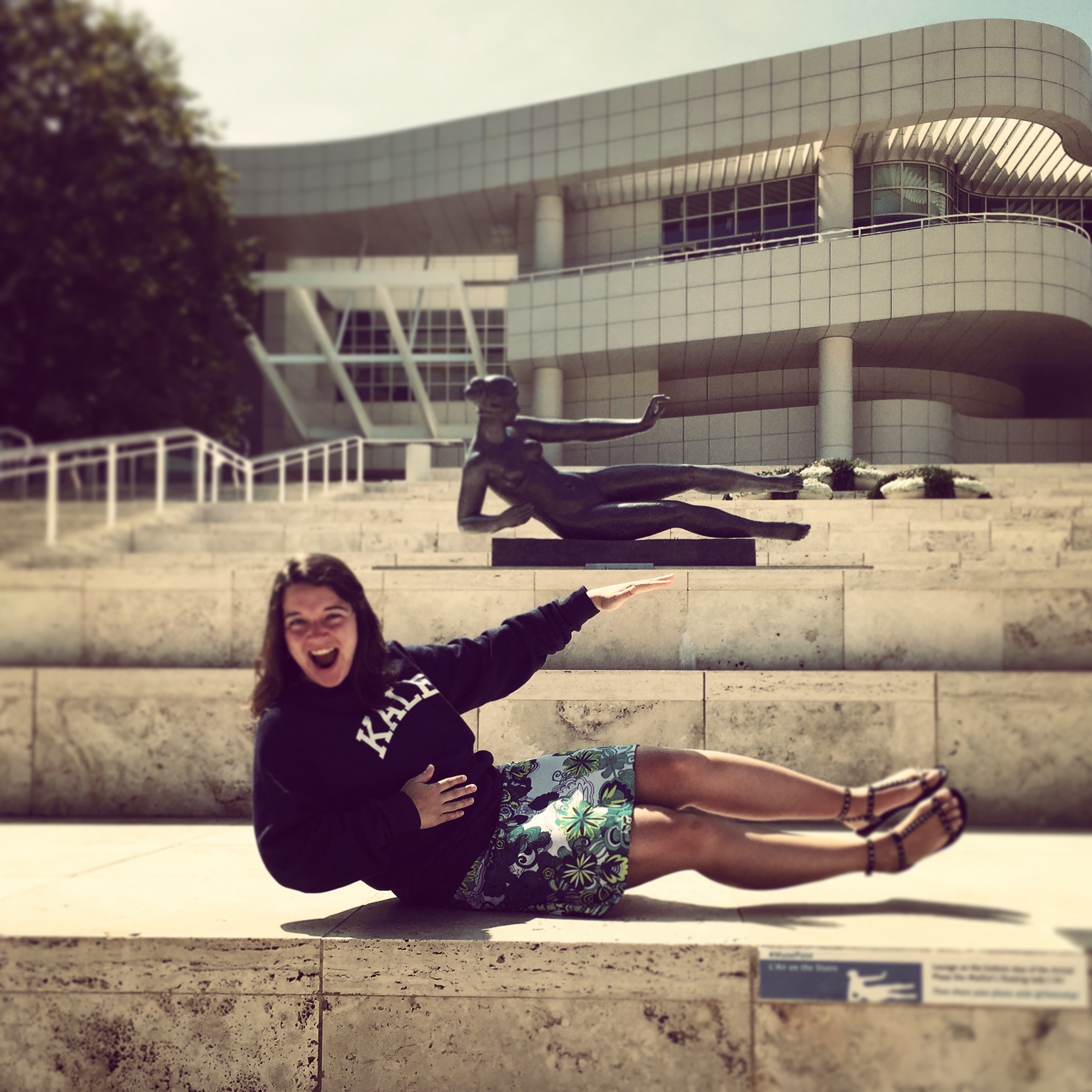
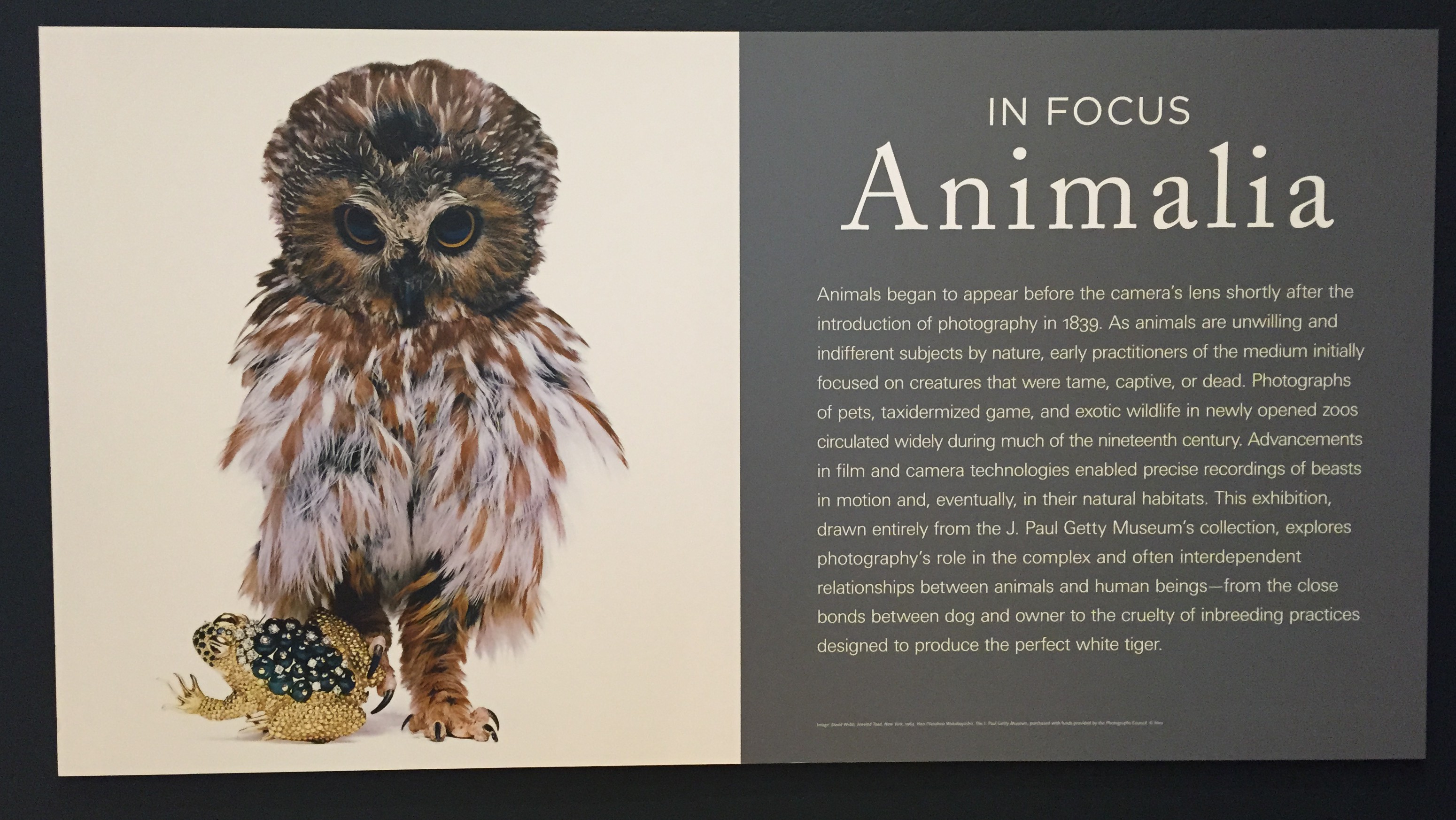
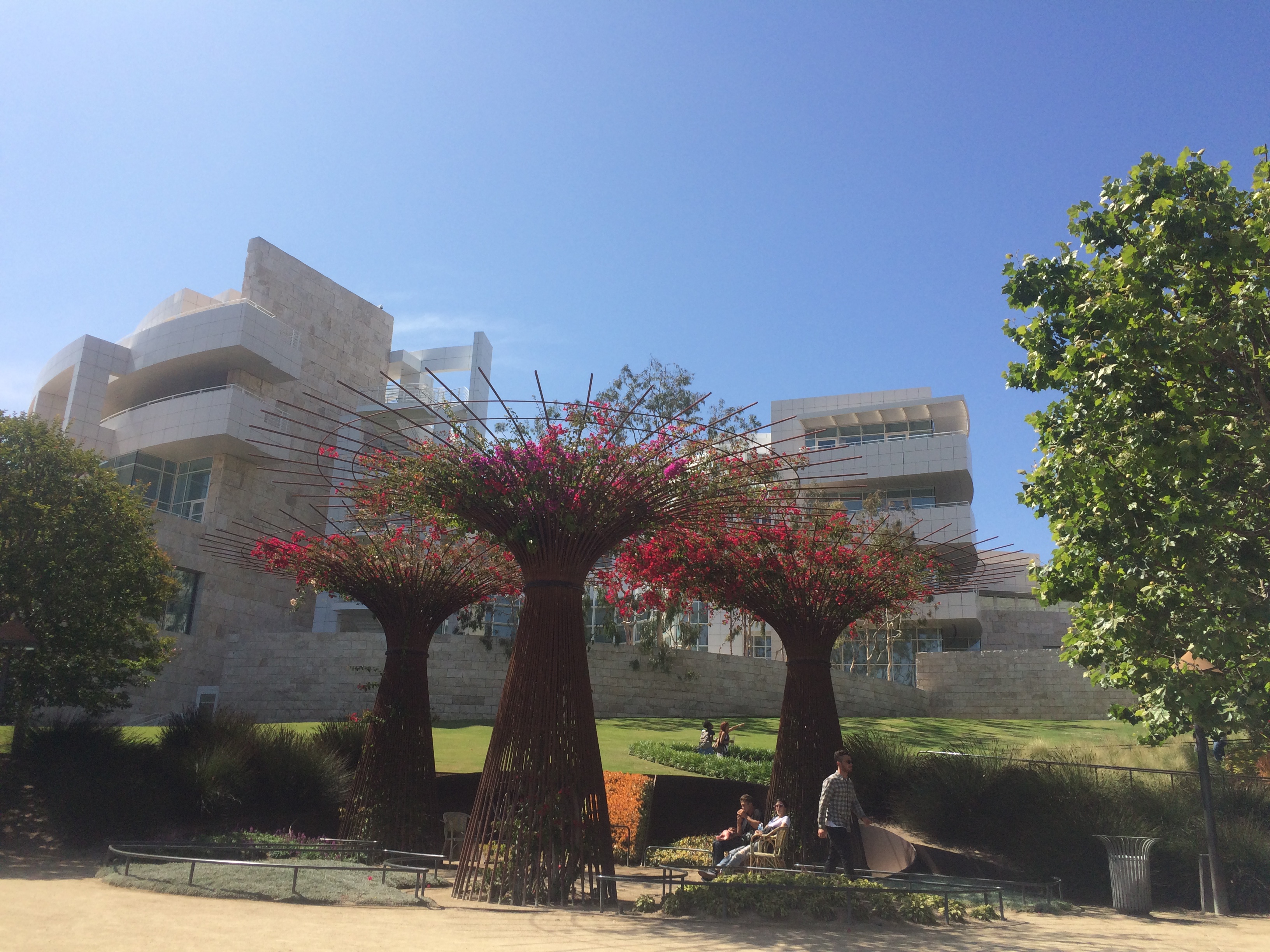
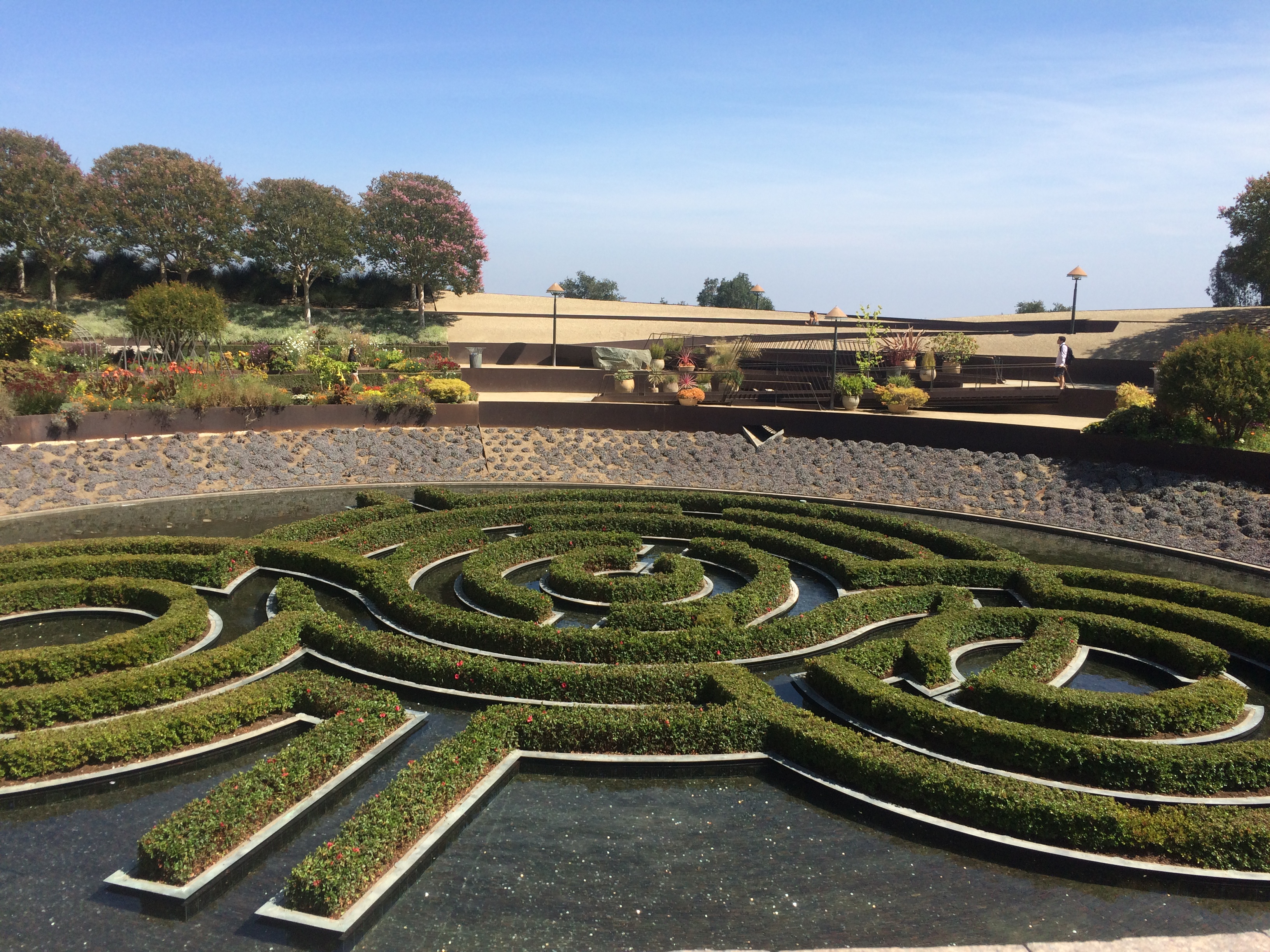
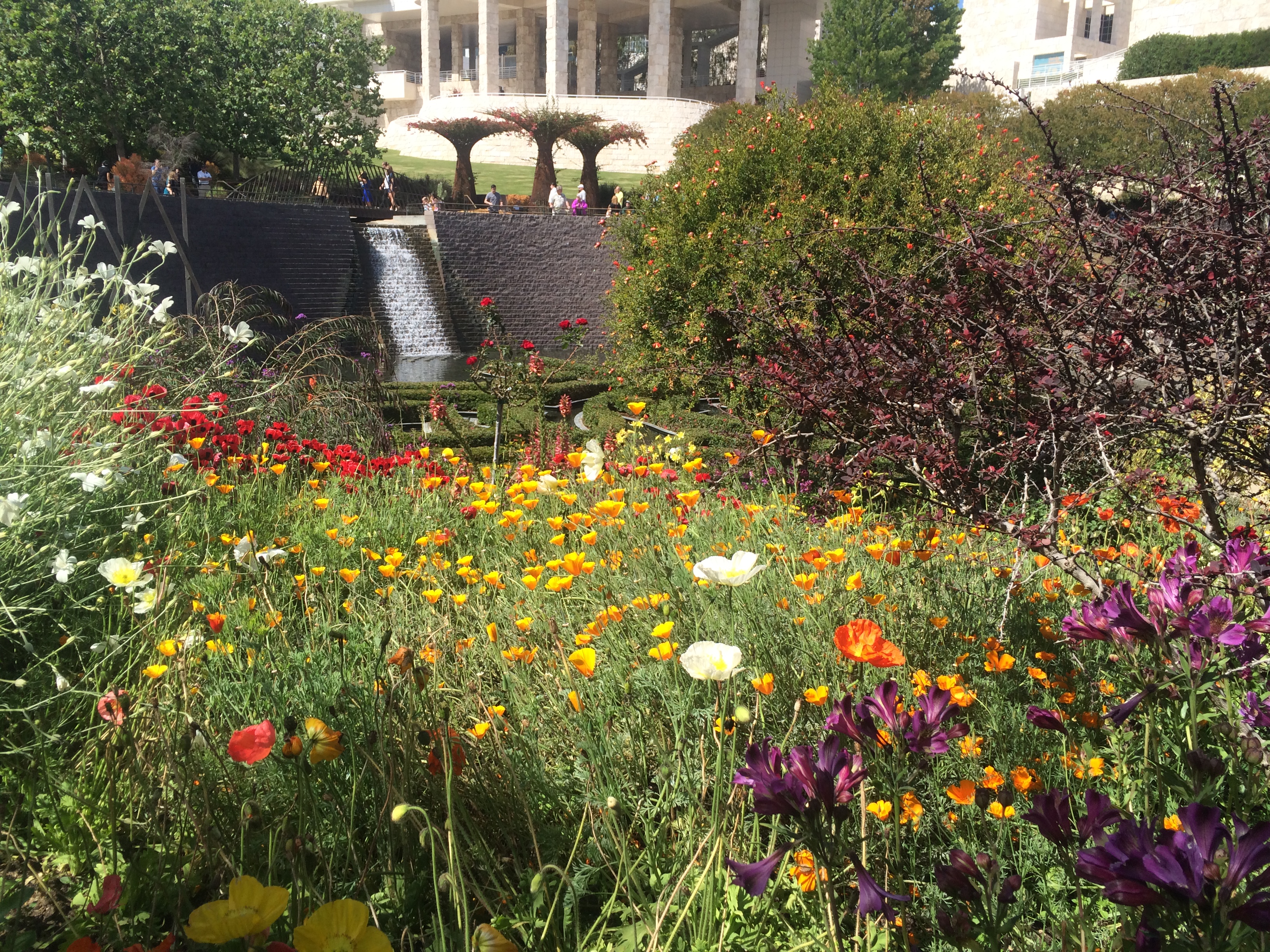
The next day we headed into the city of LA and up above the smog to The Getty Center. The Getty is an amazing center for the arts that includes astounding architecture, beautiful gardens, a massive collection of art, and a major art research library, conservation laboratory, and grant program. And the amazing thing? It’s free to everyone.

IMG_5209What this picture doesn’t capture are my screams of pain as my abs are giving it their all

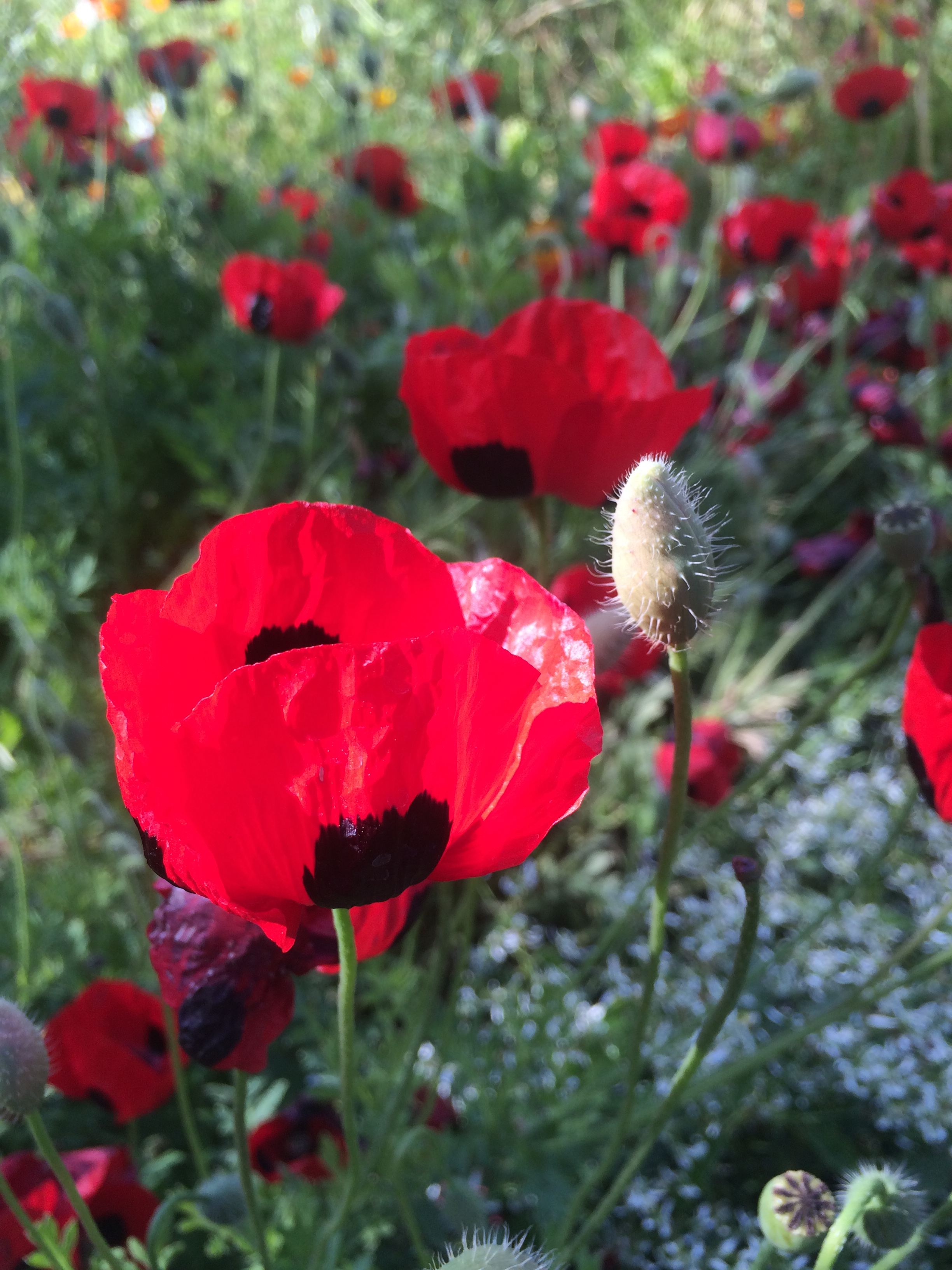
We spent nearly the whole day seeing just a glimpse of the massive collection of Western paintings, photography, gorgeous, flowing flower gardens, and the complex itself.

IMG_5246

IMG_5213

IMG_5212

IMG_5219

IMG_5220

The Getty also has a large collection of French furniture dating back a few hundred years. One of my favorite pieces is a chandelier that some French artisans devised to sell to Louis XIV for Versailles. Apparently anyone who sold anything to Louis at that time got rich, so they decided to make something irresistible – a chandelier that resembled a hot air balloon, which were up-and-coming in popular culture at the time, and Louis loved them. Now, imagine the chandelier below, but with fish swimming in the glass bowl near the bottom – like ladies in the wicker basket of a hot air balloon – that is what the artisans made:

IMG_5243

And did those artisans get rich? Nope. At that point Louis XIV had poured so much money into Versailles that the treasury finally said ENOUGH! Apparently it never sold until the Getty’s purchased it.

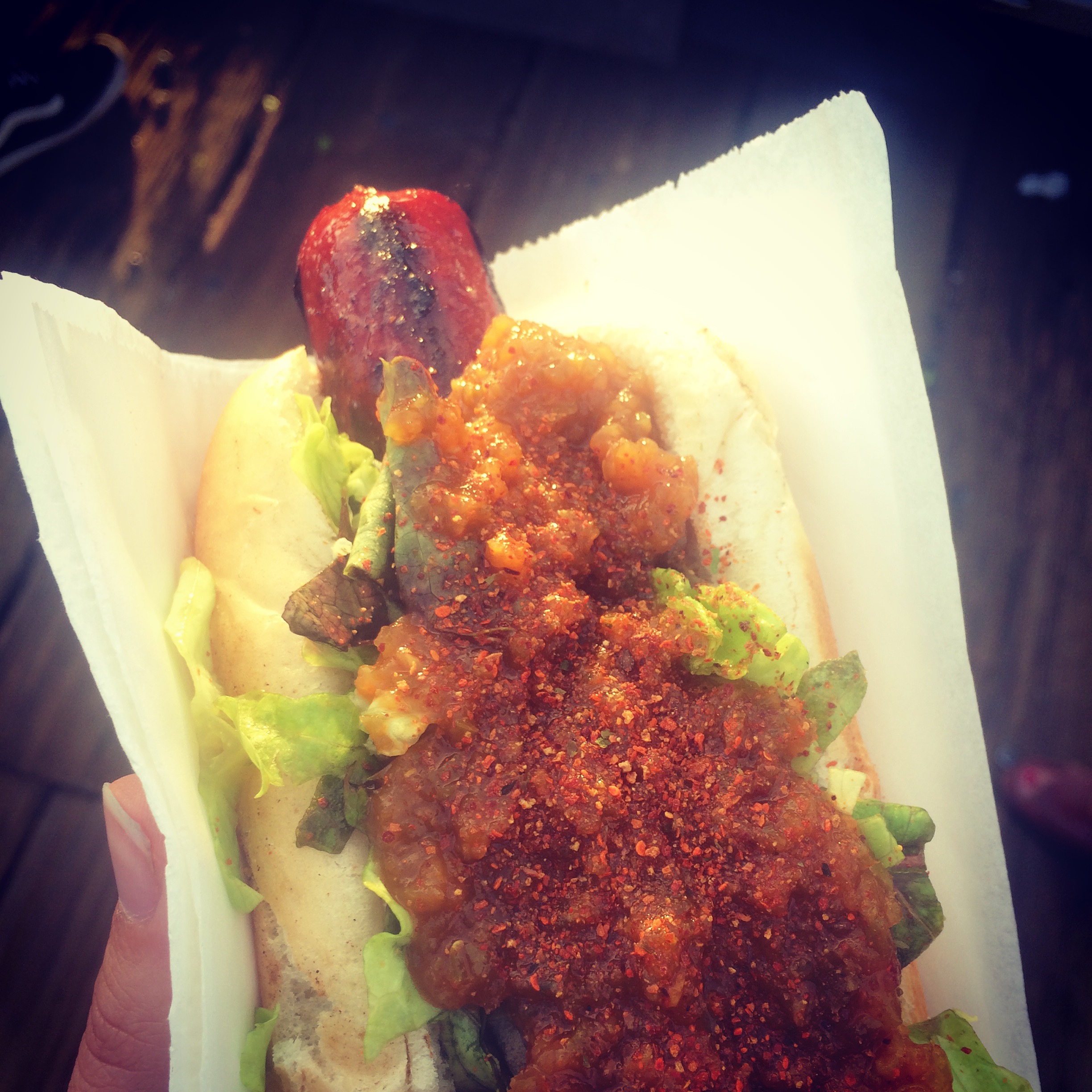
After a long day at The Getty, we headed to the Santa Monica pier. Per recommendation by a local (thanks Donna!!!) we headed to world-famous Japadog (Japanese-style hotdogs) on the pier for dinner. In case you didn’t notice, I love trying unique foods wherever I go, especially street food, and this was no exception. Behold the “Hot Spicy Japadog” in all its peppery glory:

IMG_5223

IMG_5229

Fun fact: The Santa Monica Pier has been a filming location for several movies, including Forest Gump and Sharknado, and is technically the end of Route 66.

IMG_5252

  IMG_5348

IMG_5276

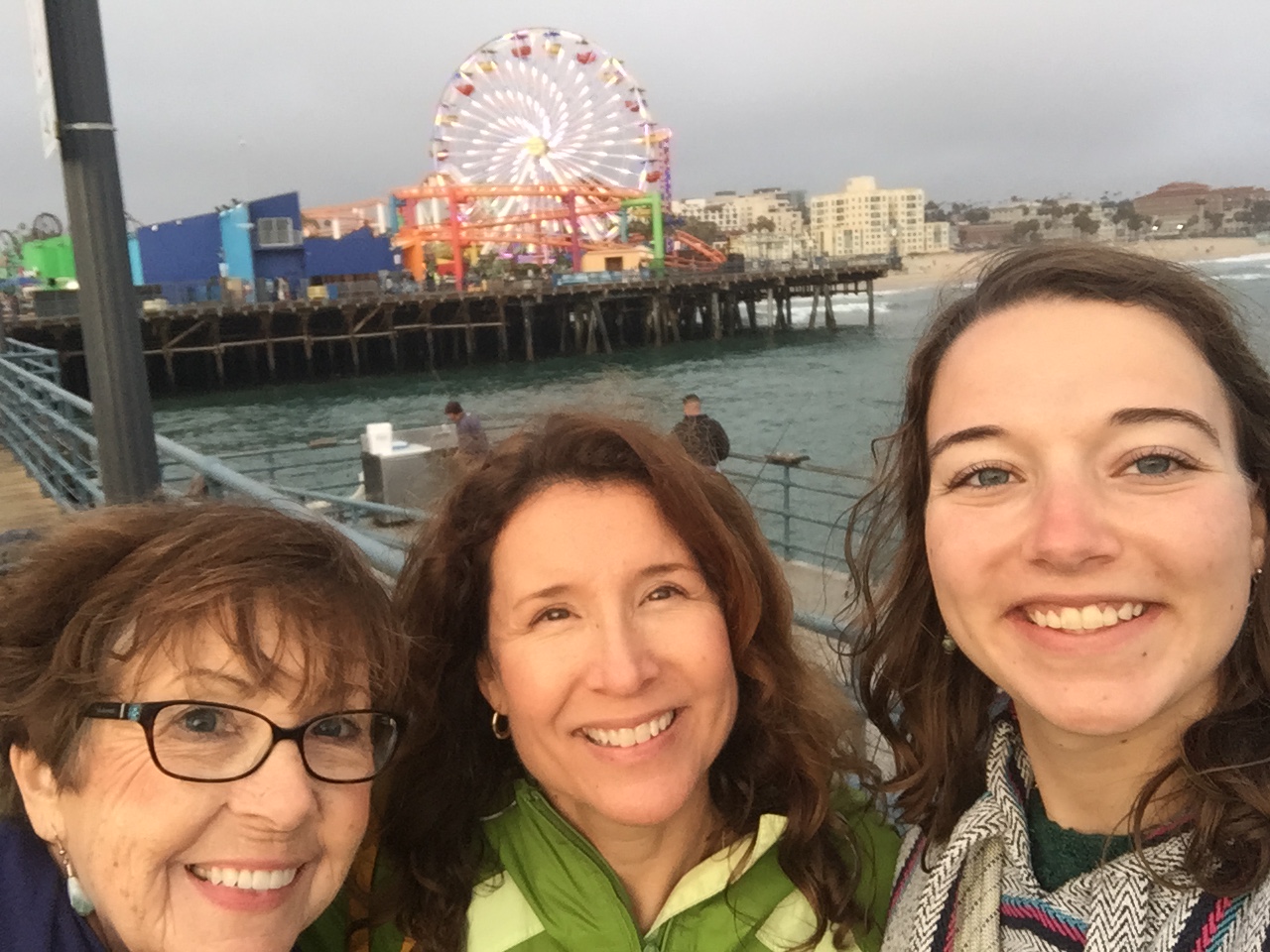
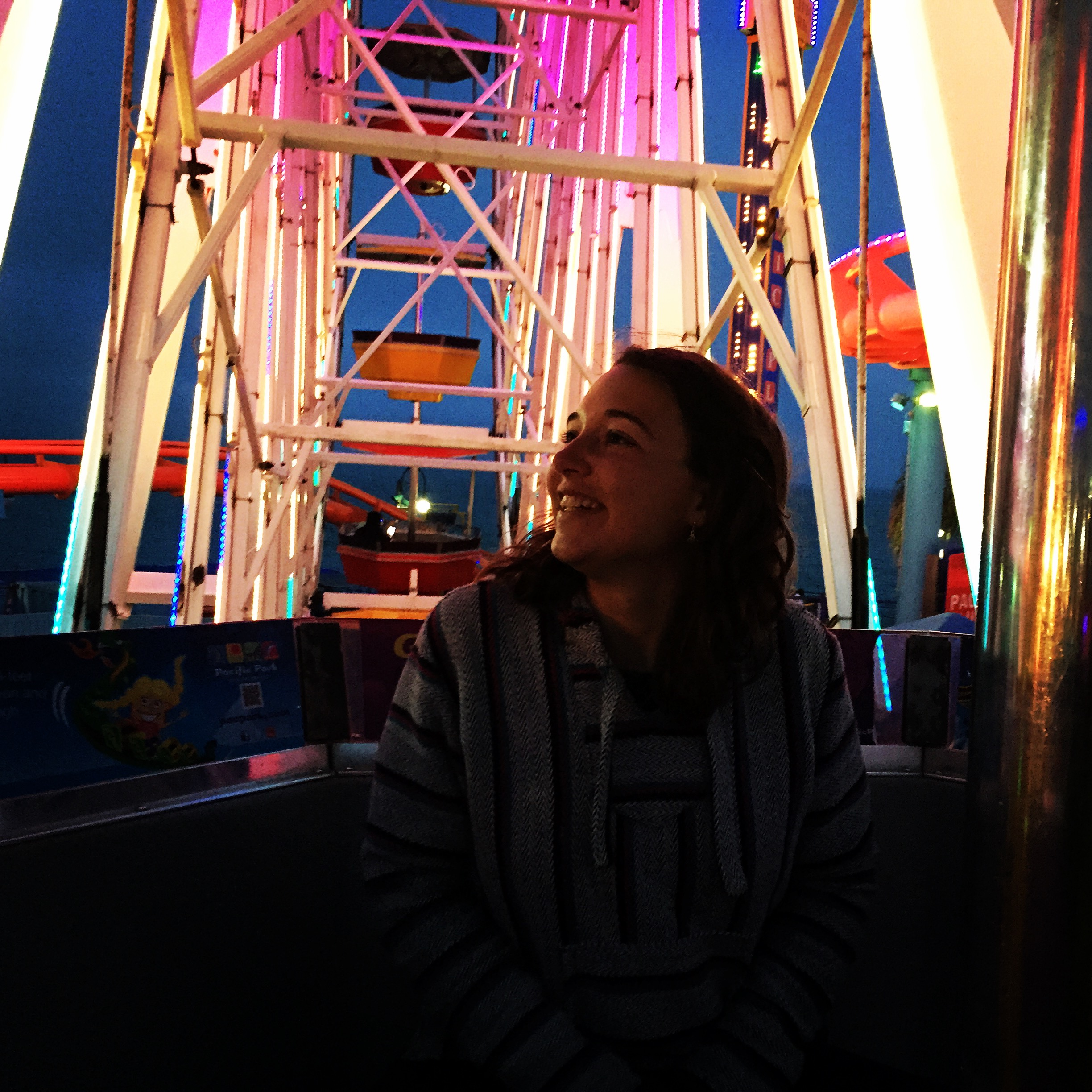
I think those pictures pretty much sum up our night on the pier.

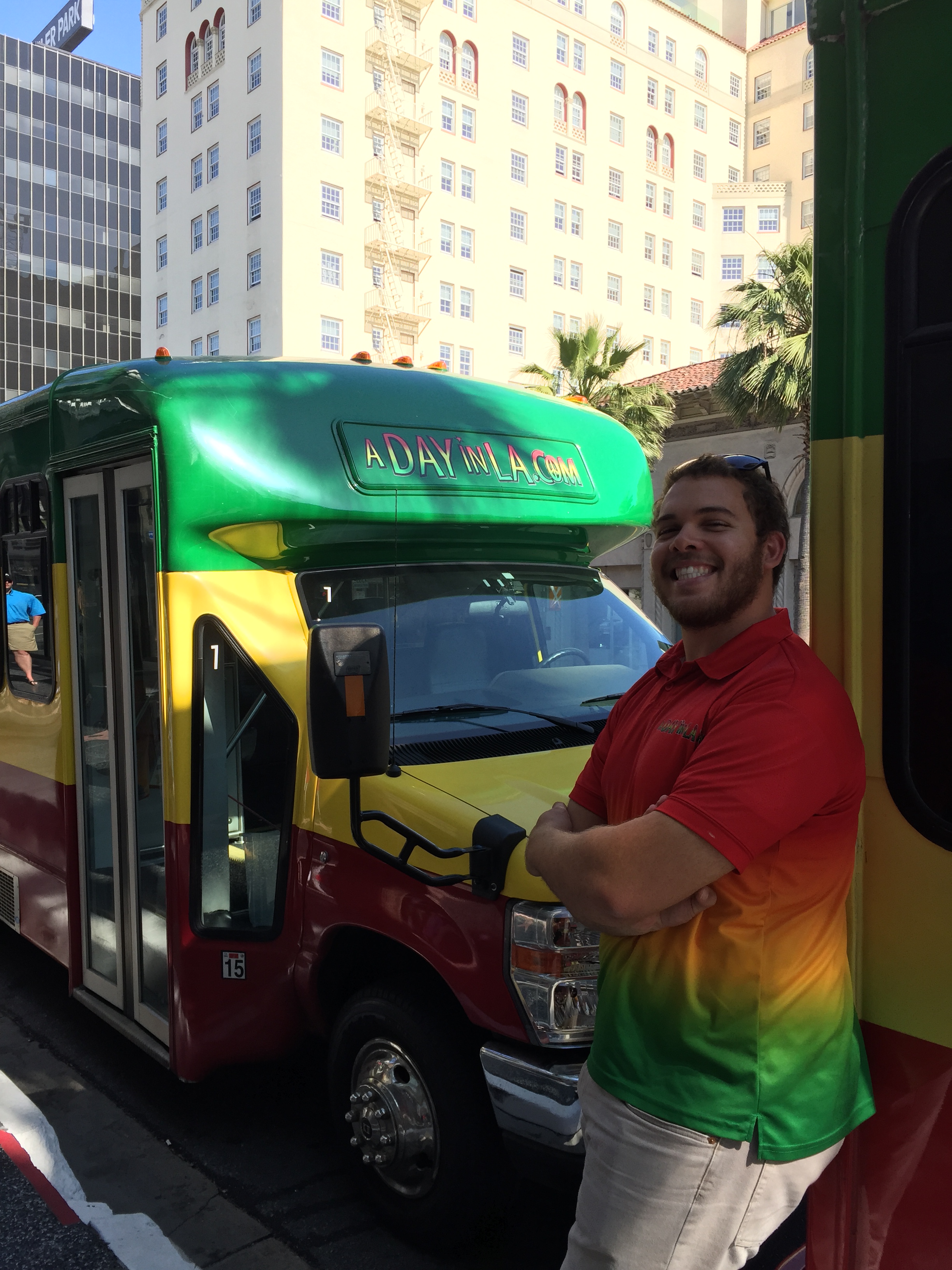
The next day we headed out on a whirlwind totally touristy tour of LA on the RastaBus with tour guide Brett at the wheel.

IMG_5339

We covered every inch of important ground in LA that it’s physically possible to cover in 8 hours. We started at Venice Beach, where we were greeted by these two sights in quick succession:

IMG_5323

Yes, that is a dog wearing a tutu, tiara, and sunglasses, lying on its pillow like the princess it is

IMG_5258

We watched the skateboarders – those 8-year olds are way better than I’ll ever be, browsed the endless stalls of art and touristy goods, watched guys shoot hoops on the same courts that the classic White Men Can’t Jump was filmed on, and saw a couple early risers working out on Muscle Beach (which I honestly thought only existed in the Spongebob universe until now).

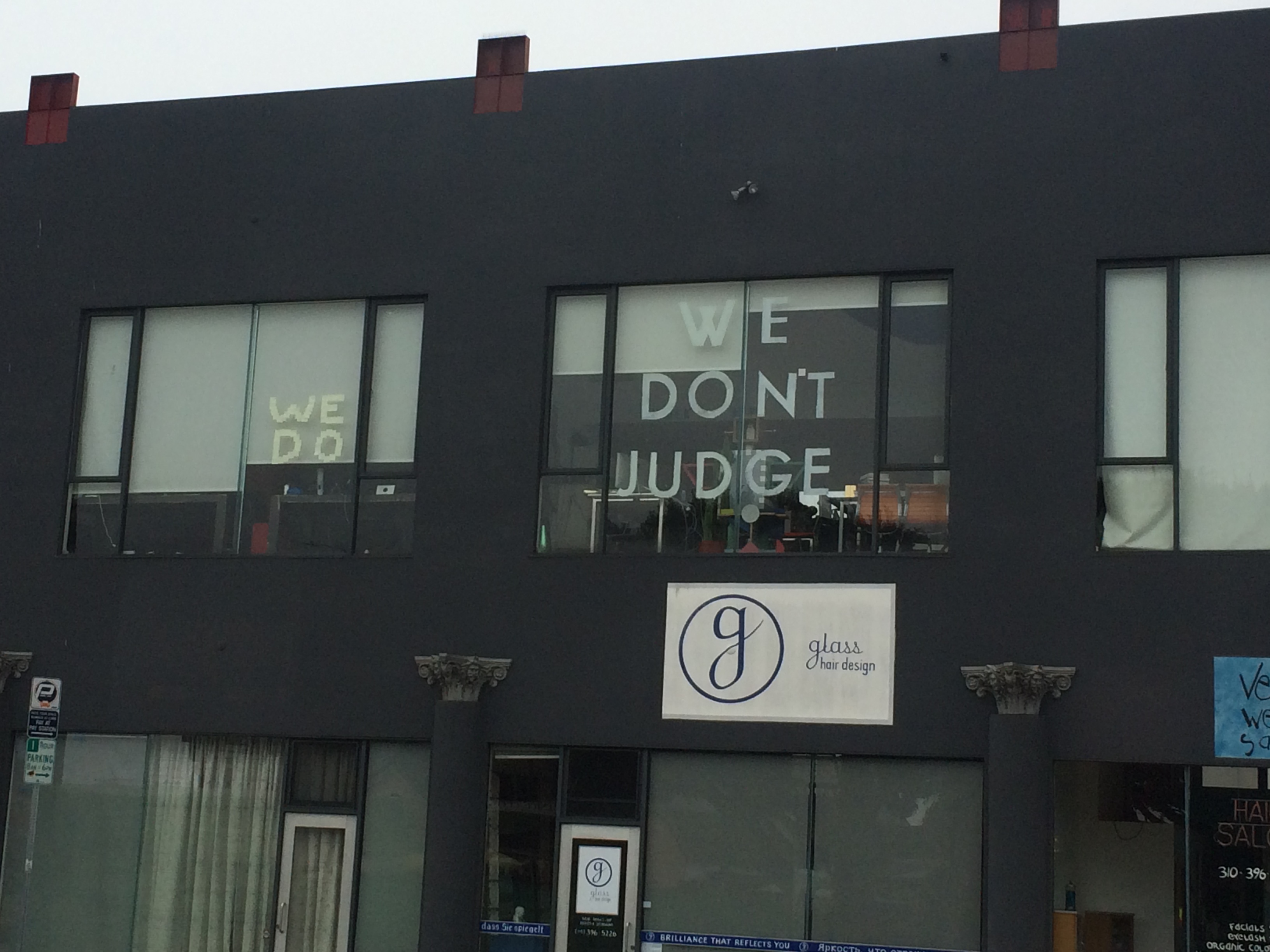
We then cruised through Beverly Hills past 102-million dollar megamansions (nope) and walked around the ridiculously exclusive Rodeo Drive shopping area (super nope). Though I did see an original Salvador Dali sculpture for sale for only $40,000… I guess I’ll have to wait until I’m $40,000 richer. Next we headed to the original LA Farmer’s Market for lunch, which was a crazy chaotic never-stopping flow of people from stall to stall, with an endless supply of every type of food you could think of. Slightly overwhelmed by the amount of options and long lines, I went for the tacos followed by some old-fashioned rainbow sherbert. It was a solid choice. I couldn’t resist capturing this hilarious exchange on these windows as we drove to our next destination:

IMG_5265

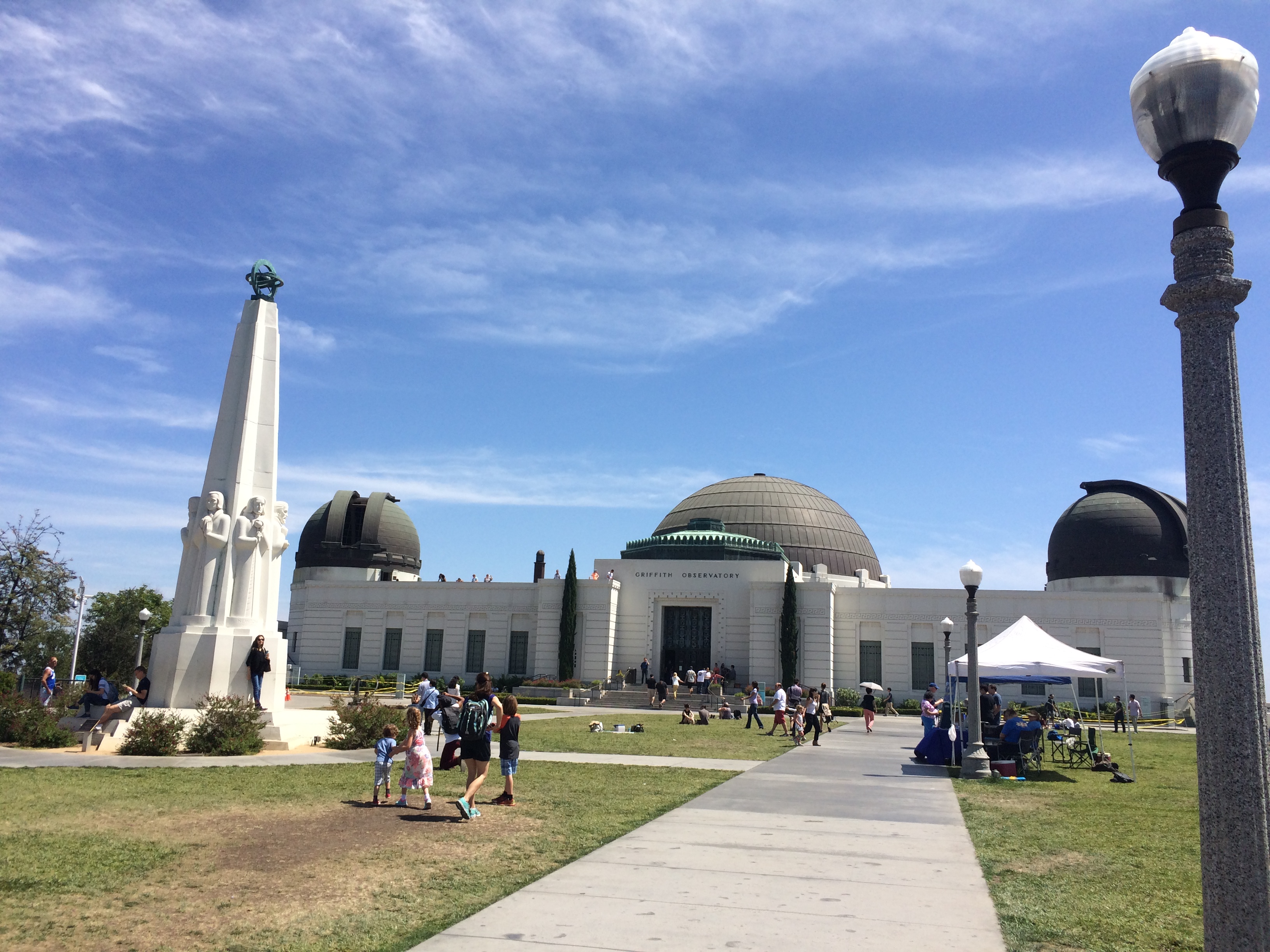
Our next stop was Griffith Observatory, perched on the mountains high above LA. Part observatory, science museum, and trailhead, I geeked out real hard.

IMG_5271

Not one, but TWO telescopes! The one on the right tracks the sun 24/7.

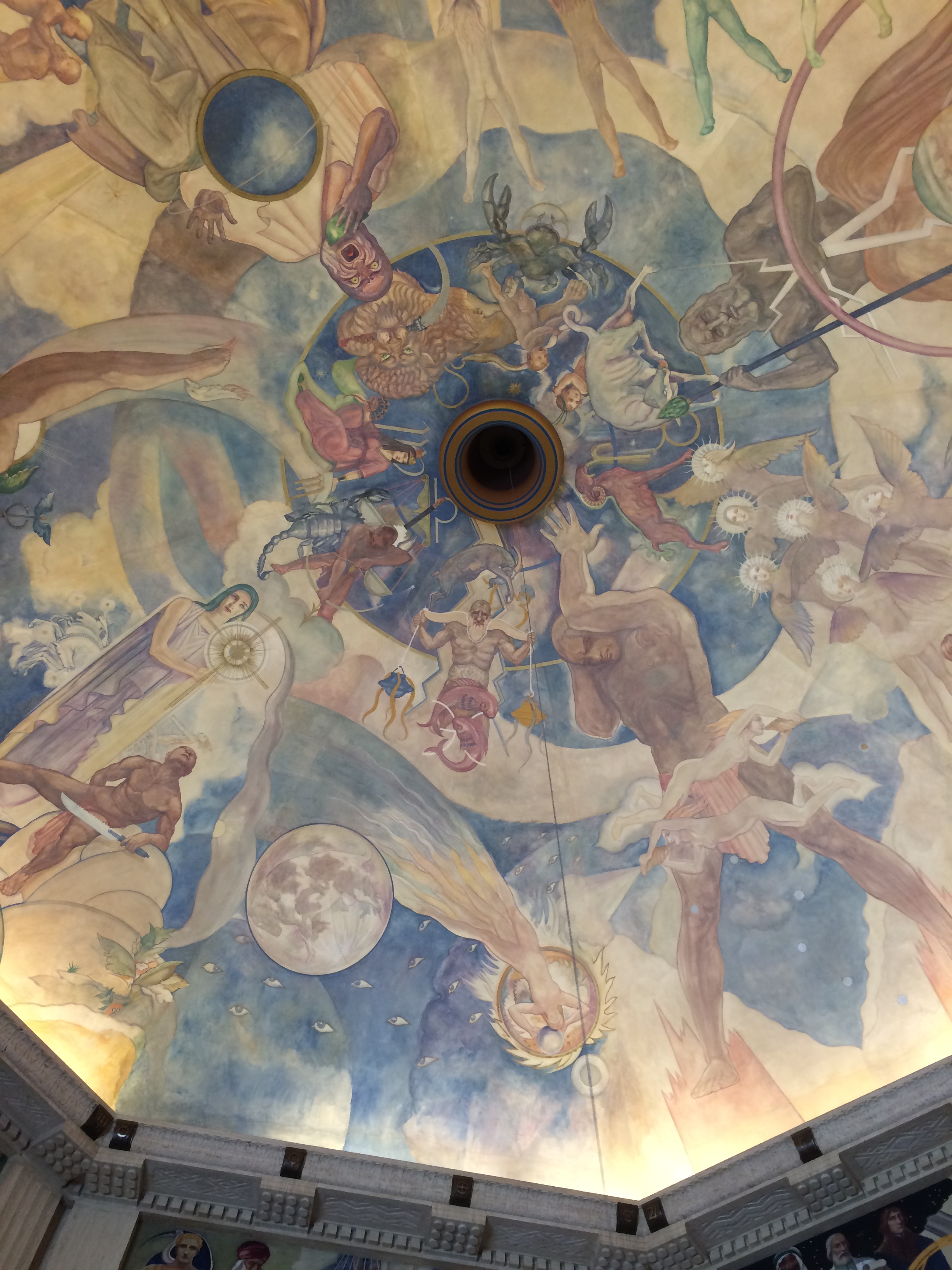
IMG_5272

Mural inside the central dome depicting historical interpretations of astronomical events. The cable hanging down is part of a pendulum that demonstrates the tilt of the earth on its axis.

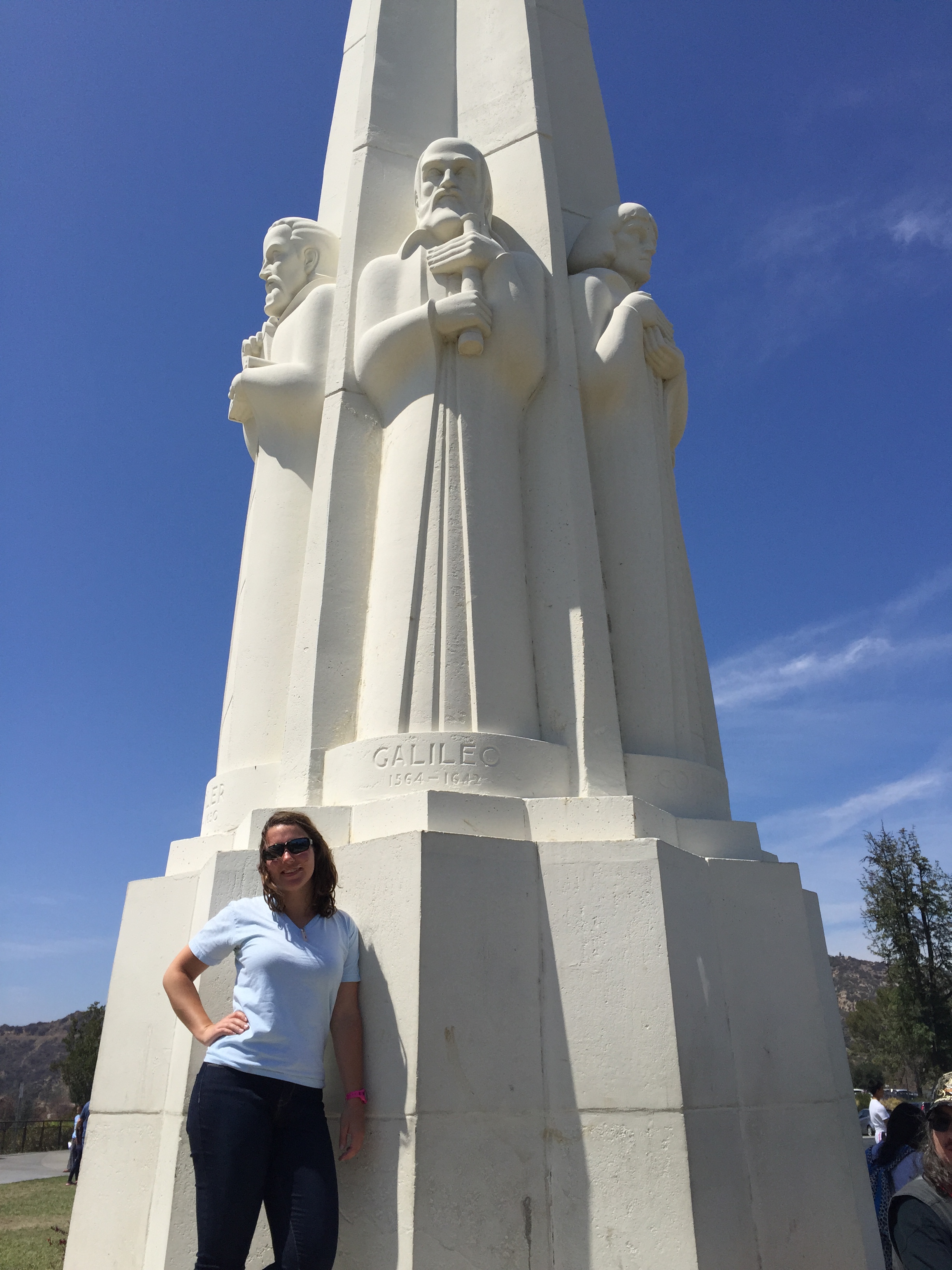
IMG_5330

Oh hey, Galileo, come here often?

IMG_5334I swear the Hollywood sign is in this picture. Right above my head. Really tiny.

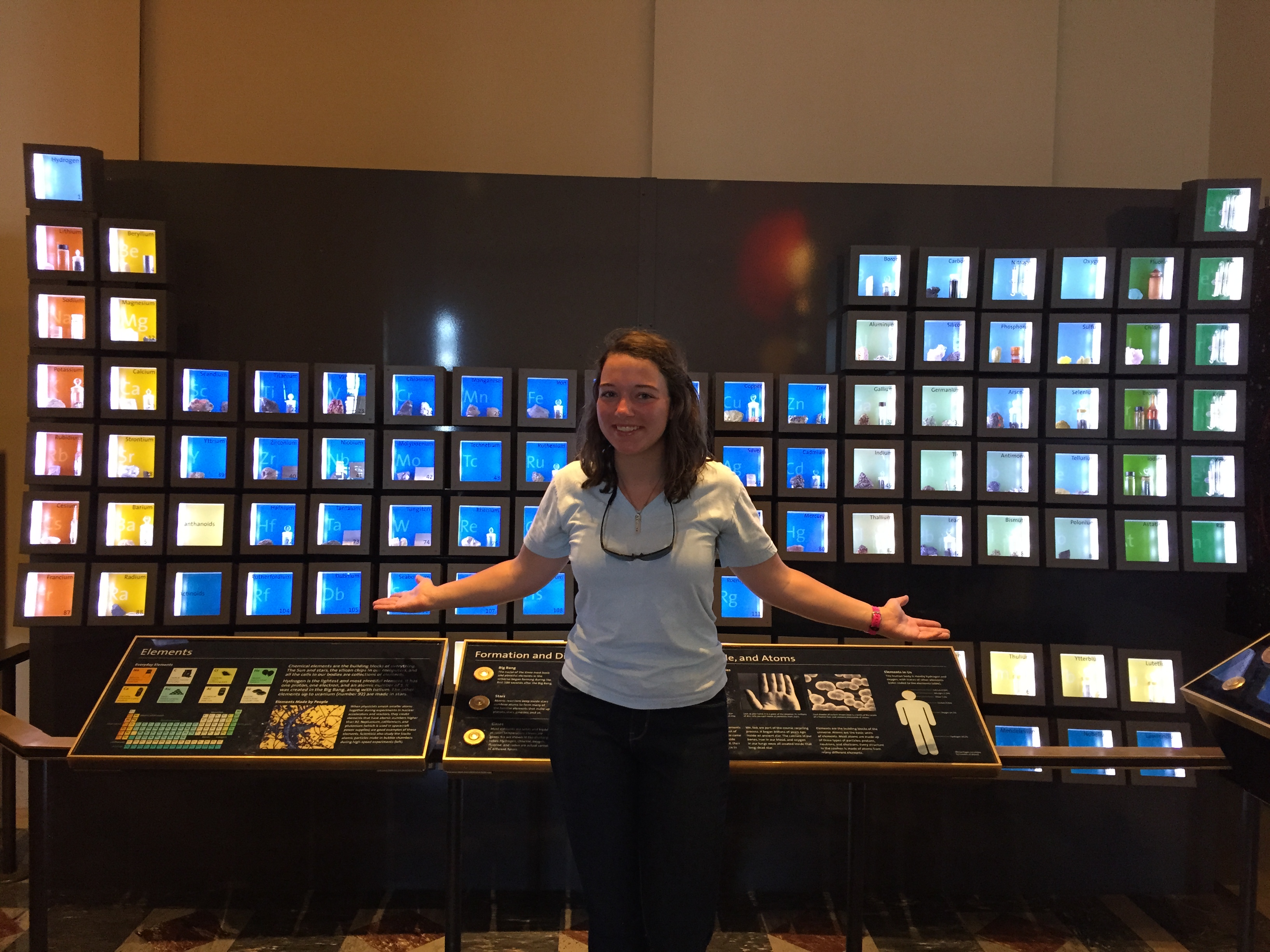
And my favorite part of the day? Well, this of course – I am a chemist after all! In case you can’t tell from the picture, this is an amazing periodic table that contains actual samples of each of the elements within their block (well, the ones that are stable enough). I never thought I’d be able to see most of these in their elemental form!

IMG_5333

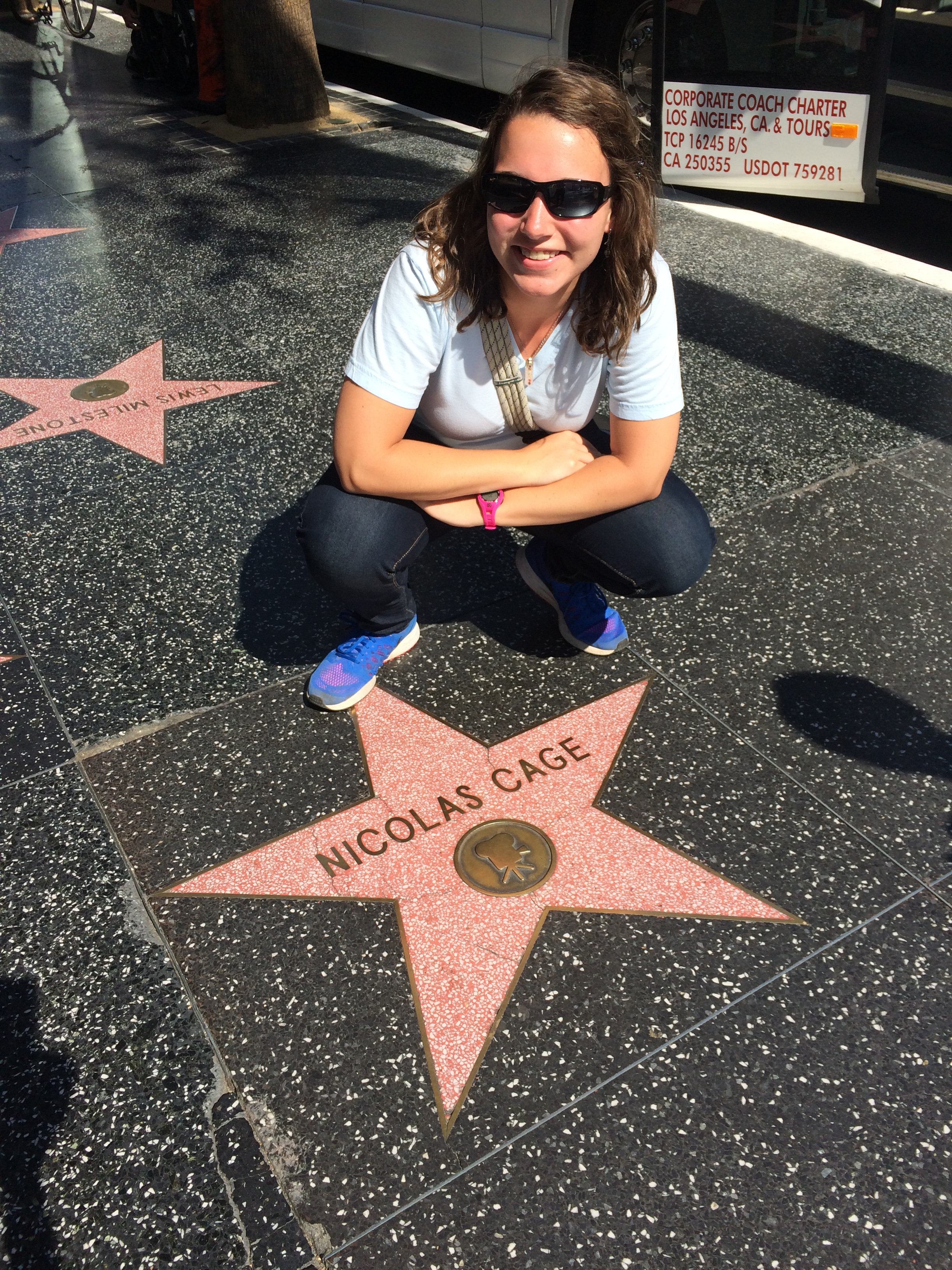
Our tour ended with a stop at none other than the Hollywood strip itself. I had to find the star of my most favorite actor, of course:

IMG_5273A word of warning for the unsuspecting tourist: the Hollywood strip is not a classy place, and is a bit overwhelming, but an awesome place to just sit back and watch the crazy crowd go by.

We finished up our last night in LA on the Third Street Promenade in Santa Monica, enjoying some gnocchi, and taking in the whirlwind of a trip we had just done. The next morning was a tearful goodbye with my Mom and Grammie as they headed back to North Carolina. I still can’t believe my parents lived in such a big crazy city like LA, but everything truly has come full circle! I headed out to Catalina Island yesterday morning, and I’ll be posting about my new adventures soon!

Strawberries and sharks – Goodbye to San Francisco, hello to Monterey Bay!

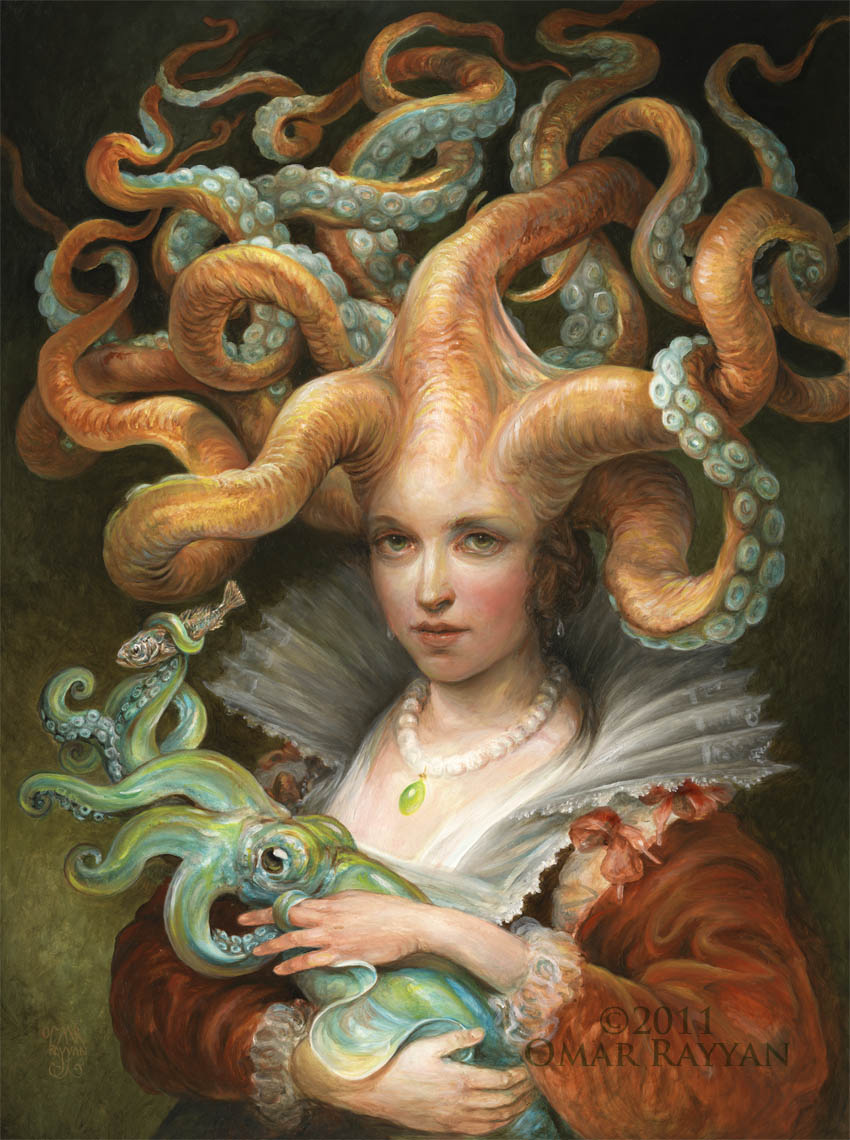
contessawithsquidLife goals: Have a pet squid. Perfect the smoulder. Have a hairdo every cephalopod would be jealous of.

“Contessa with Squid” by Omar Rayyan (2011), part of the “Tentacles” exhibit at the Monterey Bay Aquarium

 Today I said goodbye to the city of San Francisco, which I fell in love with surprisingly quickly. I have a feeling I’ll certainly be back soon to explore more! We drove out from the hustle and bustle of the city out through Silicon valley. The burnt golden-yellow hillsides, spotted with an infinite number of scrubby textures, rolled with fog and provided a tantalizing landscape as we cruised south. It was a bit of a shock seeing such wide-open sunlight-dappled golden hillsides after endless limestone and siding in the city, but I loved the lack of billboards or tall signs along the highway. For the first time in my life, we drove 30 minutes down an American freeway without seeing any golden arches, and it was blissful.

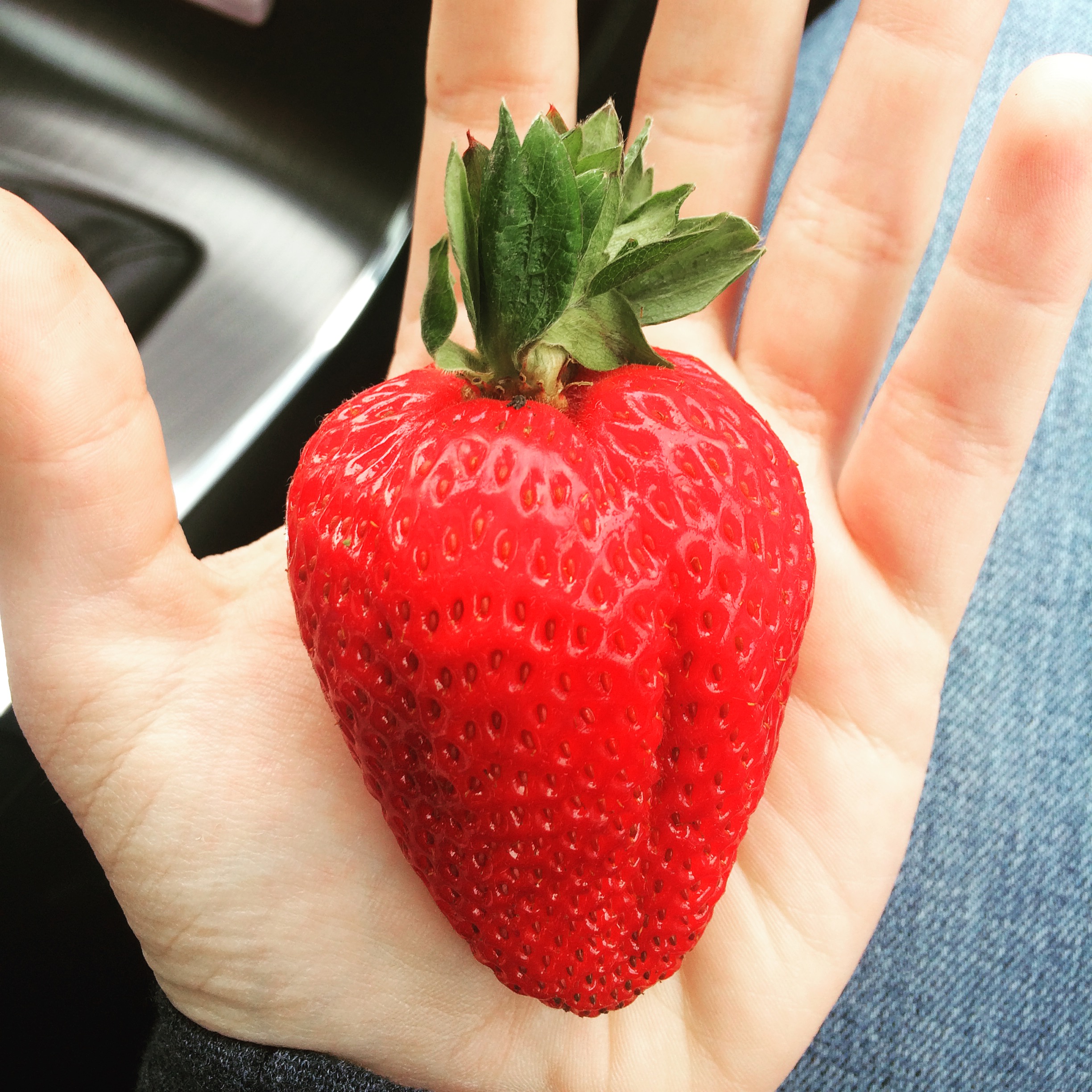
As we approached Gilroy, my mother reminisced about stopping for fresh strawberries at stands along the highway 22 years earlier. We were just cruising along when OH MY GOSH THERE’S STRAWBERRIES RIGHT THERE AHHHHWENEEDTOTURNNOW and the tires squealed and the gravel flew and my typically cautiously driving mother practically drifted that poor rental car into the fruit stand parking lot. Luckily us risking life, limb, and the car insurance deductible was worth it, because these were hands down the best strawberries I have ever had. And I am a complete strawberry nut. Not only were they beautiful and nearly as big as my hand, they were oh so sweet, juicy, and delicious.

IMG_5125

There are a few more in the fridge… We’ll see if they make it through the night…

  IMG_5123

…But you never really can have enough strawberries, can you?

 Pumped with endorphins from our strawberry adventure, we headed onward to Cannery Row and the Monterey Bay Aquarium. Located on the site of what was historically a sardine cannery, this beautiful facility pumps seawater directly out of the bay into the aquarium exhibits themselves, ensuring the floral and fauna experience conditions as close to that of their natural environments as possible. Though this makes life better for the menagerie of life at the aquarium, this system comes with unique challenges. During the day the incoming seawater is filtered to remove particles that cloud the water, allowing museum visitors a clear view. At night, the incoming water is not filtered, allowing the naturally occurring particulate matter to cycle through the tanks, providing necessary nutrients but also introducing some surprises, such as larvae from unwanted species. The output of the seawater back into the bay is also another challenge. Strict regulations (as they should be!) dictate what chemicals, larvae, waste, etc. can be pumped back into the bay, and vary greatly from one species and exhibit to another. I’m glad it’s not my job, but someone at the MBA is probably frantically hurrying around from habitat to habitat, checking that the proper filters are in place and that certain species aren’t mating and that others aren’t exposed to certain antibiotics and a million other seemingly minor but incredibly crucial regulations are followed to ensure the health of the Monterey Bay for generations to come.

IMG_5128

Another wonderfully planned feature of the MBA is its location in the heart of the bay, and a quick step outside onto the outdoor deck provides an arsenal of binoculars and knowledgeable staff and volunteers happy to answer any and all questions and to identify any wildlife you see in the bay. In about 5 minutes on the observation deck overlooking the kelp forests in the bay I saw sea otters, sea lions, a bounty of flora and crustaceans, and more seabirds than I could count. You can watch a live webcam of wild California sea otters here if you’re interested – in my opinion they’re much cuter than kittens.

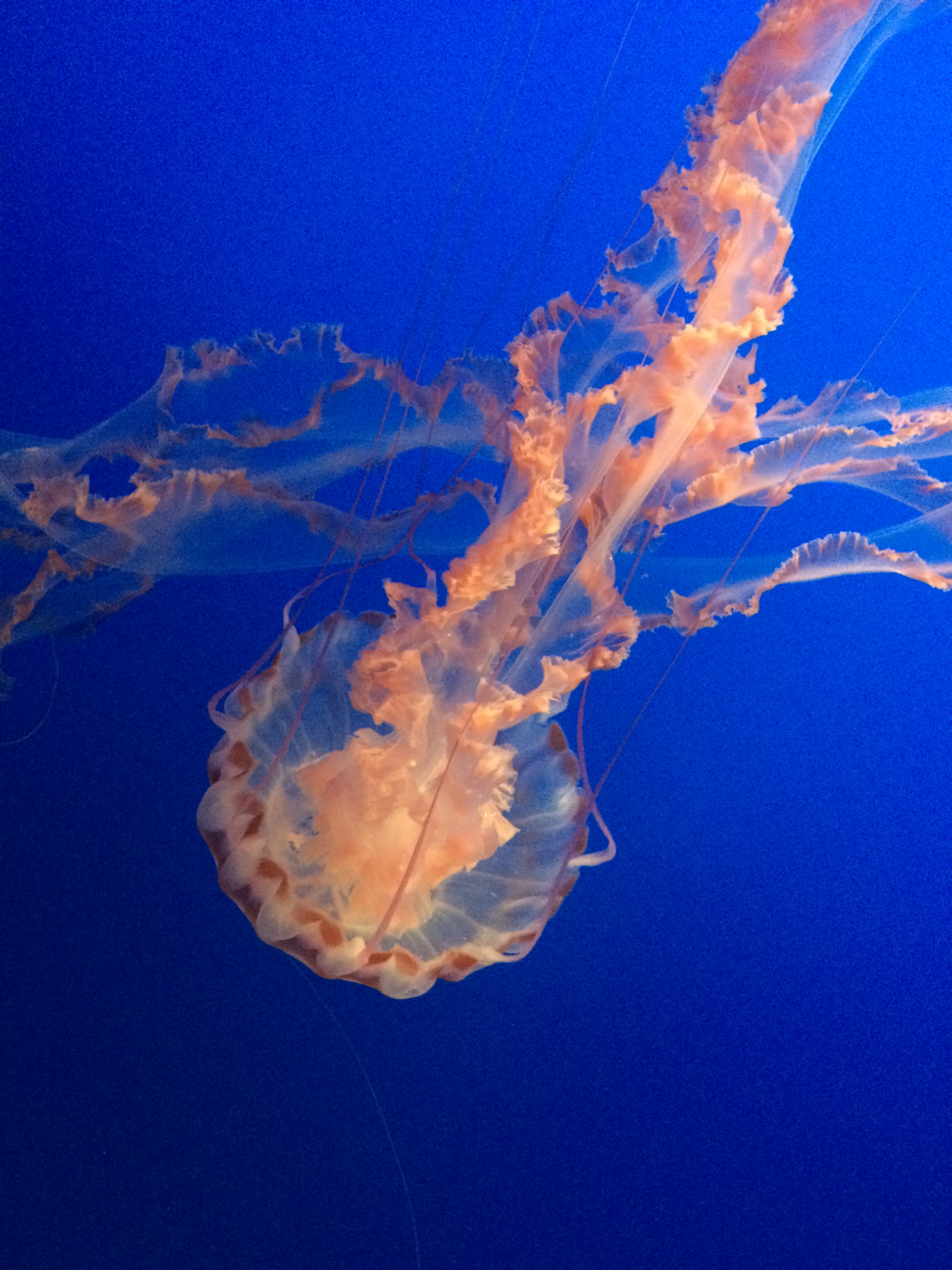
I could rattle off a million fun sea-creature facts I learned today, but I’ll try to keep this short and sweet and stick to my favorites. The absolute most mind-blowing thing I saw today at the MBA was a skate egg case that aquarists had placed a window in, allowing aquarium visitors to watch the skate embryo grow over the nearly one-year period it spends developing in the egg case. MBA took a much better picture of this amazing skate than I could, click here to see it for yourself! How amazing is that?! Another favorite of mine was the Hawaiian Bob Cuttlefish; here’s a juvenile less than an inch in length.

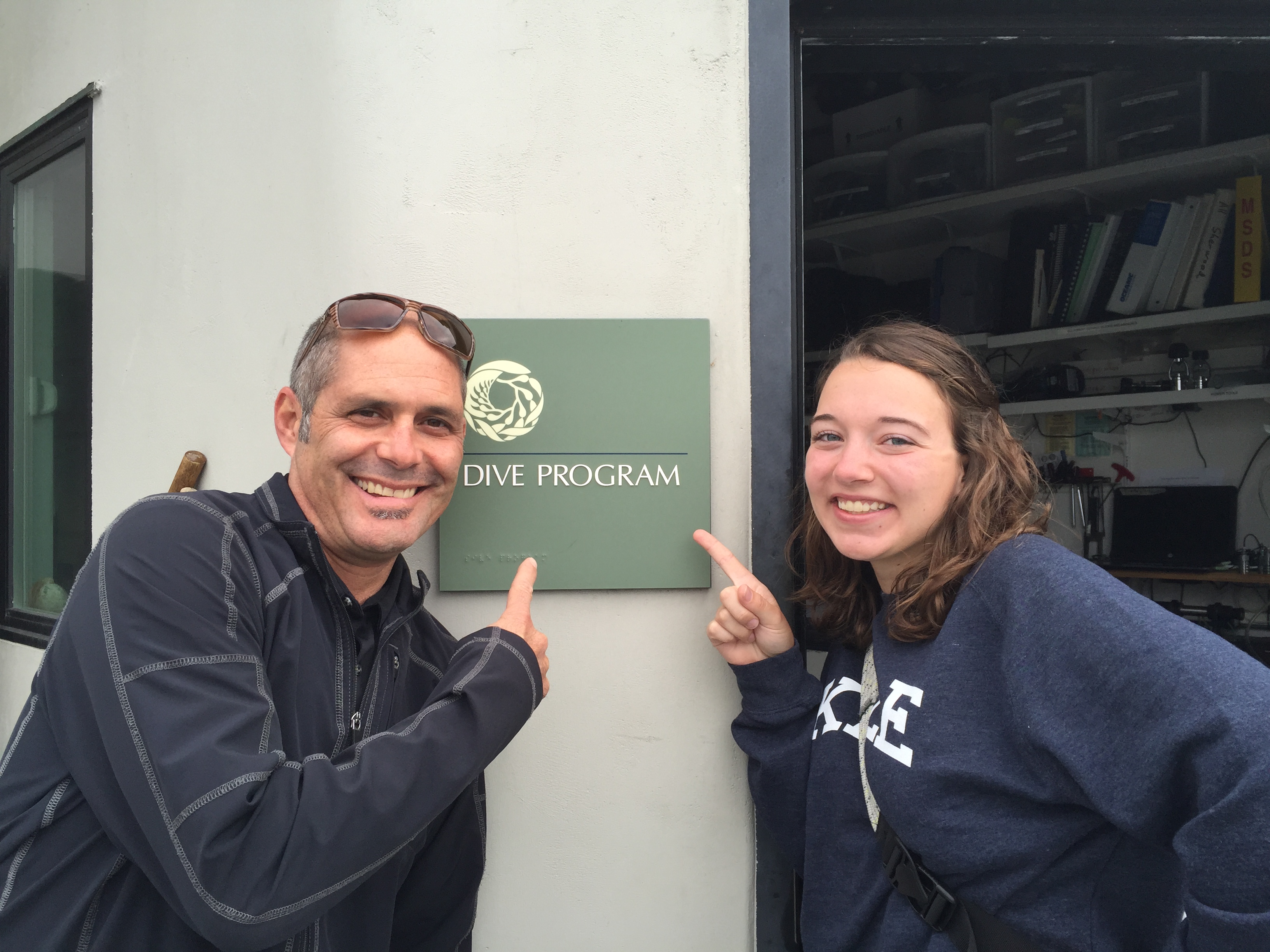
We also had the pleasure of meeting with the very personable George Peterson, the Director of Dive Programs at the Monterey Bay Aquarium. He took us behind-the-scenes of the large 28-ft deep kelp forest exhibit, where we got to watch the diving volunteers and staff put on an underwater program. This program utilized full-face masks (for those of you unfamiliar with dive equipment, these create a seal around the entirety of the face, which is filled with air from a typical scuba regulator, allowing for better field of vision for the diver, better eye contact with others, and, most importantly, a means to communicate clearly underwater via a network of radios and microphones with other divers, the safety crew, aquarium staff, and visitors looking into the exhibit from “the dry side”.

IMG_5167

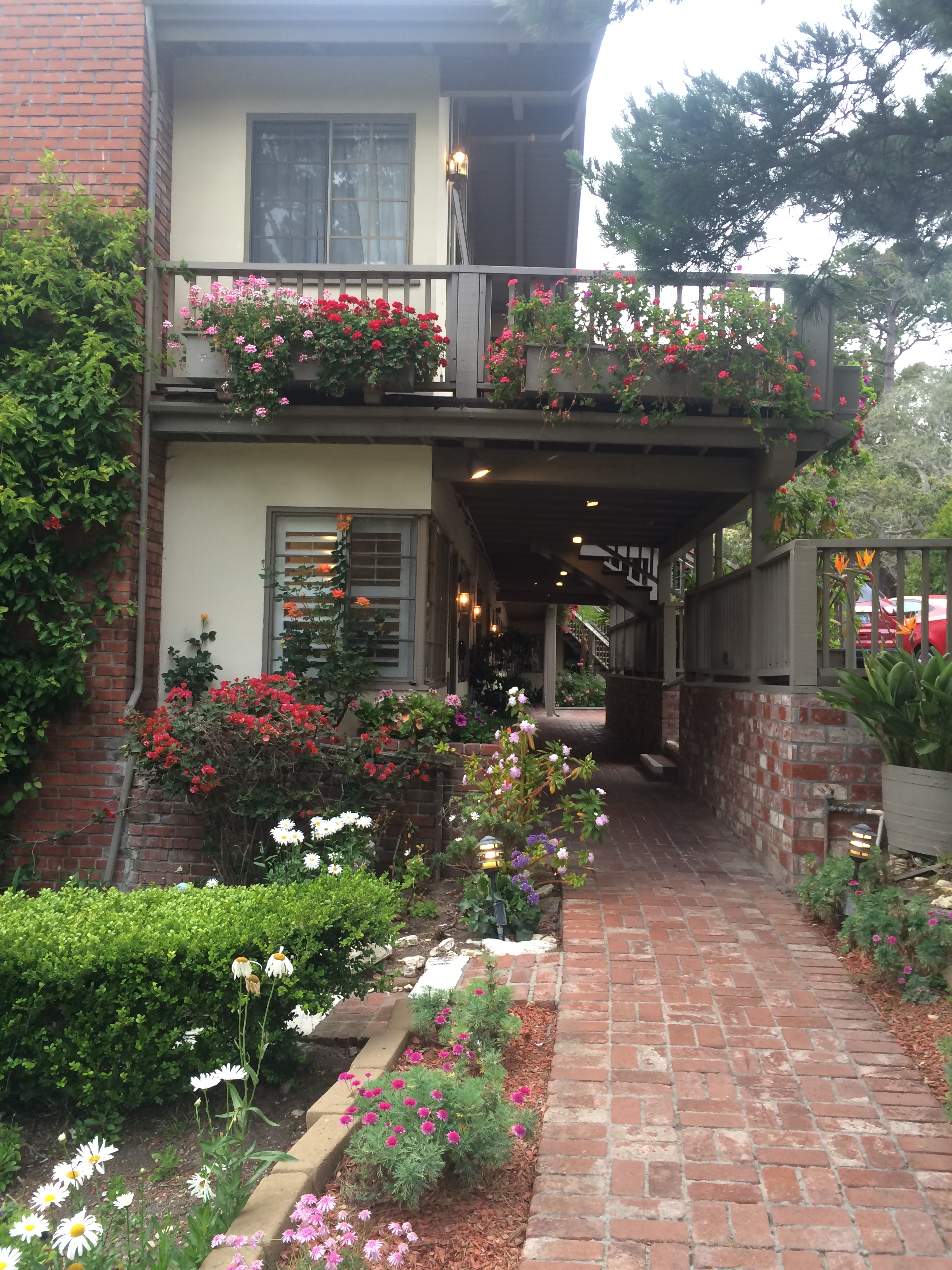
After seeing every single exhibit in the aquarium (we did it!), we made our way over to Carmel by-the-sea. This lovely community evokes Montreat, NC and Naples, FL mashed into one with just a dash of West coast pizazz. The drive into the heart of town took us down a few twisty, narrow roads lined with beautiful, tall trees and an occasional glimpse of the Pacific on the horizon. We swept past bungalows with prayer flags hanging from their porches and yards overflowing with a rainbow of succulents and flowers, though I’m certain nothing around here is for sale for nothing less than $1 million. Time to win the lottery. Even our quaint hotel had plenty of character and a bounty of flora.

IMG_5168

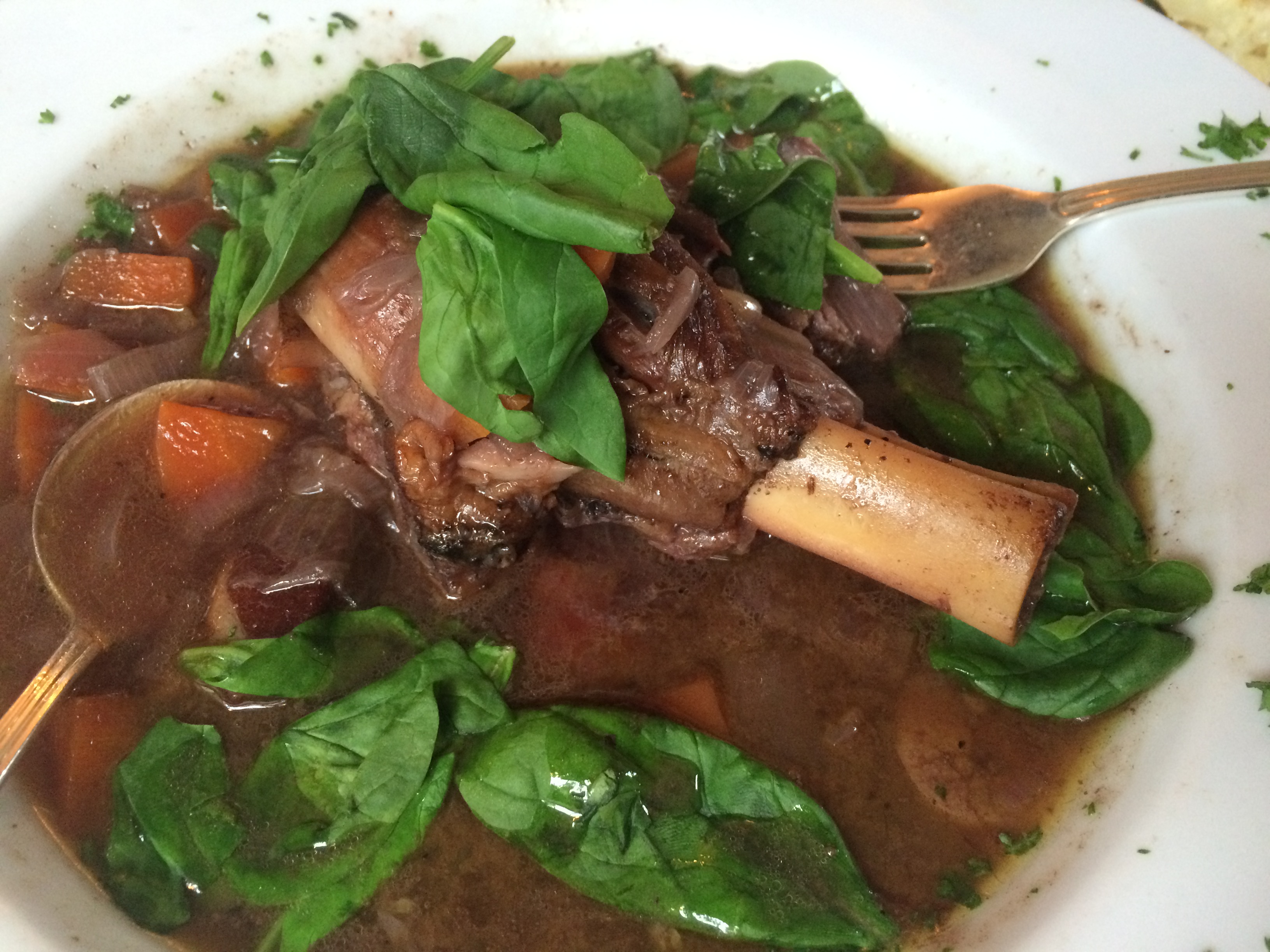
For dinner we decided to go out on a limb and try a local, highly rated French restaurant: Patisserie Boissiere. I love trying ethnic foods of all types – Indian and Ethiopian are some of my favorites – but somehow French cuisine had fell through the cracks. I ordered lamb shank and potatoes au gratin and WOW. This was the most tender piece of lamb I have ever ate, and it was served still steaming in its own broth with a bounty of fresh basil leaves.

IMG_5169

Another fitting meal for the end of another wonderful day. Now, we move on to Santa Clarita!

IMG_5173

Coming Full Circle – A Golden State of Mind

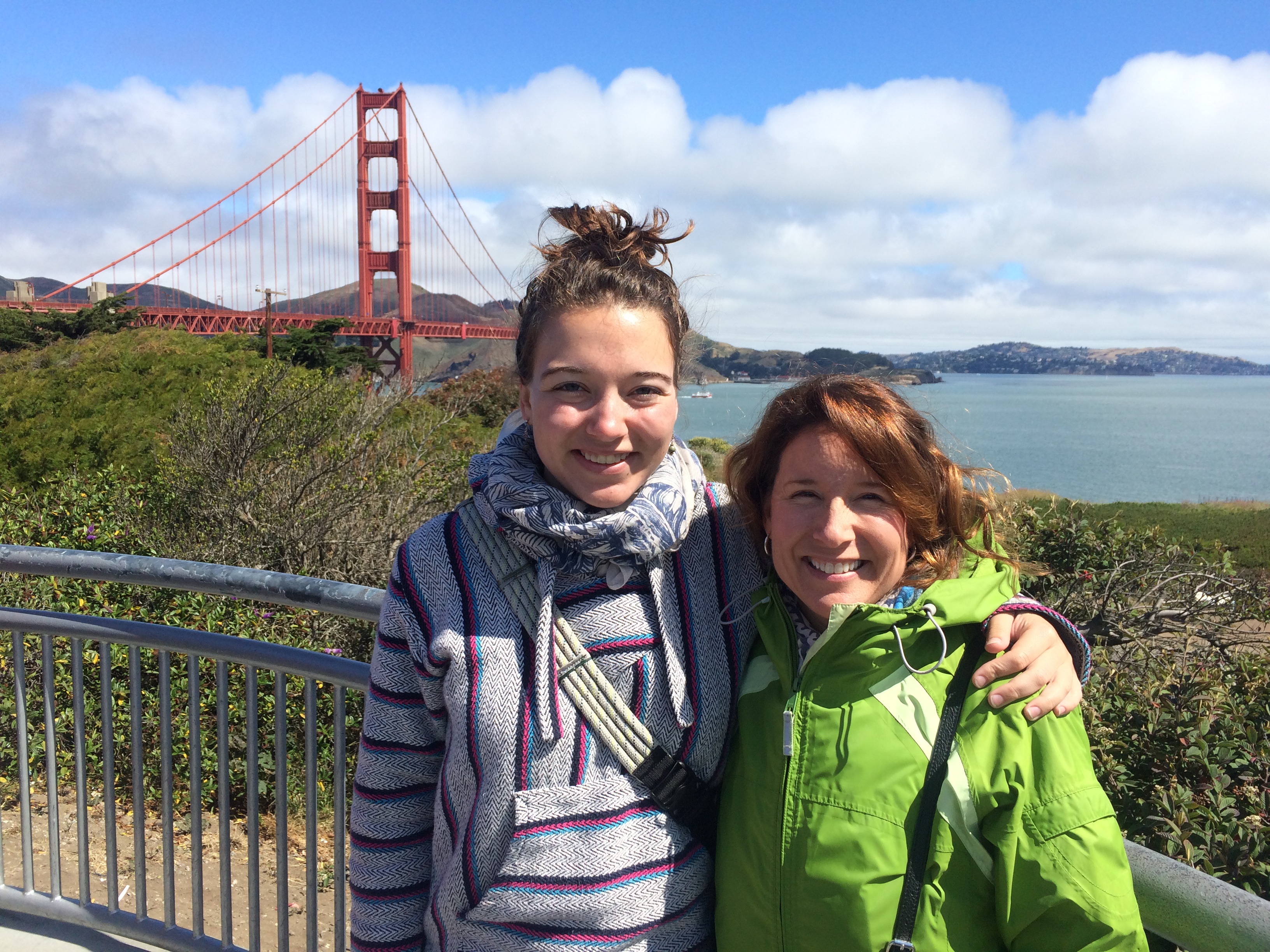
Two generations of Davidsons by the Golden Gate Bridge

Well, I’ve made it. After my parents got married and ran off to California, I came along a few years later and came into this world in Los Angeles. Conveniently born on the same day my parents were supposed to be moving, I delayed their move to the Southeast for a few months (sorry mom & dad!). I grew up in the sweetness of Southern hospitality with my Detroit-native parents (I say “eggs” like a Canadian) who probably never expected me to end up just a hop and a skip away from my birthplace.

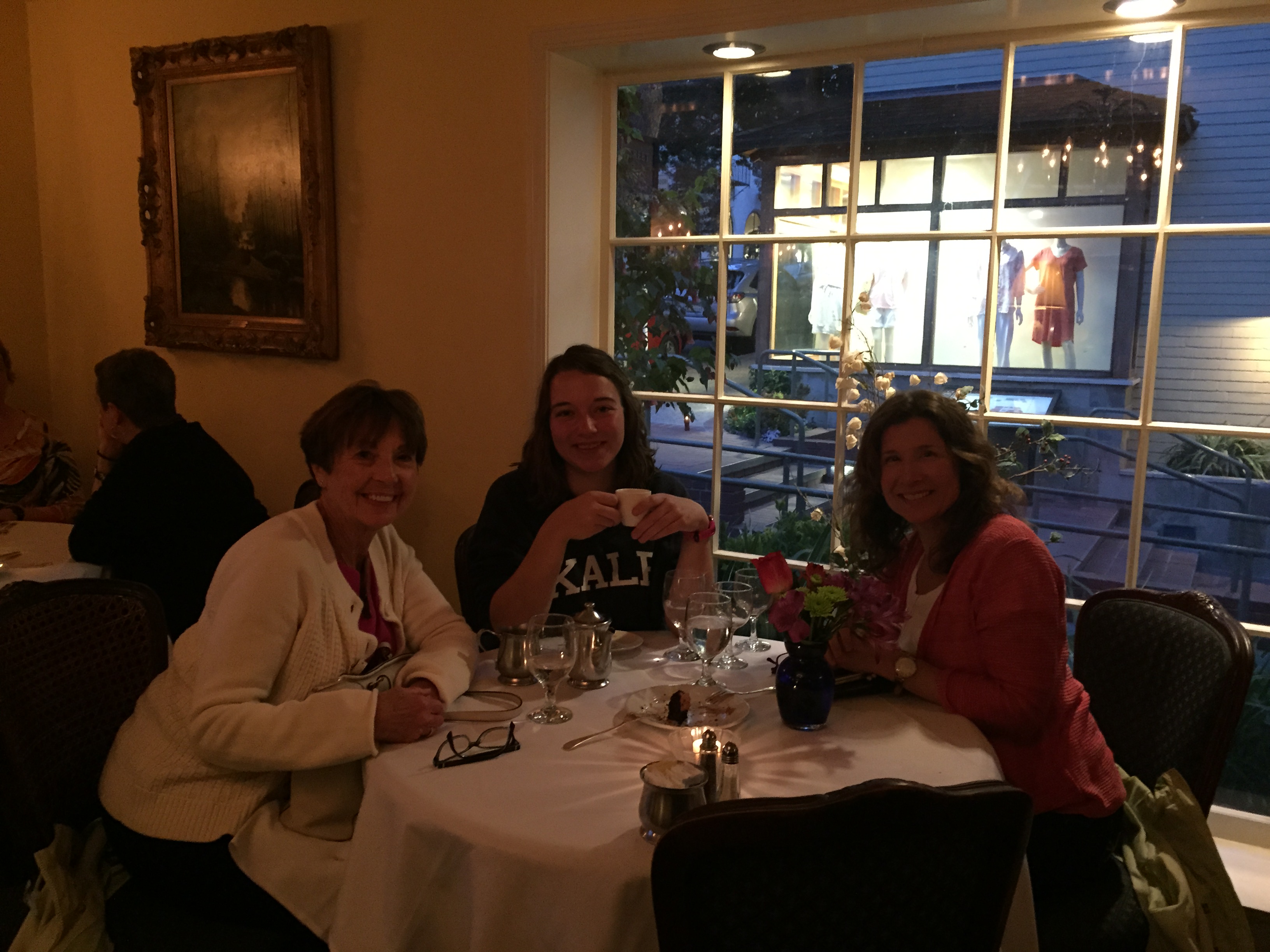
To commemorate the momentous return of yours truly to the West Coast (best coast? We’ll see.) I, my mother, and my Grammie are making our way from blustery but beautiful San Francisco down to Los Angeles, where we’ll be parting ways when I head to Catalina Island. This and my next couple posts will be all about our adventures along the Pacific coastline.

After a long, turbulent flight with beautiful views of the Sierras, we touched down at SFO and began an epic quest to get a rental car. We succeeded. We braved the infamous California highways and made our way to our hotel near Fisherman’s Wharf. Another success. We tried to not look like tourists. We failed.

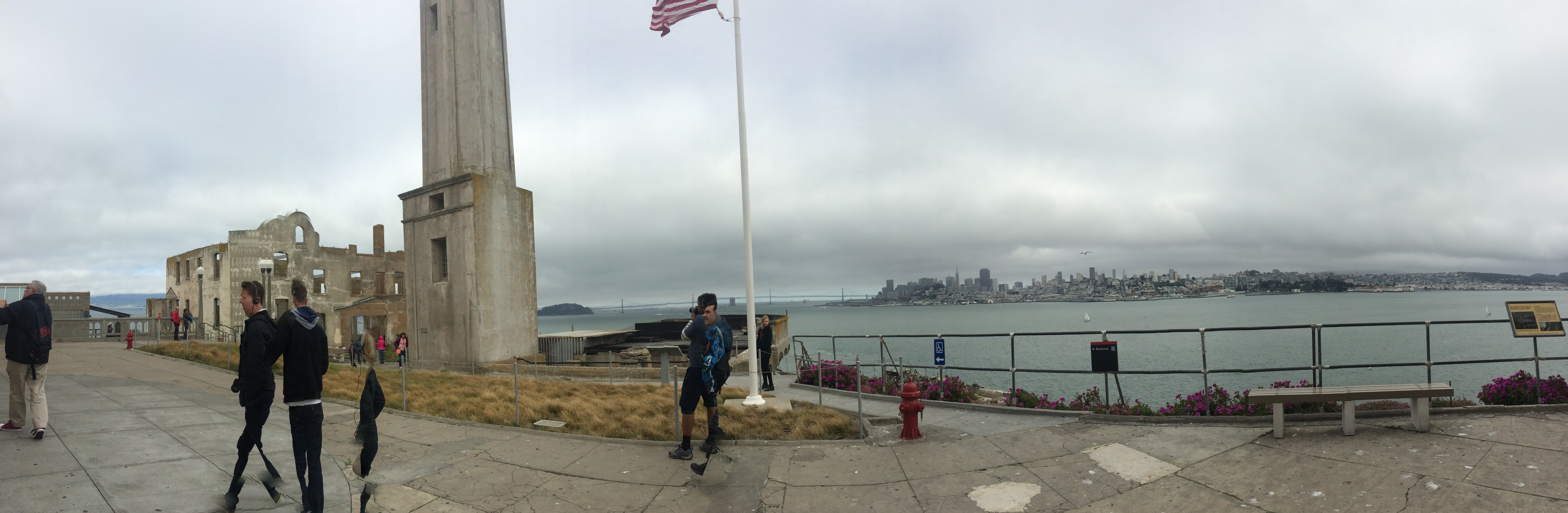
Alcatraz panorama

After a stop at In-N-Out with everyone else in the city we hurried over to Alcatraz Island. Ever since I read Al Capone Does My Shirts as a kid, I’ve been fascinated with the island. This seemingly desolate chunk of limestone in the middle of San Francisco Bay was surprisingly lovely, with a beautiful variety of flowers, plants, and seabirds. The carefully tended gardens have been there for over a century, and were tended by convicts and the families of the prison staff who lived on the island alike. The 13-story climb to the top included incredible views of the city and the bay, and ended at the top at the main cell block (see picture above).

We entered the prison and embarked on a very well-done and informative audio tour (I highly recommend it!) which led us through all the main parts of the prison. We learned about the daily lives of the government employees and prisoners on the island and relived the tension of the attempted escapes from the prison. Apparently three prisoners stole spoons from the mess hall and gradually chipped away the re-enforced concrete walls around their air vents, coordinated an escape time, and even went so far to make dummy painted heads to leave in their beds, which actually tricked the guards into thinking they were still in bed. One of the escapees starved himself to be able to squeeze through the opening, and, under the cover of darkness they slipped through the vents into the utility corridor on June 11, 1962. They clambered up several stories of piping and headed to sea on a raft into the freezing waters and brutal currents of the San Francisco Bay. The raft was later found on Angel Island (also in the bay), but no one knows if they managed to survive. Most likely drowned in the freezing waters of the bay, but it still remains “plausible” that they managed to escape.

Can you imagine feeling so miserable and restricted that you would risk everything, with an incredibly low chance of success, just for a shot at escaping? Pictures and words simply can’t capture the dank, depressing air and the squeal and clank of 250-lb steel cell doors slamming shut.

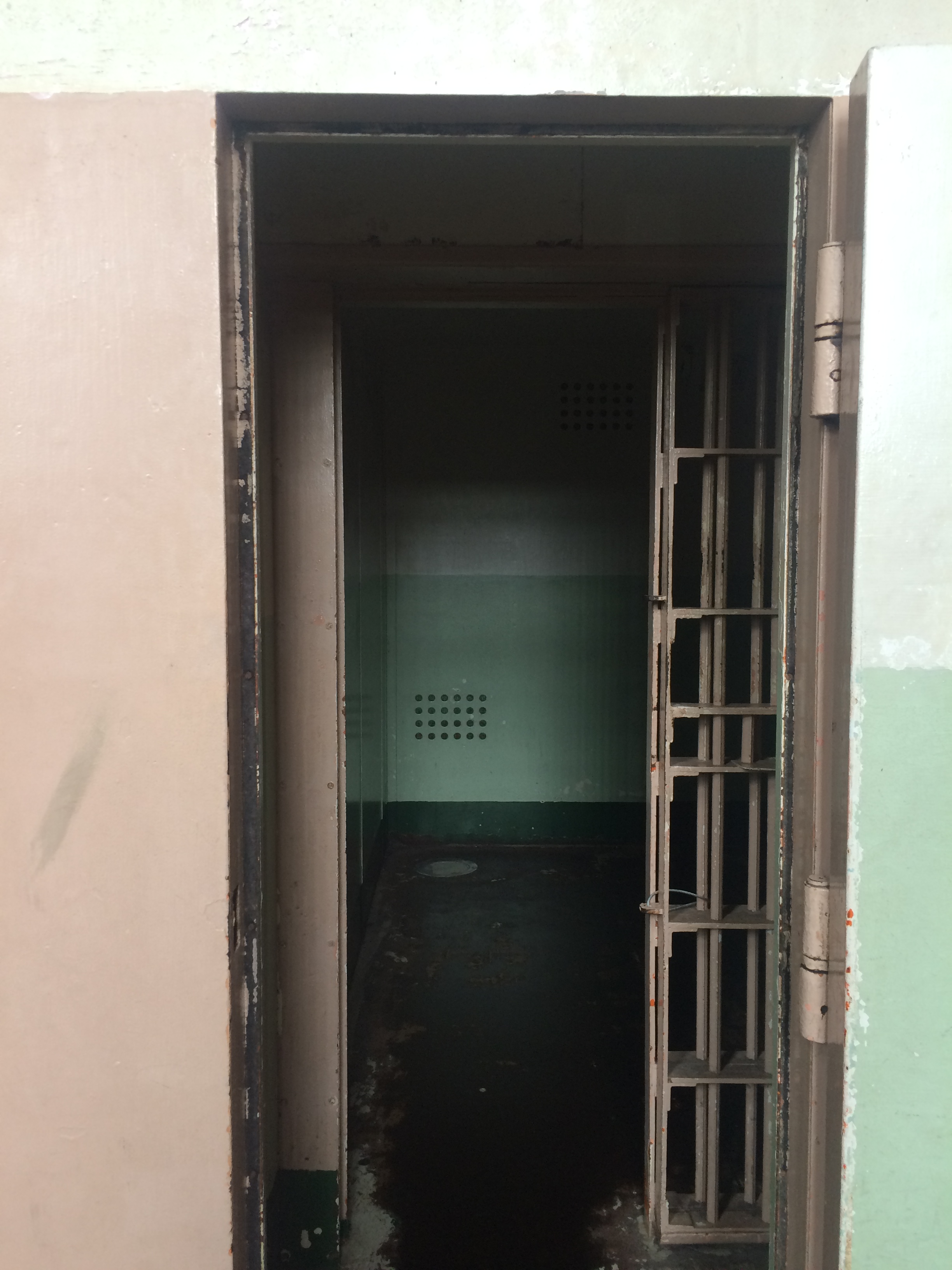
Solitary Confinement

Not that I really needed any motivation to keep me from robbing banks or murdering people, but jail is somewhere I never want to be. The solitary confinement cells, here shown with doors open, were closed with an incredibly thick steel door with the tiniest of windows, and inmates were left in darkness, but where they could still hear the laughter and fireworks of parties in San Francisco drifting across the bay – pure torture. I believe prisons still have quite a ways to go in regards to rehabilitation, but I am so glad we’ve moved past this era of harrowing confinement.

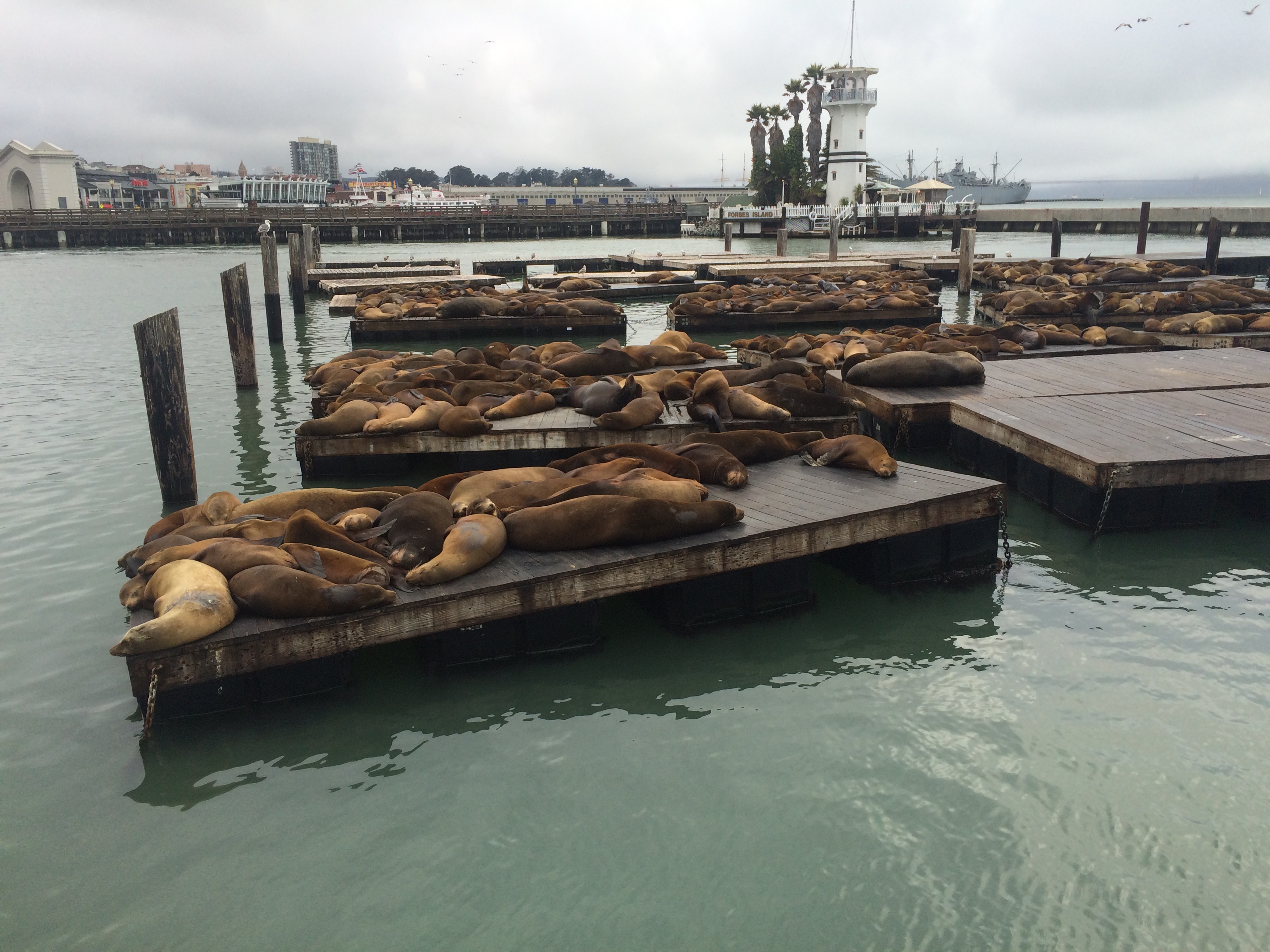
Having done our time on Alcatraz, we moved on to the much more cheerful sights and sounds of Pier 39. Along with those sights and sounds came the wall of stench that announced the presence of the California Sea Lions, which, though stinky, still seem utterly huggable to me.

IMG_5054

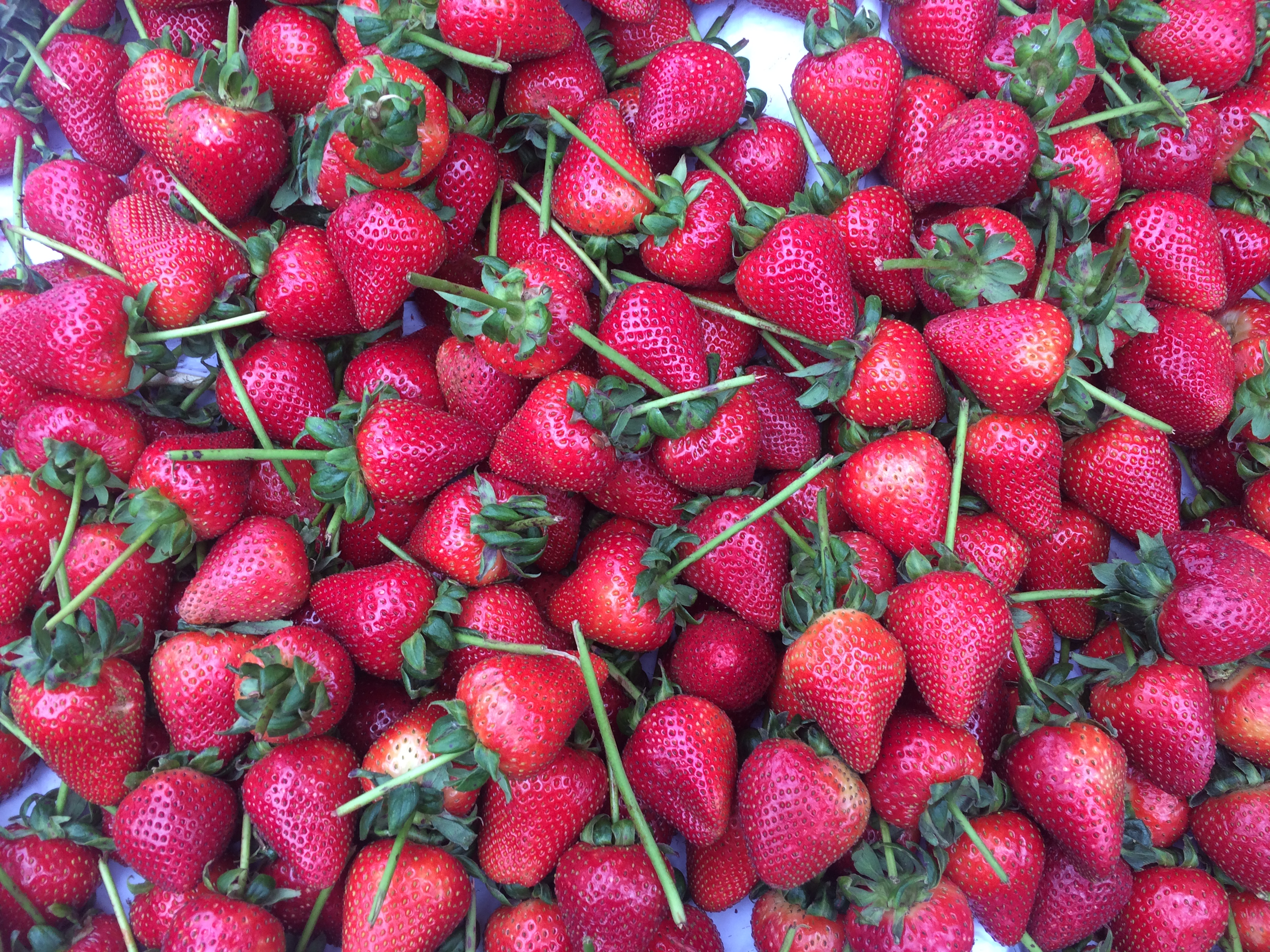
This was followed by a stop at a fruit stand, where we ate some of the most delicious and beautiful strawberries I have ever seen:

IMG_5056

We then embarked on a quest for a restaurant called The Melt, which I found out was supposed to have one of the top 10 best grilled cheeses in America (thanks roommates for the article!). After a 30-minute walk that included a lovely stroll through the ghost town of a financial district (it was Memorial Day), we finally found the restaurant, only to discover it was closed for the holiday. Thus, now feeling the full weight of the 3-hour time change and our crazy day of traveling and touring, we trudged off in the direction of the hotel, hoping to find somewhere to eat on the way. Fun fact: San Francisco, a 7×7 mile city, has so many restaurants that you could eat at a different restaurant 3x a day everyday for 3 years and never eat at the same place twice. It has the most restaurants per capita in the world!

Our walk took us past the Trans-America Tower and into China Town. I was enthralled by the smell of fresh dumplings in every direction, but we quickly discovered we had wandered into the red light district and bee-lined out of it. We came upon Little Italy, and found a majestic yet casual Italian restaurant called Colosseo (the website pictures do it much more justice than I ever can). Giant gladiator statues greeted us at the door, and the ceiling and walls featured hand-painted Renaissance-style murals. We feasted on minestrone, pesto gnocchi, and red wine – a satisfying end to a satisfying day.

IMG_5065

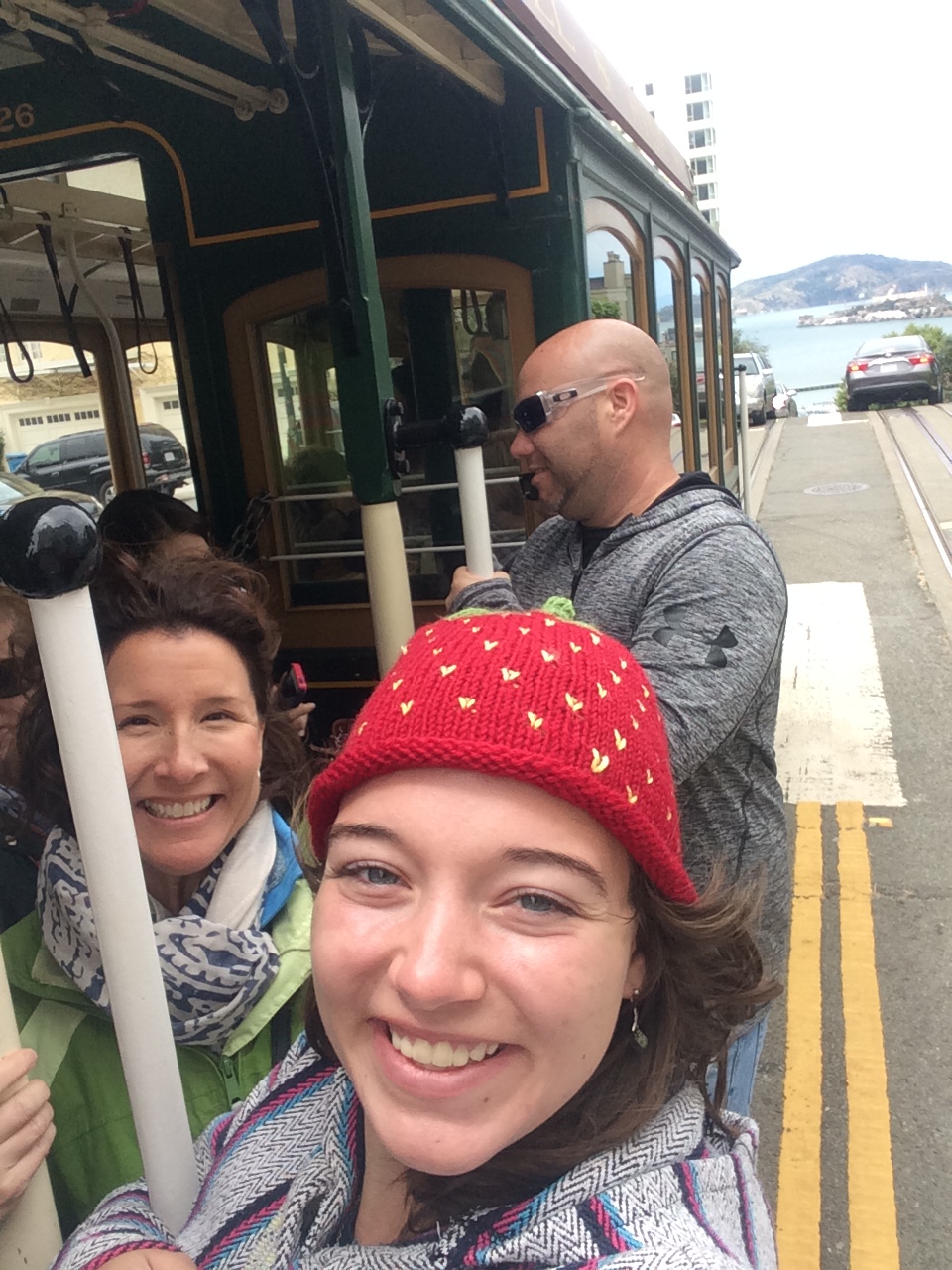
Tuesday morning we started out the day with the best darn berry-covered waffles I’ve ever ate, and jumped on the obnoxiously touristy but ridiculously fun and informative open-air sightseeing bus. We drove all over the bay area and across the Golden Gate bridge, made our way through downtown and slid through Golden Gate park and the intersection of Haight-Ashbury. Fun fact: the Golden Gate Bridge is not named so because of its not-really-even-any-type-of-gold color, but because every ship rushing into San Francisco during the gold rush in the 1800’s had to pass through the straight the bridge spans to reach port. We then continued the epic grilled cheese quest by hopping on one of the historic trolleys and headed for union square. I don’t usually selfie, but the occasion called for it… Note Alcatraz in the distance:

IMG_5100

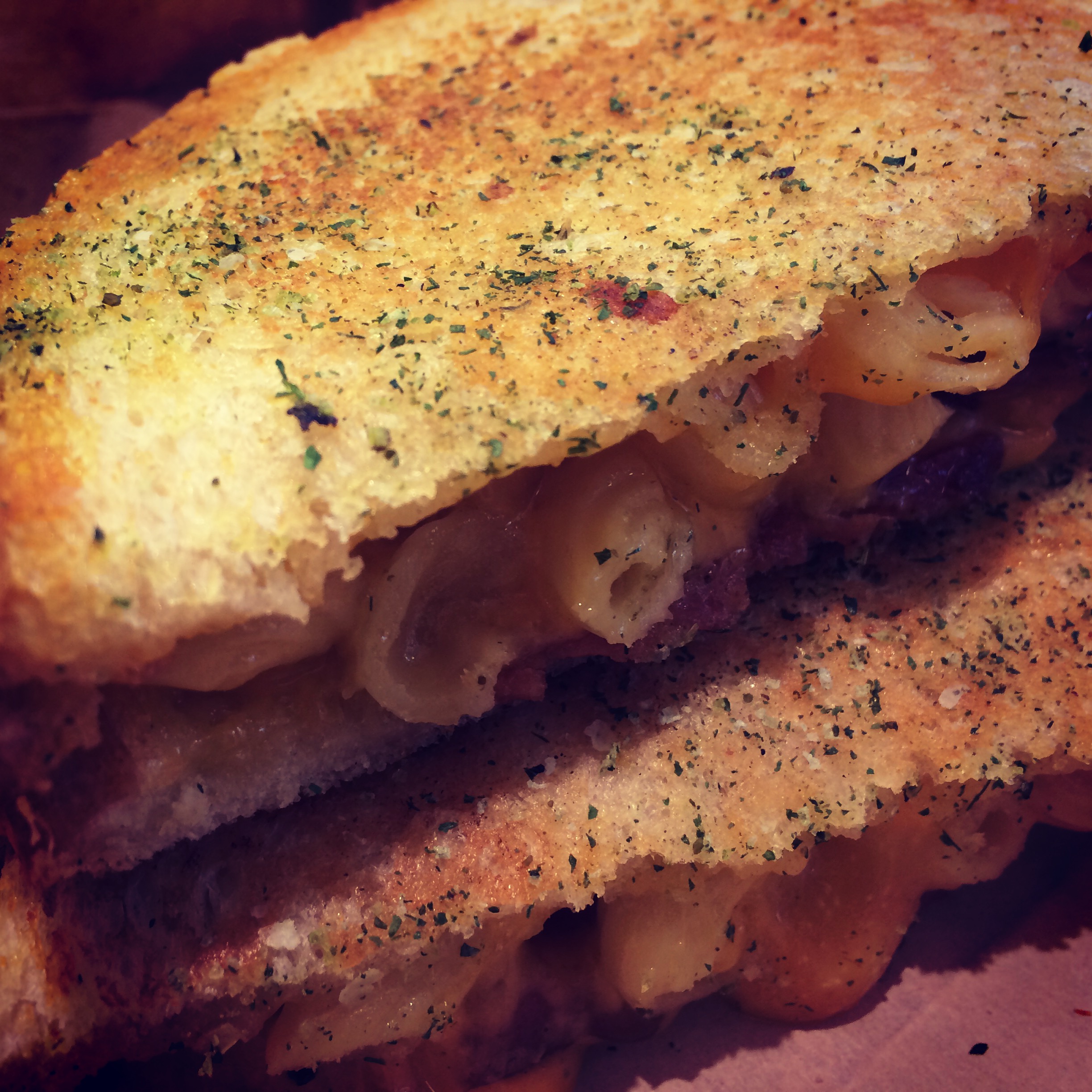
And guess what? WE MADE IT. We found The Melt. IT WAS OPEN. And I got the most amazing life-changing kind of spiritual-moment sandwich of my life: The Mac Daddy – Grilled cheese with mac & cheese and bacon in the middle. Oof. We saw and did lots of awesome things today, but I have to say, getting that grilled cheese was certainly a high point.

IMG_5103

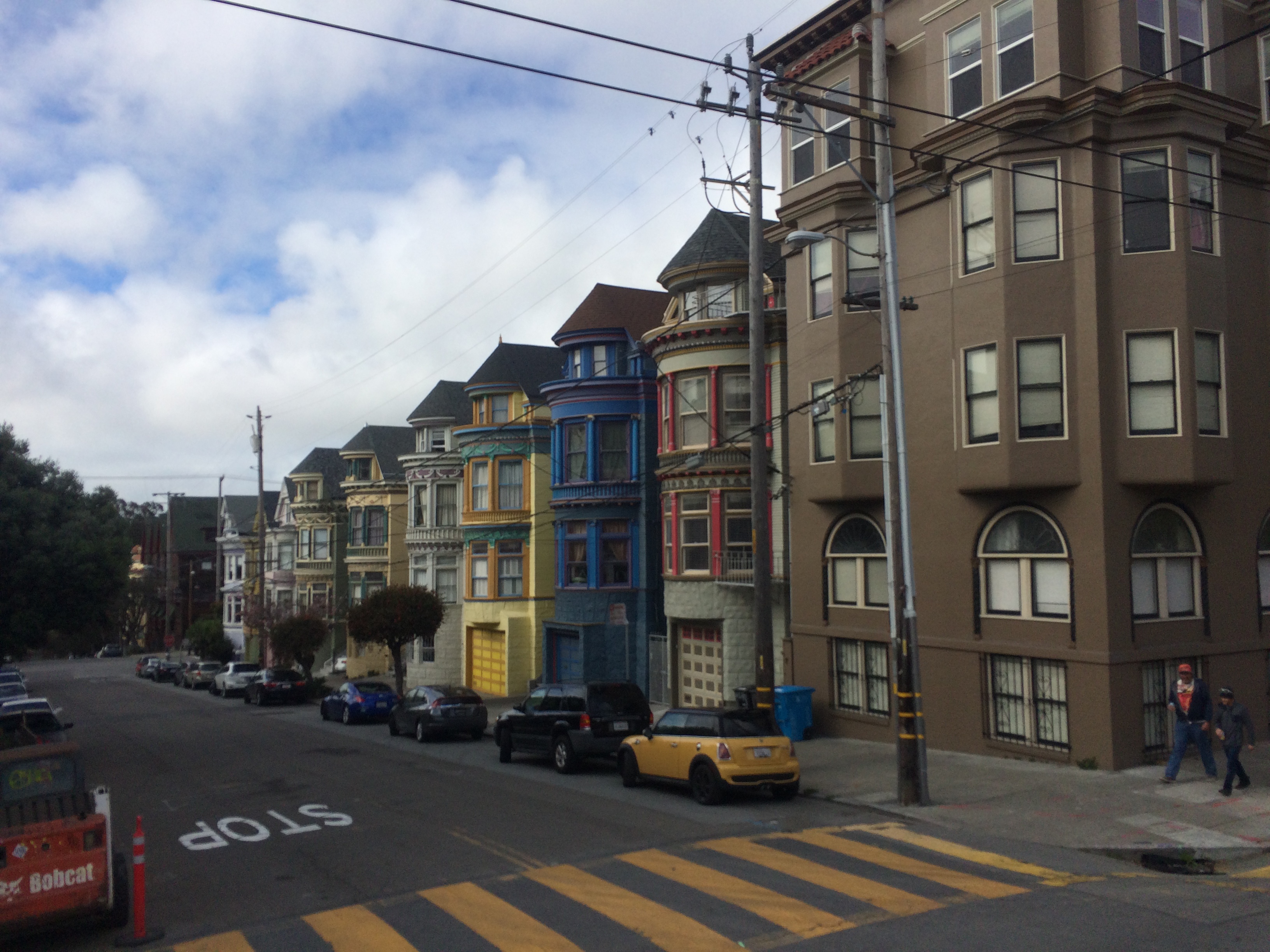
We hopped back on the big red bus and swept through the beautiful Golden Gate park, past the Victorian Painted Ladies, and breezed down Haight Street, and made our way back to the Wharf. I wish we had time to get off and explore the park, but, on the other hand, I probably would have spent my entire day there and at the adjacent museums and would have missed everything else. I’ll save it for a future trip!

IMG_5117

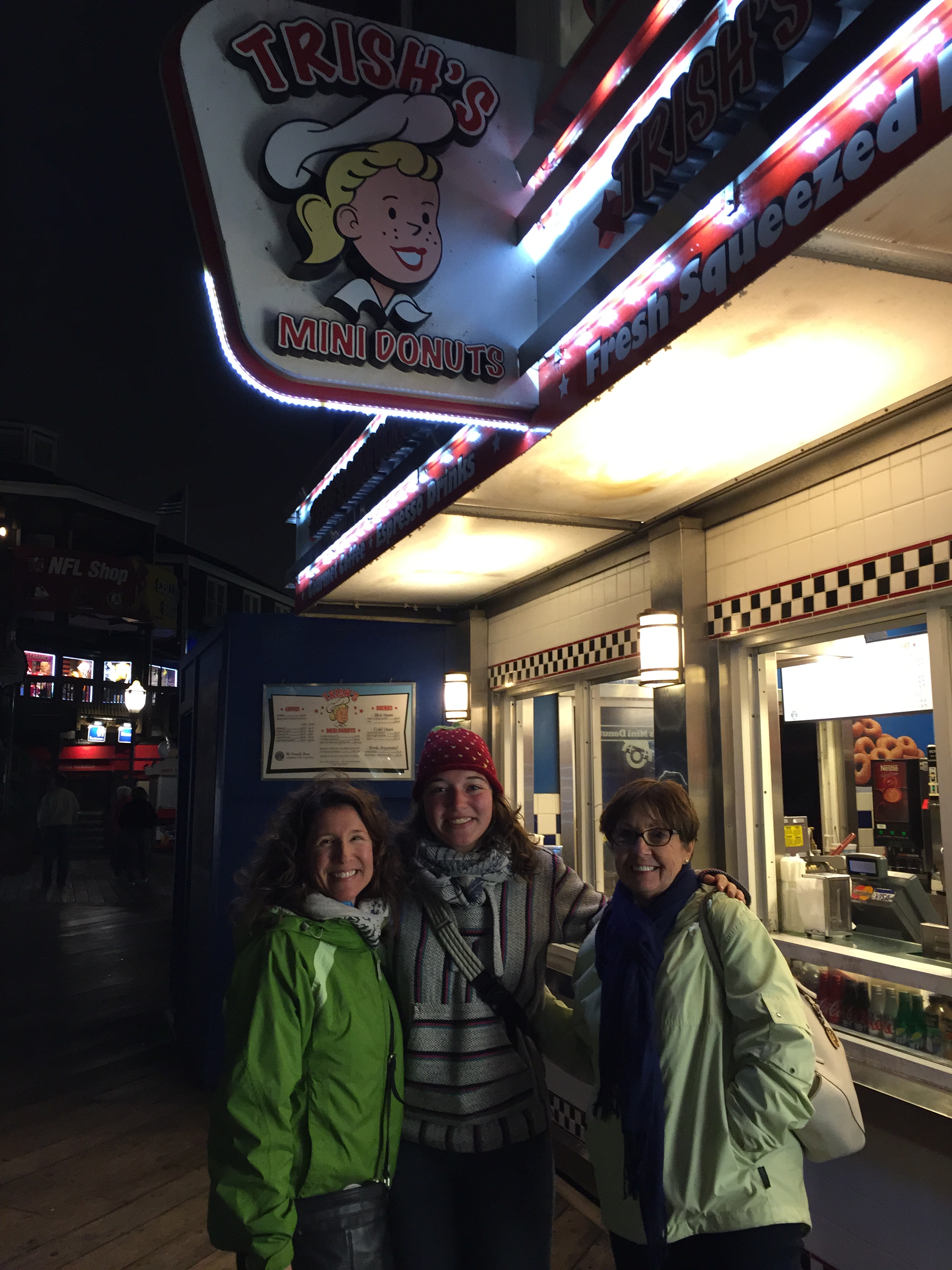
Delightfully worn out after another day of adventure, we wandered in and out of shops, grabbed some tacos for dinner, and wandered along the wharf some more. We went into a puzzle shop where I ultimately unsuccessfully battled a 3-D puzzle (it will haunt me forever until I solve it!), and met a friendly local, Elliot. He chatted with us about his experience living and working in San Francisco, and joined us for a doughnut at a little shop Grammie had her mind on all day. The fresh-out-of-the-fryer minis were another perfect ending to a fantastic day.

IMG_0498