This fall I became an aquarist at CIMI! What is an aquarist? It’s hard to define… but it’s a position that revolves around our aquariums we use for teaching invertebrate, algae, fish, and shark lessons.
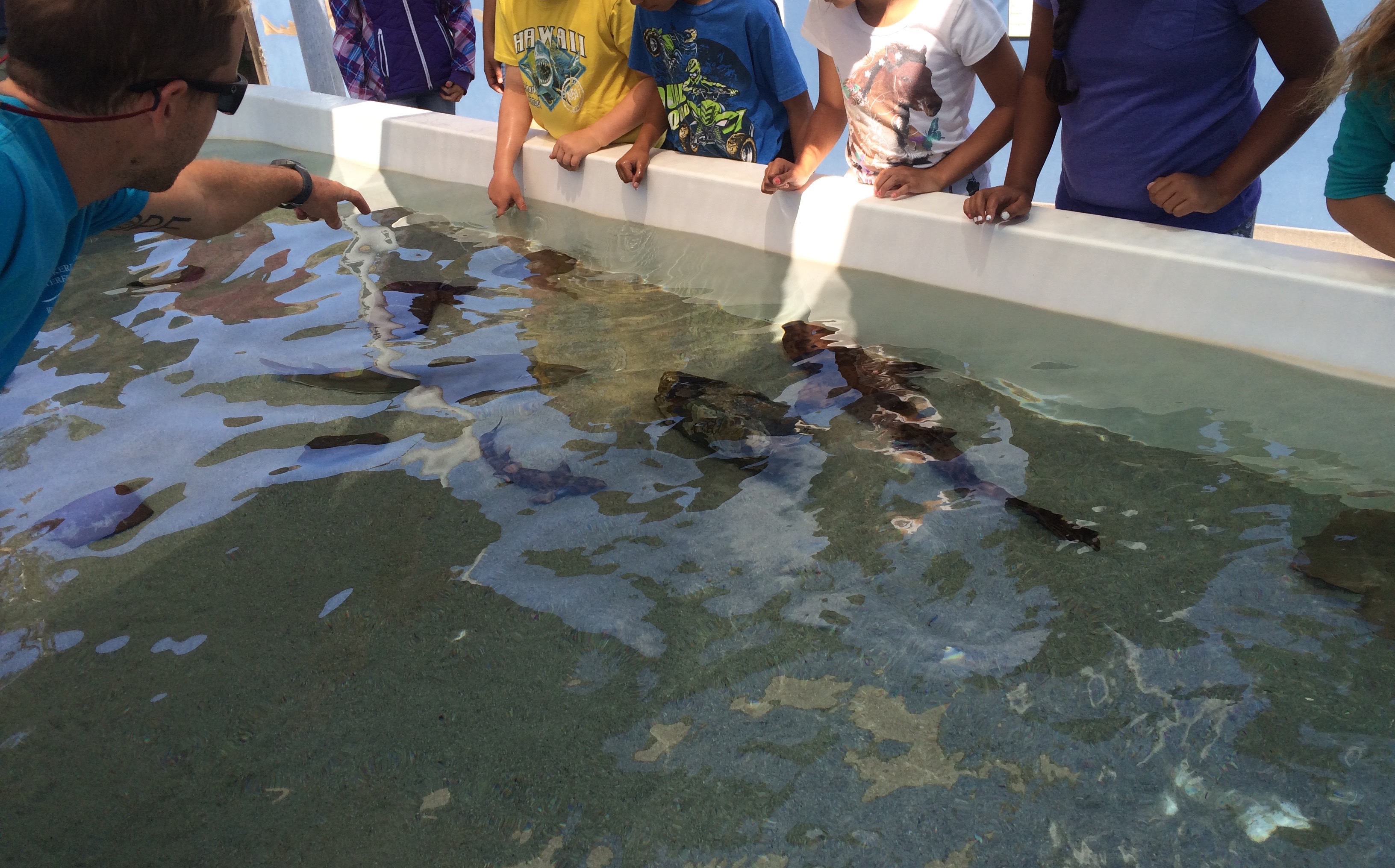
Students explore our shark barge. They get to pet several native species of sharks and rays – one of the best ways to get kids over a fear of sharks!
We’re an intimate team of four instructors who rotate week-long shifts, and teach the rest of the time. At the beginning of each season we work together to set up and break down our aquarium systems and collect animals, but most of the year we work independently. Just because we have solo shifts doesn’t mean we fly solo – we still work together to solve tough problems or collect on scuba.

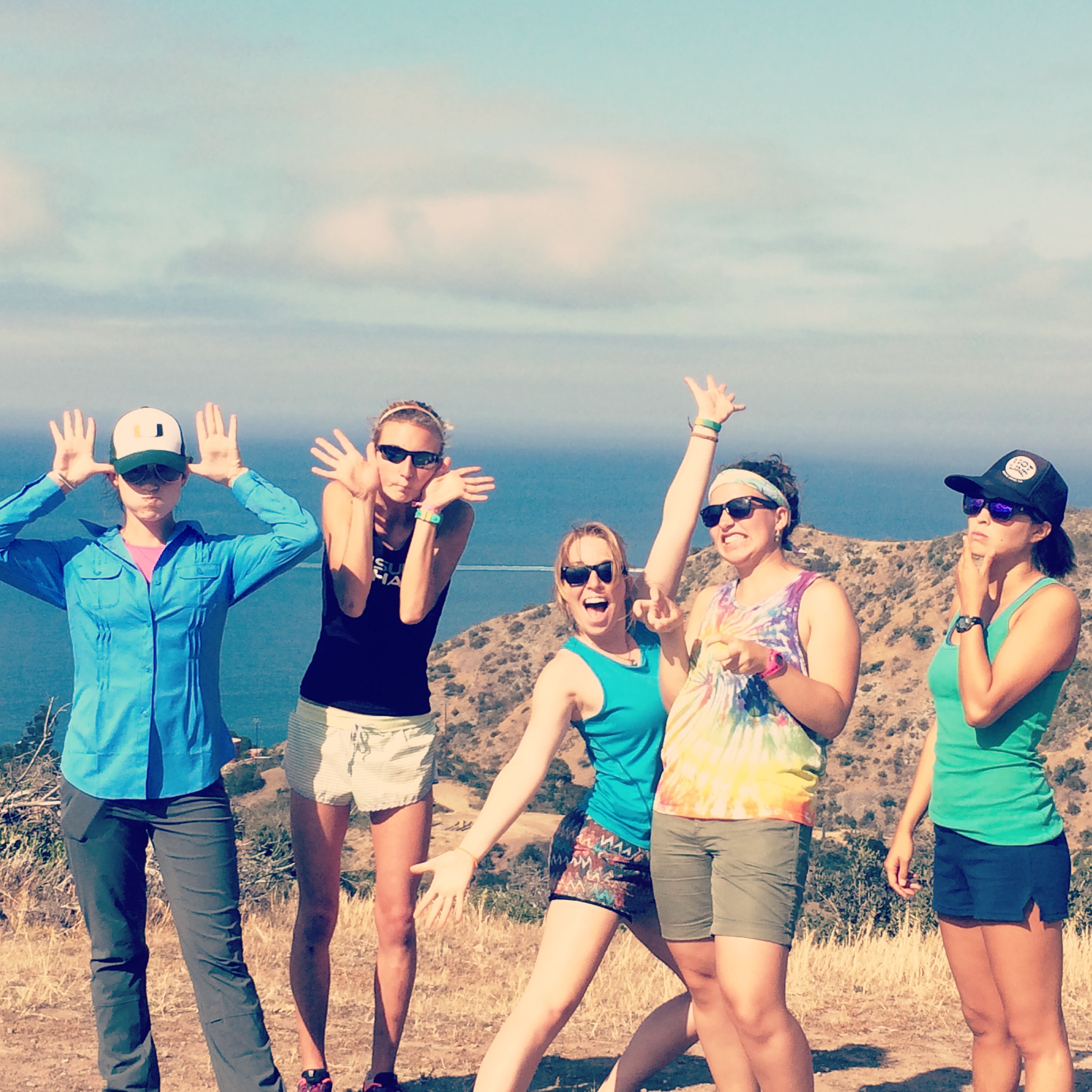
The AQ crew! From left to right: KO, Crash, MoMo, and me (aka Ed or EmD)
Most of our daily work looks like this…
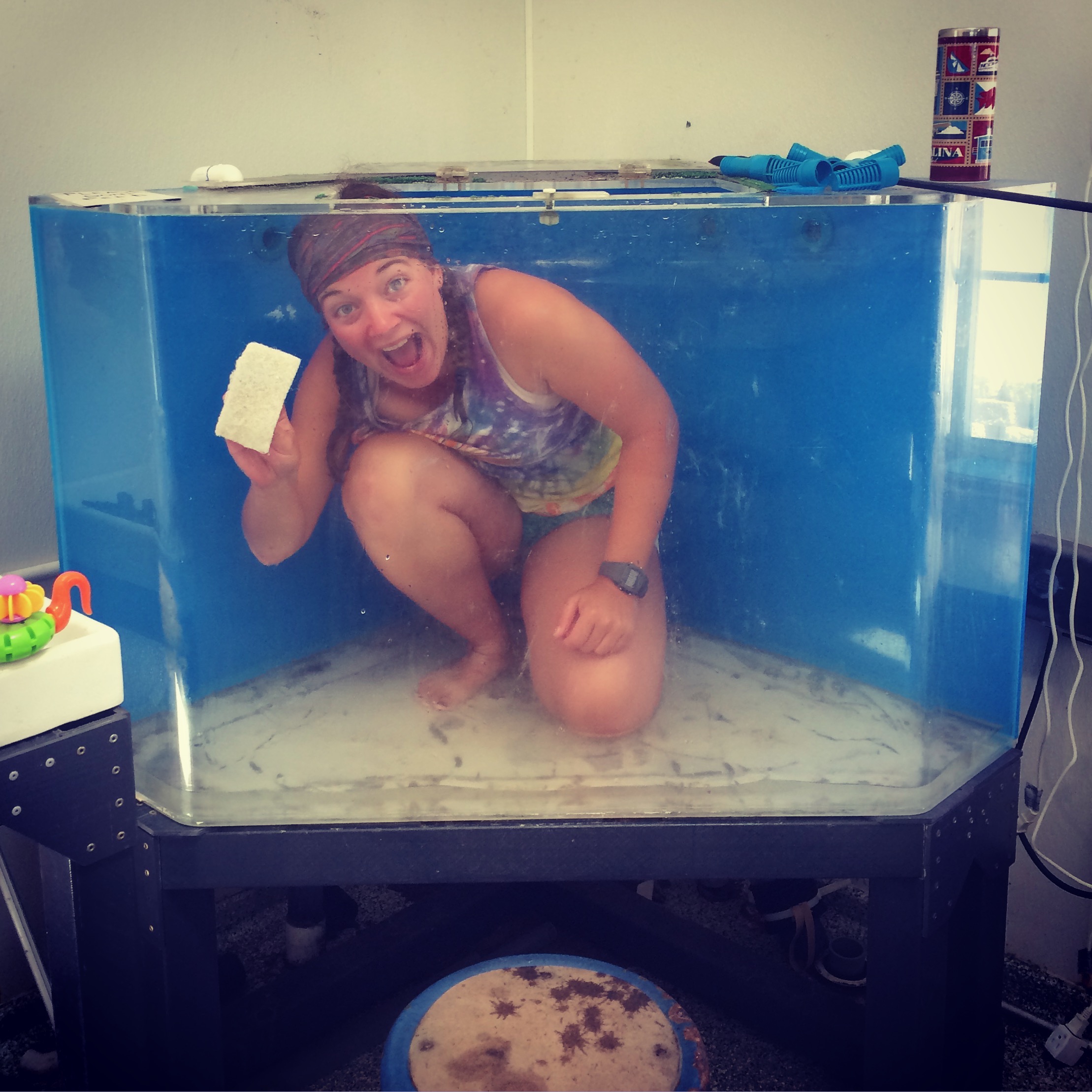
Scrubbing out the big octopus tank.
Or this…
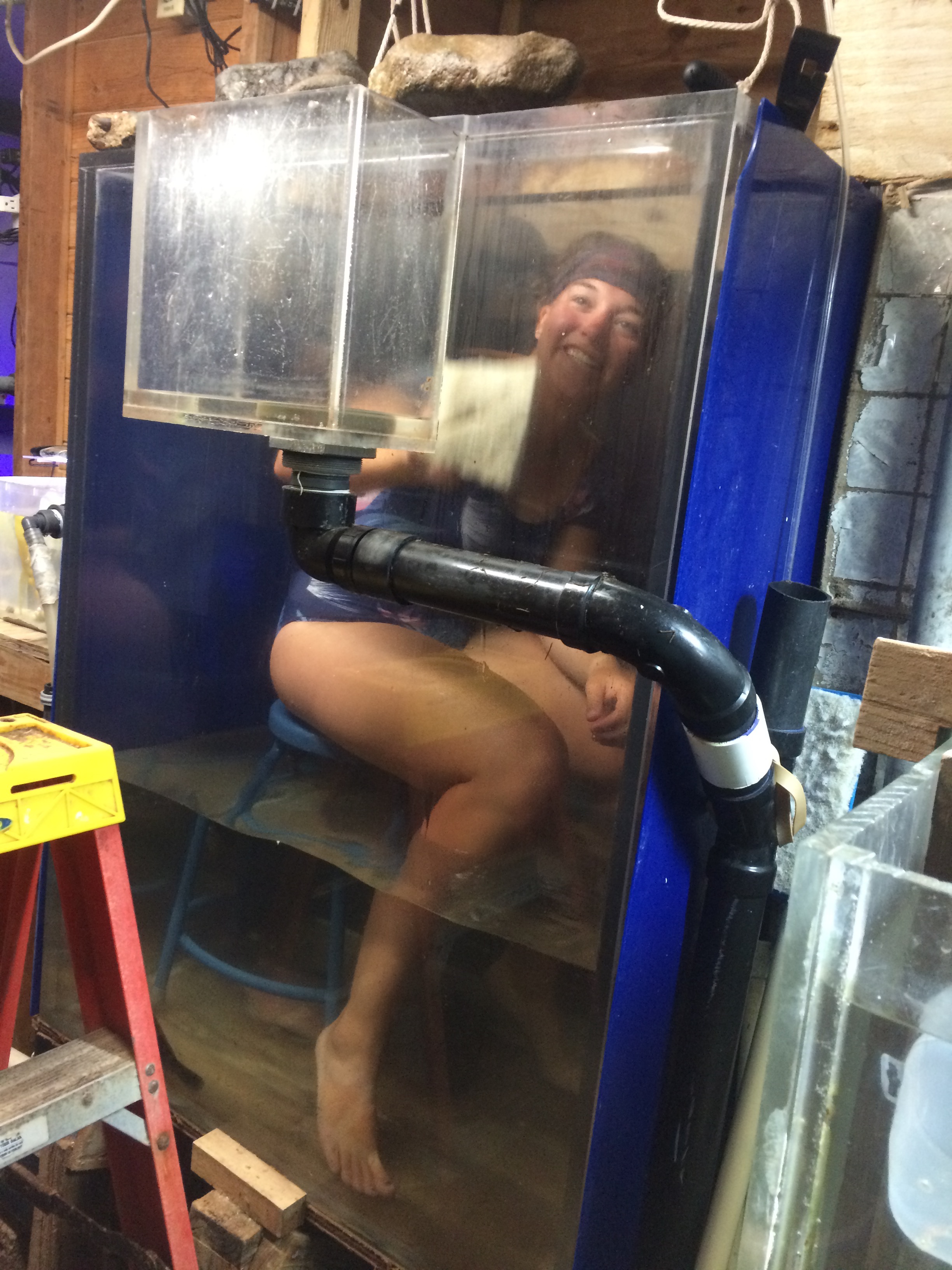
Scrubbing out the big ol’ fish tank. The confused fish were taking cover behind my legs.
So, lots and lots of scrubbing and cleaning to keep the animals healthy and the displays looking nice. But, we also get to spend a ton of time out in the ocean, collecting animals and algae for our educational aquariums!
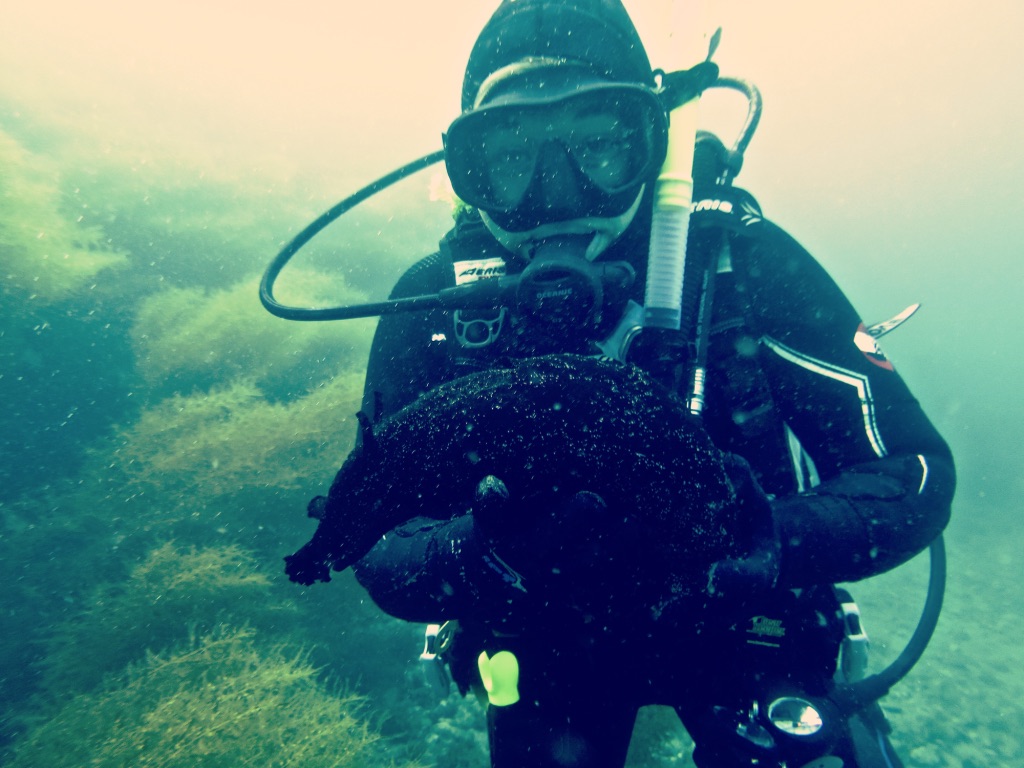
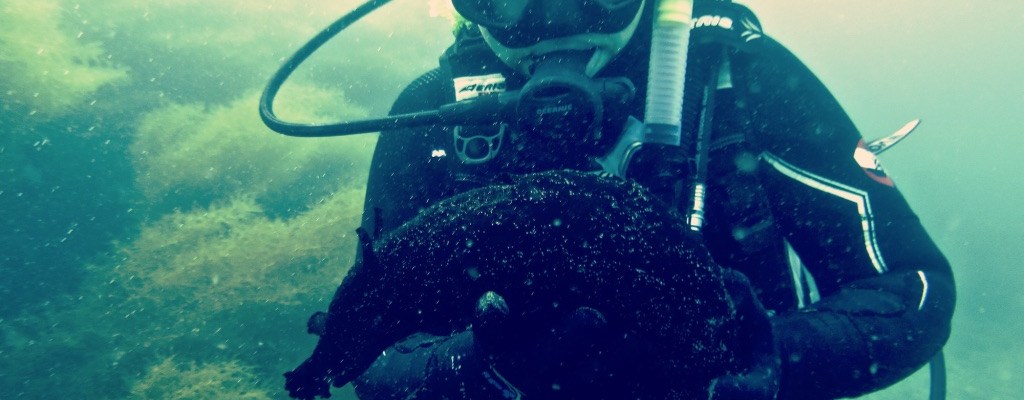
Me with a Giant Black Sea Hare (GBSH). These are the largest gastropod (slug or snail) in the world, weighing up to 14 pounds! They’re also supremely huggable critters, and eat an insane amount of algae. Photo credit: Jorie H.
Slugs are easy to catch… Fish, not so much. They’re a lot smarter and faster than you think! Sometimes nature makes collecting really easy, like when we had thousands of pelagic red crabs wash up on our beach this week!
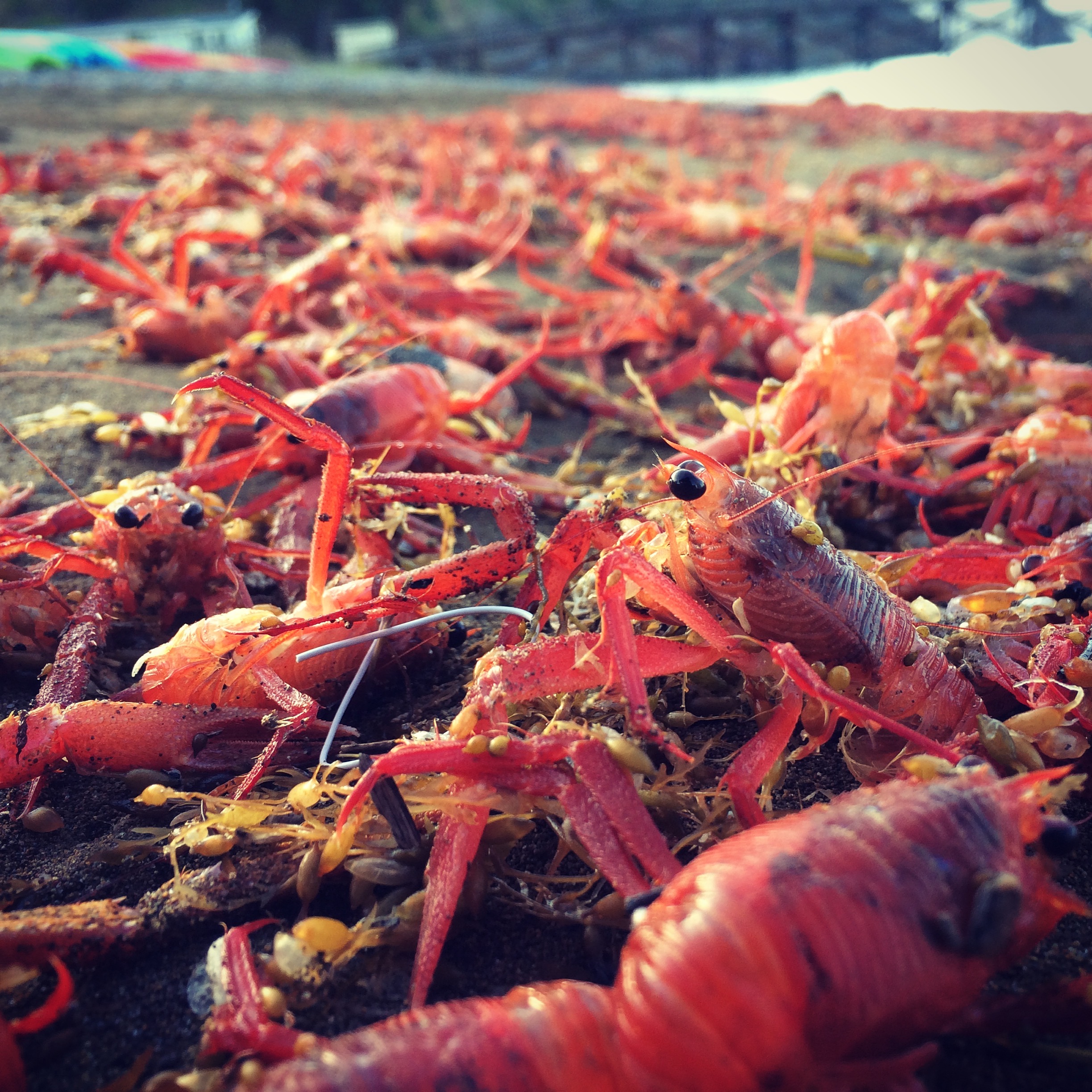
These little guys are the Snickers bars of the ocean… Everyone wants to eat them! Many baleen whale species feed on them, as well as tons of fish and invertebrates. I collected them right off the beach – their antics bring a lot of entertainment to our touch tanks! They also provide a stimulating hunt for our sharks and other creatures, which don’t get much live food in captivity.
Which, conveniently, brings me to feeding! Our critters are fed a steady diet of squid and fish, but our octopus gets live crabs. We make a special “shake” for our filter-feeding invertebrates – algae, saltwater, fish/squid, and nutritional supplements are blended together. Yum!
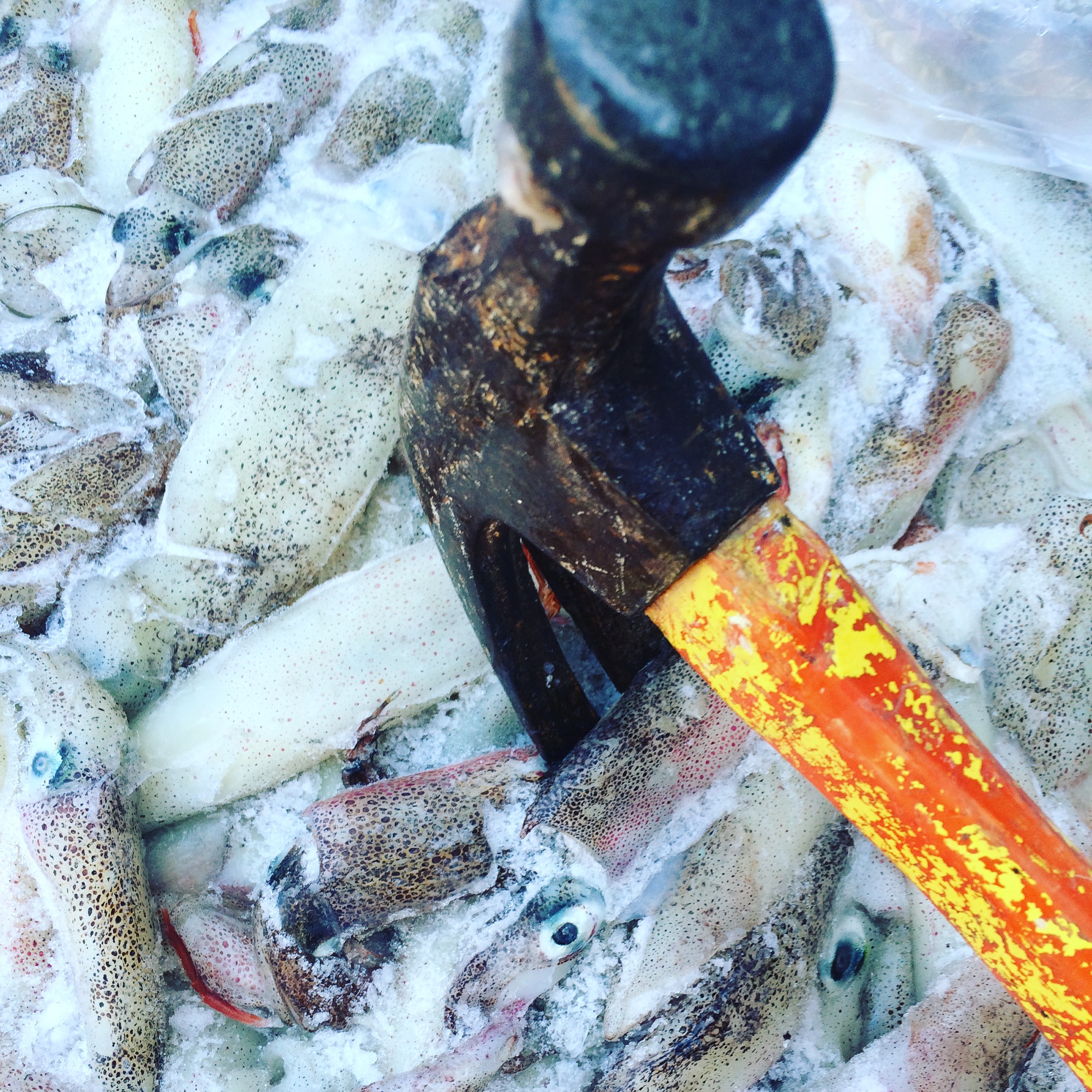
Sometimes AQ work requires some weird moments of innovation… like pulling apart squid with a hammer.
Now, I want to introduce you to some of our incredible creatures!
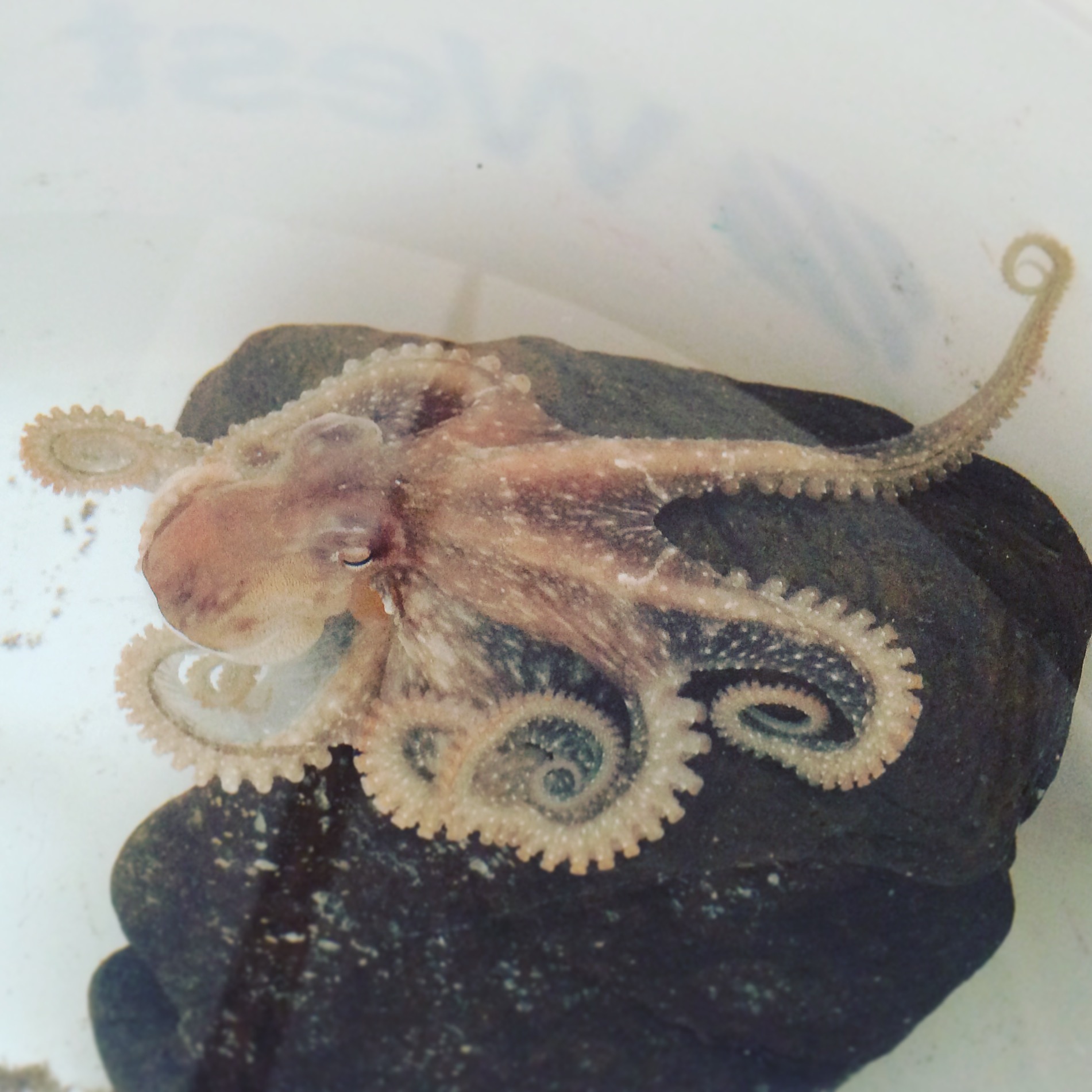
Lil’ baby red octopus! Check out those lovely arms.
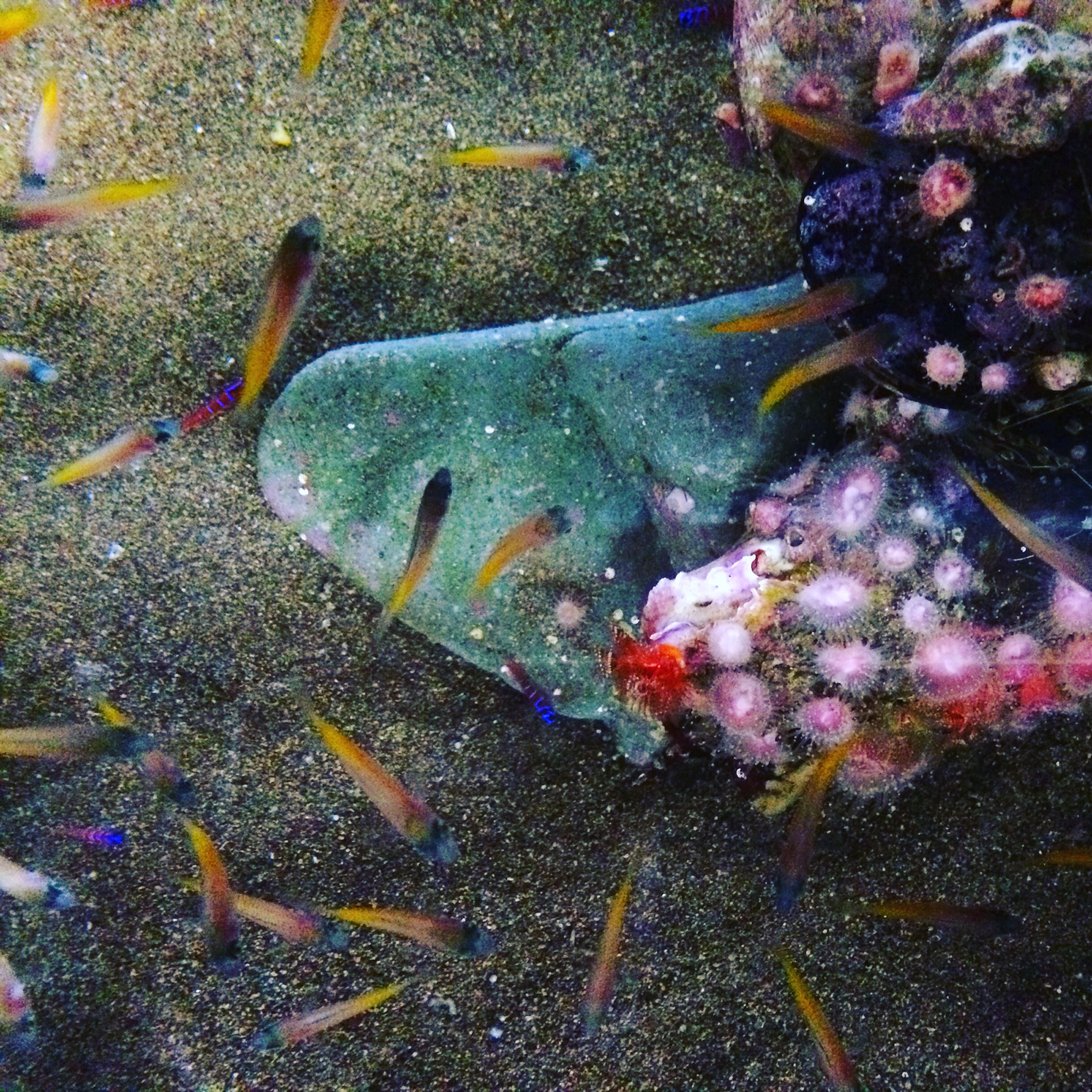
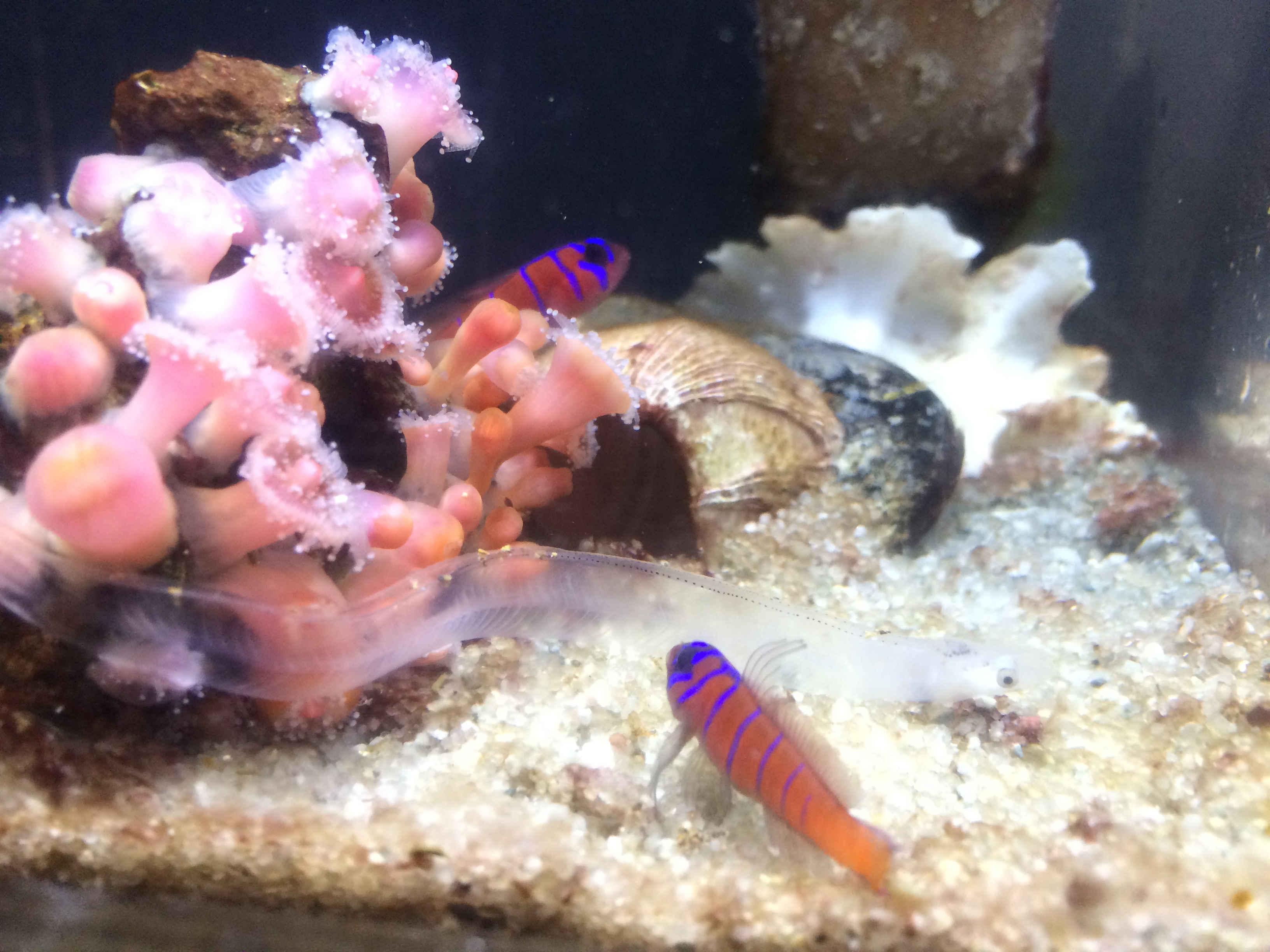
The residents of our smallest tank, formally known as Tiny Town. the yellow ones are juvenile blacksmith; the neon blue ones are bluebanded gobies, one of my favorite species.
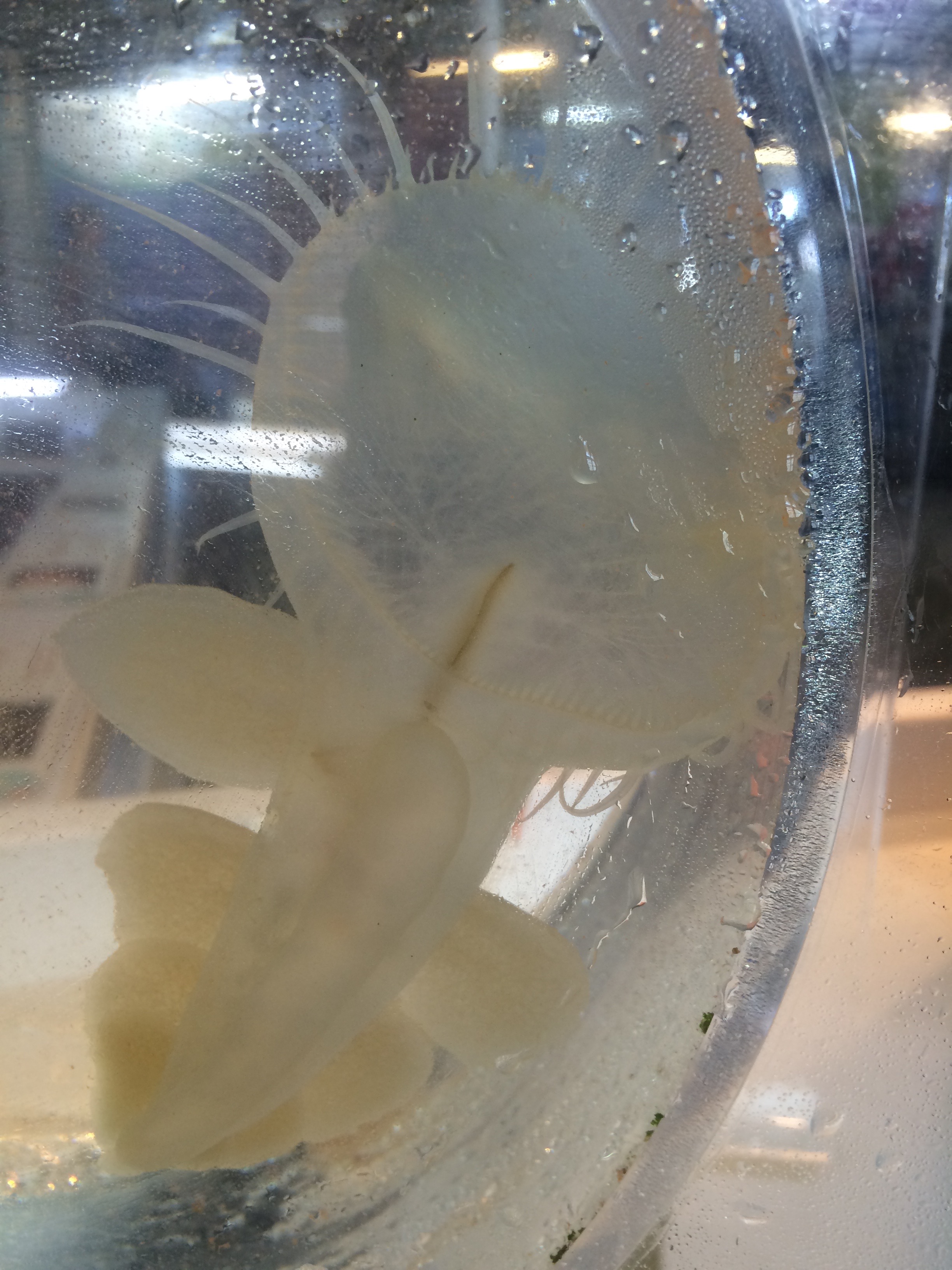
A Melibe s. sea slug opens wide for lunch at the Santa Monica Pier Aquarium. We have smaller ones in our aquaria, this one’s a monster!
We have some more sedentary residents as well – meet our incredible algae! Believe or not, algae and plankton produce approximately 70% of the oxygen we breath – trees only produce about 10%.
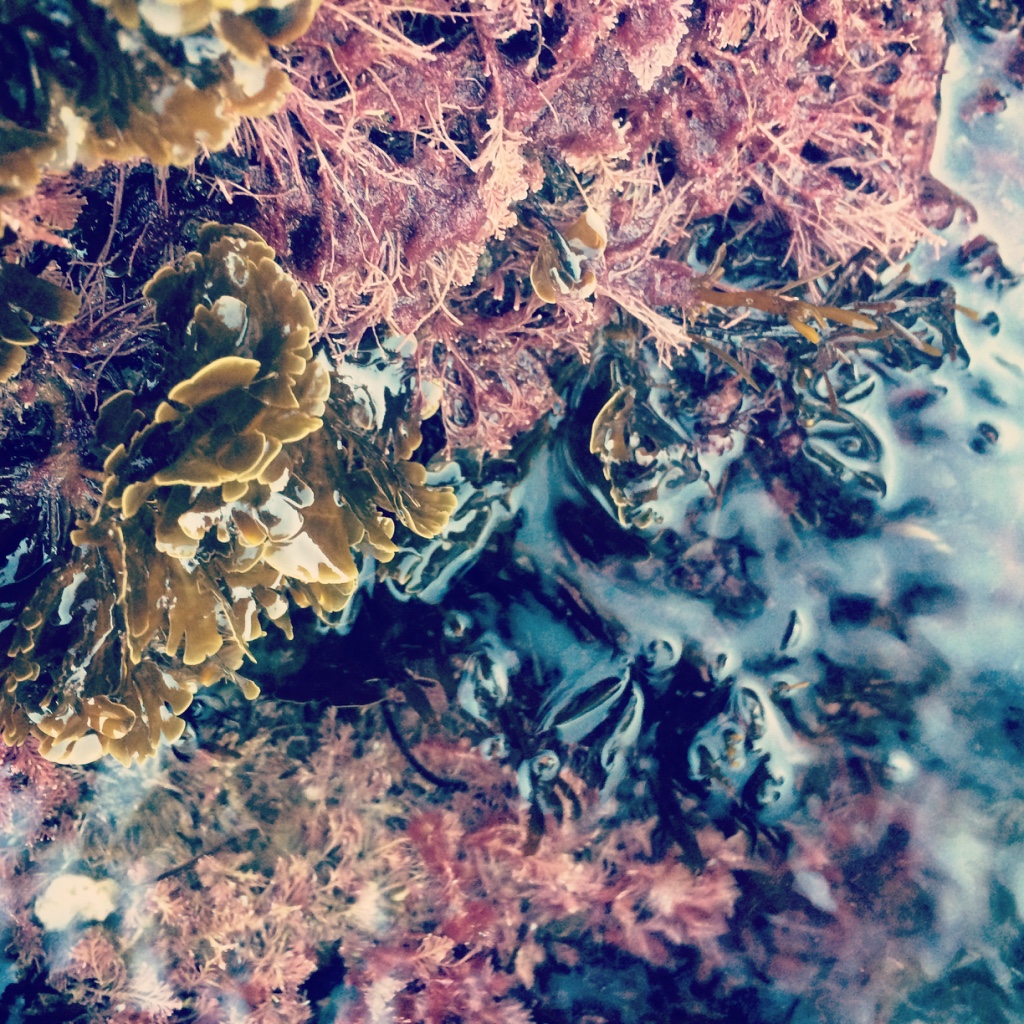
Red and brown algae in a tidepool in the bay.
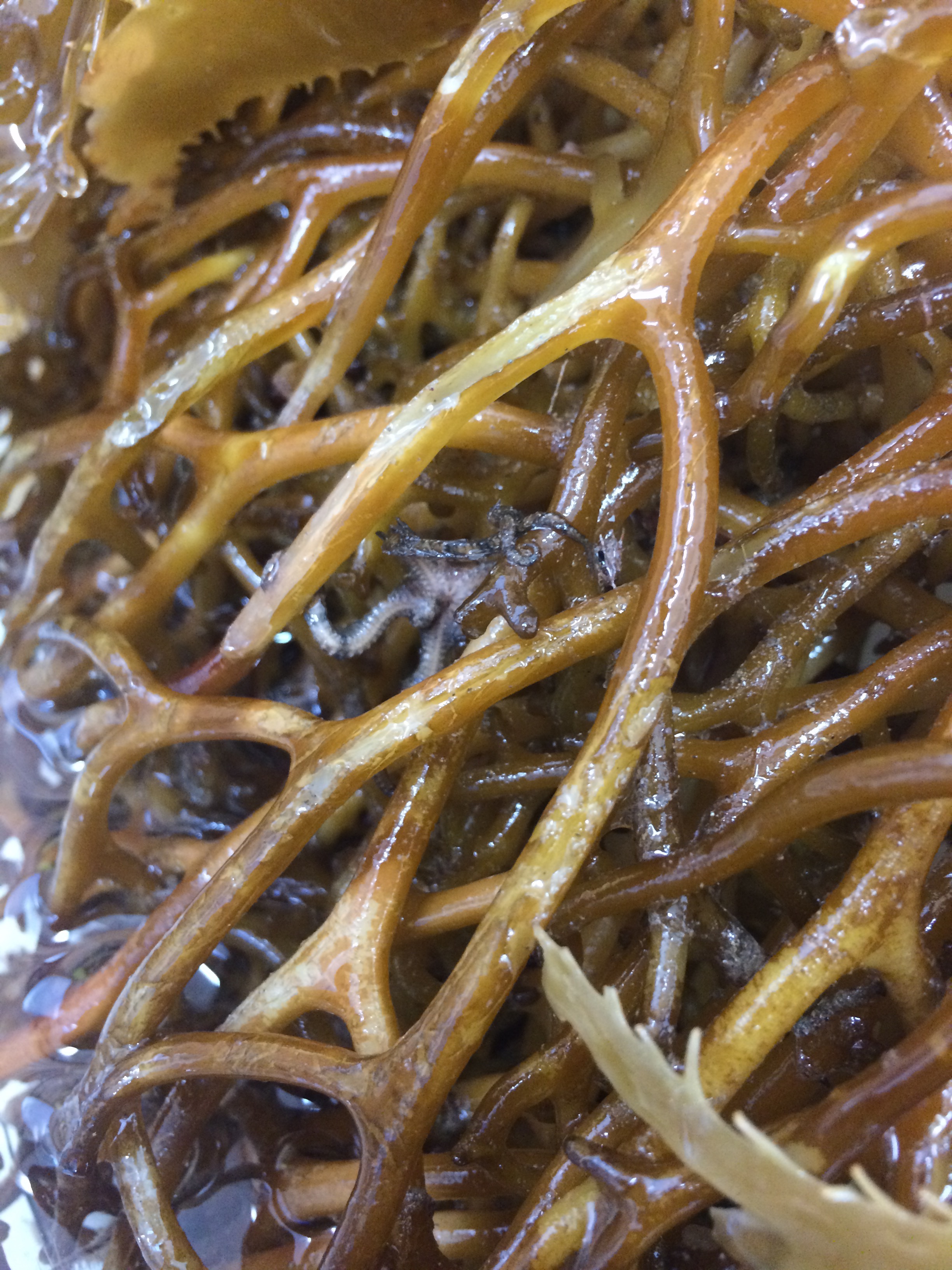
A brittle star crawls to cover in a kelp holdfast. Holdfasts are the “roots” of the algae, anchoring them to the seafloor. This holdfast (roughly 18″ across) contained over 60 individual brittle stars. The nooks and crannies are perfect hiding places!
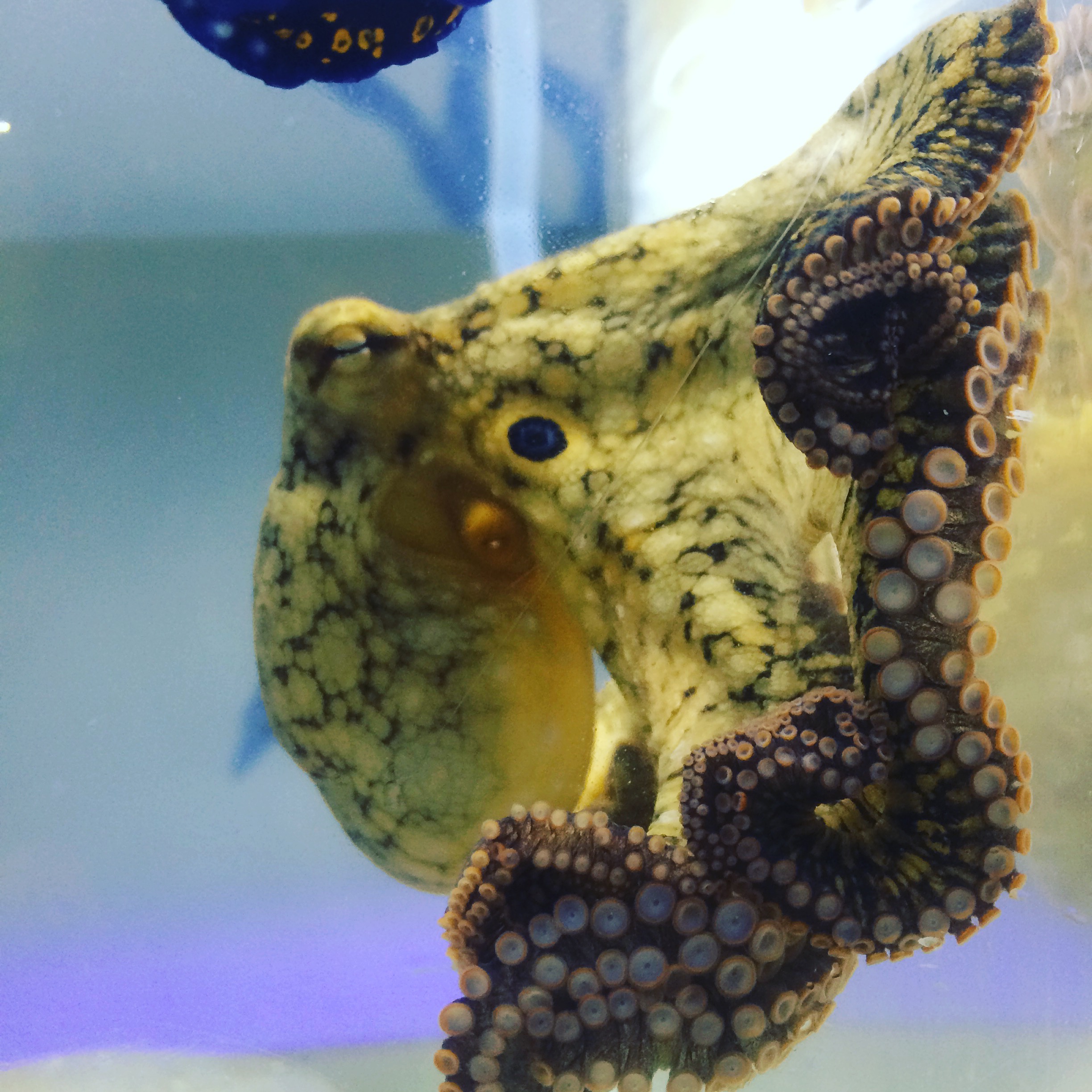
Our gregarious two-spot octopus, Nala, shows off her suckers and false eyespot she uses to intimidate predators. Her actual eye is white with a black horizontal pupil – can you find it?
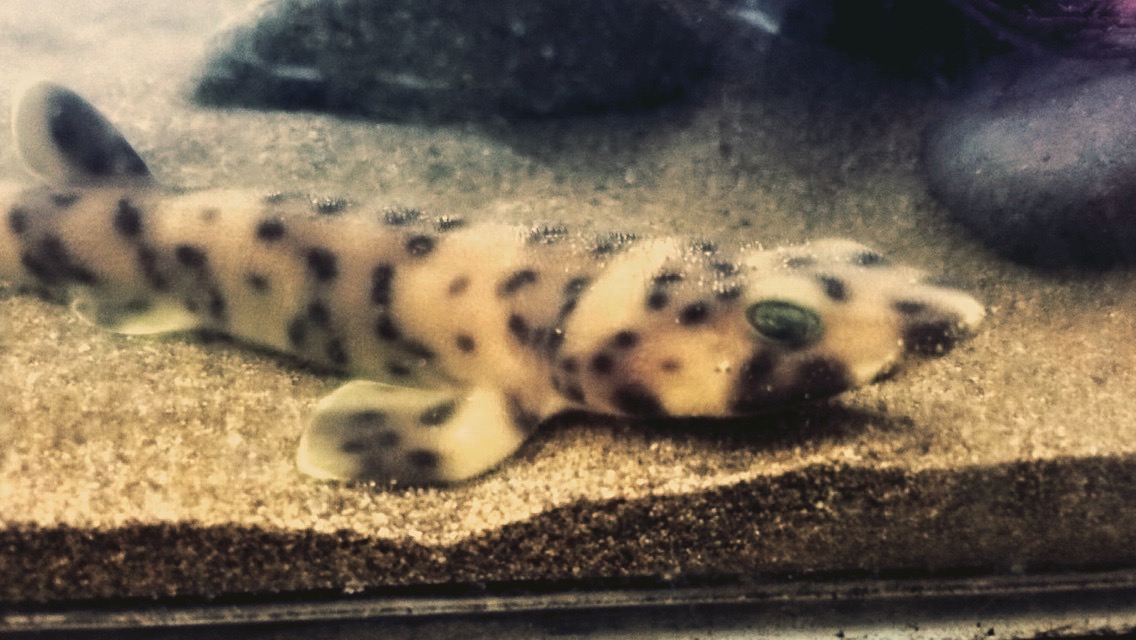
Only a few hours old, a juvenile swell shark calmly peers out of her tank.
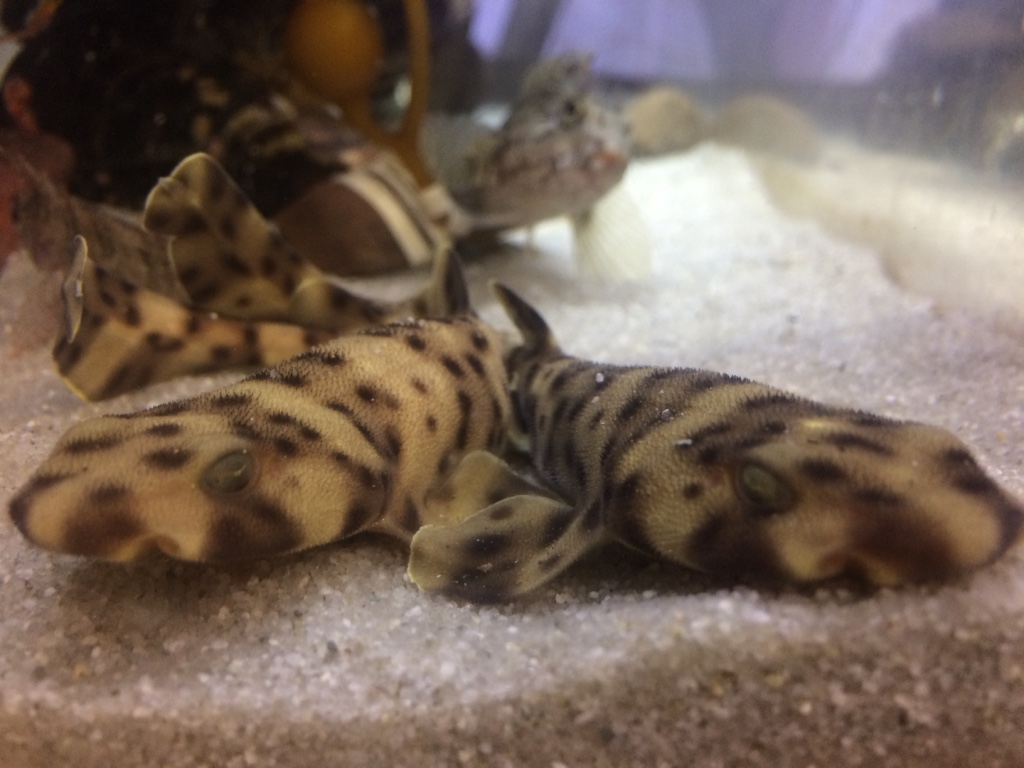
If you look closely, you can hundreds of tiny bumps on the pups. These are dermal denticles, literally “skin teeth”. These act as a form of protection, and also help sharks swim faster through the water.
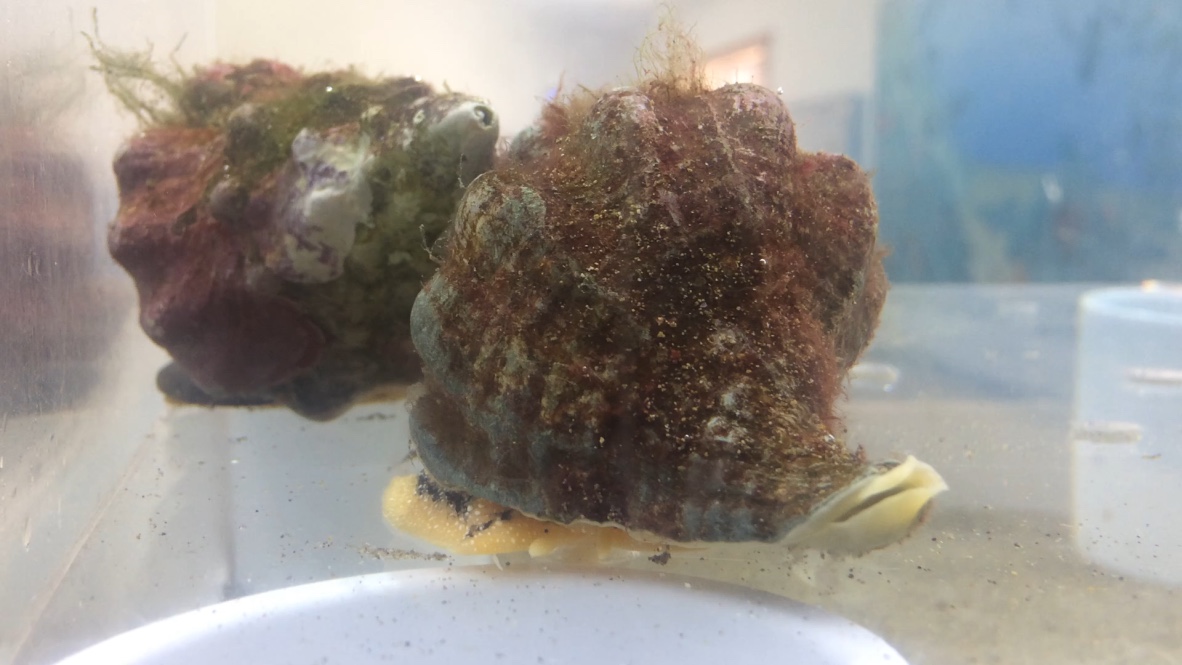
Kellet’s whelks in invertebrate lab. The algae growing on their shells provides excellent camouflage.
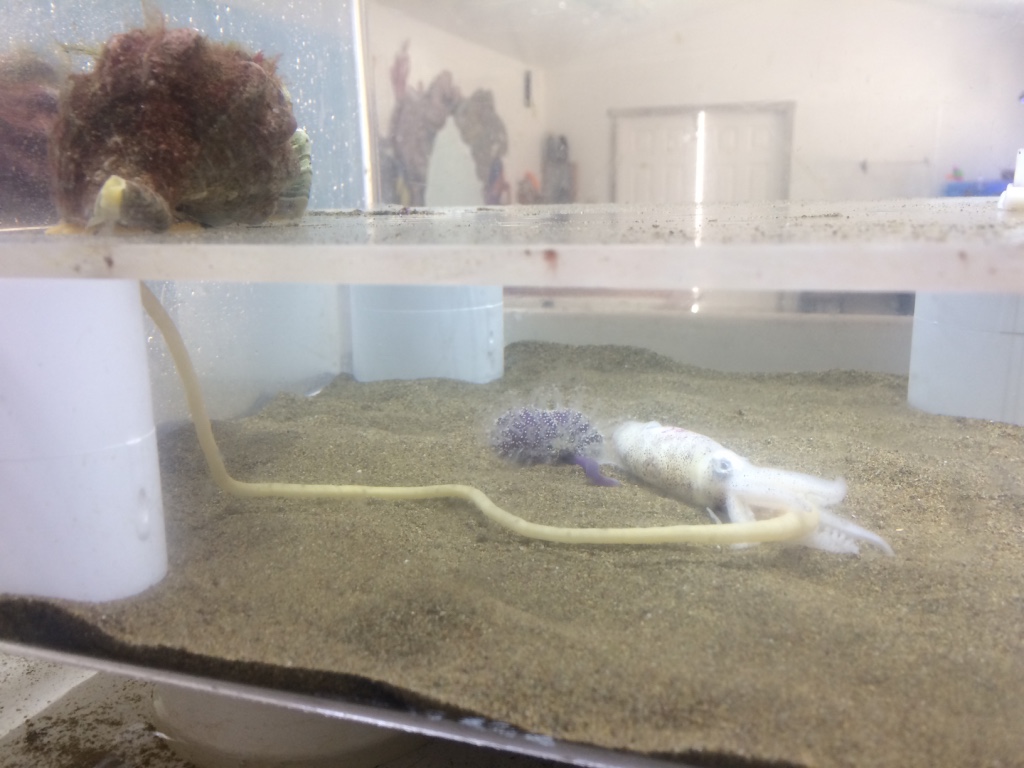
A Kellet’s whelk uses its massive proboscis to feed on a tasty squid. Incredible!
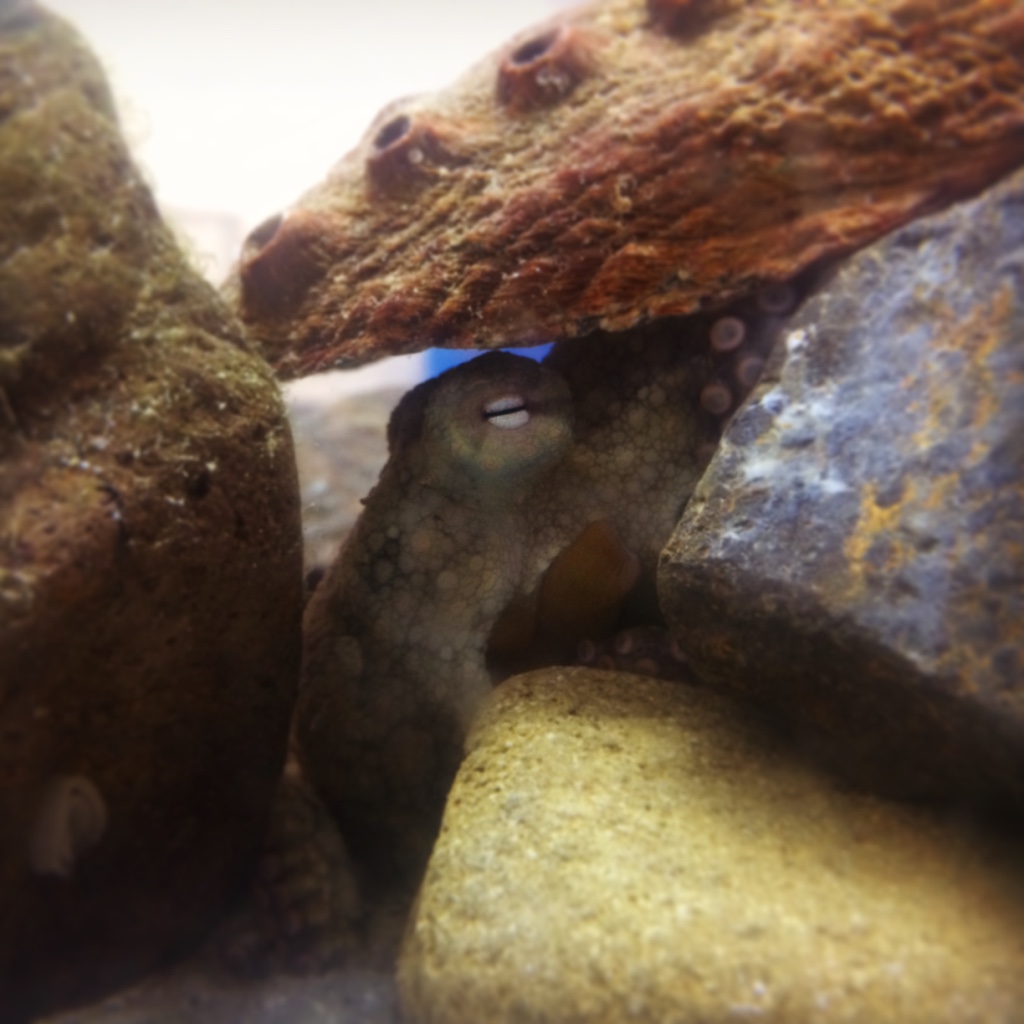
Seemingly annoyed yet curious, a two-spot octopus peers out of her den.
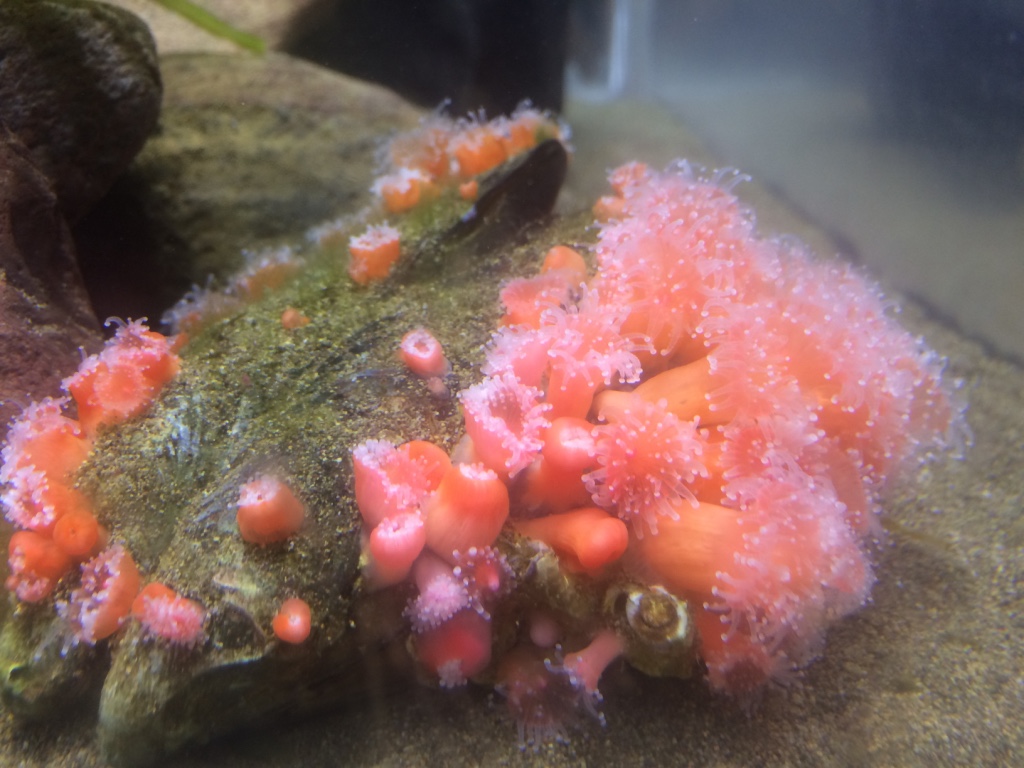
A cluster of strawberry anemones add a lovely burst of color to the tanks.

One of our grumpier residents – a southern kelp crab feasts on codium, a green algae.
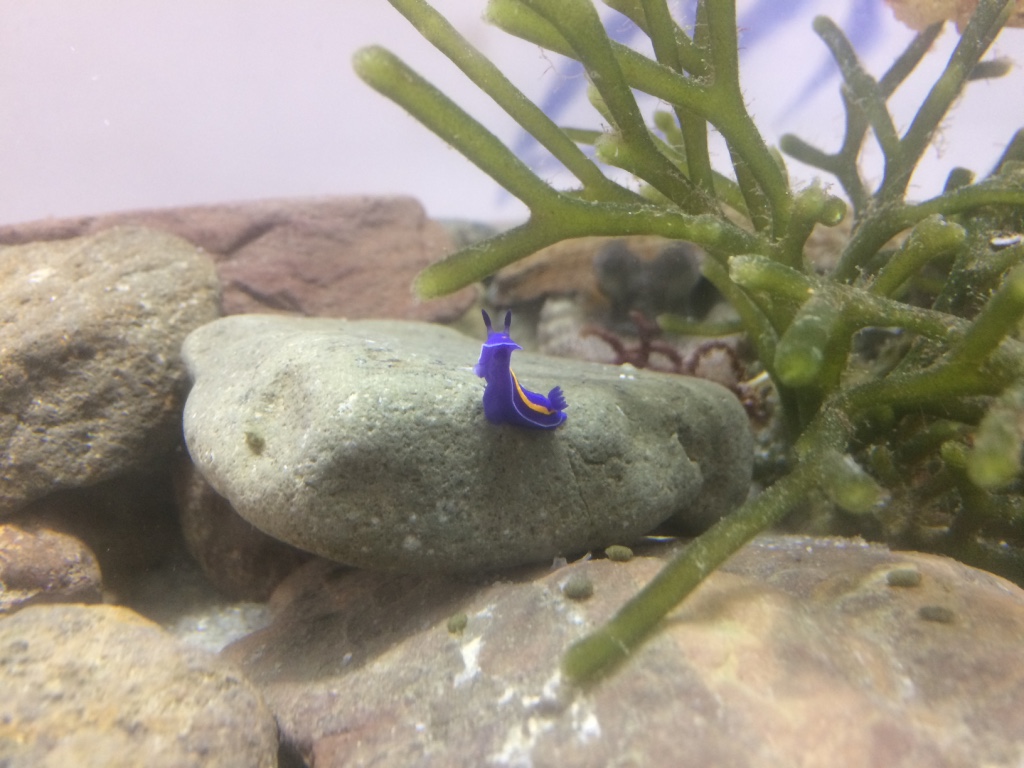
Seemingly on high alert, this nudibranch actually has no eyes or ears. They can sense light and dark, but primarily use their senses of touch, taste, and smell to navigate.
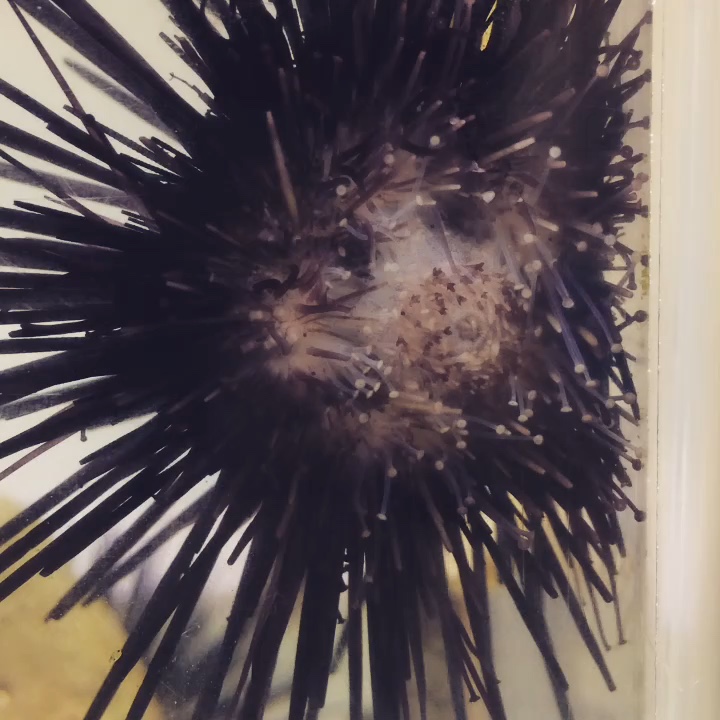
A coronado “crowned” sea urchin uses its tube feet to crawl its way around the tank. In the center, you can see its five-pronged beak, also known as Aristotle’s lantern. They use this magnificent piece of engineering to feed on algae.
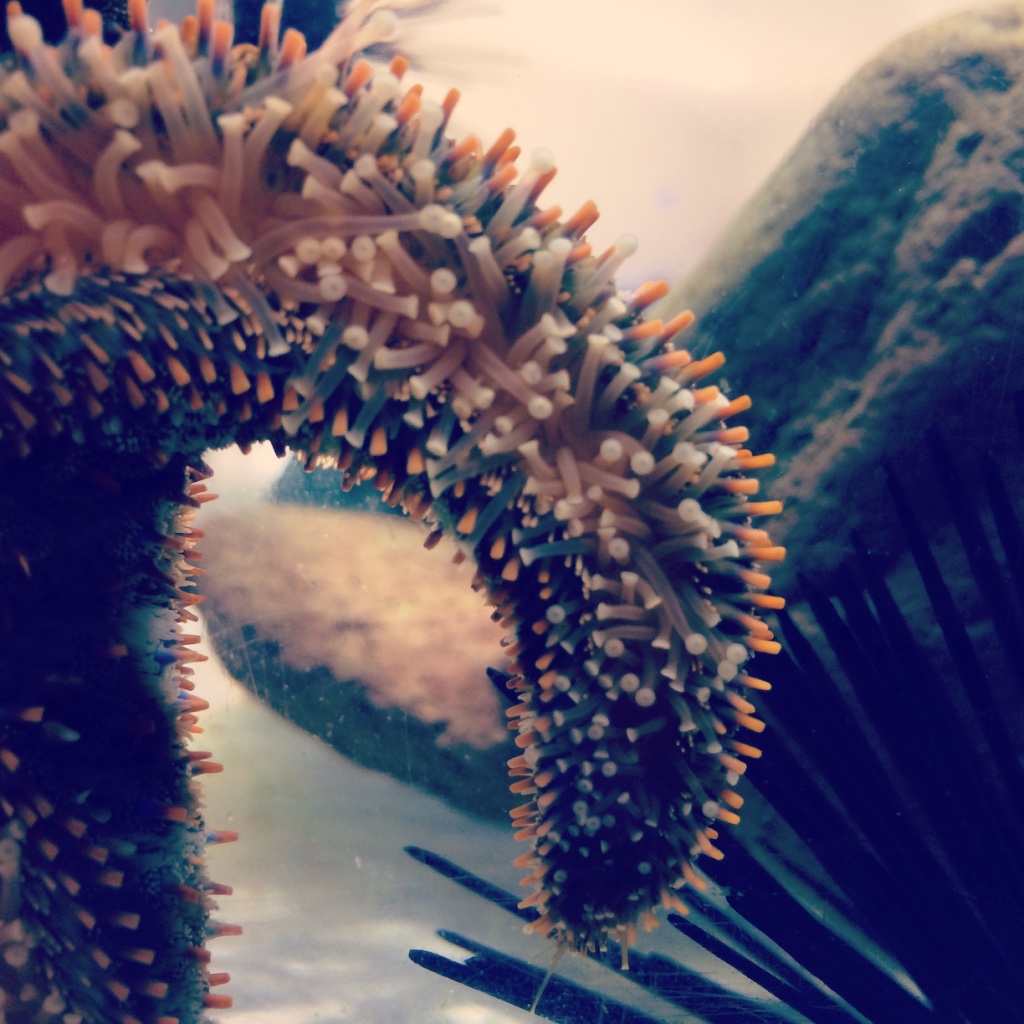
A distant relative of sea urchins, a fragile rainbow star also uses suction cup tube feet for locomotion.
In order to keep all these critters alive, we have a set of pumps pulling water up from 70 ft deep in our bay. The water then runs through a series of sumps (water reservoirs) and a filter before going into the tanks. The water then flows out into our drainage ditch and then back into the ocean. The constant flow of seawater is essential for keeping the animals cool and oxygenated. A big part of our job is maintaining these systems – I’ve learned A TON about plumbing and aquaria!
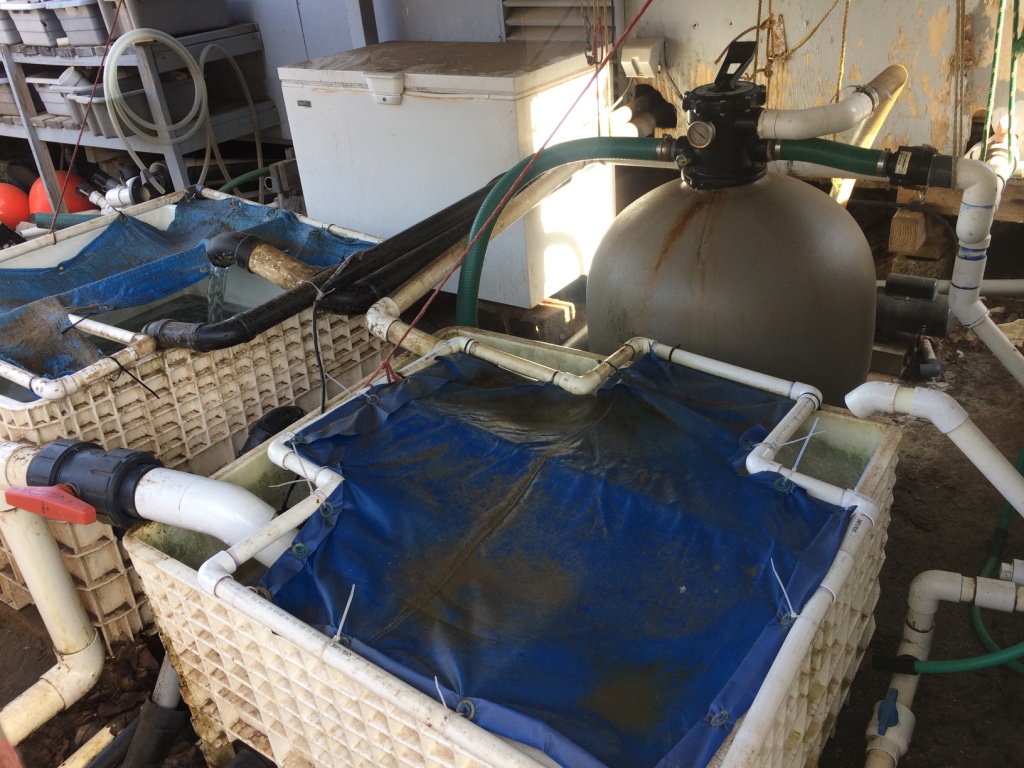
The glamorous behind-the-scenes of our aquariums. The big tarp-covered boxes are sumps that store water that is pumped through the sand filter (the big round thing) and then into the tanks.
Anyways, back to the animals…
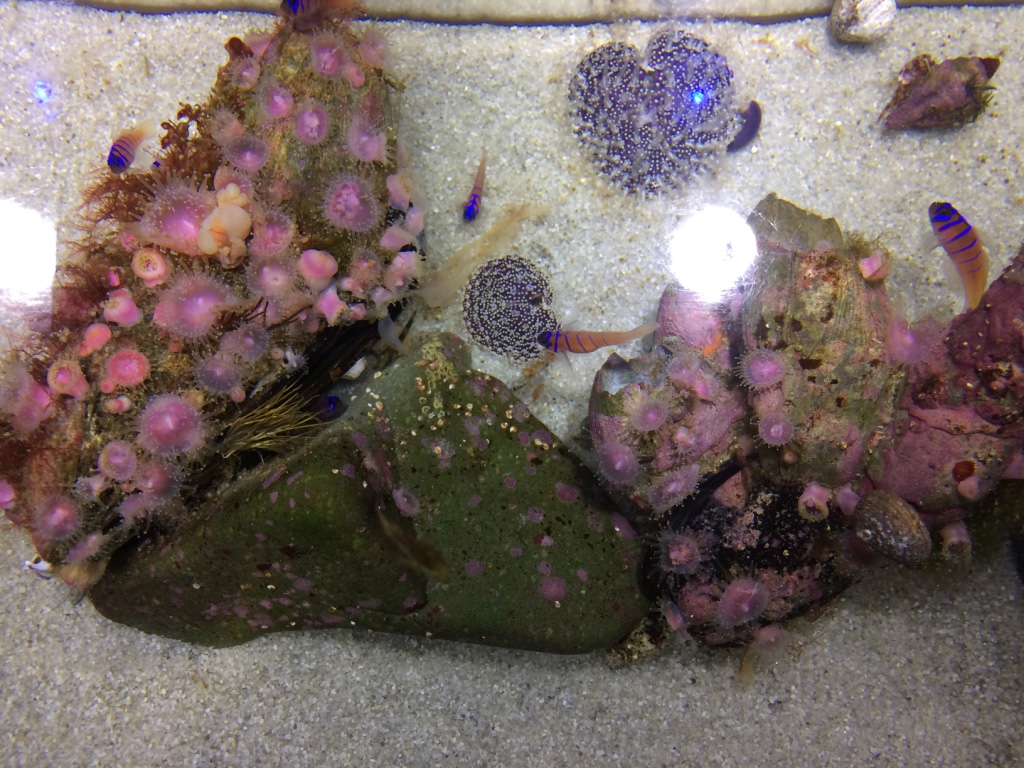
Another shot of Tiny Town and one of my favorite species – Bluebanded Gobies. How many fish can you spot? I count eight.
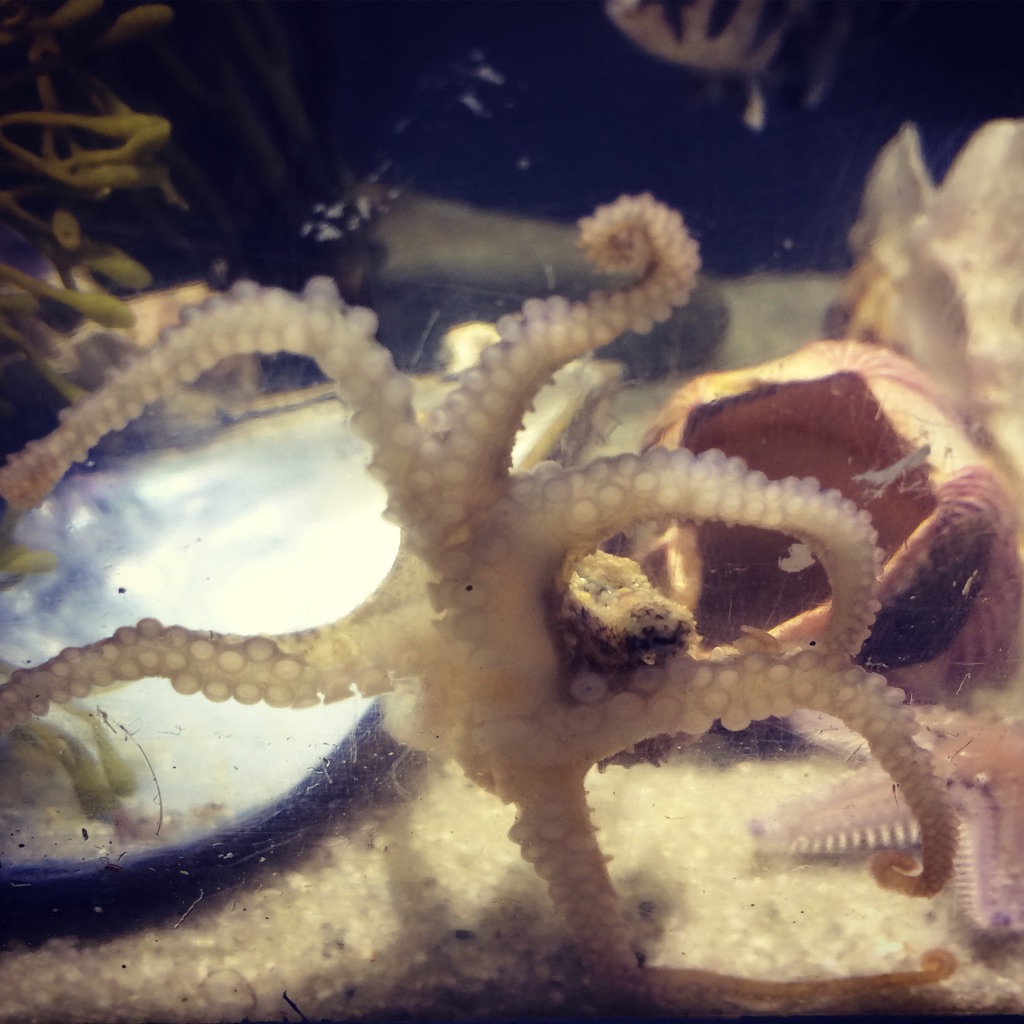
Our baby two-spot octopus, Kala, saying hello.
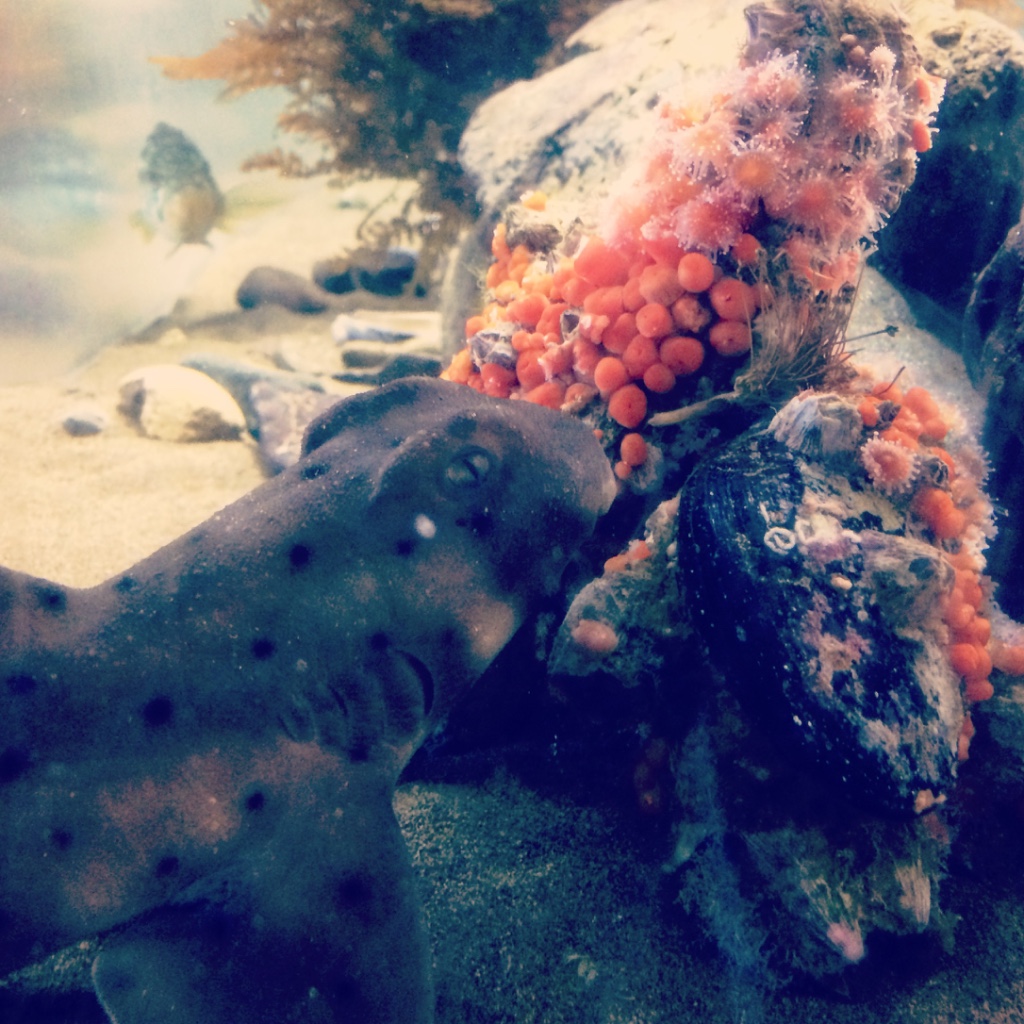
A juvenile horn shark snacking on strawberry anemones.
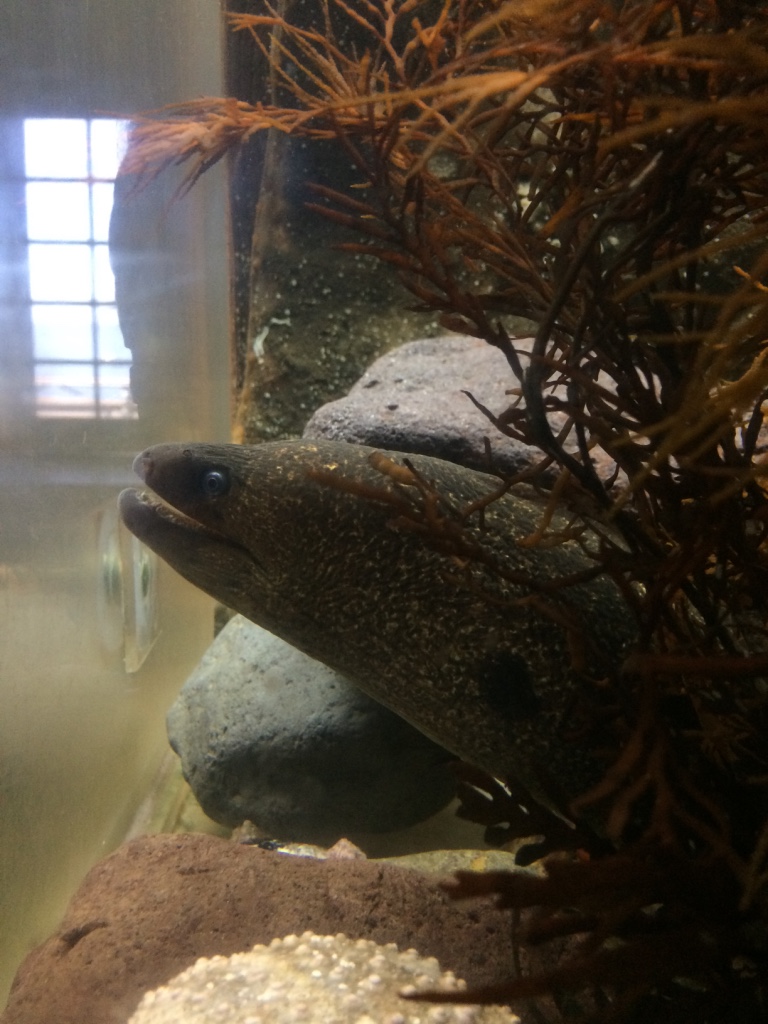
A California Moray Eel peers out from behind some algae.
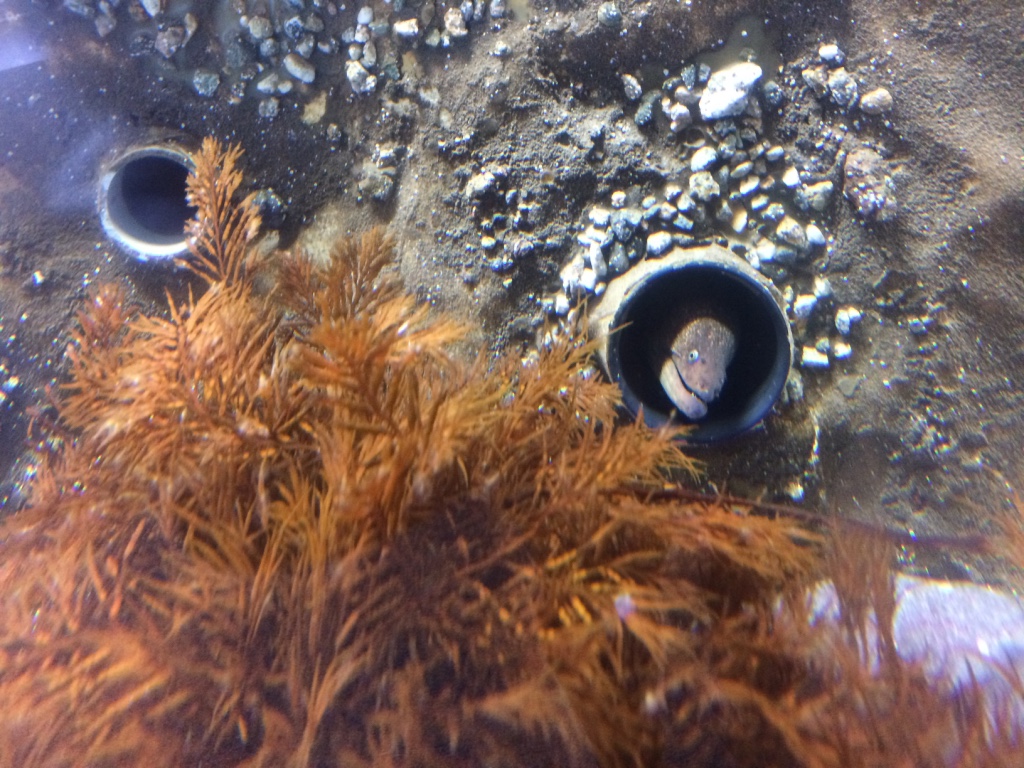
We build habitats to fit the needs of our creatures – our eel tank includes a series of PVC shelters meant to mimic eel’s natural hiding spots.
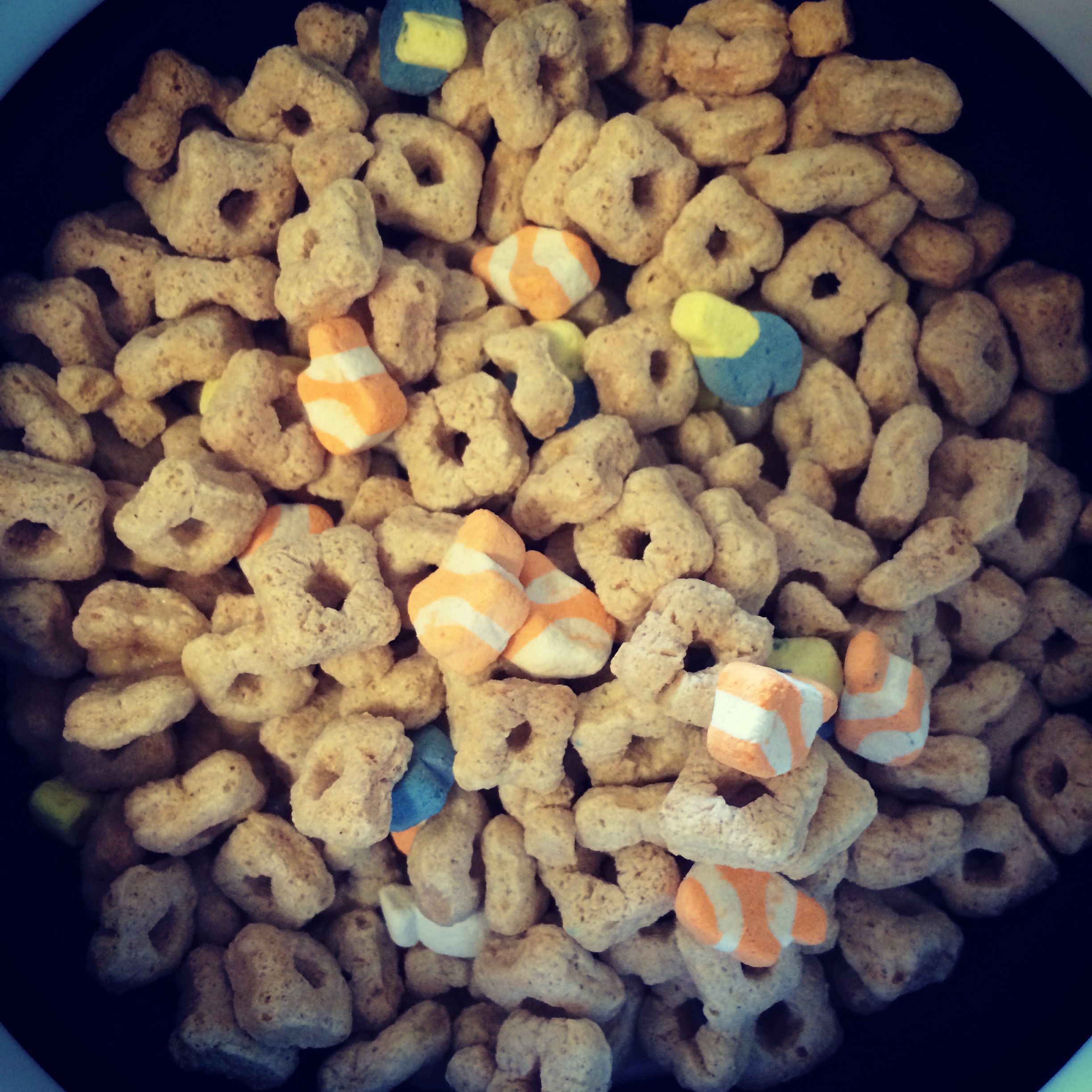
The best way to start the day as an aquarist – with a bowl full of blue tangs and clownfish!
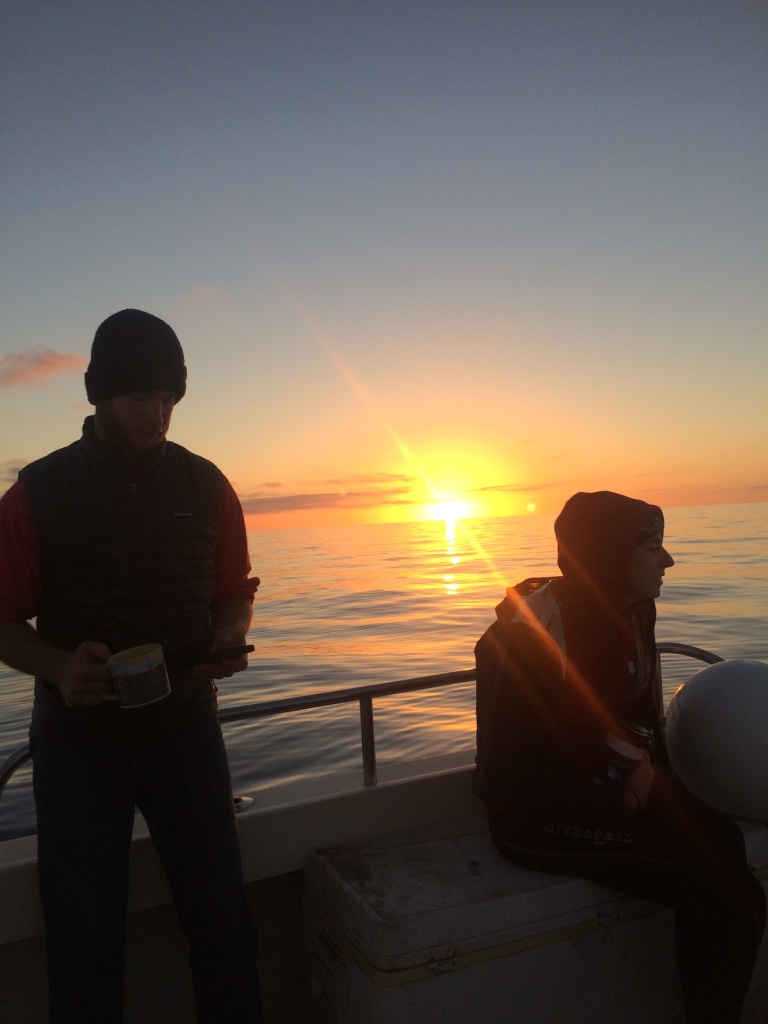
Morgan and Katie enjoying sunrise coffee on the boat – a little Team AQ bonding!
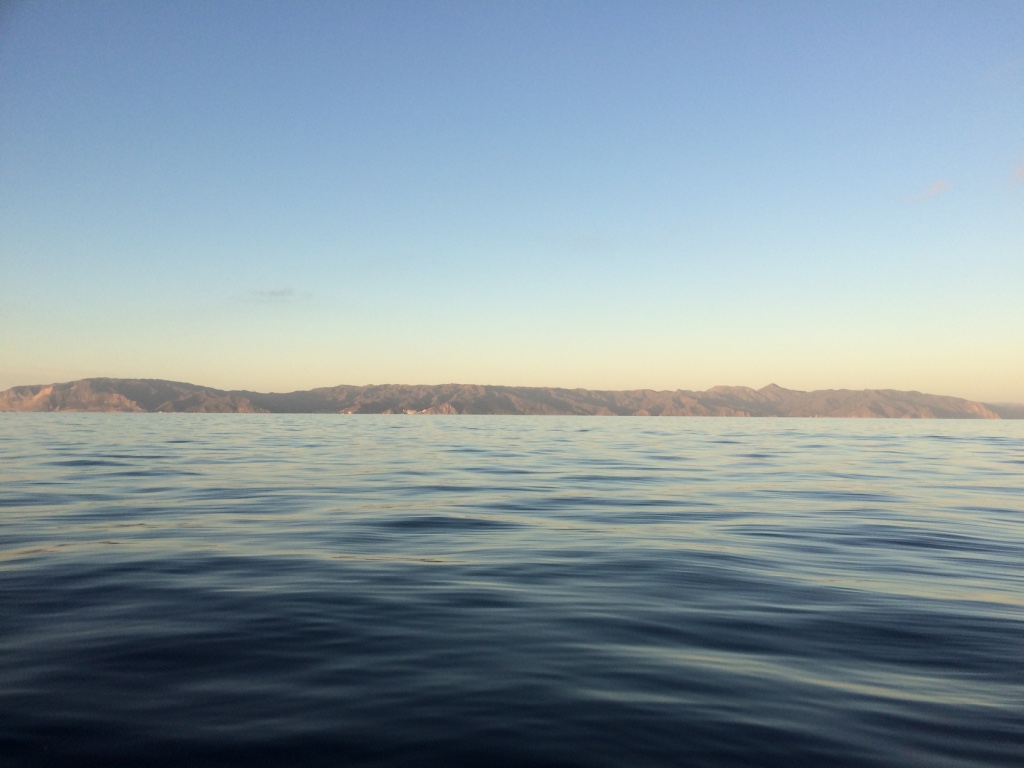
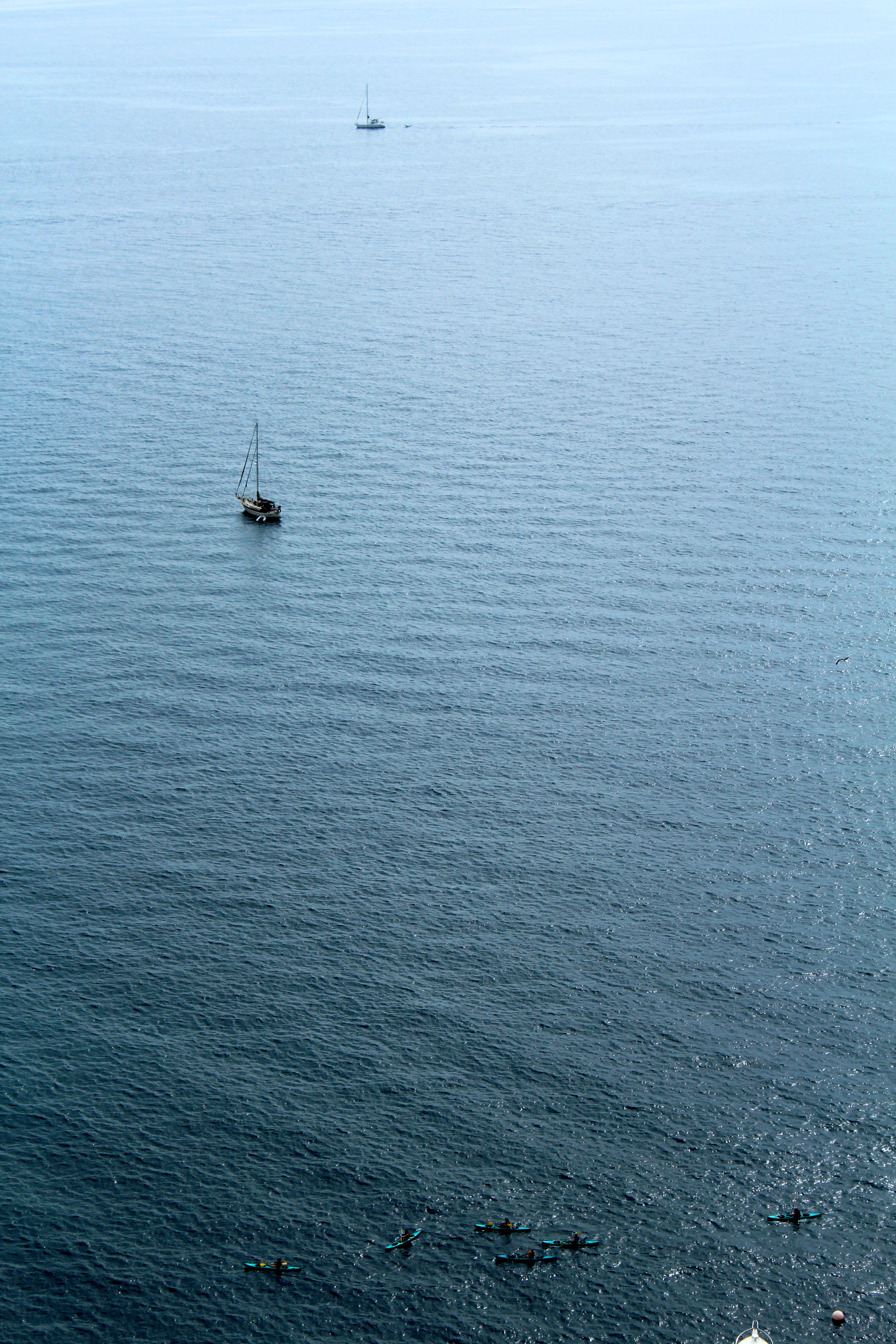
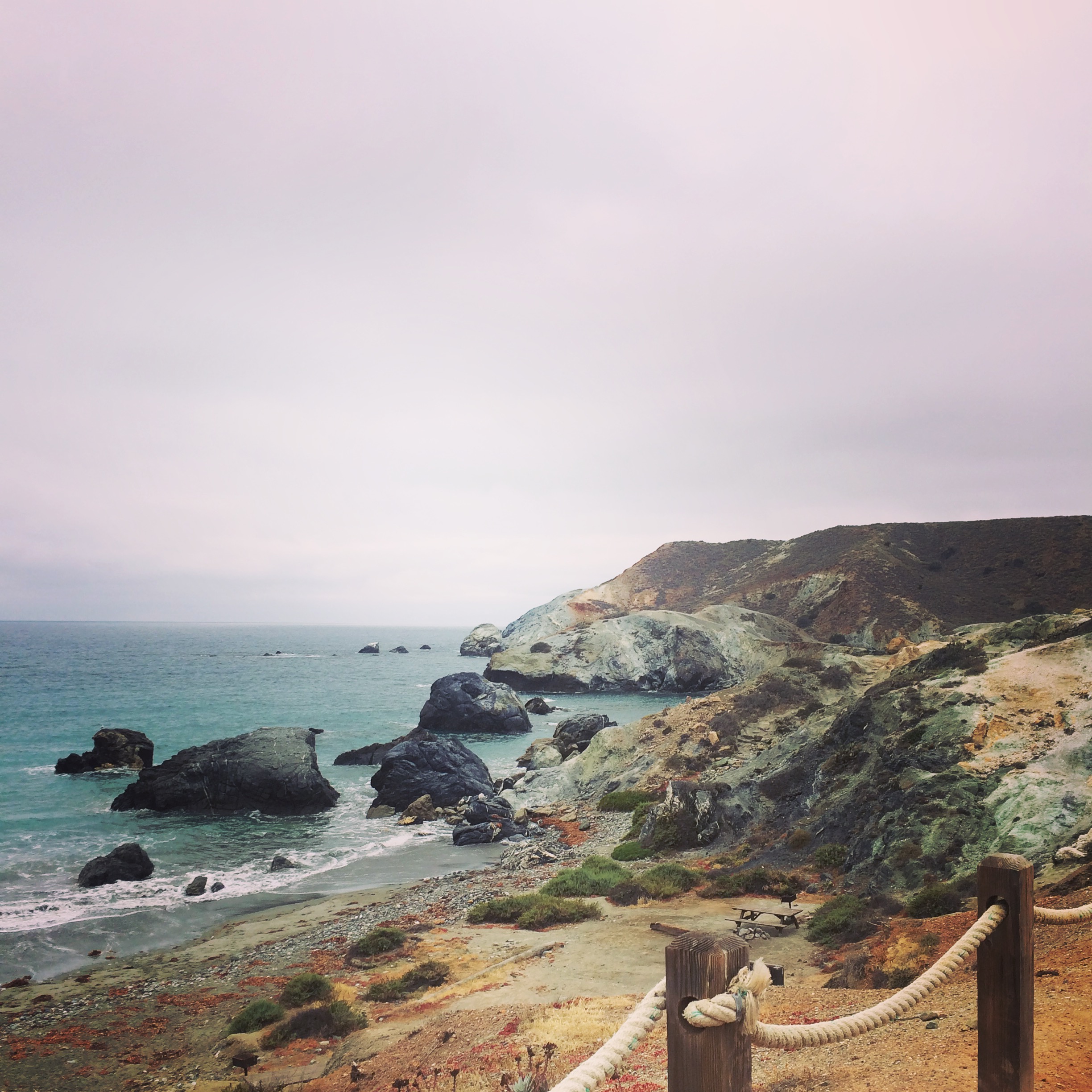
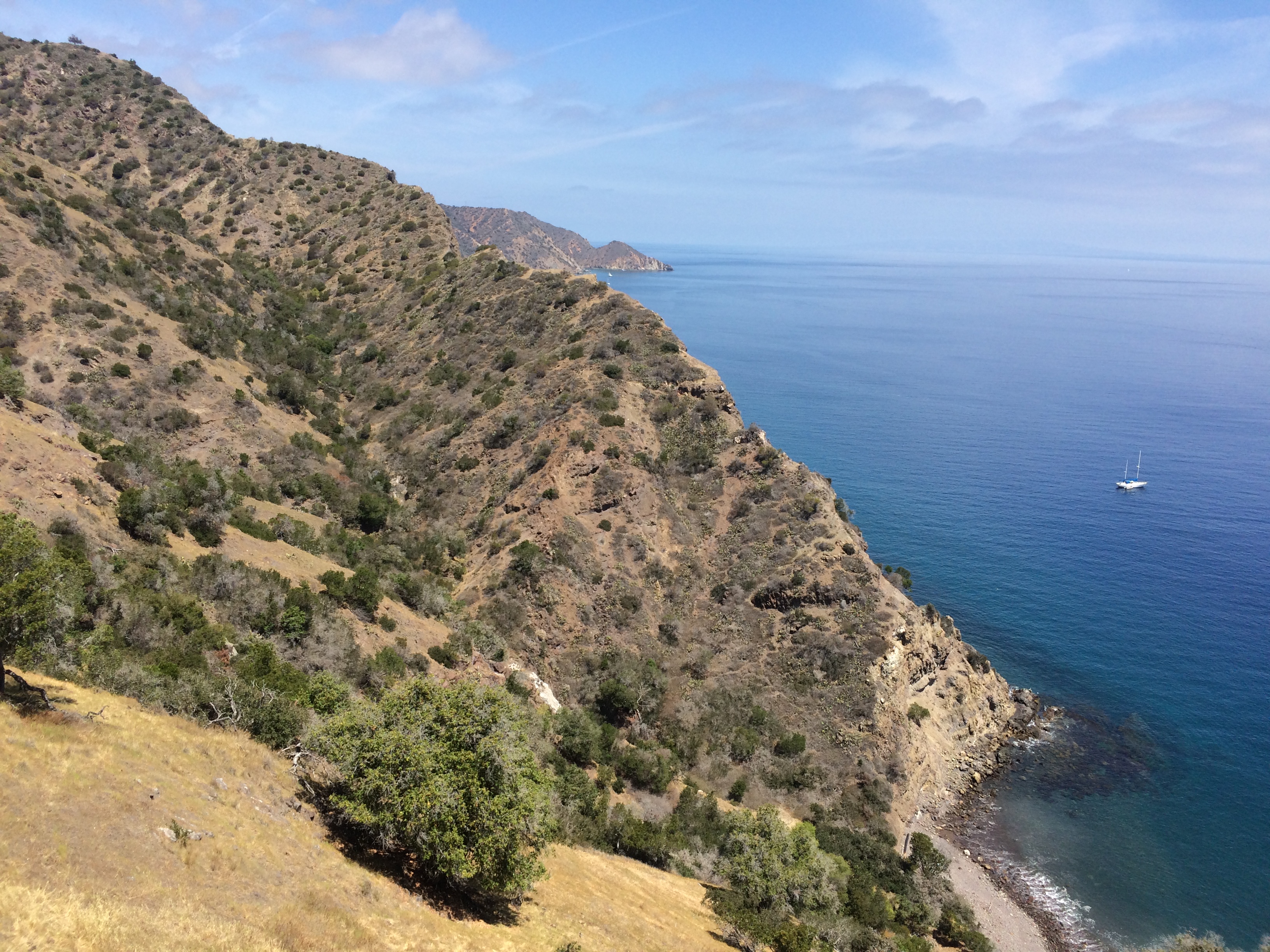
Catalina Island just after sunrise, a few miles off shore.






 Wandering Fins

