Wait… it’s September? Already? What a summer!

Hello everyone! My apologies for such a huge gap in posts – the internet here is minimal and summer sea camp was insanely busy – but I’m back! I’ll be doing a short series of posts to bring everyone up to date.
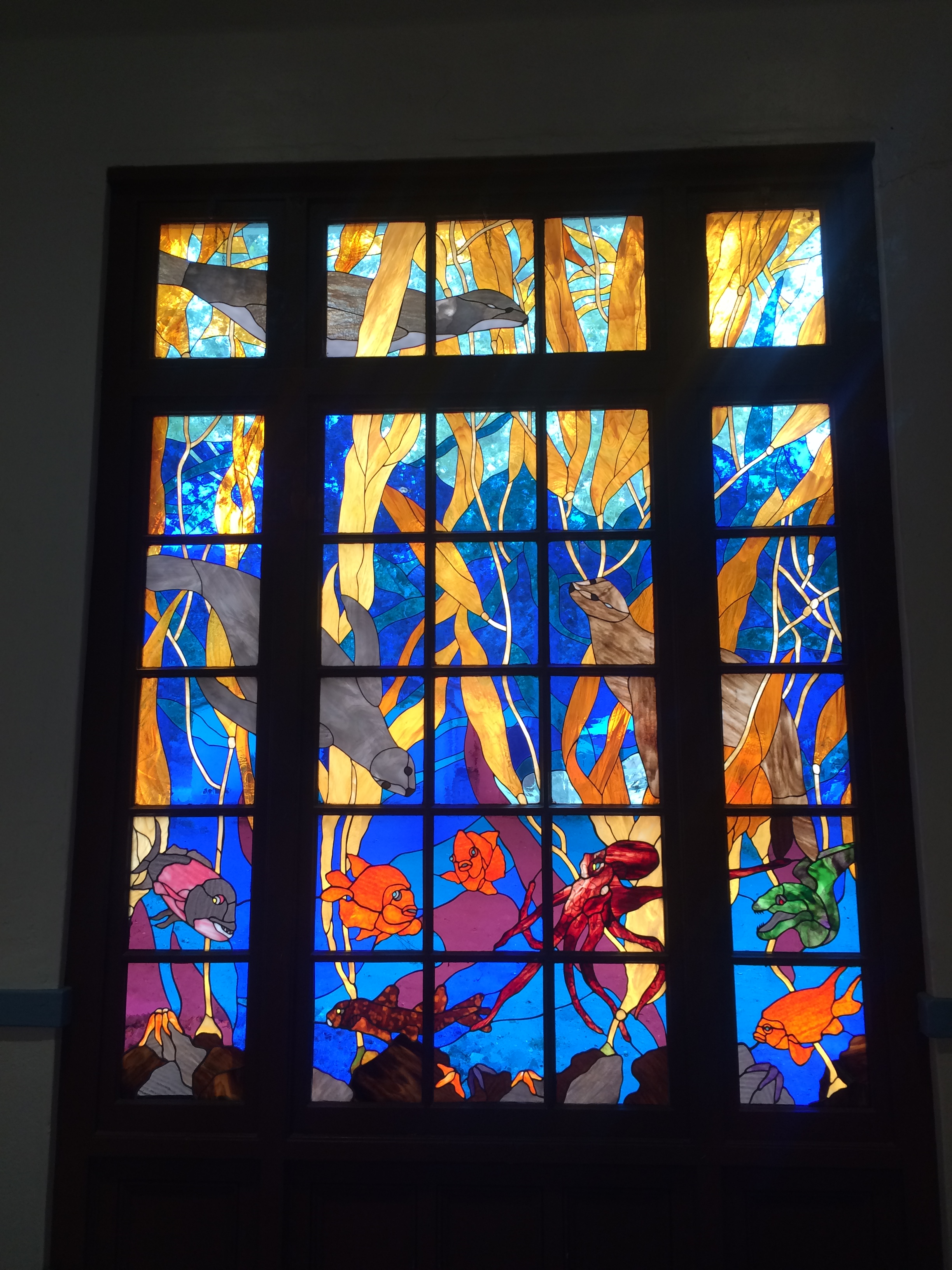
IMG_5502Stained glass window in the Marine Mammal Hall at CIMI Toyon Bay. Featuring: giant brown kelp, sea lions, garibaldi, a two-spot octopus, a sheepshead, a horn shark, and several sea stars.

Wow, I don’t even know where to begin… So much has happened since my last post! The summer was a whirlwind of summer seacamp sessions, traveling around the interior of the island for the first time, meeting and getting to know amazing kids and coworkers, and lots of learning experiences.
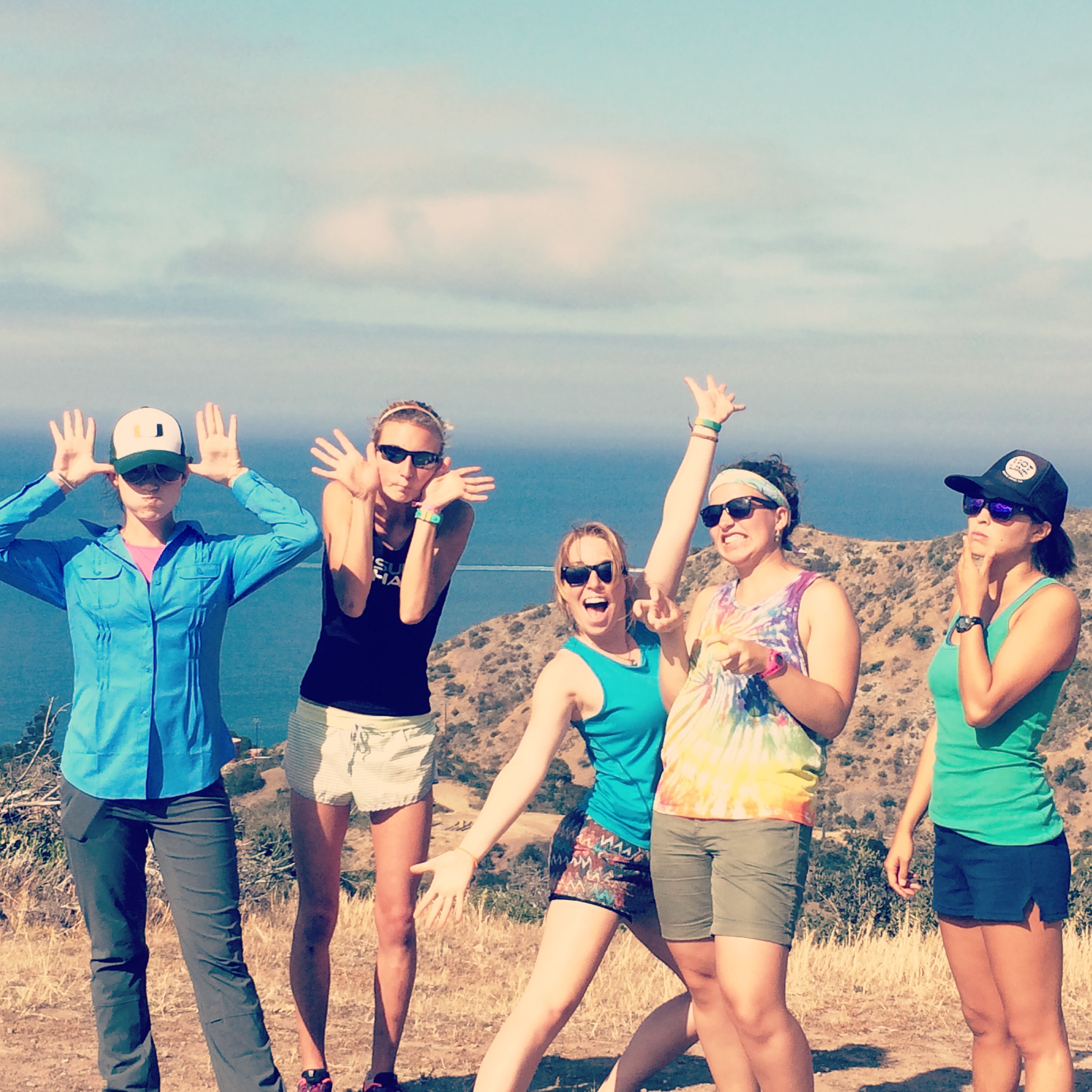
IMG_5440The five summer “new fish”.

I arrived to the island a few days before the rest of the “new fish” – what everyone calls the new folks each season. We were 5 strong, all having recently graduated from college. We were promptly engulfed into the “nerd herd” a.k.a the summer science and adventure staff (some people also refer to it as science & leisure staff, but please, we worked our tails off). The rest of the sailing and dive staff also arrived, along with a host of counselors, adminstrators, and a whole photography and social media crew. We kicked off our summer season with an physically intense week of lifeguard training followed by a week of training on the summer labs, courses, and activities we offered. I studied, paddleboarded, kayaked, went to training lectures, snorkeled, realized that a 7 mm thick wetsuit was definitely a good idea, studied some more, wrote lesson plans, hiked a mountain, shimmed past the bison in camp, went through more training… It was a jam packed week! Never have I learned so much about such a variety of topics and activities in so little time, not to mention learning all of the logistical procedures… Once our brains were so full of wonderful new knowledge that we thought they would explode, training week ended. We jumped right in to a couple days of team teaching with our more experienced coworkers during the first week of camp, and then were unleashed to teach on our own.
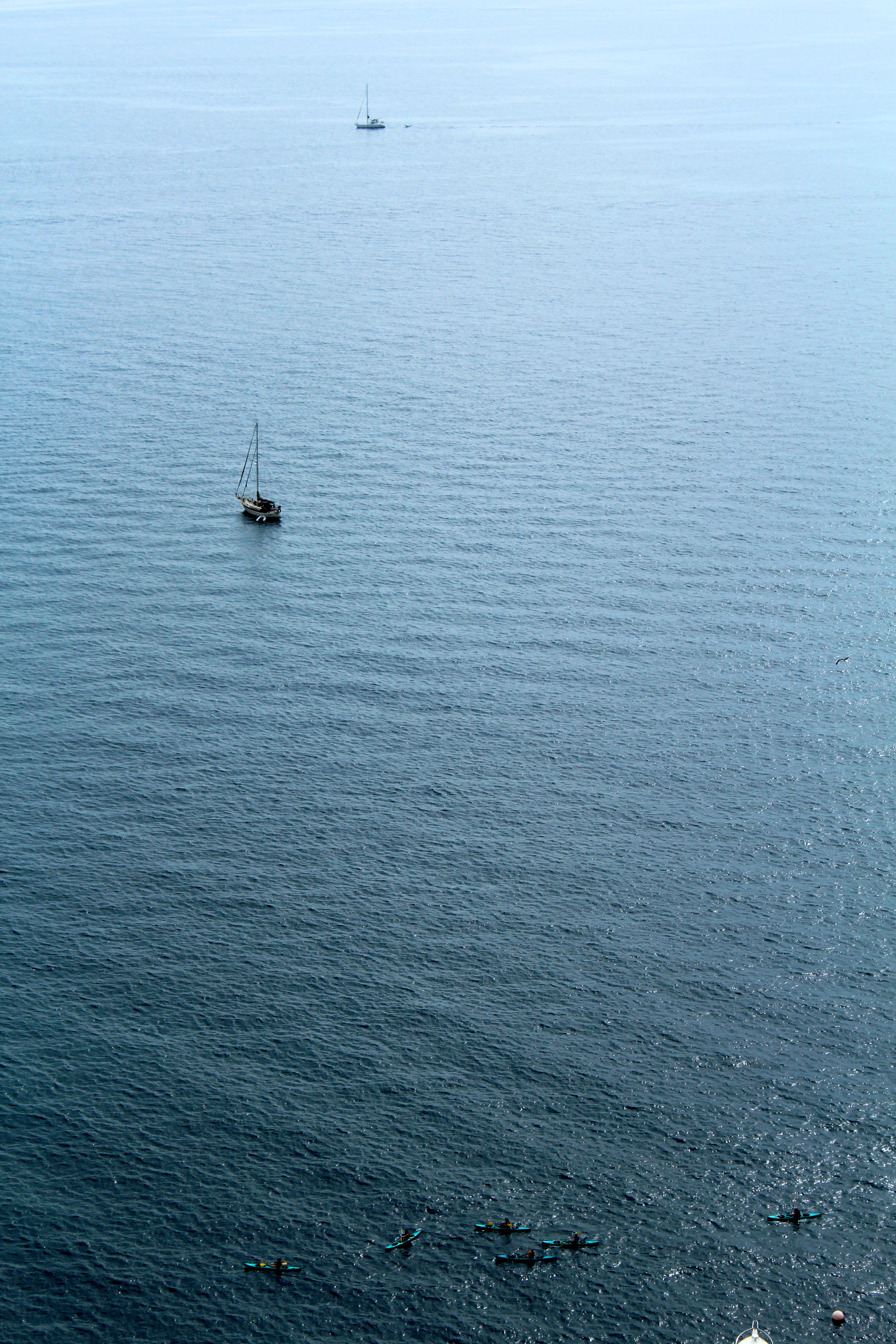
IMG_4390A troupe of morning kayakers hits the water and heads for another CIMI camp, Fox Landing, on a longer kayak.

Our summer season began with three one-week sessions of Junior Seacamp (8-12 year-olds), followed by two three-week sessions of Senior Seacamp (13-17 year olds). Per company policy I can’t post any pictures of campers to keep their privacy, so I wasn’t able to document most of our amazing adventures, but you can check out a fantastic photostream on the Catalina Sea Camp Instagram!

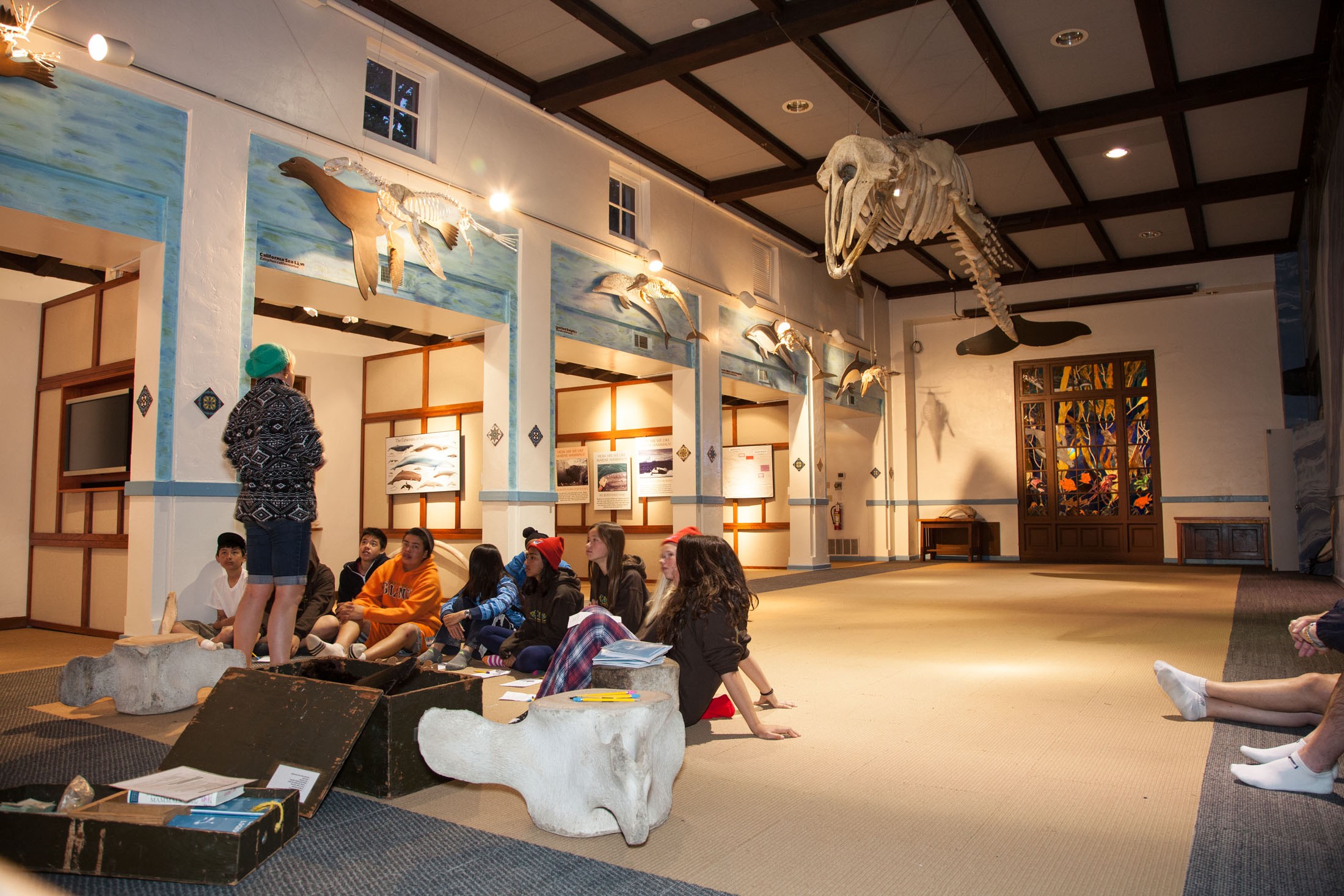
One of my favorite classes to teach during Junior Seacamp was Marine Mammals. The beautiful window at the top of this post is in the Marine Mammal Hall and is probably my favorite building at Toyon Bay. It originally functioned as a library when the buildings were constructed for the all-male boarding school that was established at Toyon in the late 1920’s. Most of the buildings around camp are nearing 100 years old and have plenty of character and stucco charm. Instead of books, the marine mammal hall now hosts an impressive collection of marine mammal specimens from populations found all around Catalina.

Some of the most unique educational resources we have at Catalina are our gray whales. Our first is an incredible life-sized inflatable of an adult grey whale:IMG_5470
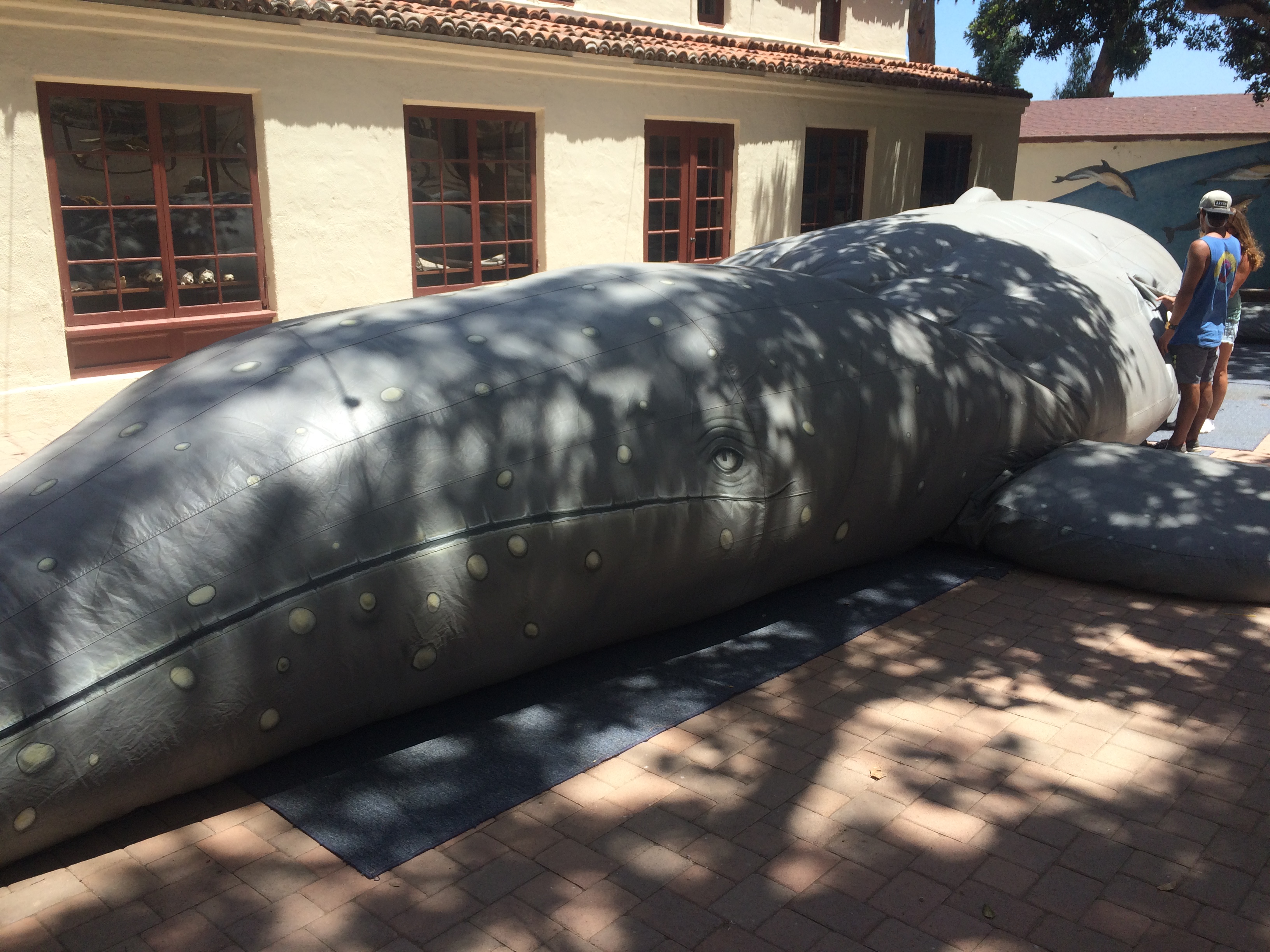
Grey whales can reach up to 50 ft. in length and weigh over 70,000 pounds. Whoa. (He’s a little deflated at the moment)

The best part of our inflatable grey whale? You can go inside! A life-sized heart, brain, lungs, and rib cage are inside, and students can roam around so that they can experience how incredibly massive these creatures are. Grey whales are spotted around Catalina on occasion, and have even come into our bay before to feed. My fingers are crossed and I’m hoping I’ll have the opportunity to see one of these amazing creatures with my own eyes during my time here! Grey whales are baleen whales (mysticetes), and do not have teeth like odontocetes. Mysticetes use massive plates of baleen hanging down from their upper jaws to filter out tiny krill, plankton, or invertebrates from water or sediment. Grey whales are nicknamed “mudsuckers” because their feeding strategy involves diving down to the bottom of the ocean and scraping up sediments into their mouths by swimming sideways on the bottom. They then use their baleen to filter out all the mud and water which leaves behind tasty tasty little invertebrates for them to enjoy! I always have my kids act out this sideways bottom-scraping feeding in class – it’s absolutely hilarious.
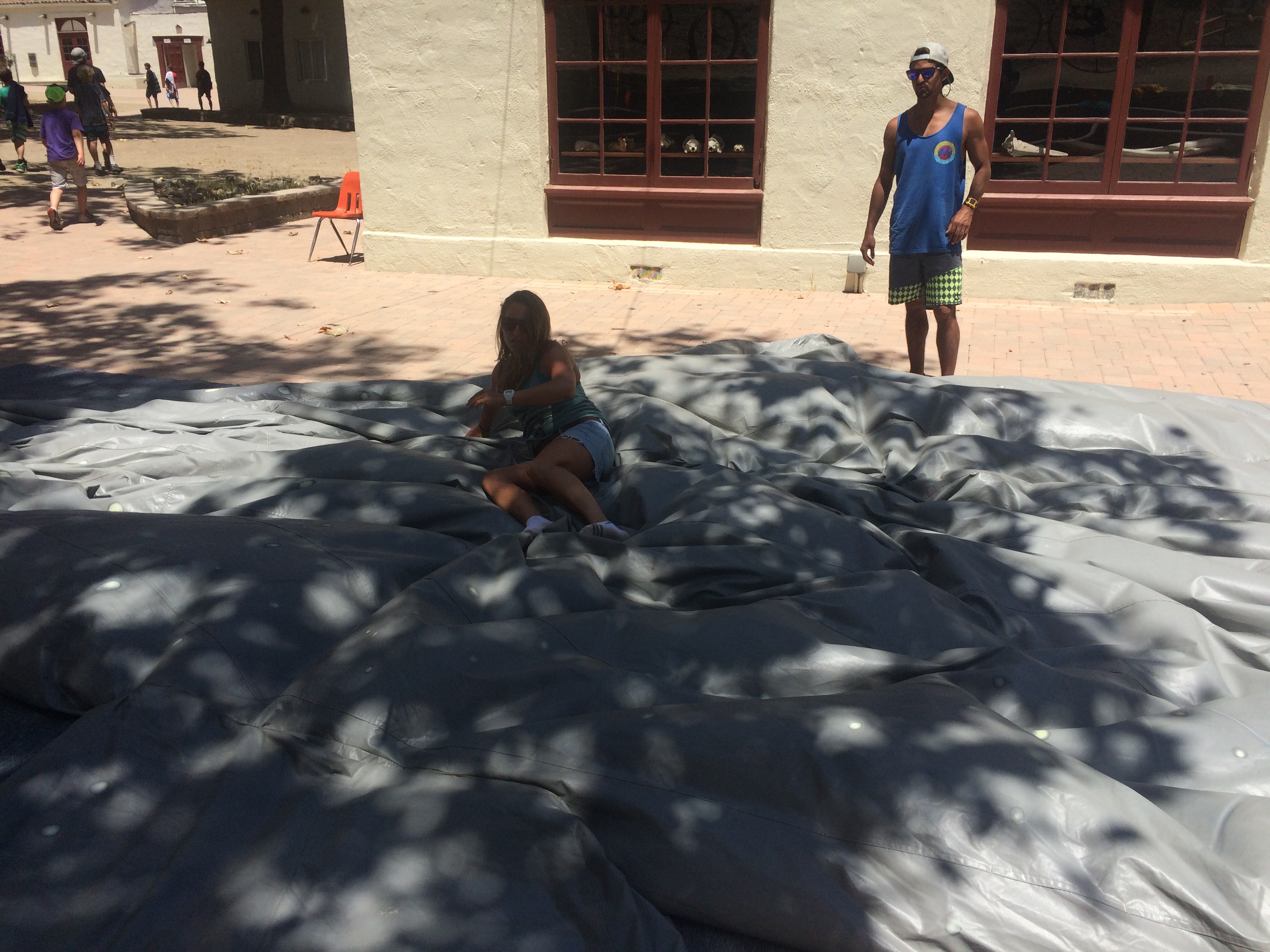
IMG_5471

Peach and Igor having lots of fun deflating the whale (I promise I was helping and not just taking pictures)

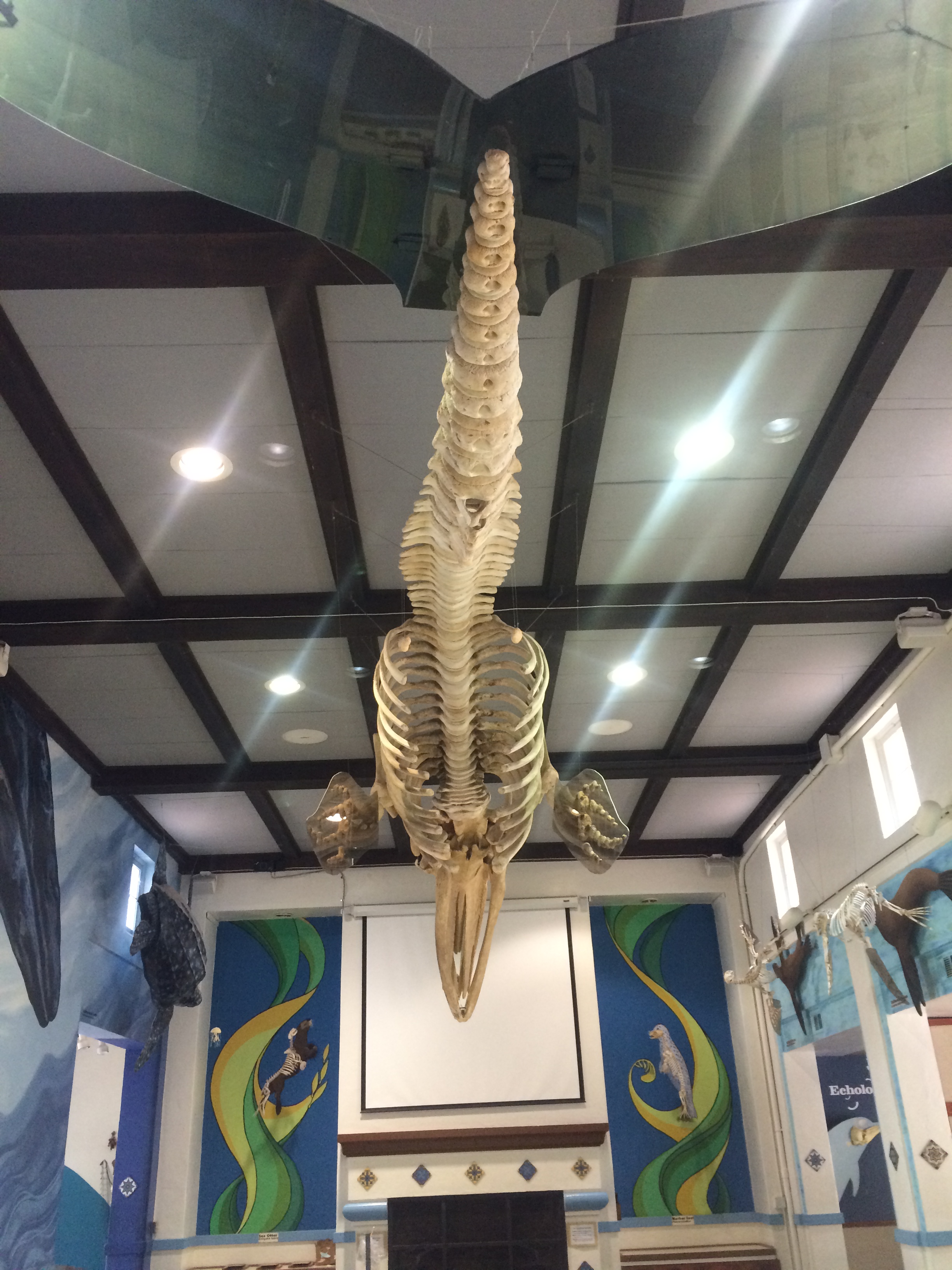
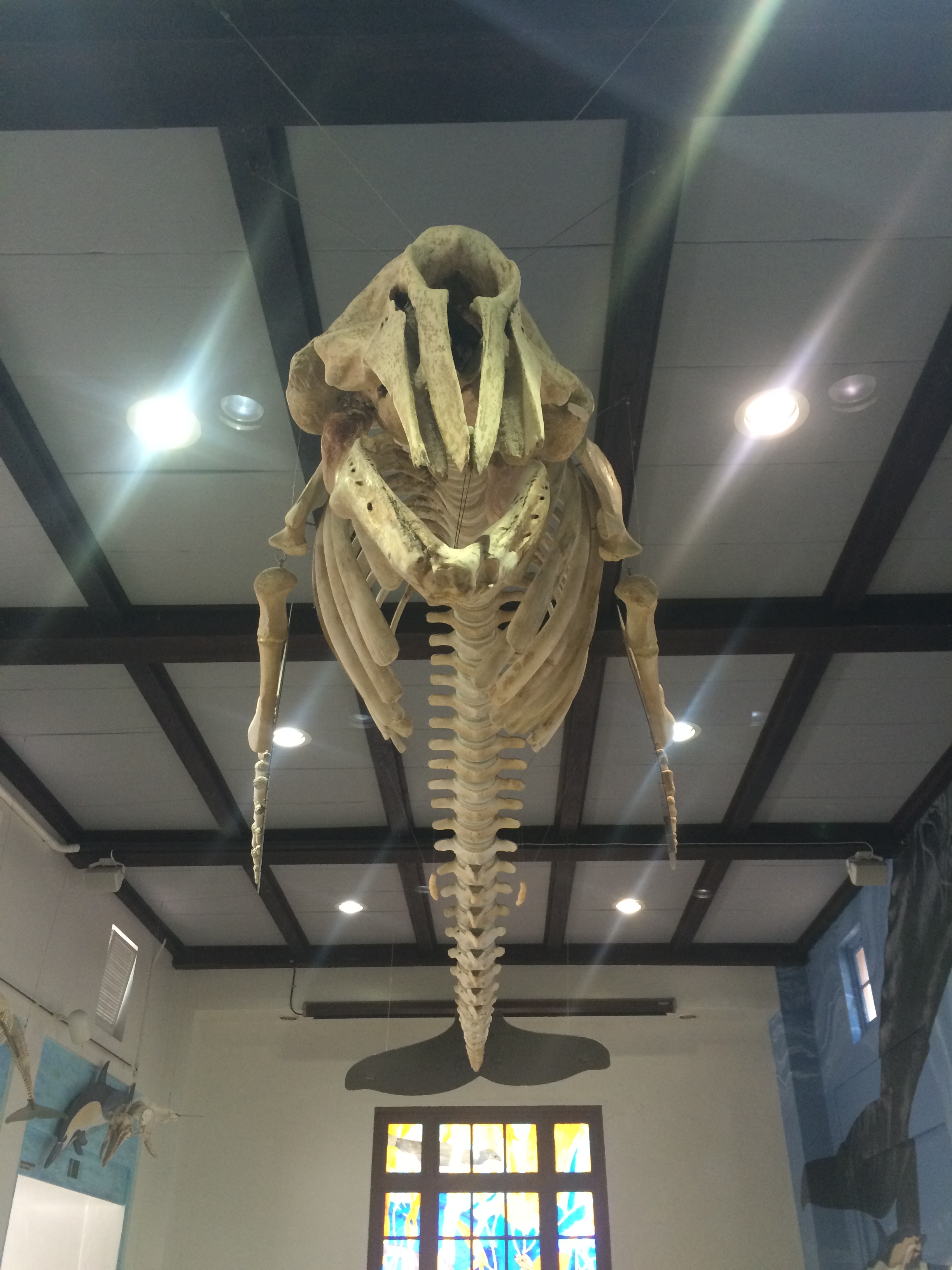
We are lucky to have a beautifully grey whale skeleton inside Marine Mammal Hall (yes, all the skeletons inside are real – I get asked that all the time). I challenge you to guess how old this whale was when it died, keeping in mind that it is approximately 20 feet long and most likely weighed between 15,000 and 20,000 pounds at the time of death:
IMG_5501

Meet Bomber the grey whale!

IMG_5500

Another great view of Bomber the grey whale and the interior of our marine mammal hall.

So, how old did you think our whale was when it died? Bomber (named for the beach this grey whale was stranded on) was only 9 months old. Can you imagine being 9 months old, 20 feet long, and weighing over 15,000 pounds? The scale of these whales is unbelievable.

 Junior Seacamp was a whirlwind of activity – tons of kids stoked to be at camp and thrilled to see each and every creature they possibly could. Campers went to the majority of activities and labs with their cabin group, but were also able to pick some of their own activities. Every night of camp was filled with fun activities, games, dances, ice cream socials, and campfires full of songs, skits, and dances. Everyone put in an incredible amount of work to have tons of participation from staff, counselors, and campers alike. I’ve learned so many songs this summer… I could write an entire post of them!

Senior Seacamp came with a whole new schedule, feel, and the opportunity to really get to know campers. Every senior seacamper gets to choose what classes they want to take ahead of time – anything from a menagerie of scuba courses to sailing to science classes to leadership to kayaking to climbing to art and jewelry creation. It was fantastic to see a lot of these campers having the opportunity to choose exactly which classes they wanted to take and what they wanted to do. For many of them it was certainly the first time they’d had unrestricted freedom, without a parent or teacher guiding them, to choose what they wanted to do. I taught seven different courses: Nature Photography, Invertebrates & Ichthyology, Nature Expression (an art class), Climbing & Kayaking, Advanced Kayaking & Climbing, Seafood Cookery, and Island Exploring.

My favorite class that I taught was definitely Invertebrates & Ichthyology. I was nervous about learning and teaching so much material I had just learned, especially coming from a chemical and not a biological academic background. Luckily I was so excited to teach I caught on to all of the material right away and enjoyed reading up on the various topics I was teaching in my spare time. Both sessions I was lucky to have incredibly inquisitive classes, and after every class they sent me home with homework and tons of questions to answer. That’s what I love about teaching – students push me to learn more!
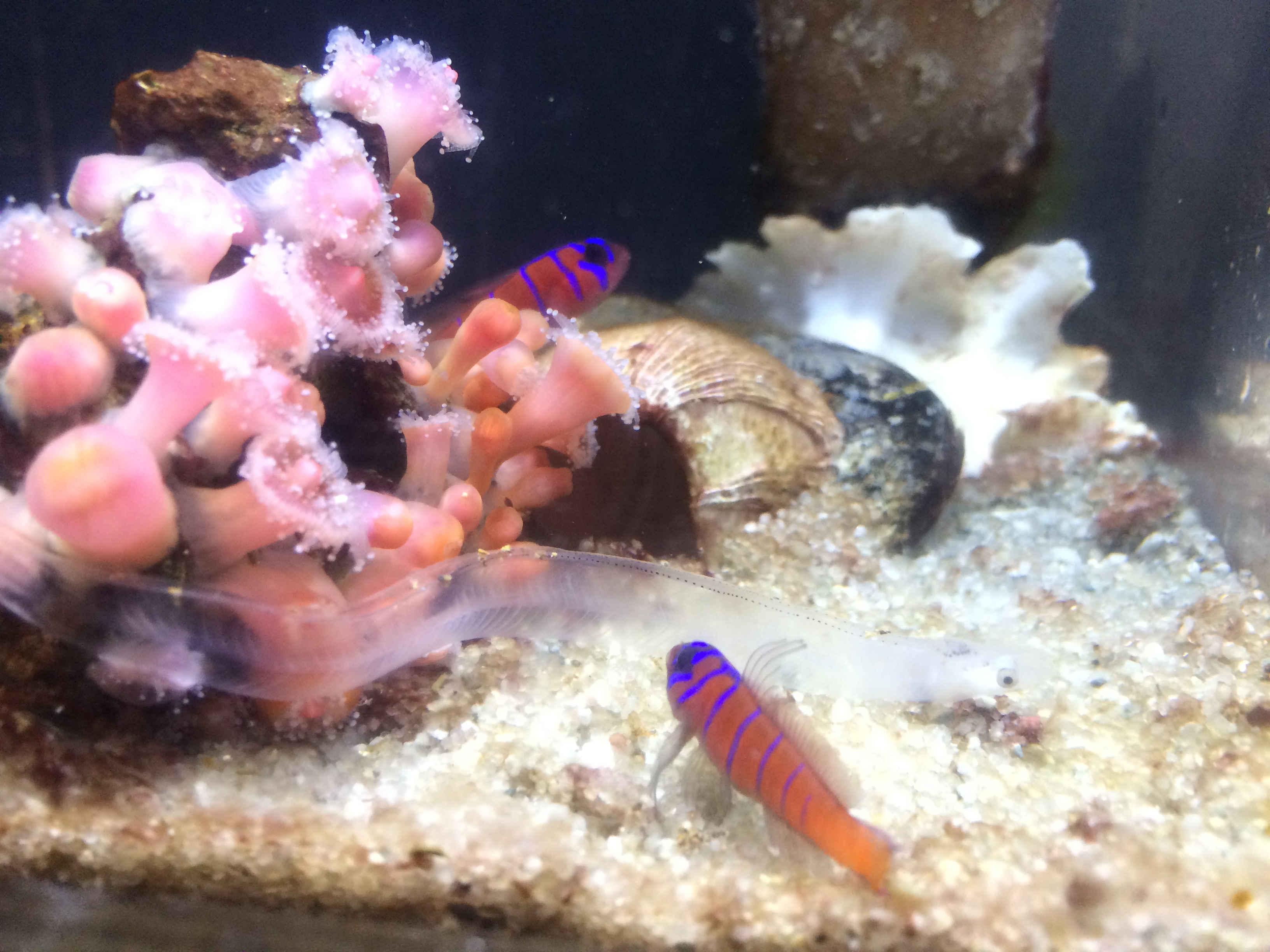
IMG_5409Blue-banded goby (endemic – meaning the only place this species is naturally found – to the Channel Islands) and an eel larvae I found washed up onshore at Toyon Bay. Strawberry anenomes are also in the background. Picture taken in one of the tanks in our Fish Lab.

Both Senior and Junior Seacamp included several big social events including dances and carnivals. All of them were themed and the instructors and counselors were way dressed up and dancing completely ridiculously which gave the kids a lot of freedom to have fun with their friends and not worry about looking silly. My personal favorite theme was the Sci-Fi carnival, which I of course had to dress for in full Na’vi attire:
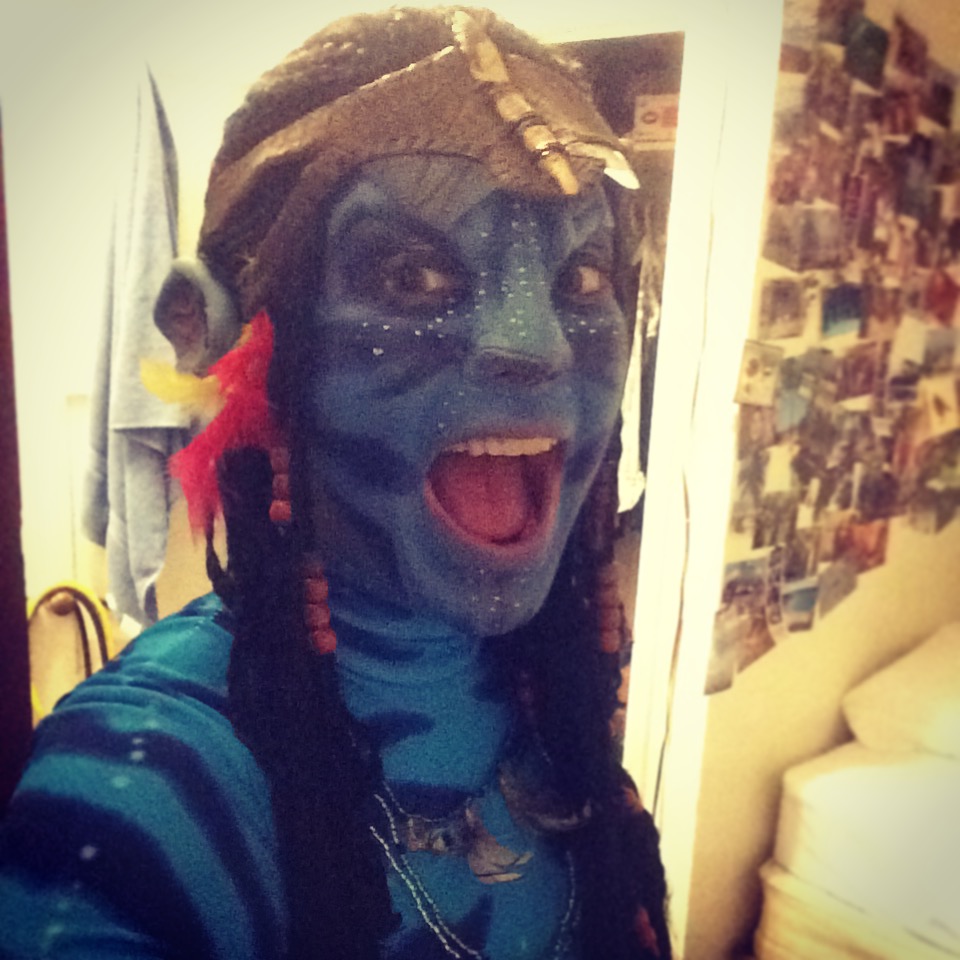
IMG_5516Took two hours to do the makeup – totally worth it!

The best part of the costume was going up to my campers and even some of my coworkers, casually chatting with them, and watching them go completely wide-eyed and trying to figure out who on earth was under all the makeup. Most of them figured it out!

This summer was certainly the fastest summer of my life… I still can’t believe it’s already September. Unfortunately the end of summer also meant saying goodbye to many amazing staff members that were only around for the summer – we miss you!!!
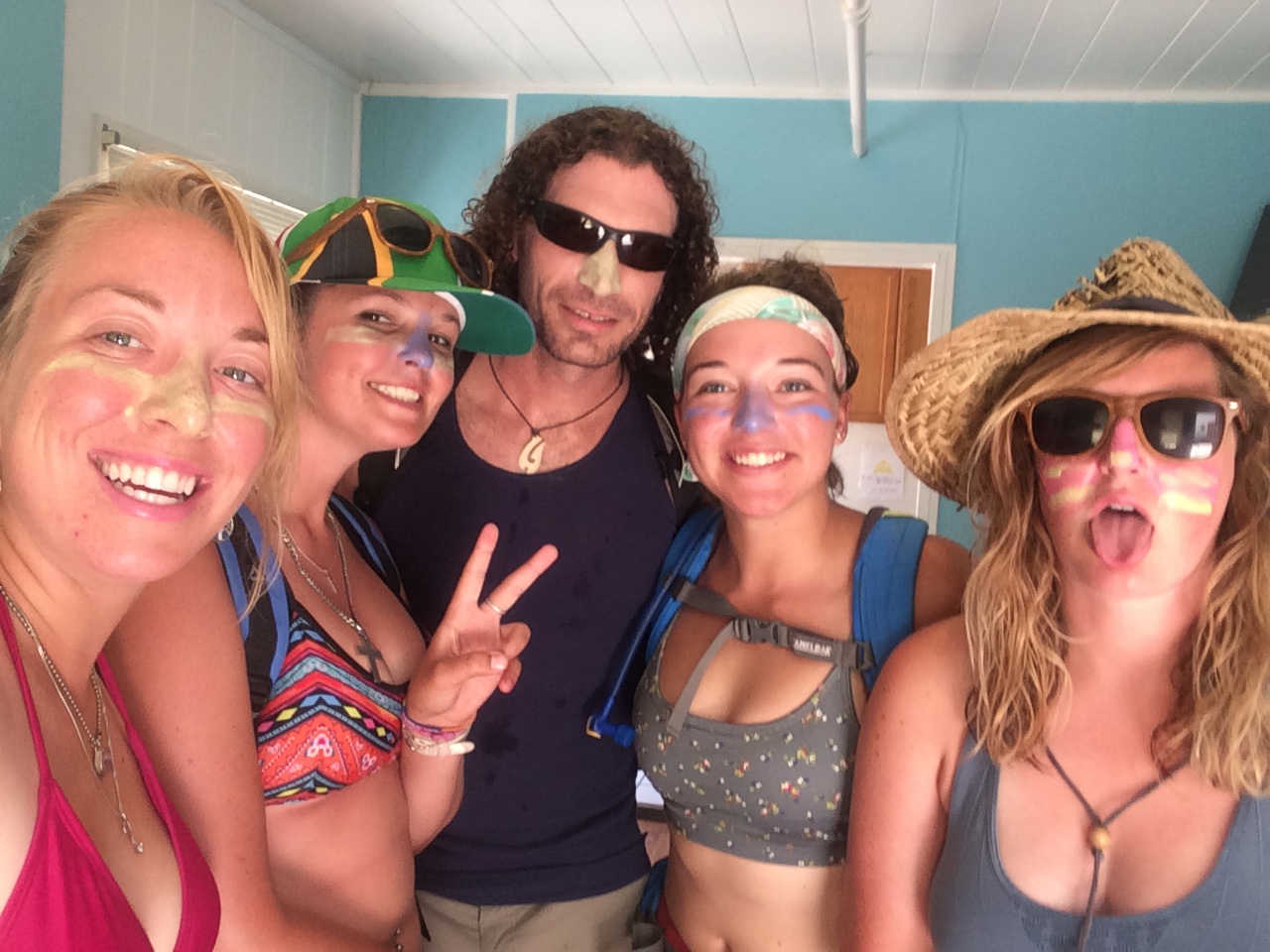
IMG_5534Getting ready to set out on a day-off hike during the summer. From left to right: Katrina (one of my current roommates), Enize (our energetic and amazing seafood cookery instructor who has returned to South Africa), Mossy (a wonderful dive instructor and dive buddy, now back in Australia), me (hey, I’m still here), and Courtney (another fantastic dive staff member, currently off adventuring on the playa). Also – that colorful stuff on our faces is colored zinc – the best kind of sun protection. Stylish and functional!

We’re now deep into our school year programs – a whole other animal than our summer seacamps! I’ll keep you all updated – thanks for reading!
“Your worst day here is better than your best day on the mainland”

Those were the words I was greeted with upon my arrival at the Catalina Island Marine Institute (CIMI) by one of the sailing instructors.

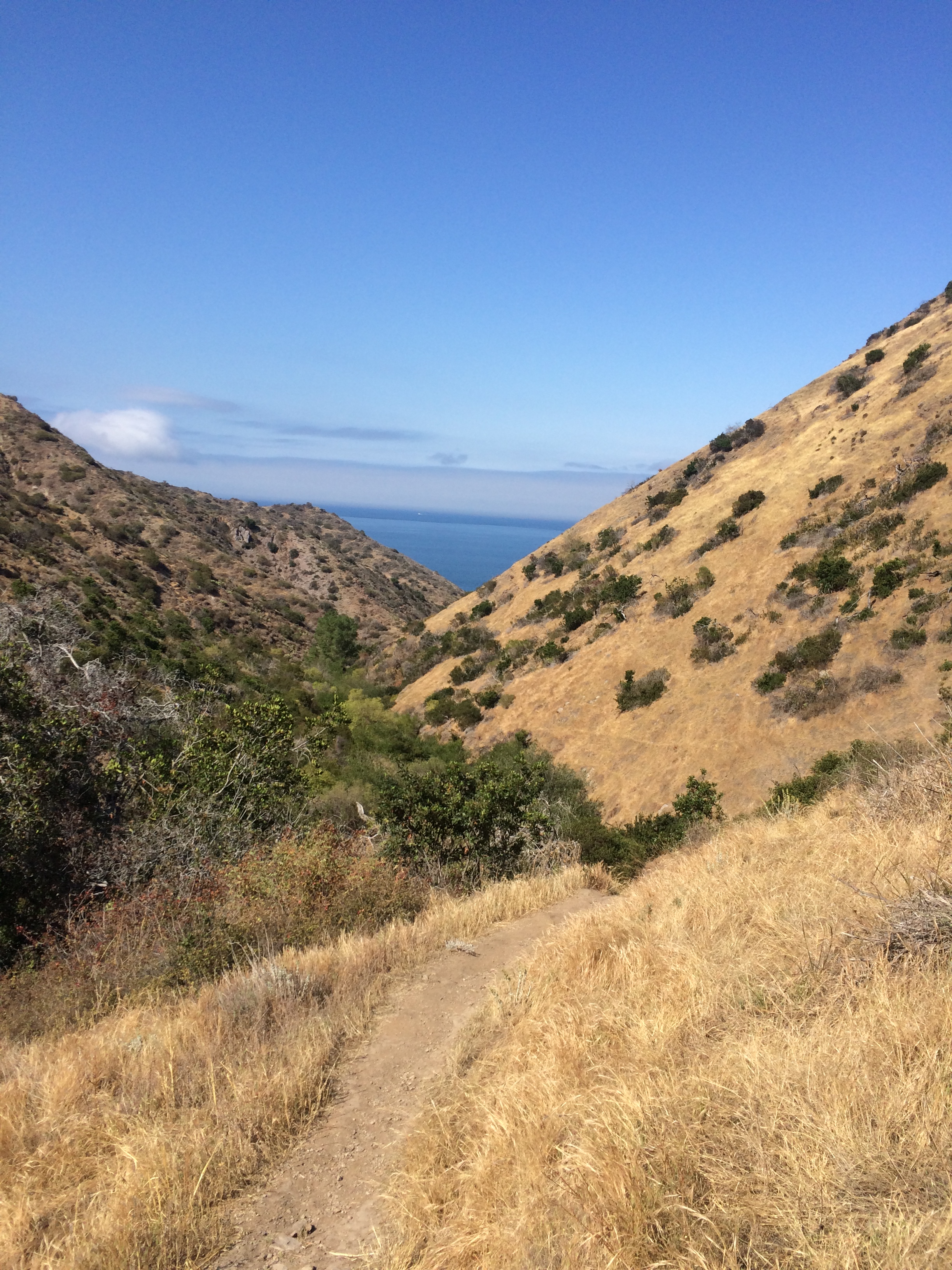
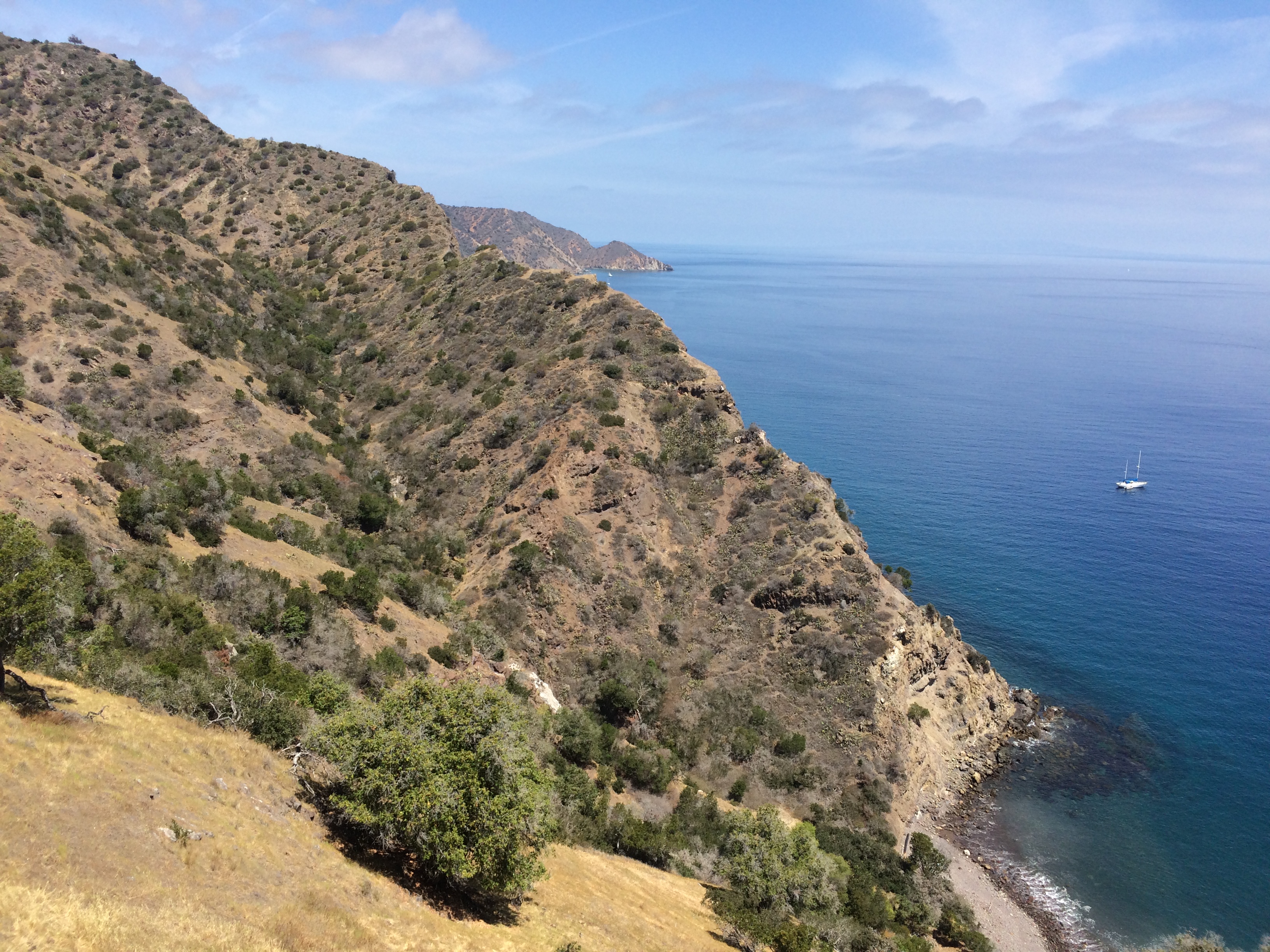
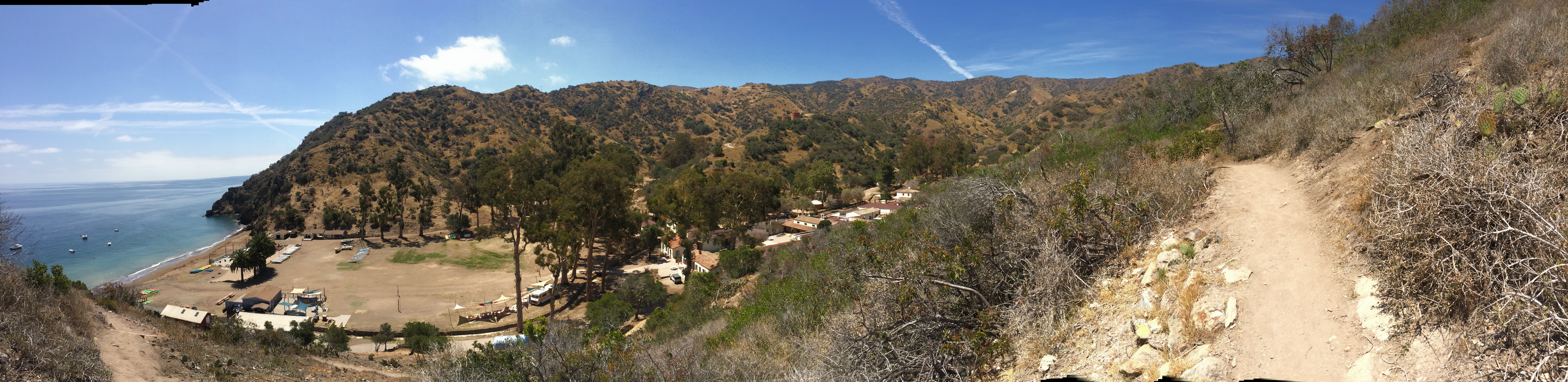
The island is absolutely rugged, arid, and beautiful.

IMG_5371 CIMI Toyon Bay from the Shrine Trail

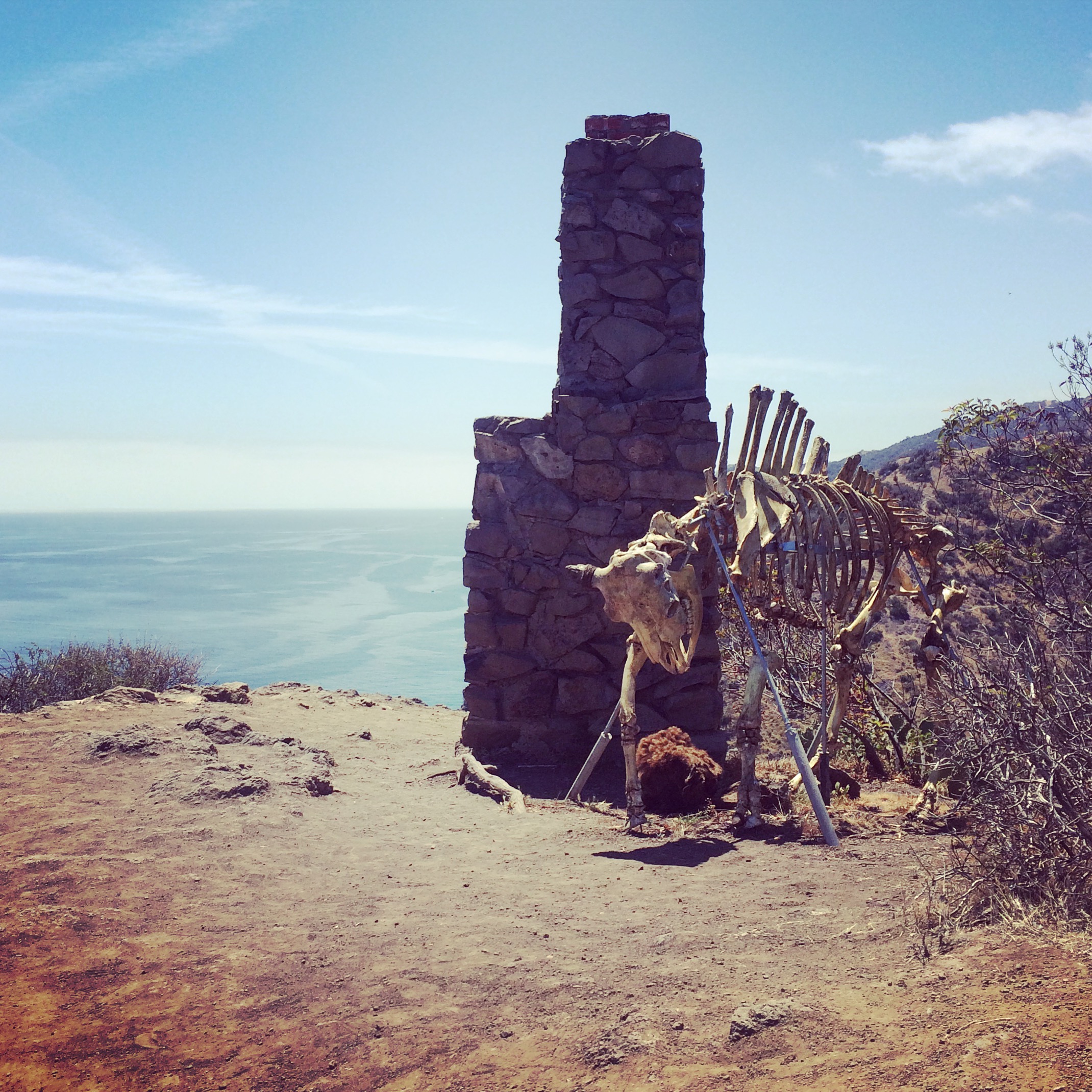
IMG_5399“The Shrine” at the top of the Shrine Loop Trail

I’ve been at CIMI for about two weeks now, and I still wake up every day thinking HOLY COW I can’t believe I actually live here! The facilities are in tip-top shape (thanks to a hardworking maintenance staff), the food is delicious (thanks kitchen staff!), the landscape is breathtaking, and everyone is incredibly friendly and absolutely stoked to be living and working here.

Our first week was filled with an intense waterfront lifeguard certification course. The first day we were in the water at 6:30 am sharp, no wetsuit, doing swim drills in 63 degree water. We worked in the water all day (thank goodness for wetsuits after those initial drills) and jumped straight into book work until after 10 pm that night. We all hammered through the course in three-and-a-half solid days, and everyone passed with flying colors, confident and ready to save lives. So that others may live! Even after completing my divemaster and working in dive safety, I’m always blown away by the infinite amount of knowledge there is to gain, and the importance of practicing skills. I learned a multitude of skills I never would have known I was lacking, and was able to refresh and re-enforce my confidence in the ones I already knew.

Of course, there’s also no bonding experience like charging into the ocean at 6:30 am with a bunch of other crazies who are stuck on this island with you.


IMG_5395

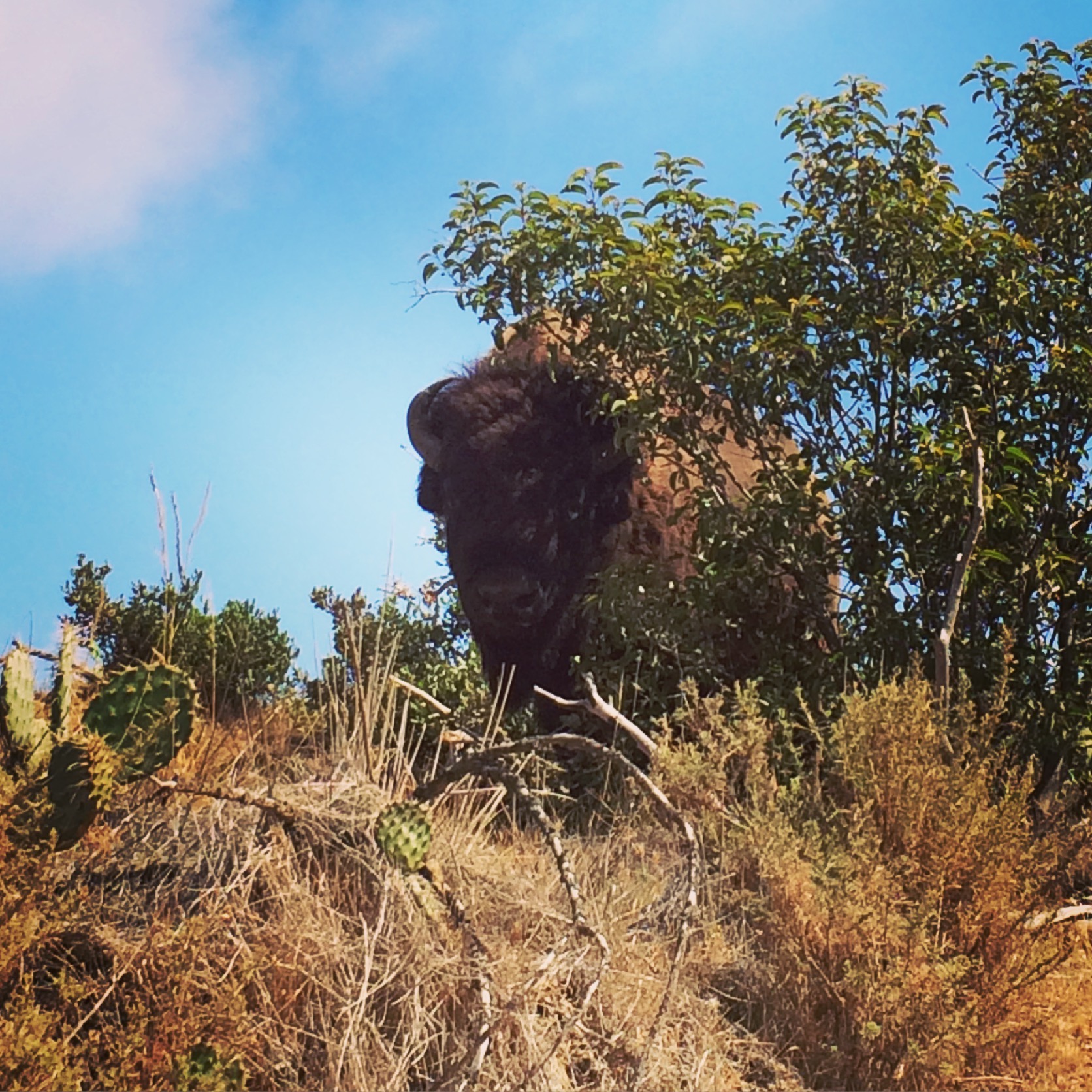
Our grumpy camp resident, Mike Bison

Though the people at CIMI are delightful company, we have present our token grump, Mike Bison. Yes, he’s named after Mike Tyson for a reason – he is not a happy camper. Fun fact: bison, though they look sleepy and slow, can run at up to 30 mph. They can also (according to our secretary) jump 6 ft vertical without a running start. Long story short, you do not want to get in the way of a large, fast, easily provoked critter. He has a habit of standing in the middle of the road when we’re trying to get somewhere, and loves to come munch on the grass and leave his patties all over camp. But, he’s a cutie and we’ll deal with it. He certainly provides endless entertainment. Ran out of small talk? Tired of talking about the weather? Talk about Mike Bison.

One of my favorite things about Toyon Bay (besides the fact that I can hear the ocean out my bedroom window) is that it is the trailhead for several hiking trails through the gulleys, canyons, and ridge-lines of the surrounding area. I’m becoming a lean, mean fighting machine from morning trail runs and afternoon hikes and explorations, and I can’t wait to lead campers and school groups up and down the trails.

Though it’s known primarily for its marine life and bison, I have fallen in love with the Catalina landscape. With the extreme drought conditions the island is currently experiencing, it’s a dry, dusty, prickly place that still manages to awe with its dramatic cliffs and rock faces veined with minerals and succulents.

IMG_5441

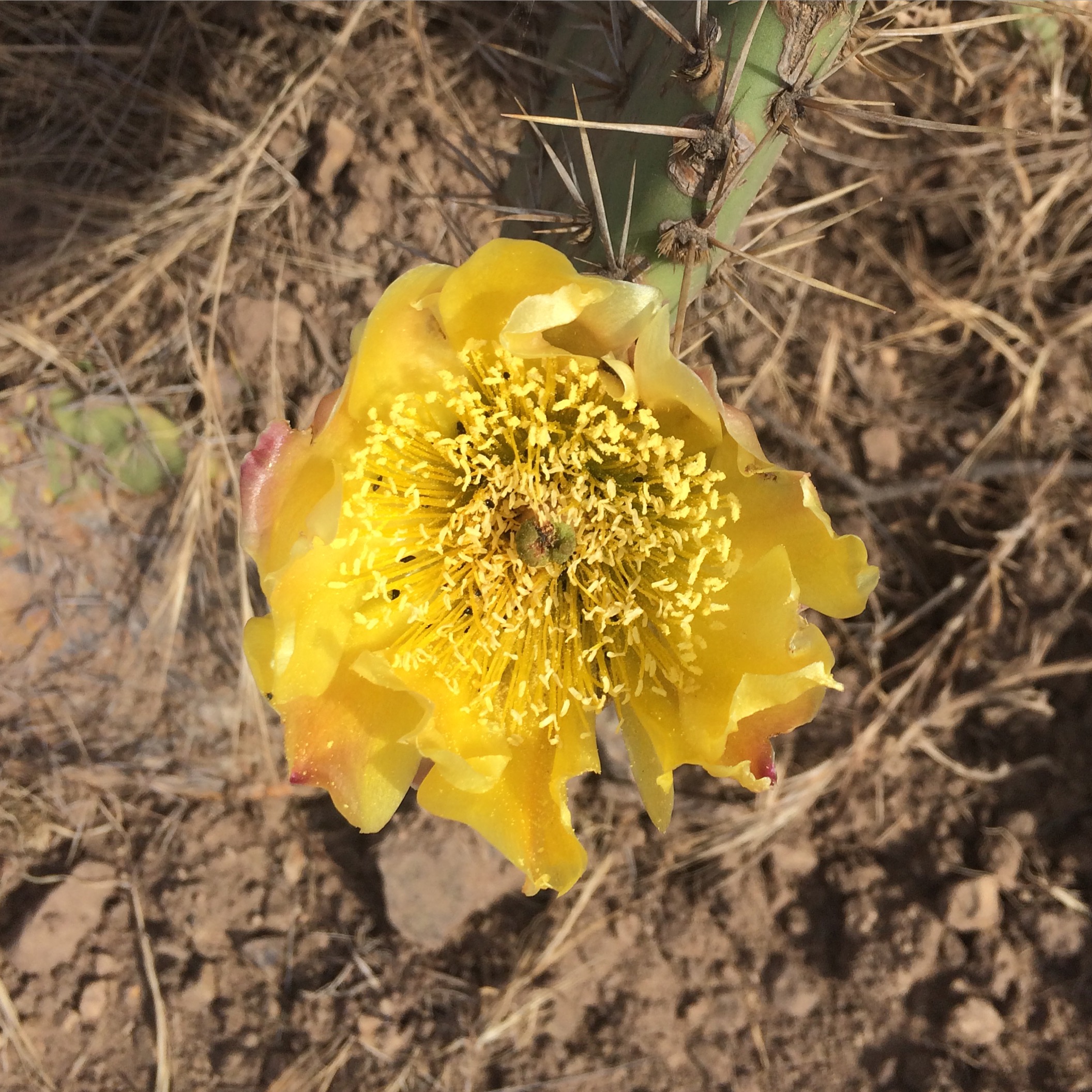
Prickly pear cactus blossom – Fun Fact: The pads and fruit of the cactus are edible; the fruits are called tunas

The trails are surrounded by sage, cacti, succulents, and several shrub and tree species. Fun fact: Smelling sage releases feel-good endorphins in your brain. My personal favorite plant thus far on the island is the Lemonadeberry. This bush produces blotchy red-yellow berries with a sticky coating. If you suck on the berries, they taste like sugared lemons and are delicious. The indigenous people of Catalina used to pick the berries and soak them in water to produce a drink similar to lemonade – I’m going to collect berries and try this on my next hike!

IMG_5442

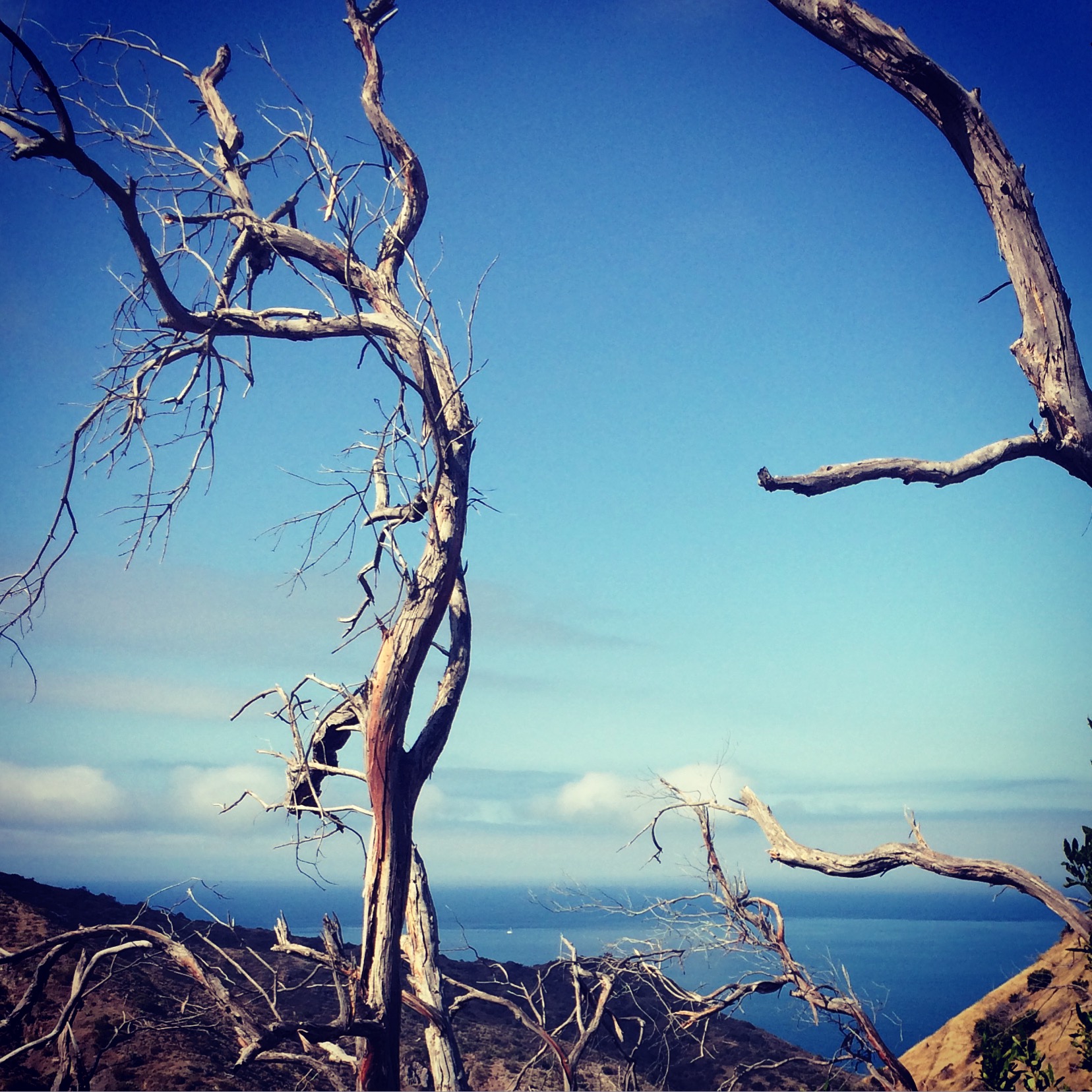
Ironwood branches overlooking Toyon and the Pacific Ocean

Fun fact: When Wrigley owned the Chicago Cubs and the island of Catalina, the team began making their bats out of the endemic ironwood tree. This species was dubbed ironwood because the wood is incredibly dense and actually sinks when placed in water. This high density gave the Cubs an advantage and they began hitting many more homeruns. Ironwood bats were eventually banned by the MLB since they gave the Cubs an unfair advantage – no one else could get the wood since it only grew on Catalina.

IMG_5416

I still can’t believe I get paid to hike these beautiful mountains – Canyon Trail

This past week has been a whirlwind of science and adventure training. I’ll be teaching courses on fish, sharks, invertebrates, algae, plankton, marine mammals, oceanography, kayaking, hiking, archery, snorkeling, and so much more! Our first campers just got here today and I can’t wait to start teaching tomorrow! I could write a book on everything I’ve learned, but I’ll resist for now!

IMG_5396

Our archery range has dinosaur targets. It’s pretty awesome.

One of my favorite things about being on the ocean is walking in the morning and looking for interesting things that washed up overnight. There’s an abundance of seaglass and shells, and occasionally some live creatures. Here’s a couple I found:

IMG_5409

Unknown eel larva I found washed up on the beach in Toyon Bay (The clear creature, you can see its eye to the right). The pink anenomes are Strawberry Anenomes, the fish are Bluebanded Gobies.

IMG_5449

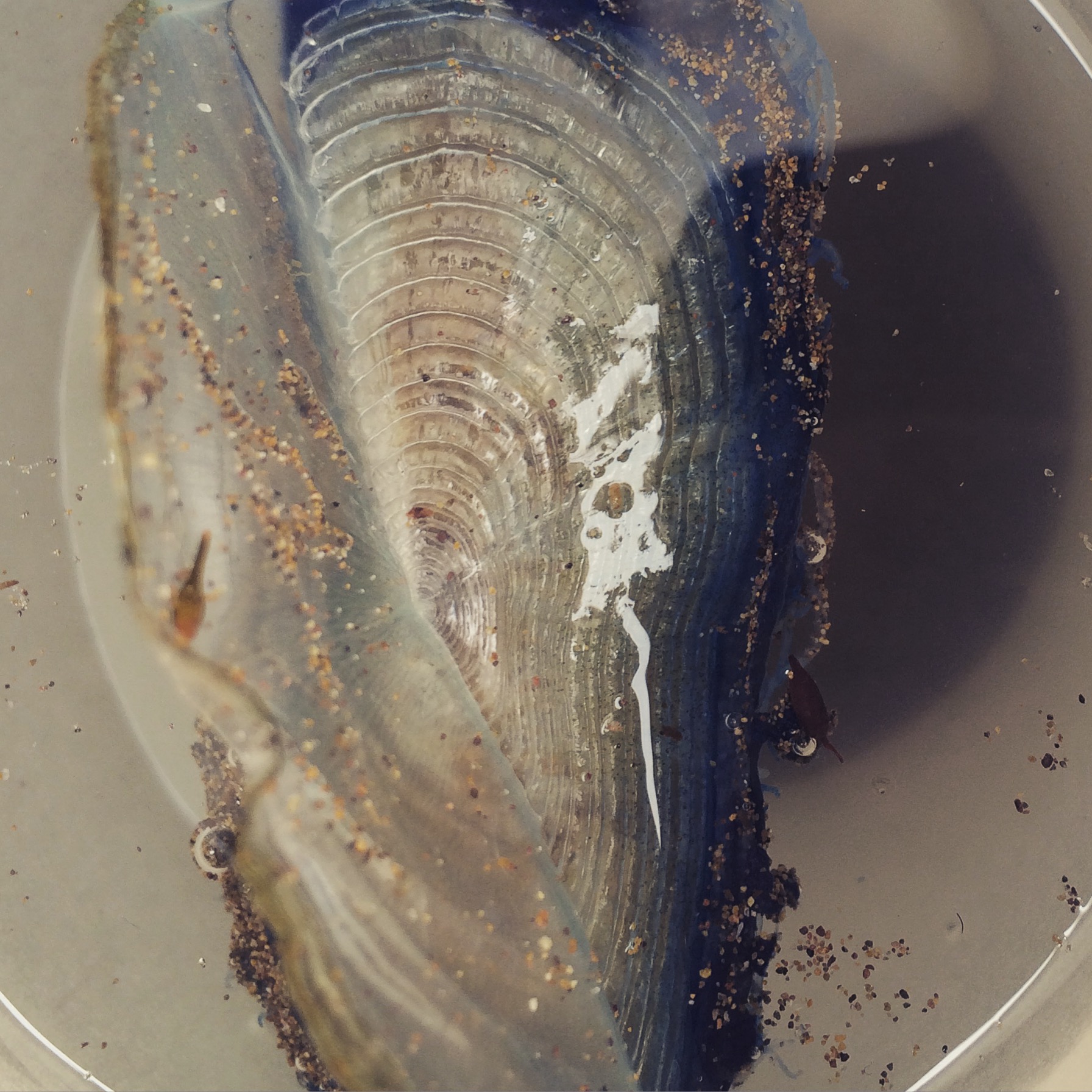
A By-the-wind-sailor (Velella velella) I found washed up in Toyon Bay. These are a type of jellyfish that use their ‘sail’ (the part pointing up towards the camera) to catch the wind and move about the open ocean in search of food. Unfortunately, when they’re caught in an adverse wind they’re helpless and get washed up on shore like this little guy.

I wish I had more pictures of the marine life, but I’m settling into a much more unplugged pace of life where I rarely have my phone on me to take pictures. I’m also currently lacking an underwater camera, but I promise I’ll get some underwater shots soon!

IMG_5450

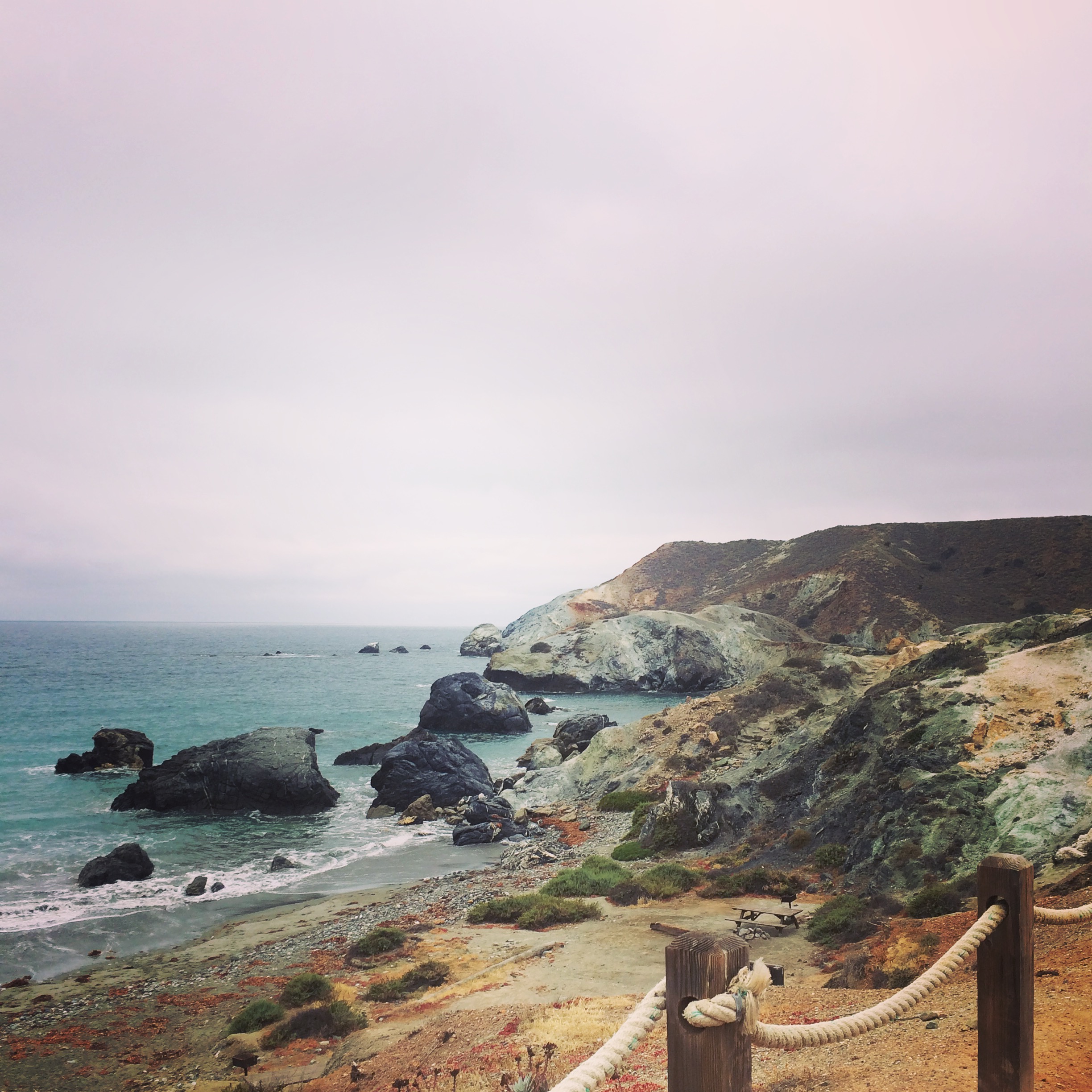
Shark Harbor, backside of Catalina. The variety of rock formations here are astounding.

The last couple weeks have been a blur of training and meeting dozens of new people, building friendships, memorizing plankton species, and trying to figure out where on earth the laundry rooms are. Now, our first group of campers have arrived and CIMI is full if energy! I’m so excited to teach and learn from all these kids this summer and into the school year. Wish me luck!

IMG_5362

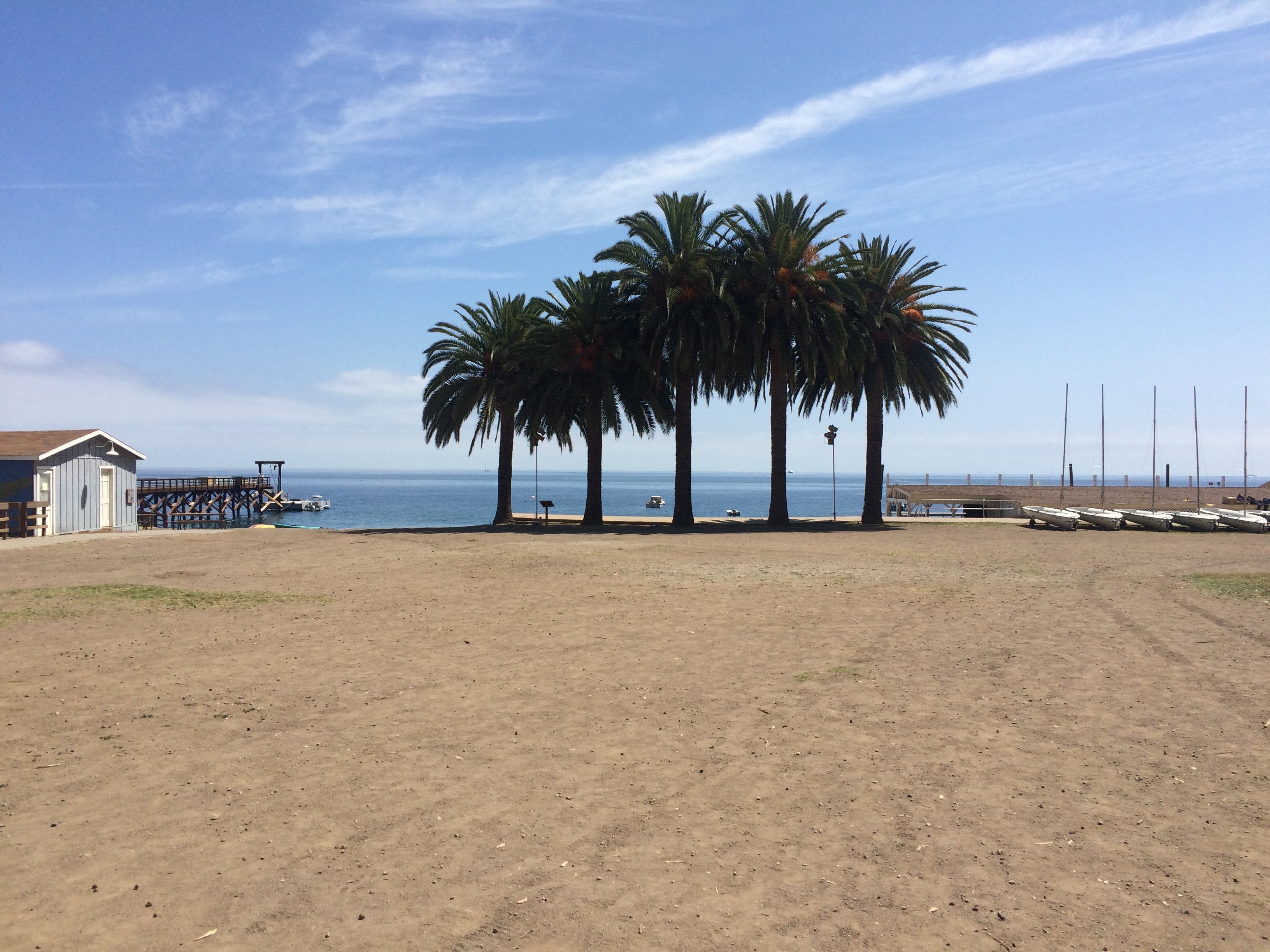
Our “front yard” at Toyon Bay.

IMG_5384

Sunset from my doorstep. The beautiful adobe-style buildings at our complex were built in the early 1920’s

A brief history of a small island – Santa Catalina Island, CA

I’ve made it to beautiful Catalina Island, 26 miles across the sea! Catalina Island has a very interesting past, so here’s a brief history of the island for you to enjoy!

CatalinaIslandWest

The west side of Santa Catalina Island; from www.catalinachamber.com

Now, lets go back. Way back. As in about 119 million years ago, when the Farallon plate collided with the North American continental plate, a process known as subduction (I swear this isn’t all a geology lesson, bear with me).

https://i0.wp.com/stream1.gifsoup.com/view2/1369132/subduction-o.gif

 Now, you see right where those two plates are meeting? Right where there’s a greenish line between them? All that geologic material scraped off from the collision of the plates are the foundation of Catalina Island. And all that mountainous volcanic action happening to the right? Those are the Sierra Nevada mountains, also formed by the collision of these plates. This scraping and subduction continued until about 20 million years ago, when the last of the Fallon plate was subducted. At this point, igneous volcanic material made its way into the rocks of Catalina, and formed a volcanic archipelago off what is now the California coast. The late Miocene Epoch (23.7-5.3 million years ago) ushered in an intense period or extensional and wrench faulting that moved the island about 156 miles north, and also rotated it by about 60 degrees. This also resulted in major shifts in sea level and vertical movement, some of which are still occurring today.

These dramatic forces resulted in a dramatic landscape and a beautiful array of geological structures and life on the island. Fun fact: There are 8 plant species that exist only on Santa Catalina Island.

IMG_5376

Lets fast forward a bit. People have been living on the island for over 7000 years. The indigenous people, later dubbed the Gabrielino, survived on the island by gathering plants and sea life. This harmonious lifestyle supported a population of about 1500 people on the island. The island was a trade and religious center, and the trade of soapstone and soapstone goods supported a trading network all along the California coast. I have found it difficult to find other information about the native peoples of Catalina.

In 1542 the explorer Juan Rodriguez Cabrillo “discovered” and claimed the island for Spain, naming it San Salvador. In 1602 Sebastian Viscaino reclaimed the island, naming it Santa Catalina in honor of St. Catherine’s Feast Day. Under Spanish control, the indigenous peoples were forcibly removed to the mainland in the 1820’s to Mission San Gabriel, ranchos, and other missions farther south.

In 1822 Mexico revolted against Spain and Californian territories, including Catalina, came under Mexican control. In 1846 the island was awarded in a land grant by the governor to its first private owner. The ownership of the island changed hands several times and was eventually taken over by the army during 1864 during the Civil War. Barracks were built, but the island never saw any action. Eventually the army left the island to an absentee owner and the island was used primarily for ranching.

Another major shift in Catalina’s history occurred in 1887 when the island was purchased by the entrepreneur George Shatto, who planned to turn the island into a resort community with other areas utilized for ranching and mining.

https://i0.wp.com/upload.wikimedia.org/wikipedia/commons/thumb/d/d5/George_Shatto.jpg/220px-George_Shatto.jpg

George Shatto; wikimedia commons

Shatto and his team planned the town of Avalon – which his sister-in-law named after a Lord Alfred Tennyson poem – and constructed the Hotel Metropole. completed in 1888. He also purchased a steamer which made daily passenger runs to and from the island. Eventually financial troubles forced Shatto to turn over the island to the Banning Brothers, who had operated the cross-channel transportation to the island for many years.

https://i0.wp.com/www.postcardroundup.com/wp-content/uploads/2011/01/hotel-metropole.jpg

The Hotel Metropole circa 1902 after renovations by the Banning Brothers; source

The Banning Brothers continued to renovate and improve the island, filling the hotel and campgrounds around Avalon in the summers. Several families also moved to the island as permanent residents; consequently the island’s first public school was constructed in 1902. This was also a time of growth for tourist attractions, including glassbottom boats, sportfishing, an incline railway, stagecoaching, public bath houses, and even early aviation.

https://i0.wp.com/ecx.images-amazon.com/images/I/51mrbjltumL.jpg

Catalina Island may have had the first documented glass-bottom boats in the world, recorded as early as 1899; source

A severe fire, started near the back of the Hotel Metropole, cause unknown, in 1915 destroyed half of Avalon. Though devastating, it provided a clean slate for the construction of new buildings and attractions.

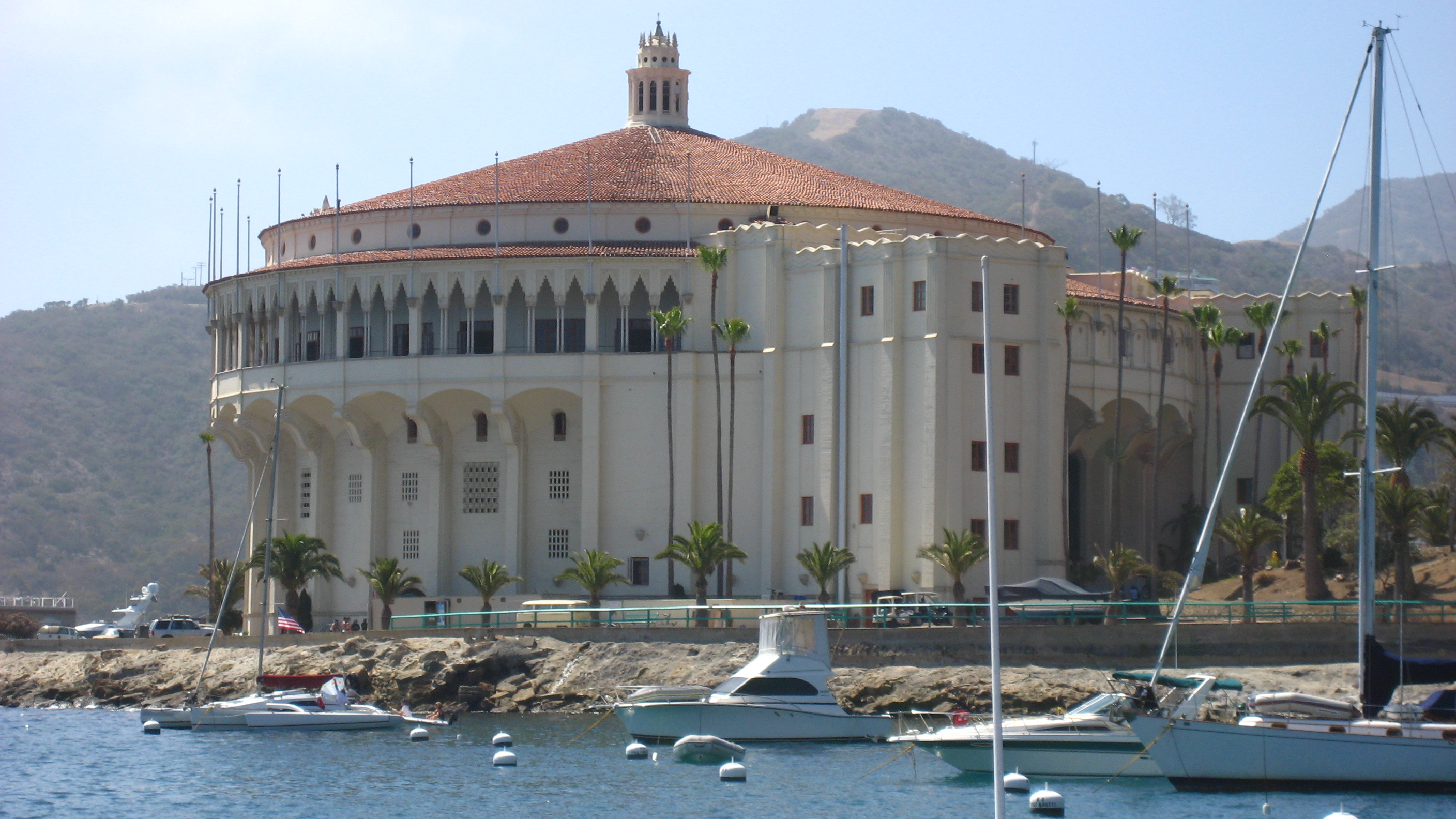
In 1919, William Wrigley Jr., of Wrigley’s Chewing Gum, decided to purchase stock in the island with several other investors. After visiting the island himself and envisioning the massive tourism potential Catalina had, he bought out all of the other investors and began to transform the island. He improved the infastructure on the island, created a new steamship line, and built several beautiful buildings that are still in use, including the famous Casino:


Catalina_160 From wikimedia commons

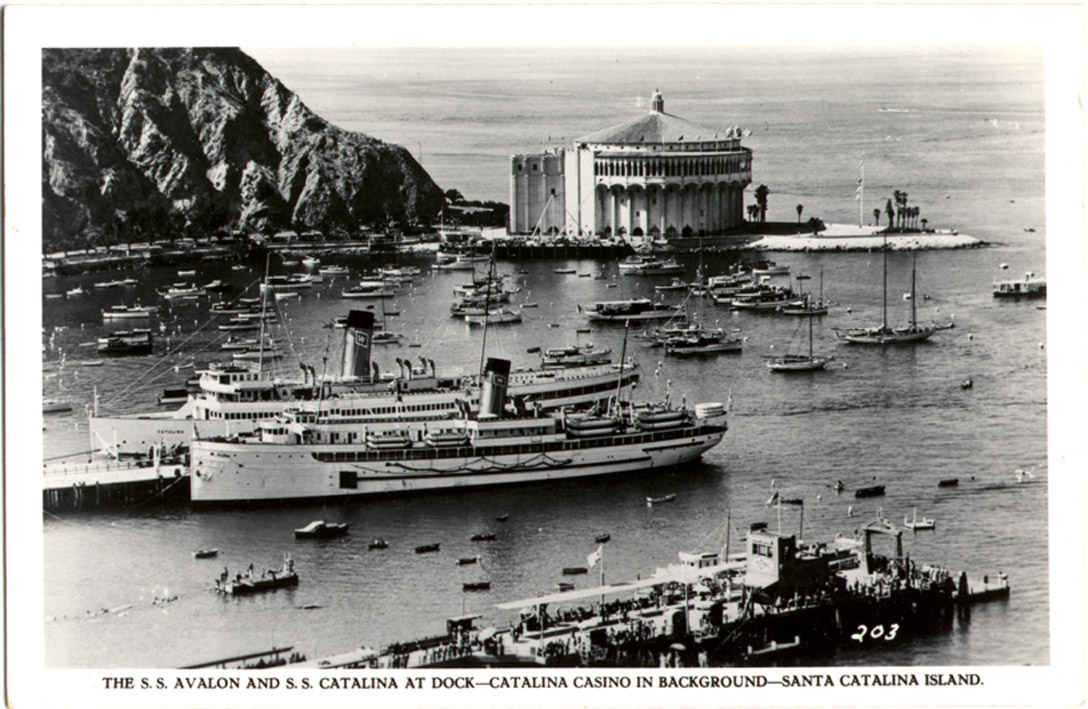
The island remained a bustling tourist attraction until the start of World War II.


avalon

Source

At this time the Federal Government took over the island in 1943, transforming the island to a strategic base in case of an attack by Japanese forces on the west coast. But, really, if you look at a lot of the pictures from that time period, it really looks like all the soldiers were having a grand ol’ time on the island! The place where I’m situated on the island, Toyon Bay, was the home base for the Office of Strategic Services (now known as the CIA) at this time.

After WWII, Catalina returned to its role as a tourist mecca. The CIMI facilities at Toyon Bay, originally constructed as a private boarding school for boys in 7-12th grade in the 1920’s, was reestablished as two separate resorts and later returned to being a boy’s school in the 1960’s. In the 1980’s, it was bought by Guided Discoveries and transformed into the camp it now is. These nearly 100-year-old beautiful facilities are now my home and work place.

Marine-Mammals-Toyon-e1403024314284

The Marine Mammal Hall at CIMI Toyon Bay. Source