Halfway to my Master’s!

Hey everyone! Just a quick update for now – what a crazy, busy year it’s been!

In a nutshell, in this past year I’ve:

  • Traveled to so many new places: New England, Quebec, Iceland, and some new cities out west
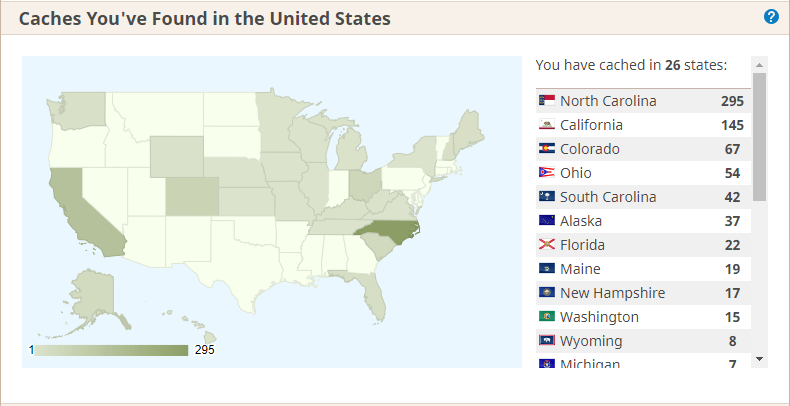
  • Made it halfway to finding a geocache in all 50 states
  • 1
  • Moved from California to Asheville to Raleigh
  • Completed half of the classes for my Master of Arts in Teaching – Secondary Science… and learned, honestly, much more than I could have ever anticipated!
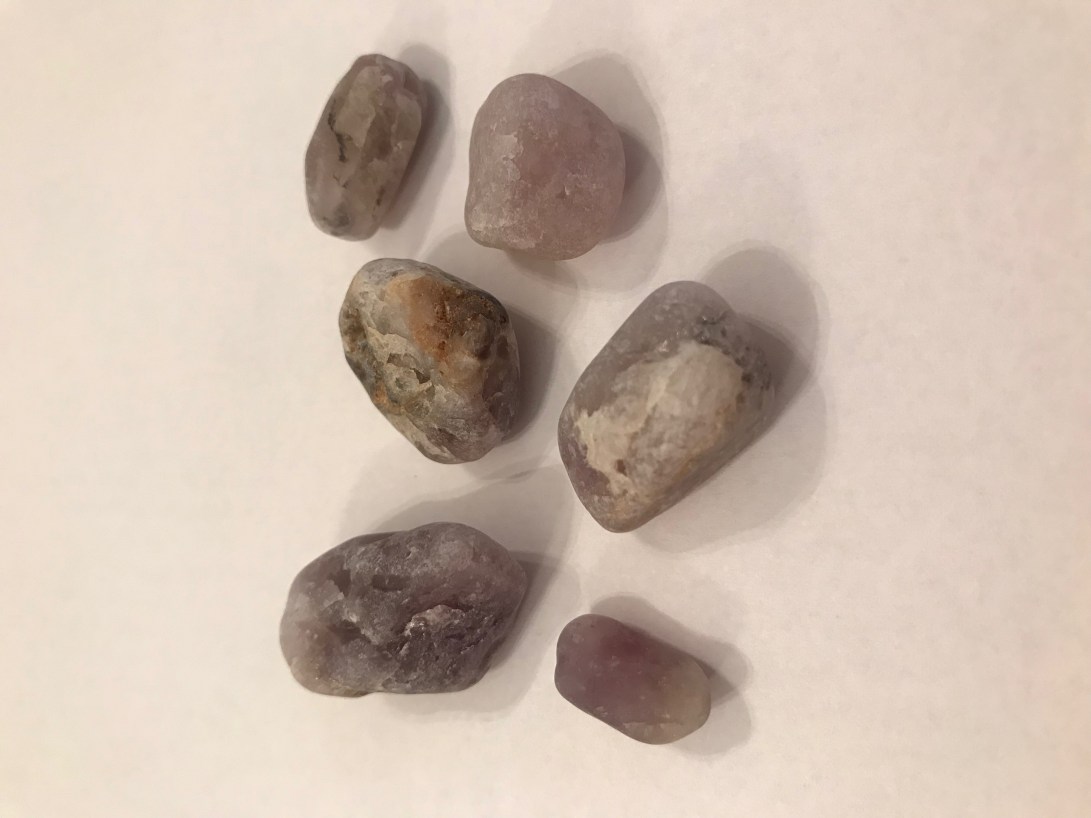
  • Become a bit of a hobbyist geologist thanks to Earthcaches – below is some amethyst I found on Catalina Island
  • Catalina am

I’ll write a longer update later, as I’m hoping for a relaxing summer teaching kayaking to daycampers with the city of Raleigh! Are you in the triangle? Lets meet up!

IMG-1420

Headin’ down south to the land of the pine…

I’m giving up the island life (for now) and returning to North Carolina for the next couple years! It was a hard goodbye, but there’s big things on the horizon…

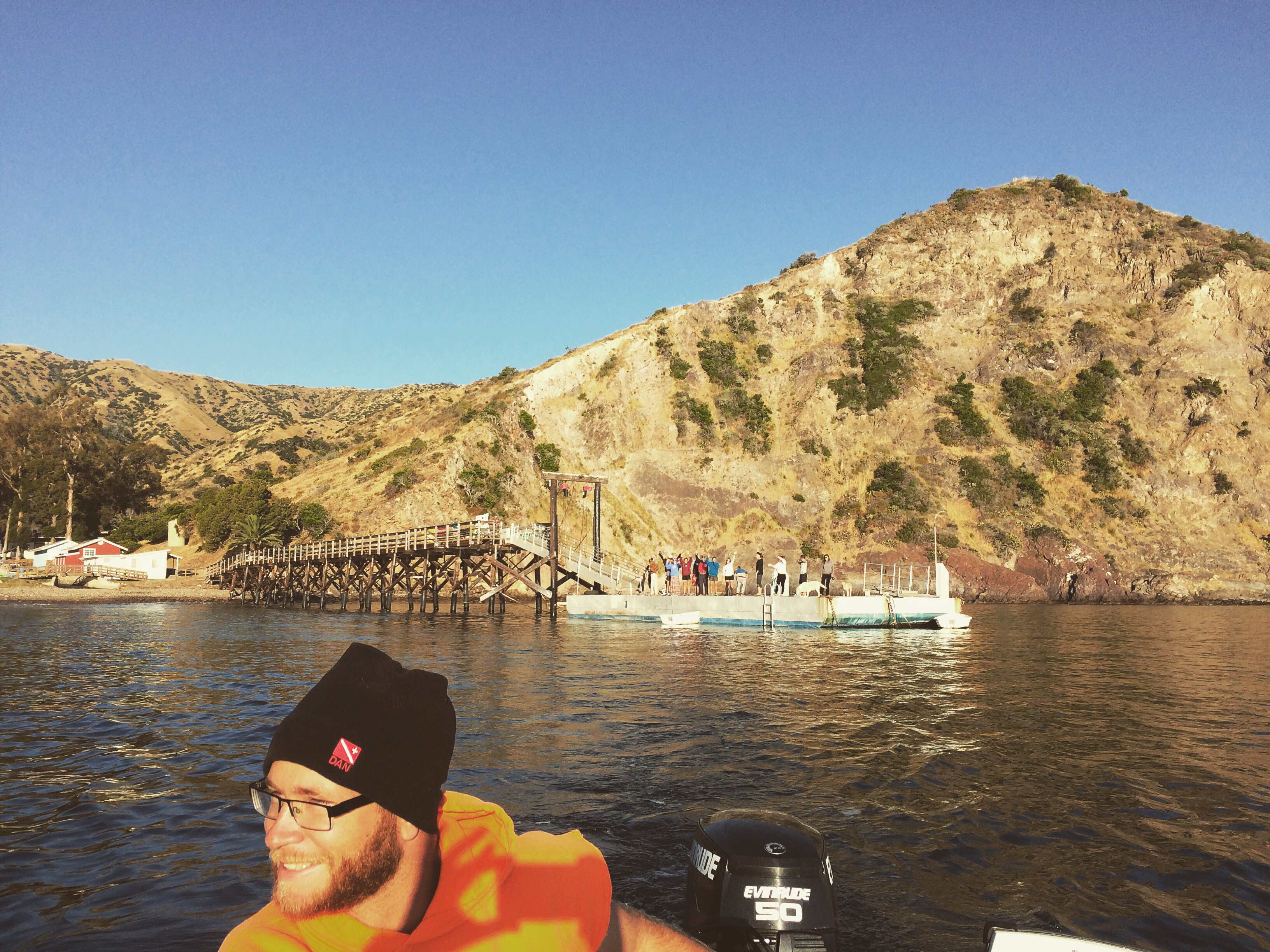
The goodbye committee at Toyon, and Morgan motoring me to the ferry


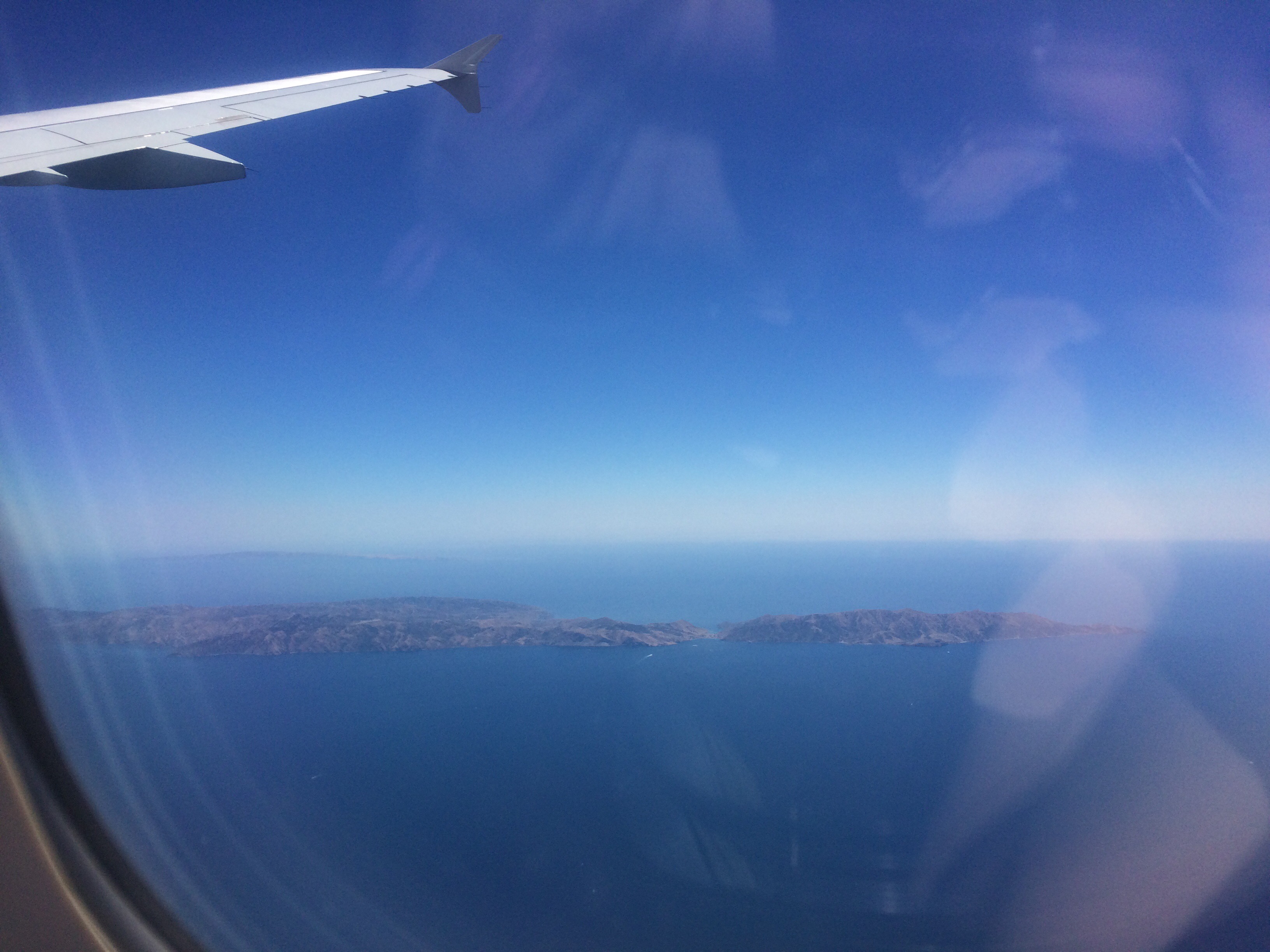
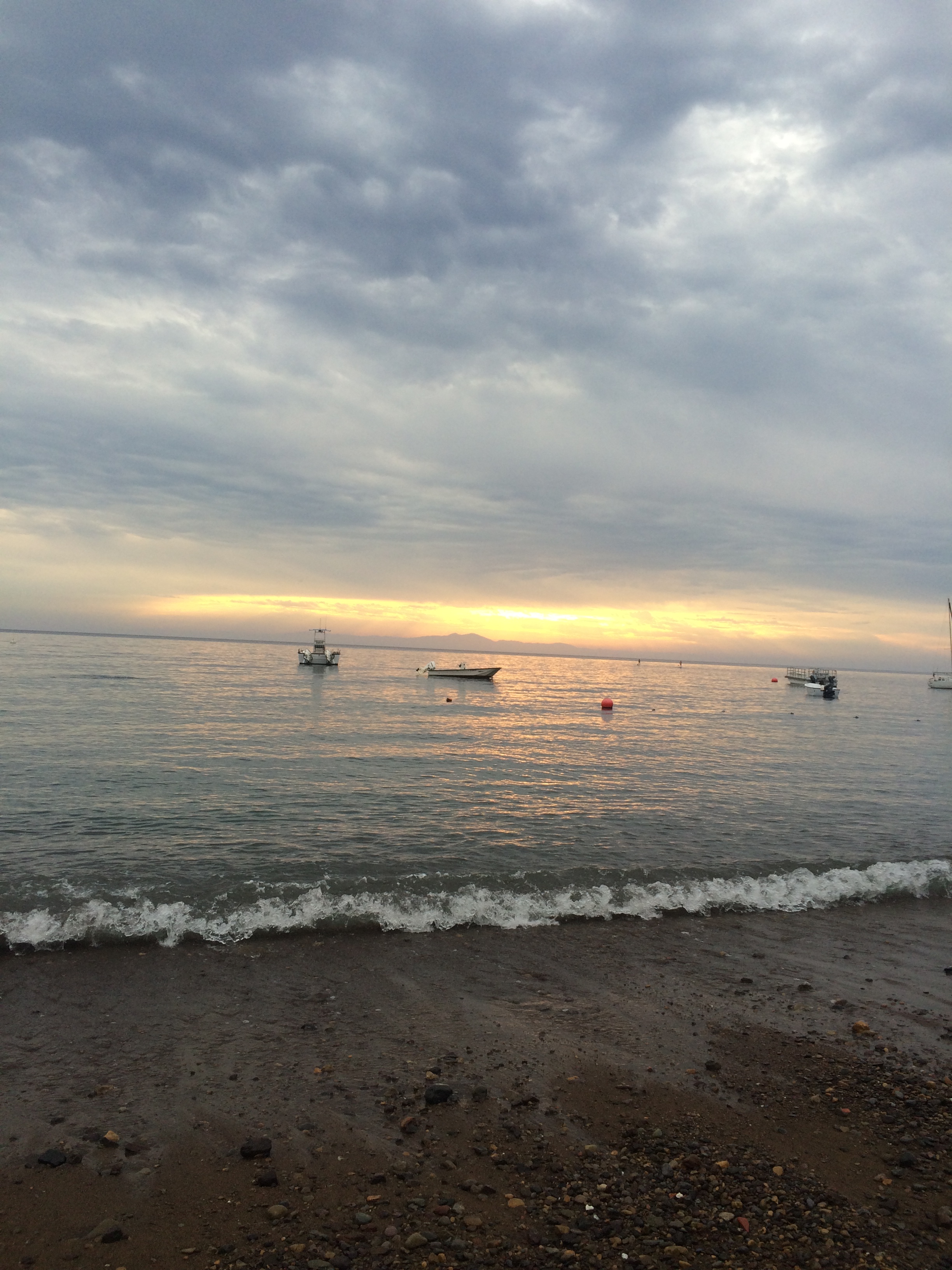
Catalina Island from my airplane window. I’m not ashamed to admit I was crying as I was flying away.

I’m returning to the homeland to earn my Masters of Arts in Teaching to become a high school science teacher! My goal is to focus on chemistry and environmental sciences. I start classes this fall, but I’ll be bouncing around for the summer, visiting old friends and new places. See ya soon, NC!

The Life Aquarist

This fall I became an aquarist at CIMI! What is an aquarist? It’s hard to define… but it’s a position that revolves around our  aquariums we use for teaching invertebrate, algae, fish, and shark lessons.
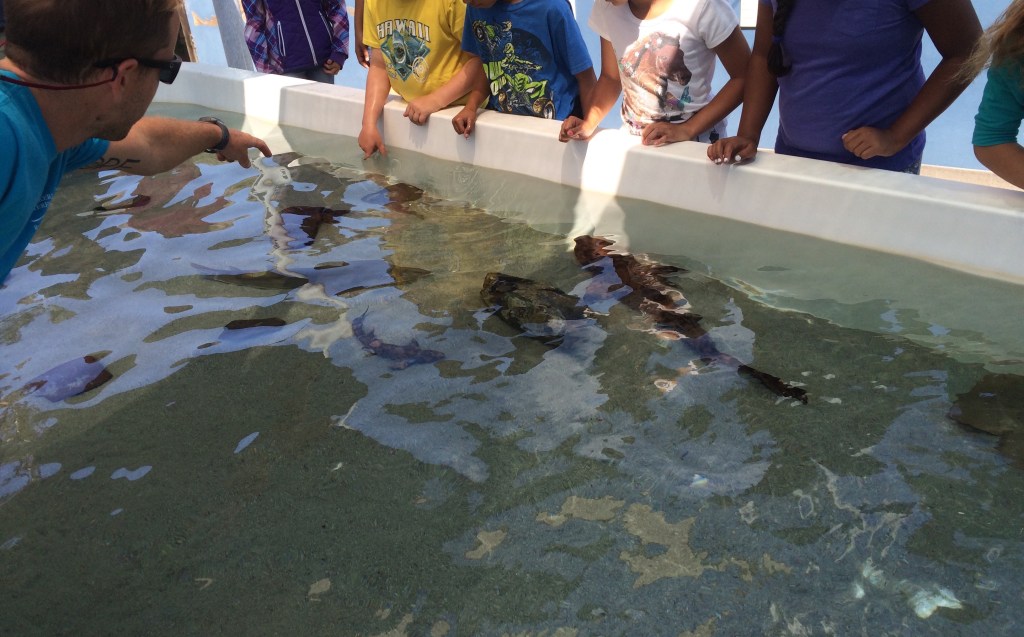
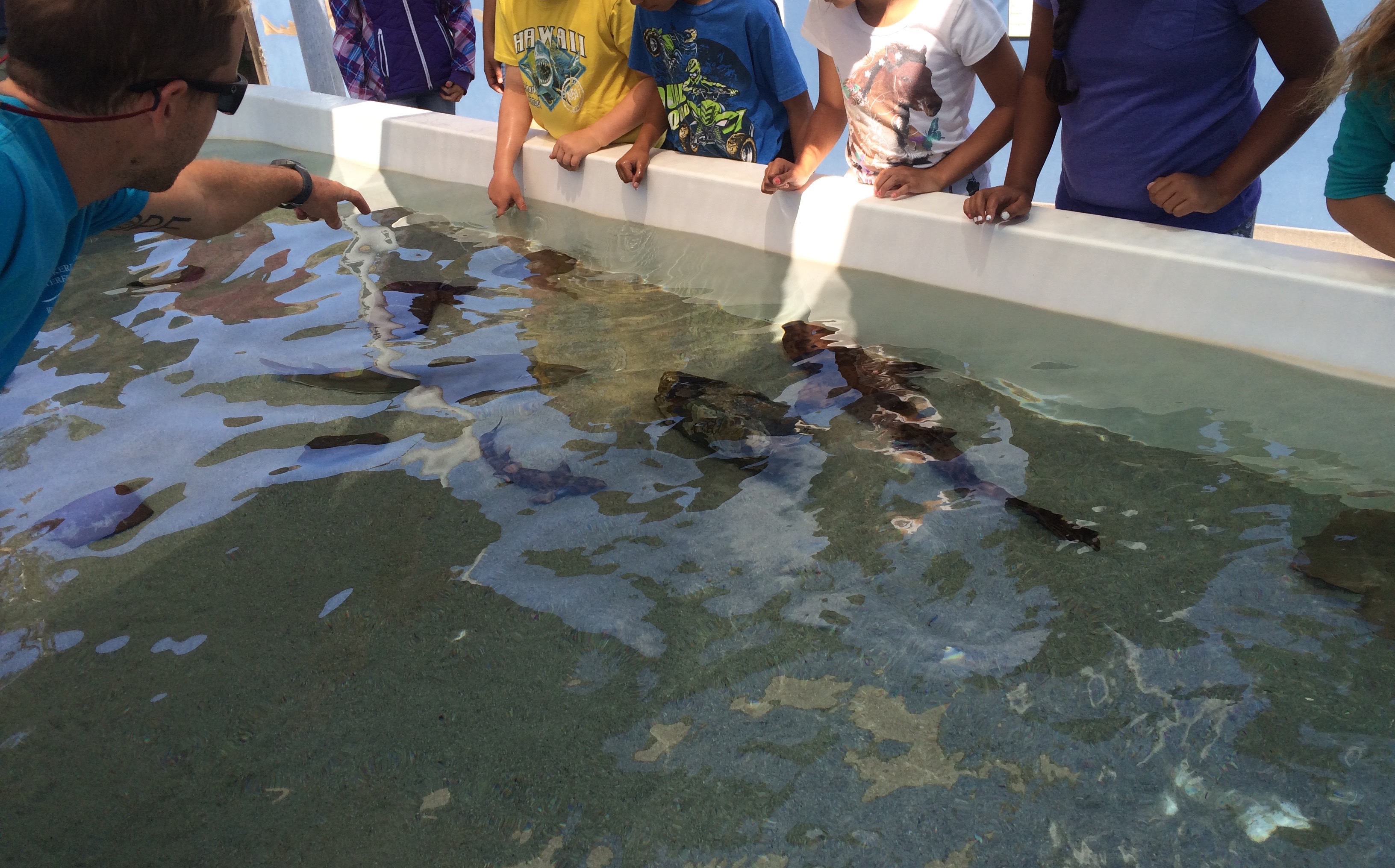
Students explore our shark barge. They get to pet several native species of sharks and rays – one of the best ways to get kids over a fear of sharks!

We’re an intimate team of four instructors who rotate week-long shifts, and teach the rest of the time. At the beginning of each season we work together to set up and break down our aquarium systems and collect animals, but most of the year we work independently. Just because we have solo shifts doesn’t mean we fly solo – we still work together to solve tough problems or collect on scuba.
thumb_img_1862_1024

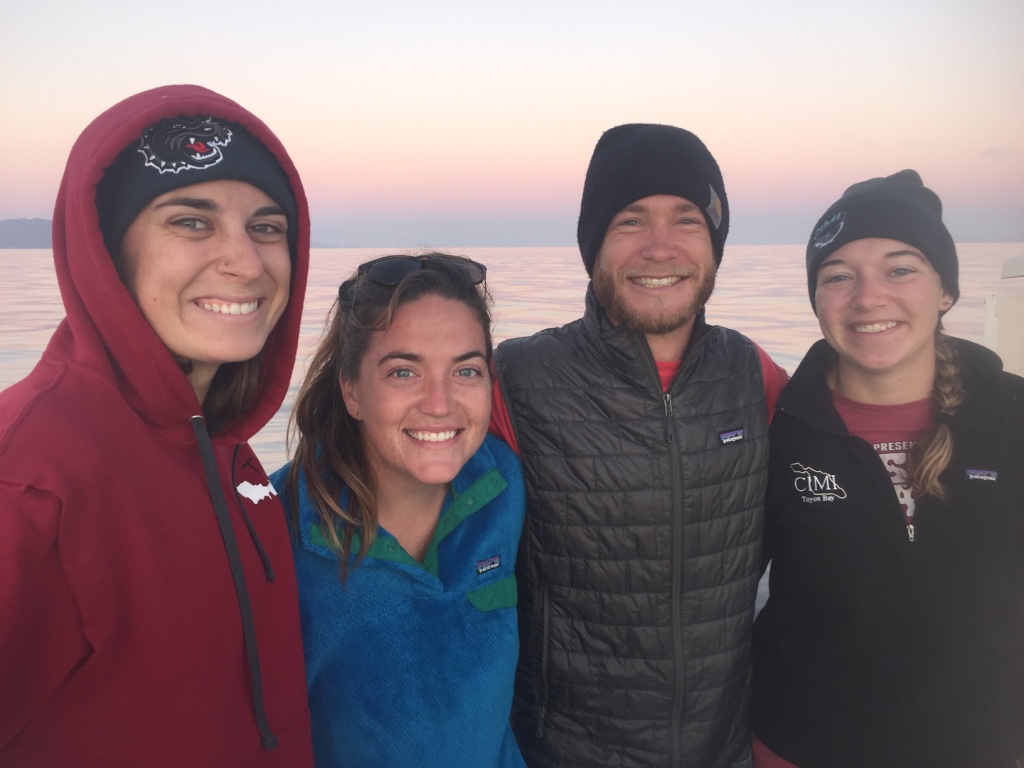
The AQ crew! From left to right: KO, Crash, MoMo, and me (aka Ed or EmD)

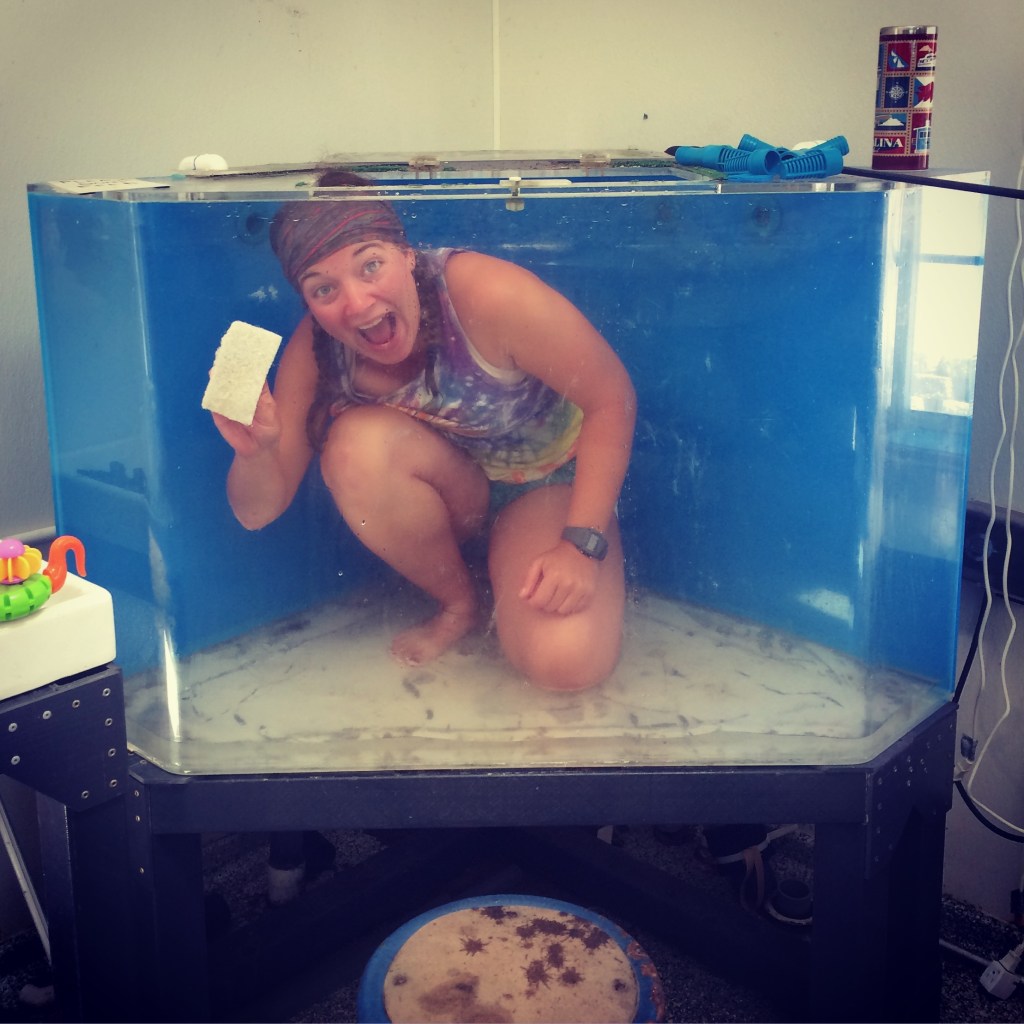
Most of our daily work looks like this…
IMG_6957

Scrubbing out the big octopus tank.


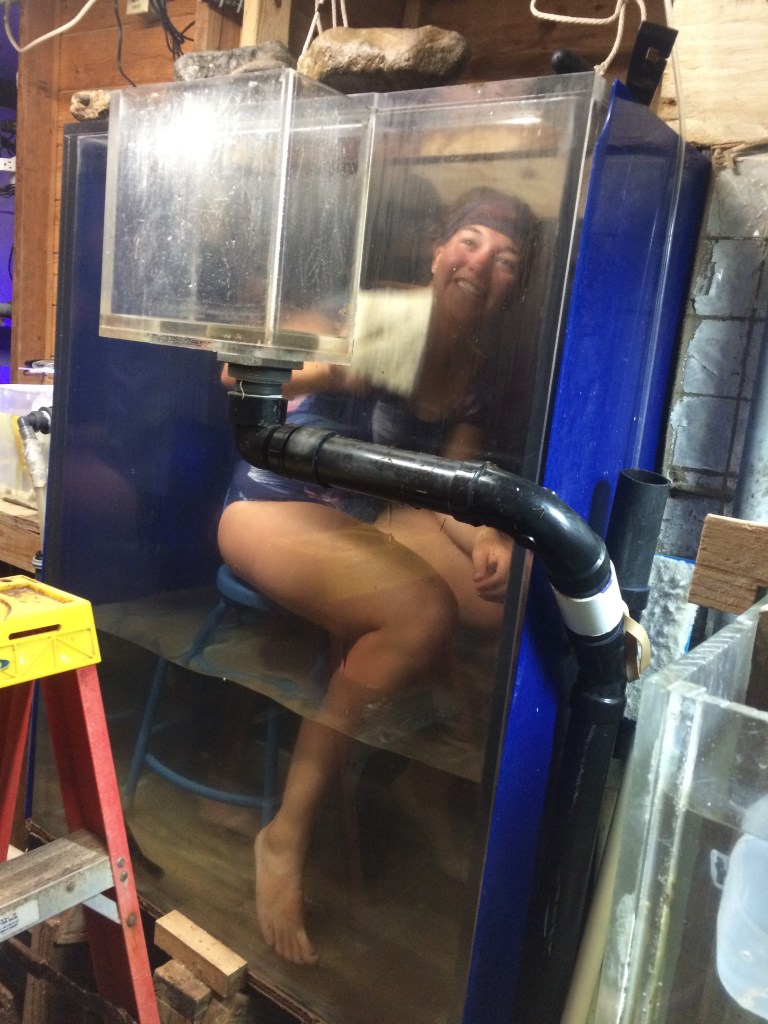
Or this…
img_7093

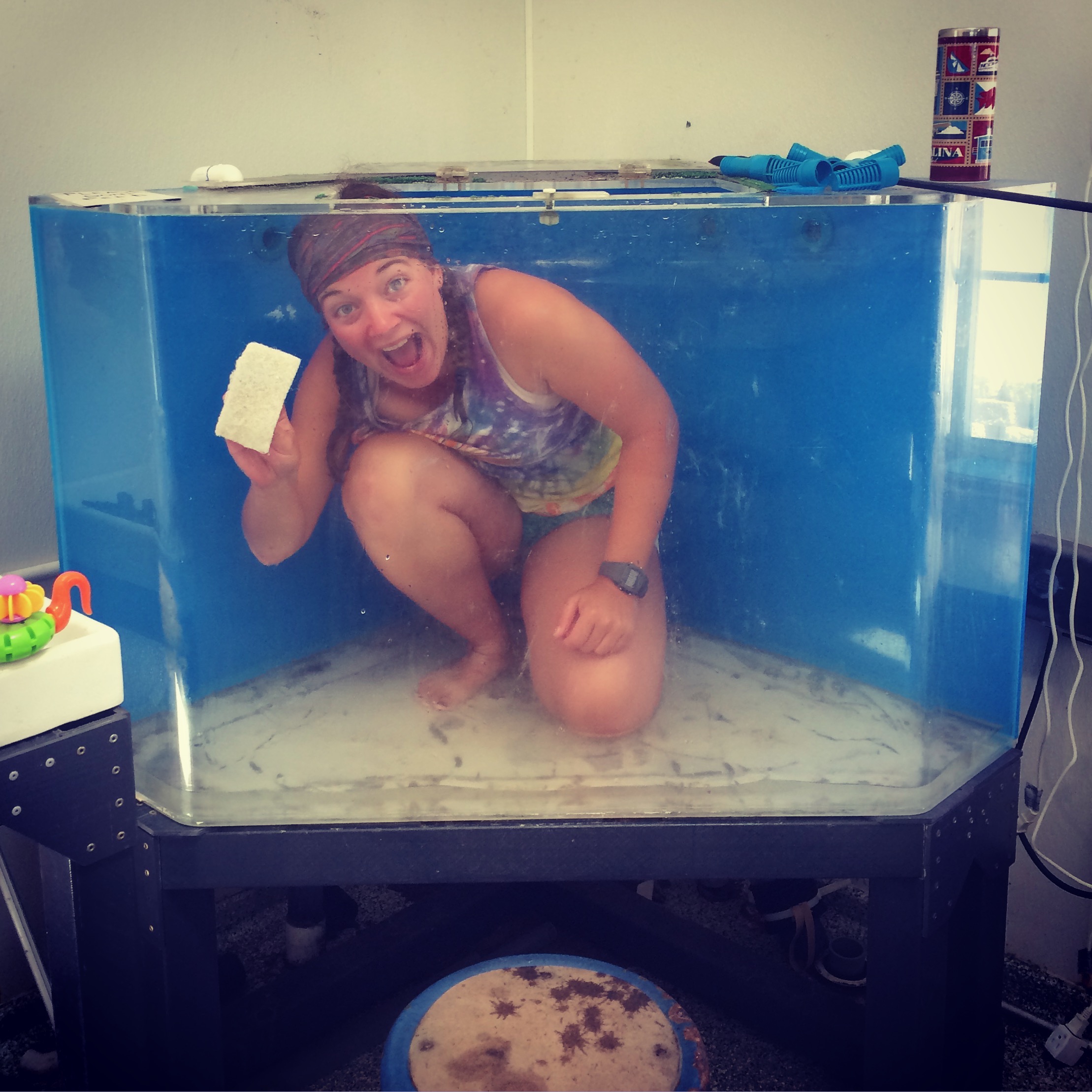
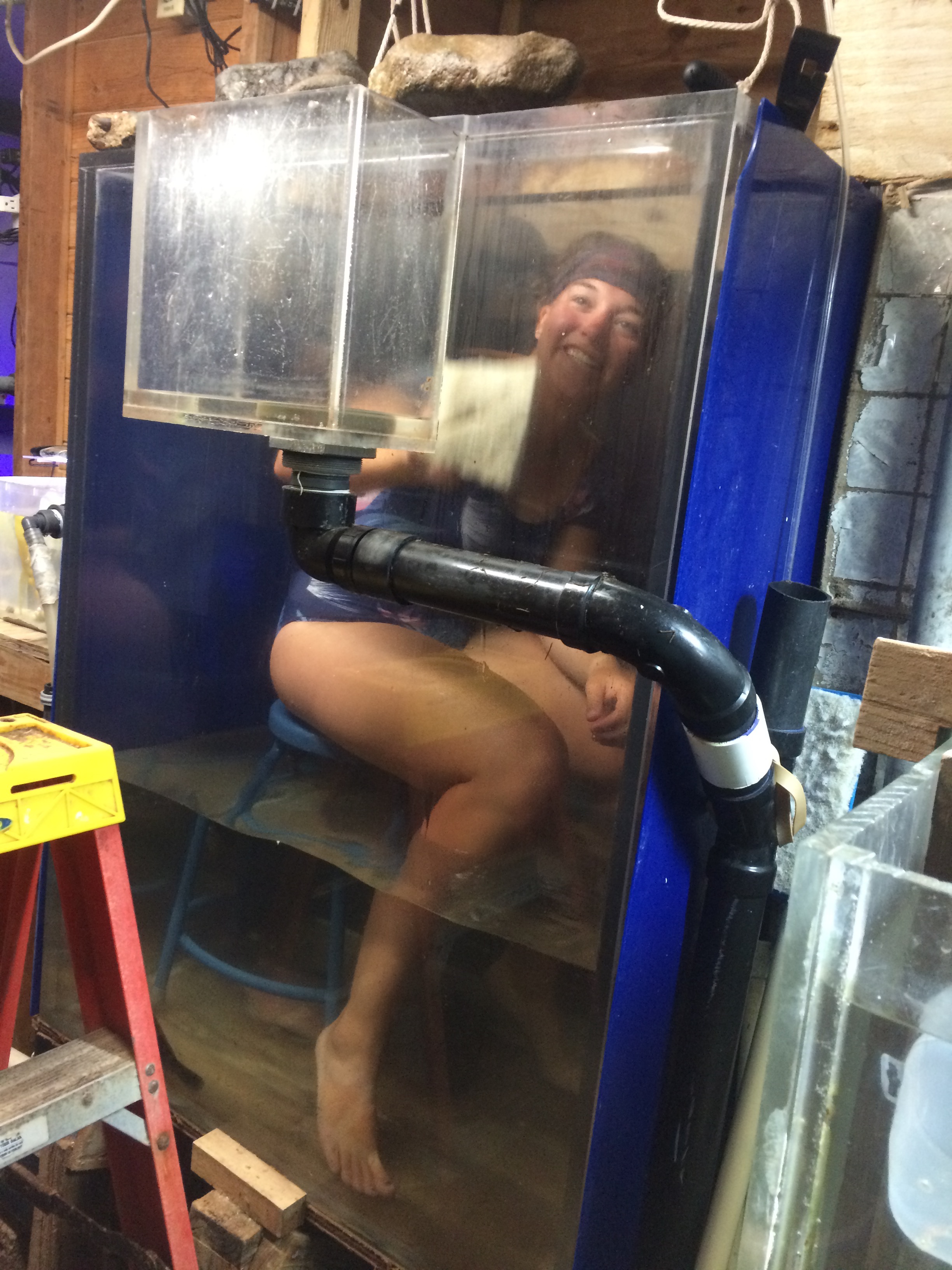
Scrubbing out the big ol’ fish tank. The confused fish were taking cover behind my legs.

So, lots and lots of scrubbing and cleaning to keep the animals healthy and the displays looking nice. But, we also get to spend a ton of time out in the ocean, collecting animals and algae for our educational aquariums!
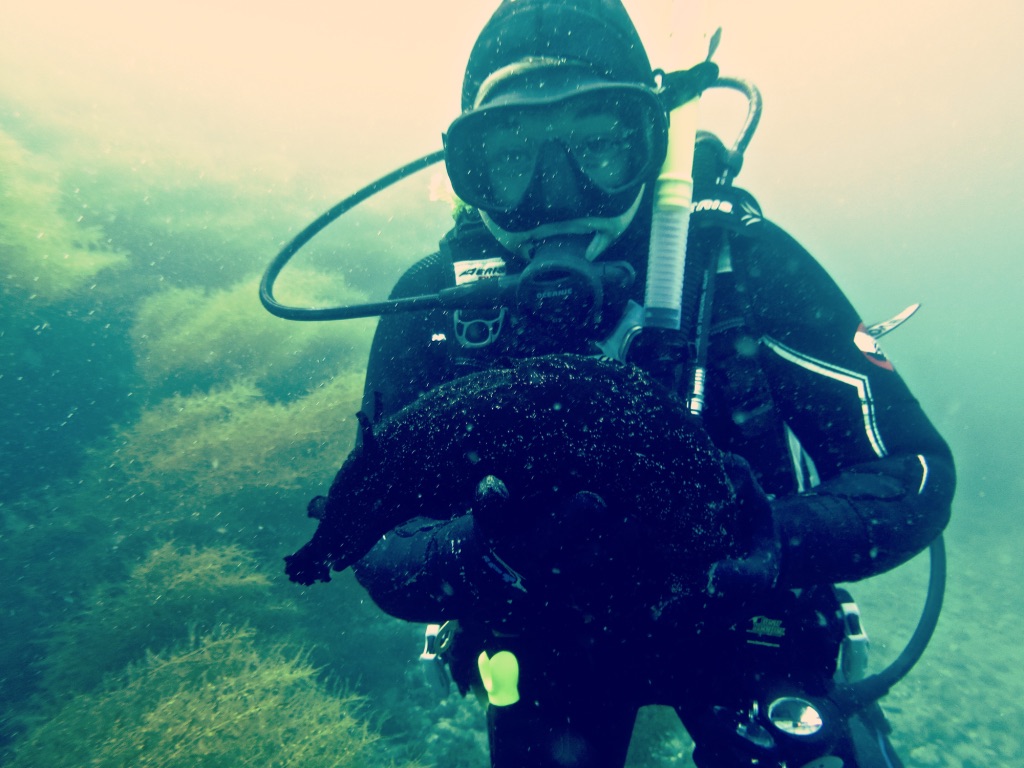
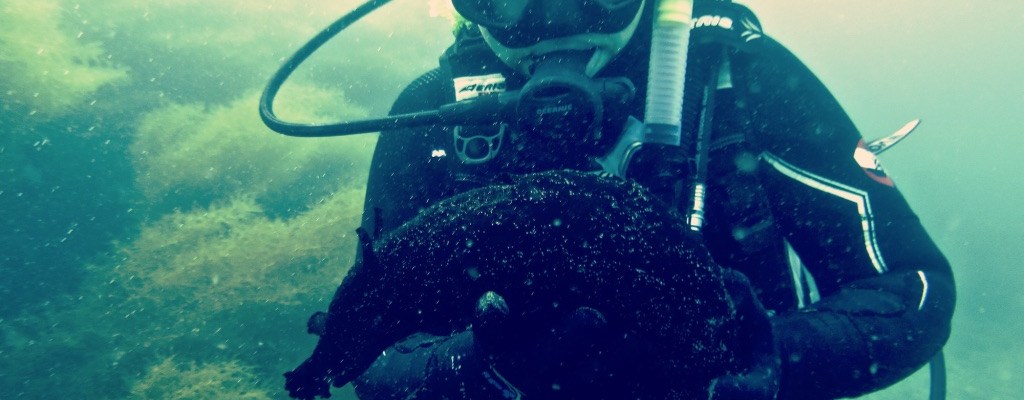
Me with a Giant Black Sea Hare (GBSH). These are the largest gastropod (slug or snail) in the world, weighing up to 14 pounds! They’re also supremely huggable critters, and eat an insane amount of algae. Photo credit: Jorie H.

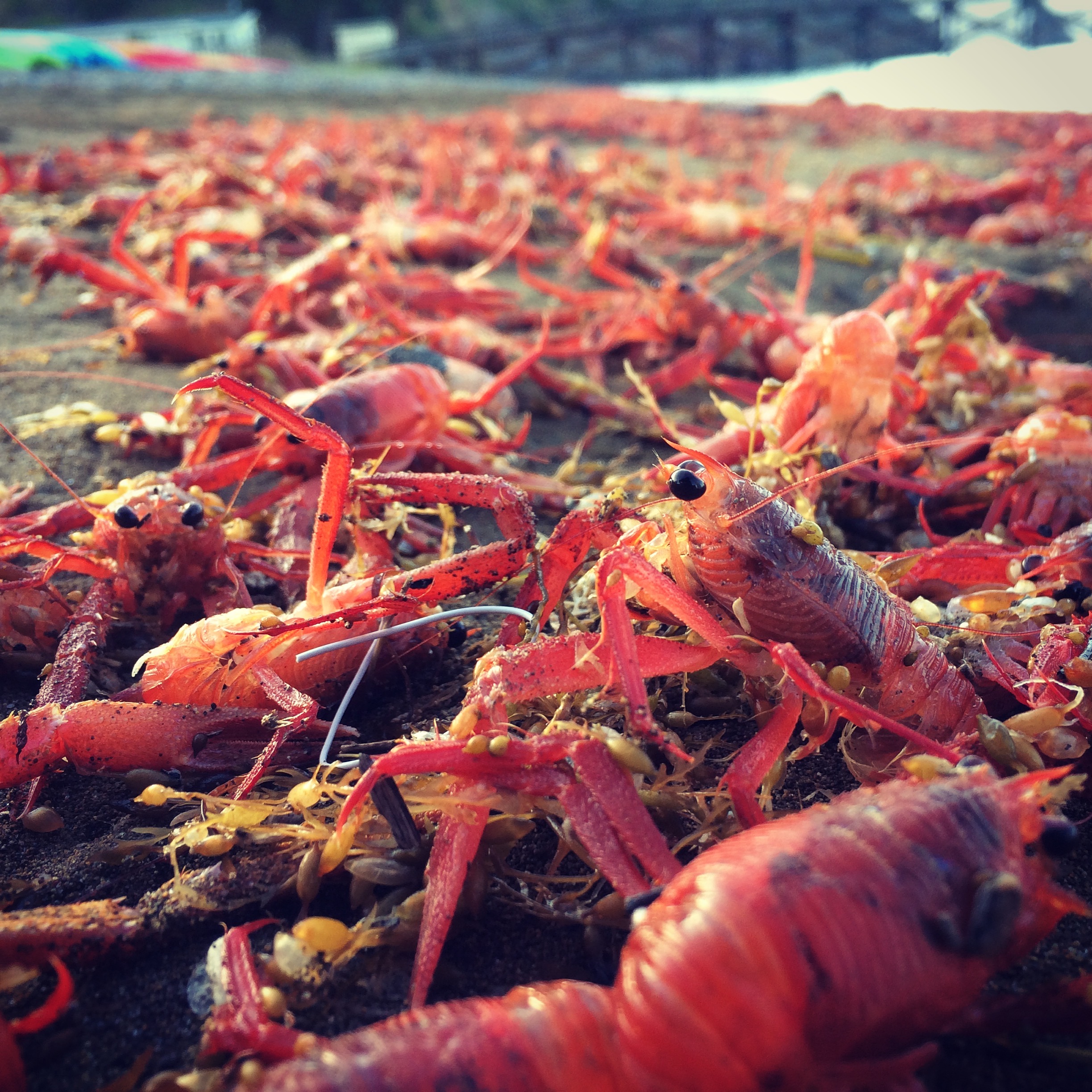
Slugs are easy to catch… Fish, not so much. They’re a lot smarter and faster than you think! Sometimes nature makes collecting really easy, like when we had thousands of pelagic red crabs wash up on our beach this week!
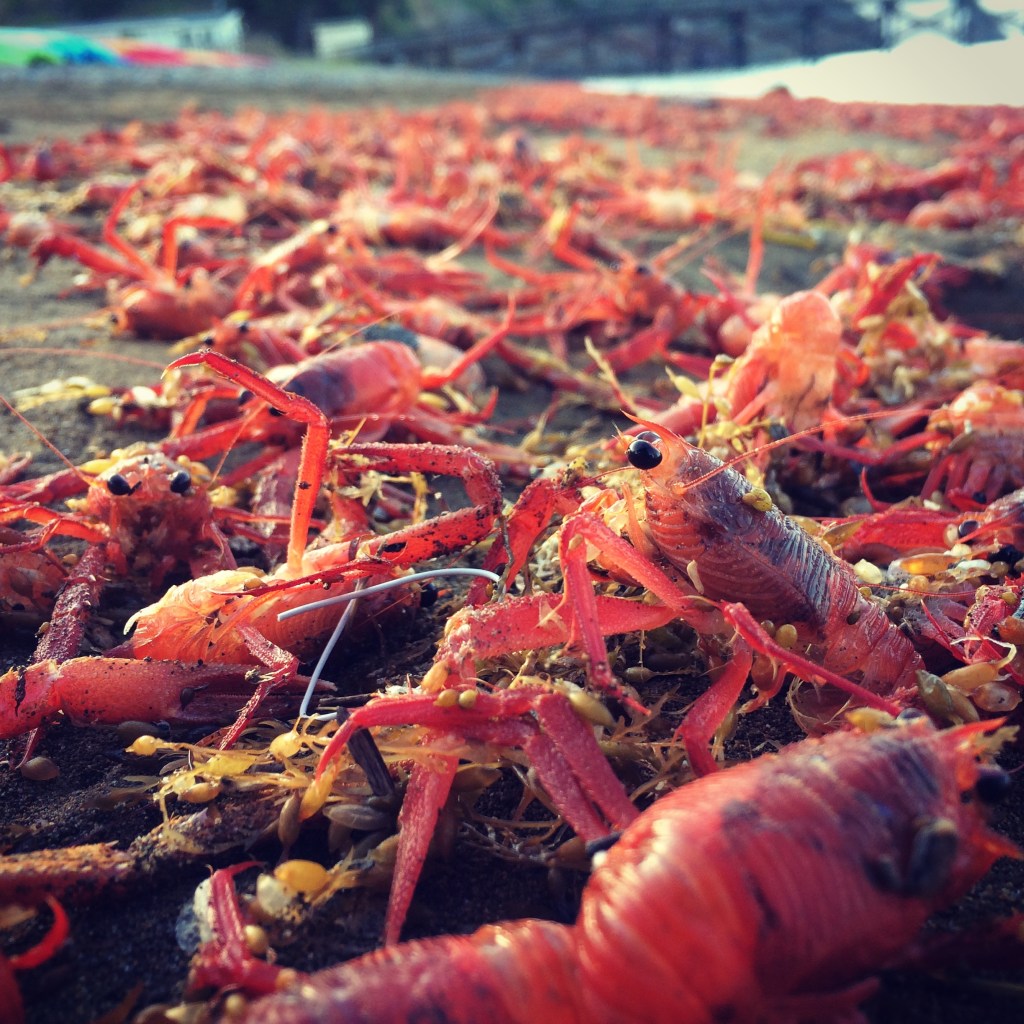
These little guys are the Snickers bars of the ocean… Everyone wants to eat them! Many baleen whale species feed on them, as well as tons of fish and invertebrates. I collected them right off the beach – their antics bring a lot of entertainment to our touch tanks! They also provide a stimulating hunt for our sharks and other creatures, which don’t get much live food in captivity.

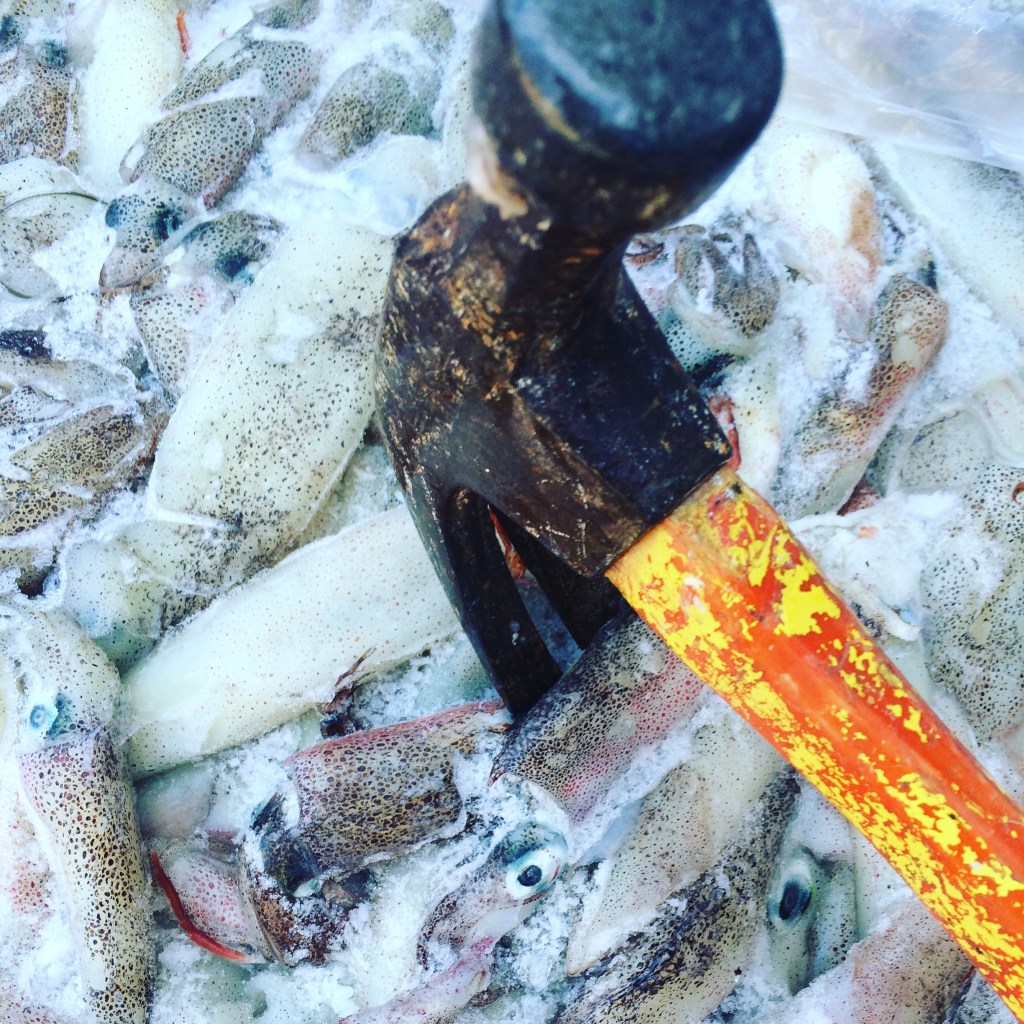
Which, conveniently, brings me to feeding! Our critters are fed a steady diet of squid and fish, but our octopus gets live crabs. We make a special “shake” for our filter-feeding invertebrates – algae, saltwater, fish/squid, and nutritional supplements are blended together. Yum!
img_6977

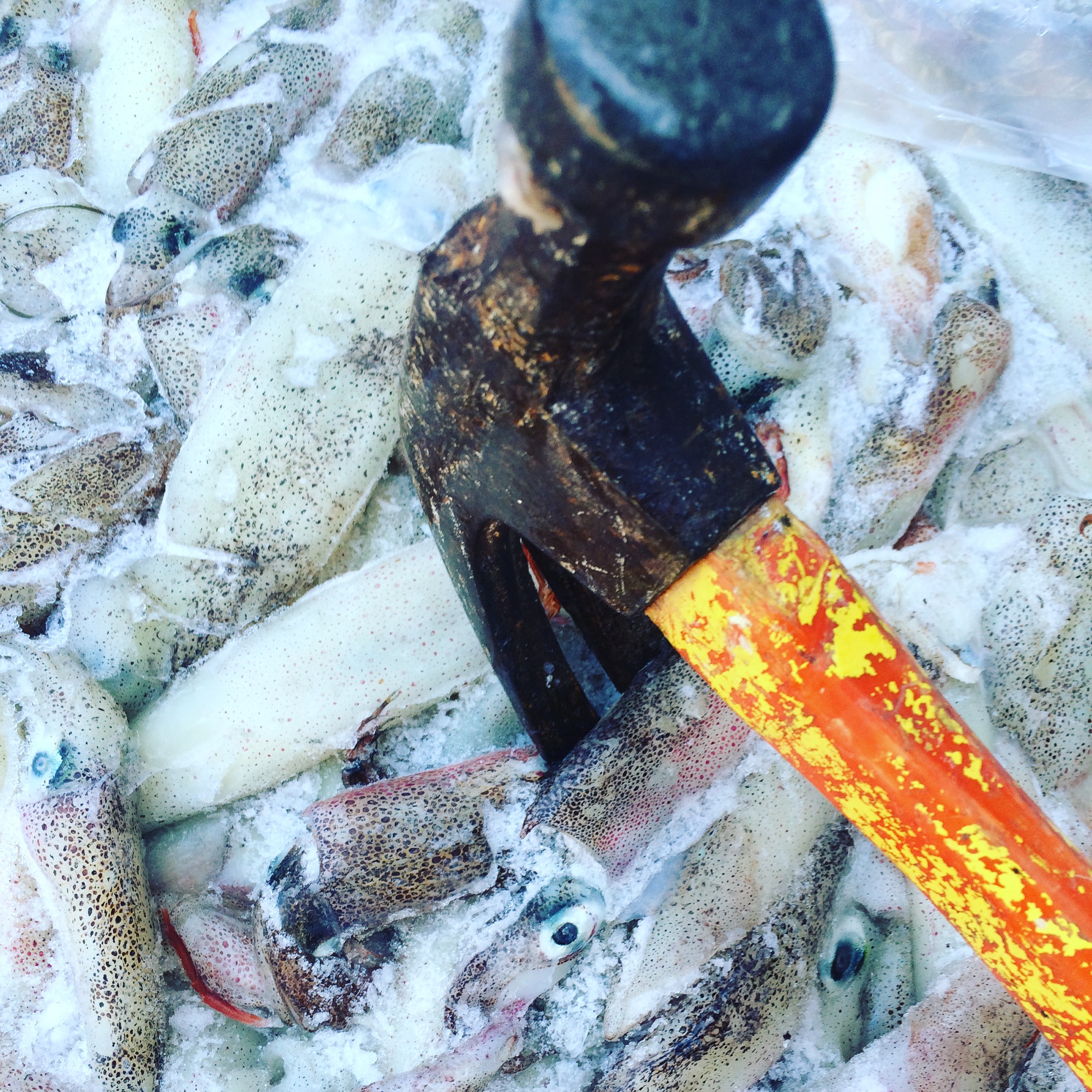
Sometimes AQ work requires some weird moments of innovation… like pulling apart squid with a hammer.


Now, I want to introduce you to some of our incredible creatures!
 

IMG_6956

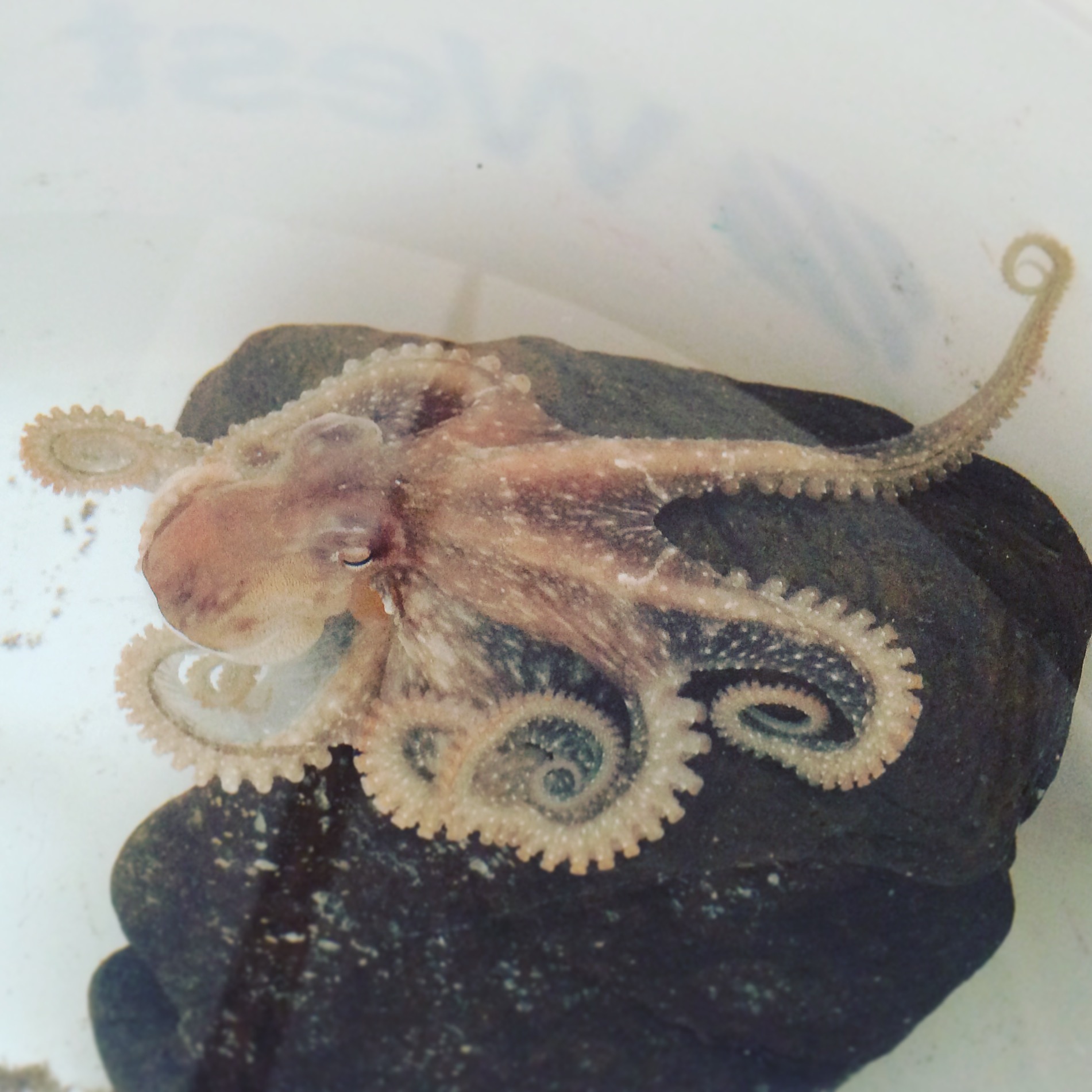
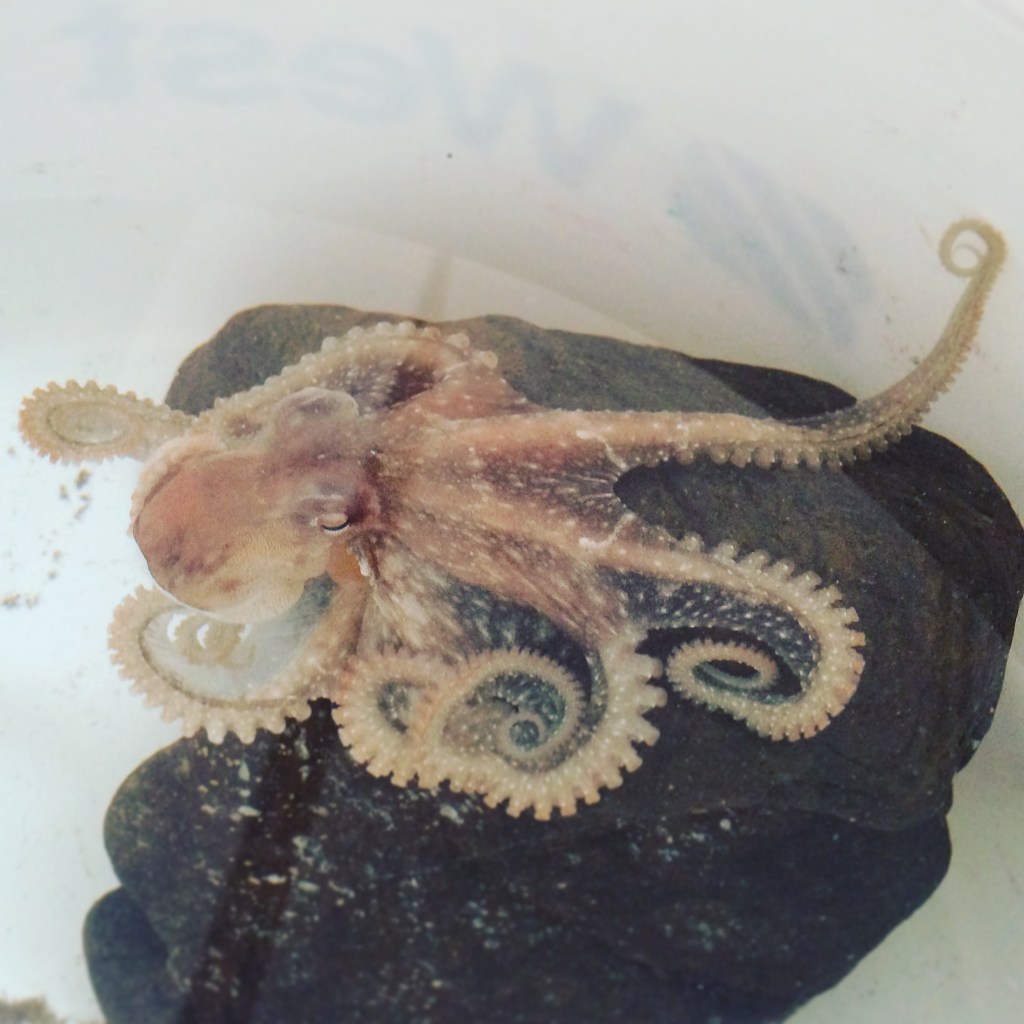
Lil’ baby red octopus! Check out those lovely arms.
 

img_6981

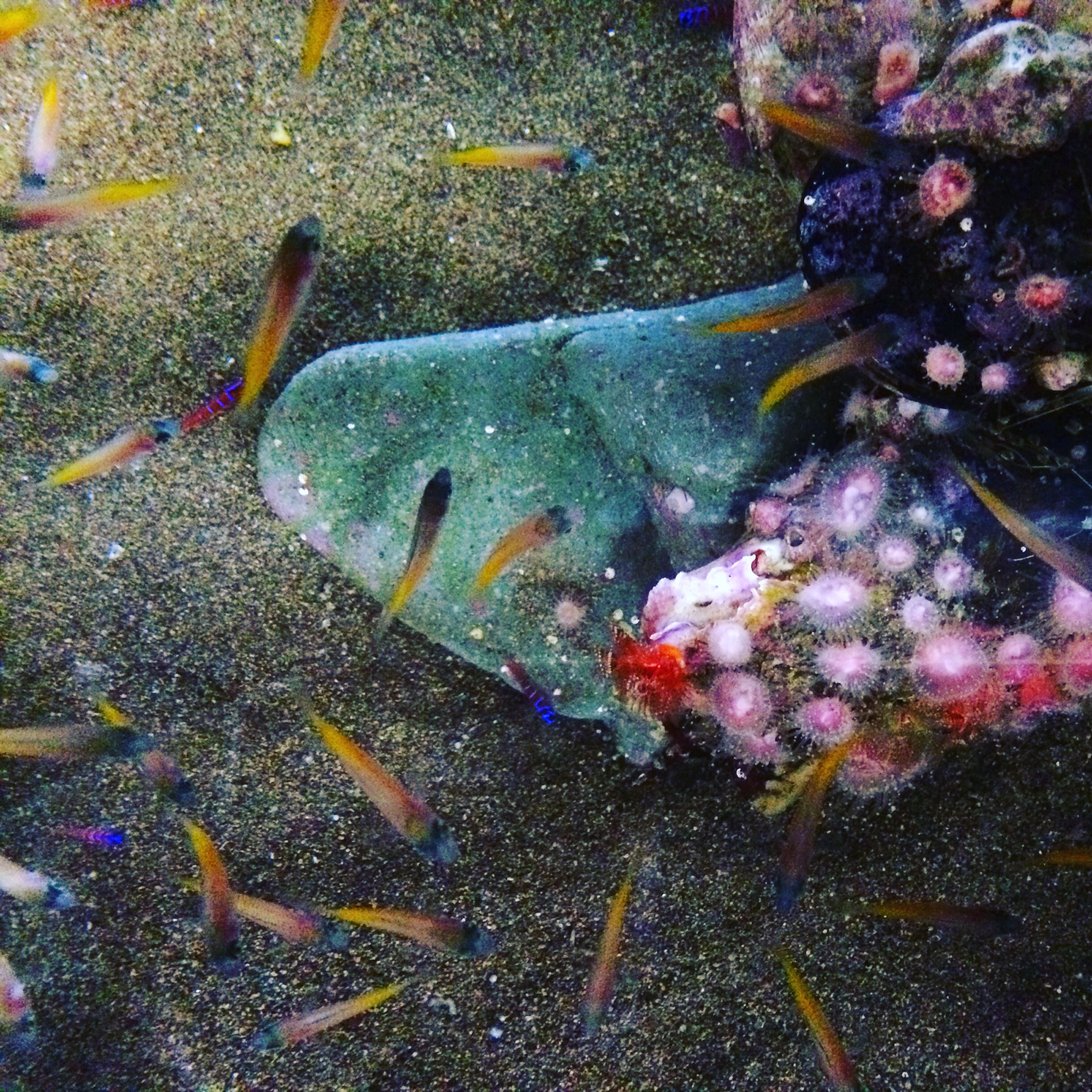
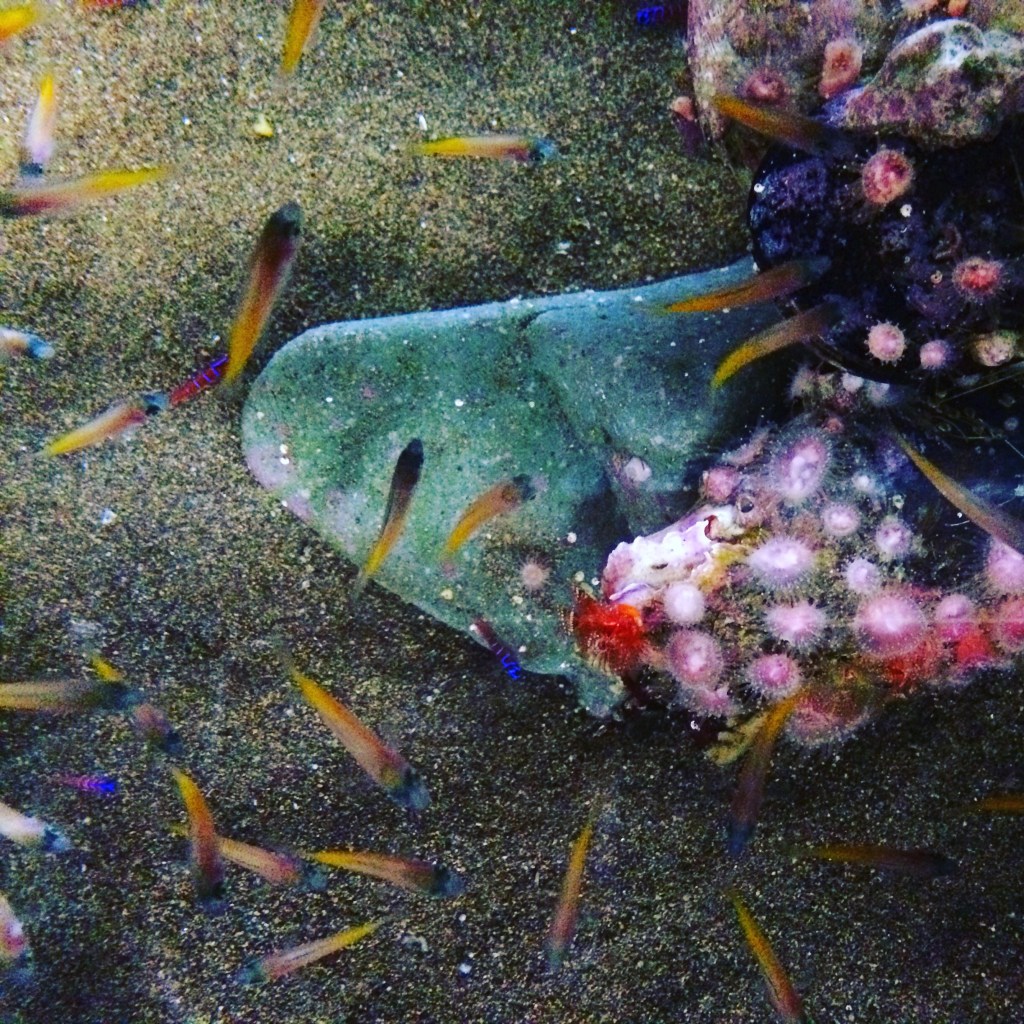
The residents of our smallest tank, formally known as Tiny Town. the yellow ones are juvenile blacksmith; the neon blue ones are bluebanded gobies, one of my favorite species.
 

img_7005

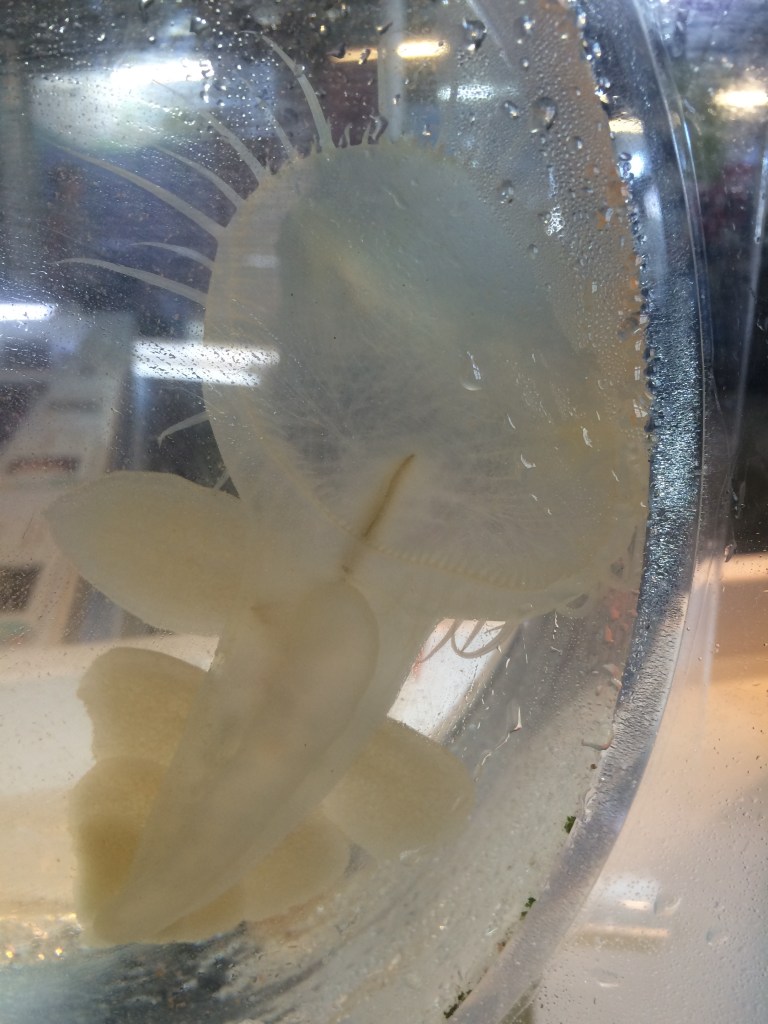
A Melibe s. sea slug opens wide for lunch at the Santa Monica Pier Aquarium. We have smaller ones in our aquaria, this one’s a monster!

We have some more sedentary residents as well – meet our incredible algae! Believe or not, algae and plankton produce approximately 70% of the oxygen we breath – trees only produce about 10%.
thumb_img_7221_1024

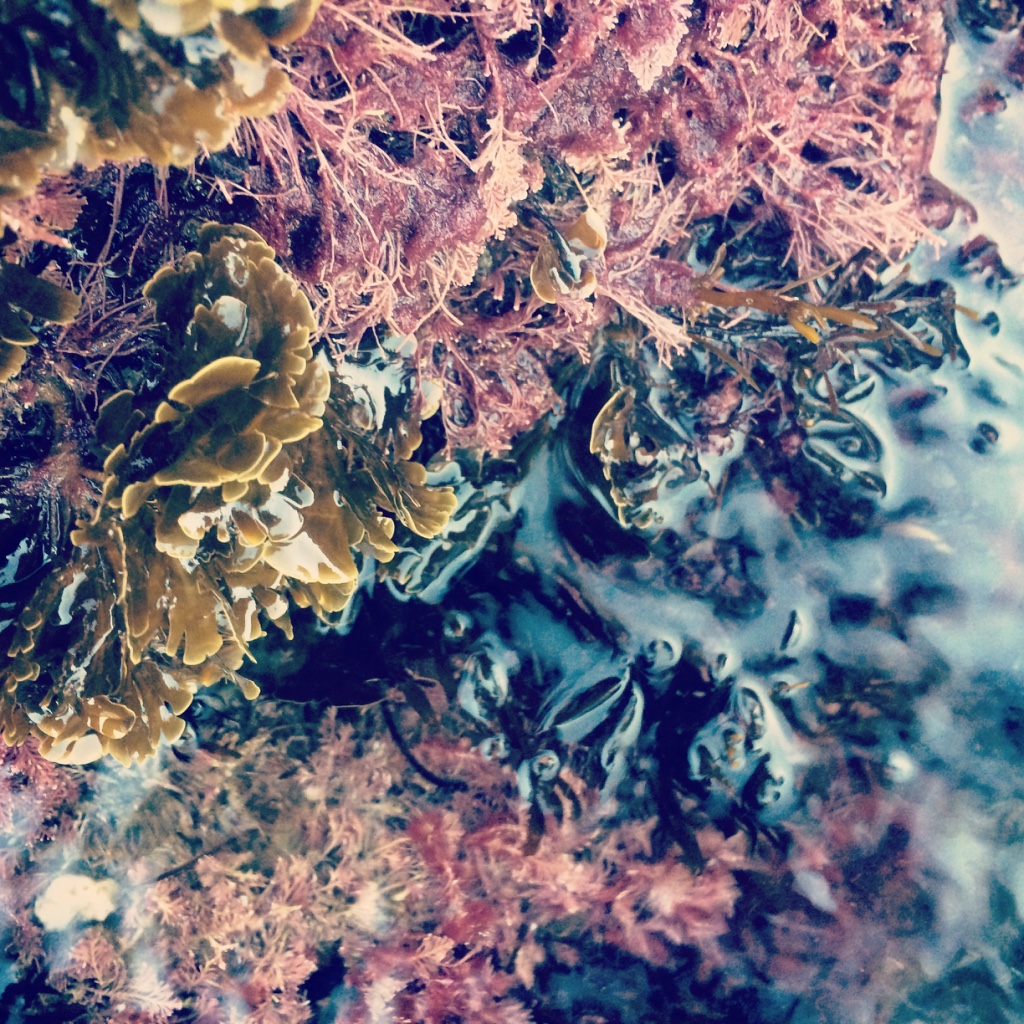
Red and brown algae in a tidepool in the bay.
 

img_7095

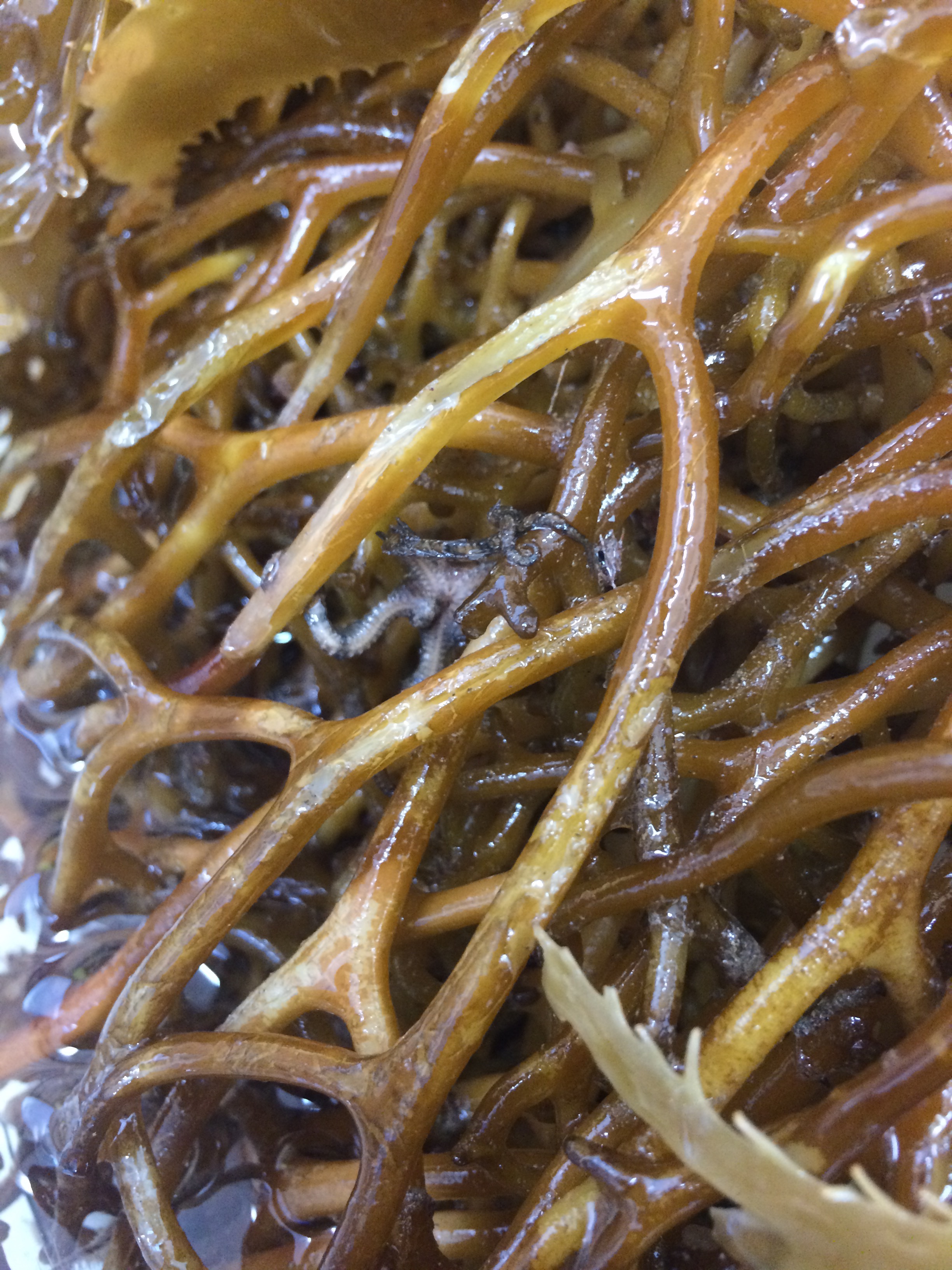
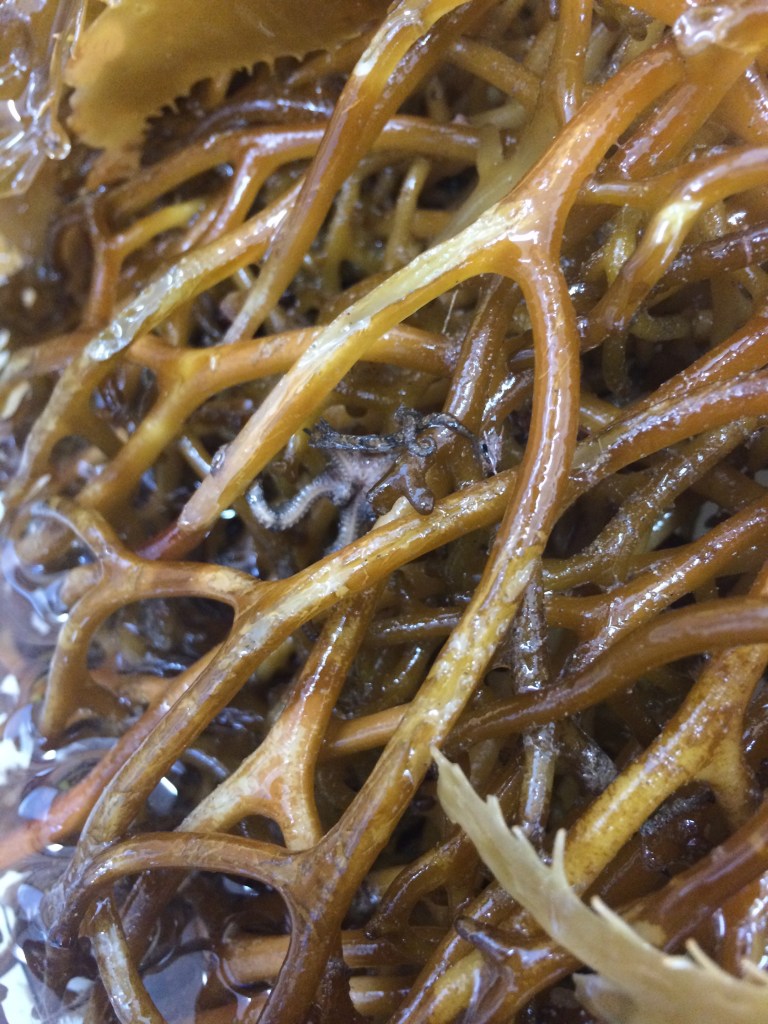
A brittle star crawls to cover in a kelp holdfast. Holdfasts are the “roots” of the algae, anchoring them to the seafloor. This holdfast (roughly 18″ across) contained over 60 individual brittle stars. The nooks and crannies are perfect hiding places!
 

img_7088

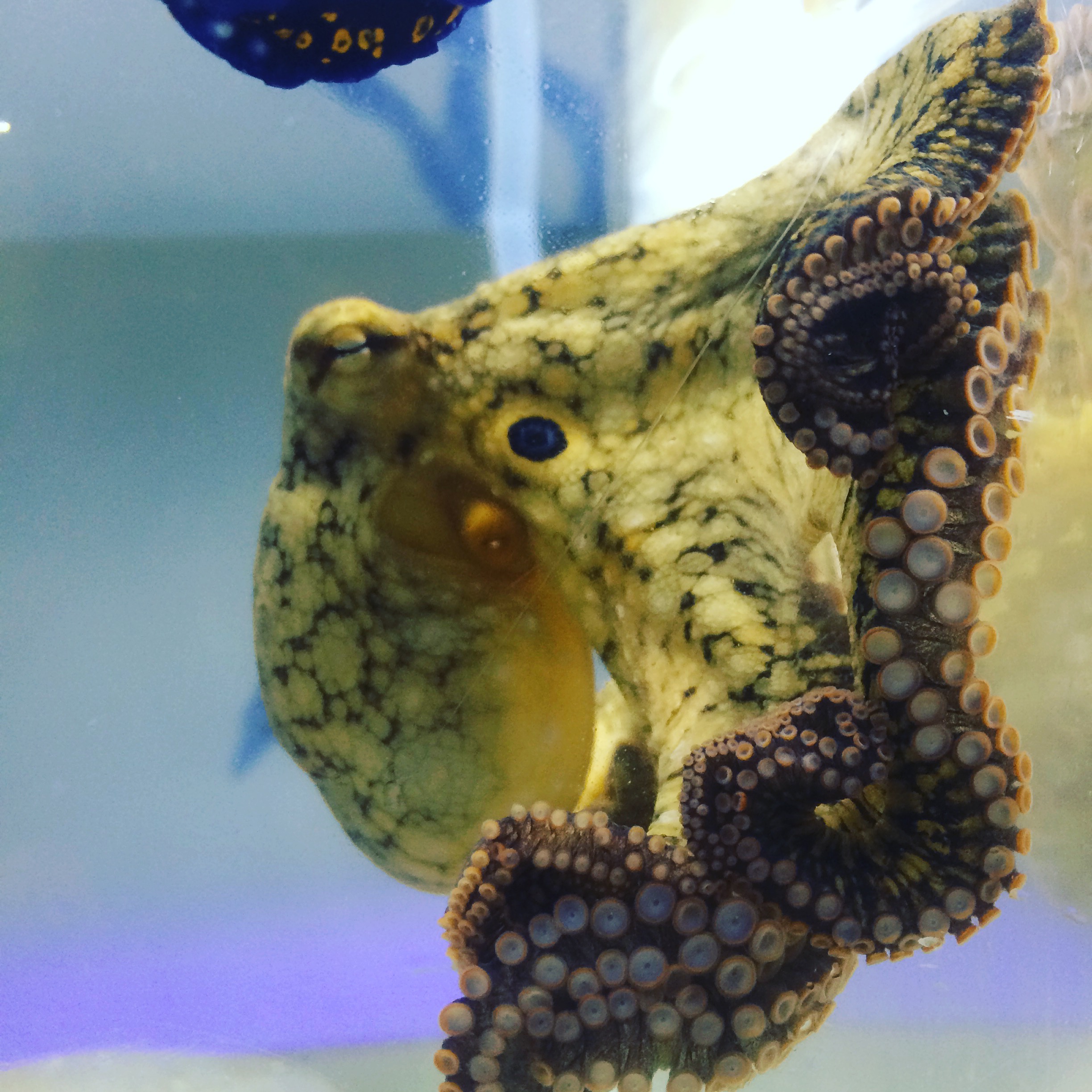
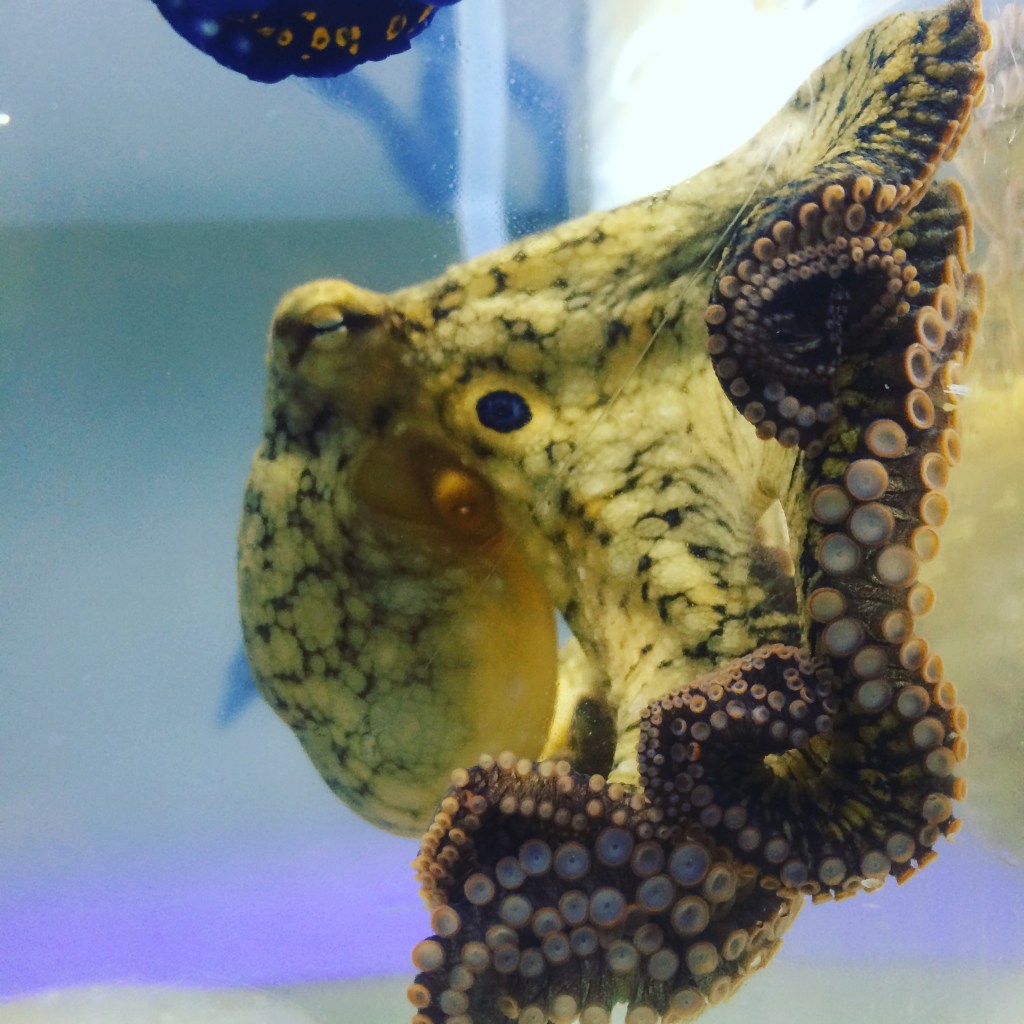
Our gregarious two-spot octopus, Nala, shows off her suckers and false eyespot she uses to intimidate predators. Her actual eye is white with a black horizontal pupil – can you find it?
 

img_7099

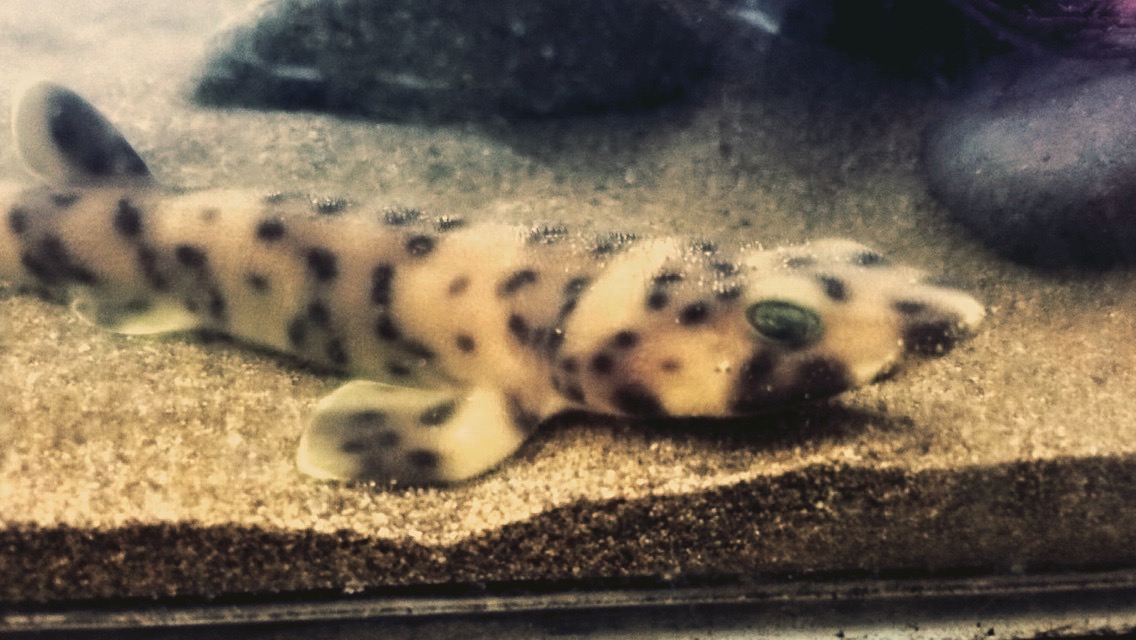
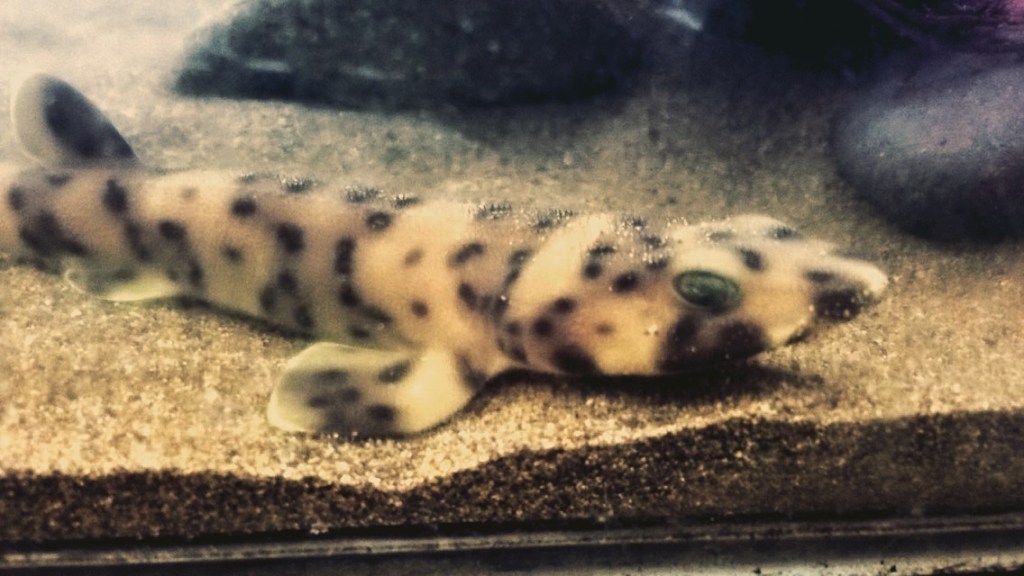
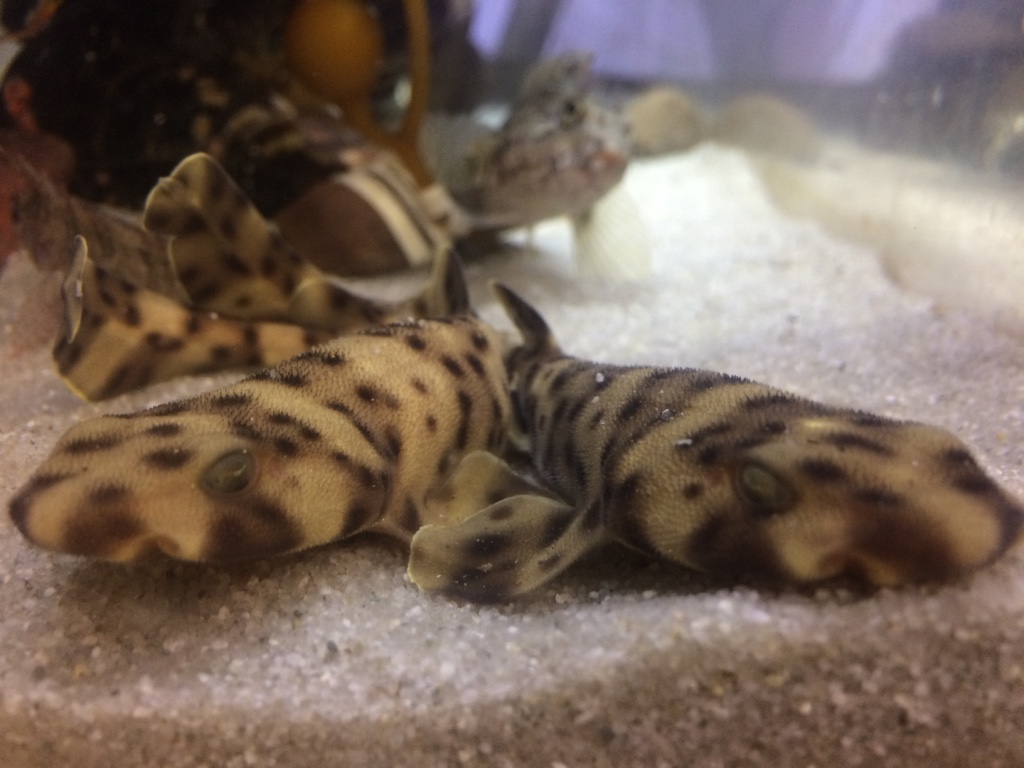
Only a few hours old, a juvenile swell shark calmly peers out of her tank.
 

thumb_img_7226_1024

If you look closely, you can hundreds of tiny bumps on the pups. These are dermal denticles, literally “skin teeth”. These act as a form of protection, and also help sharks swim faster through the water.
 

thumb_img_7171_1024

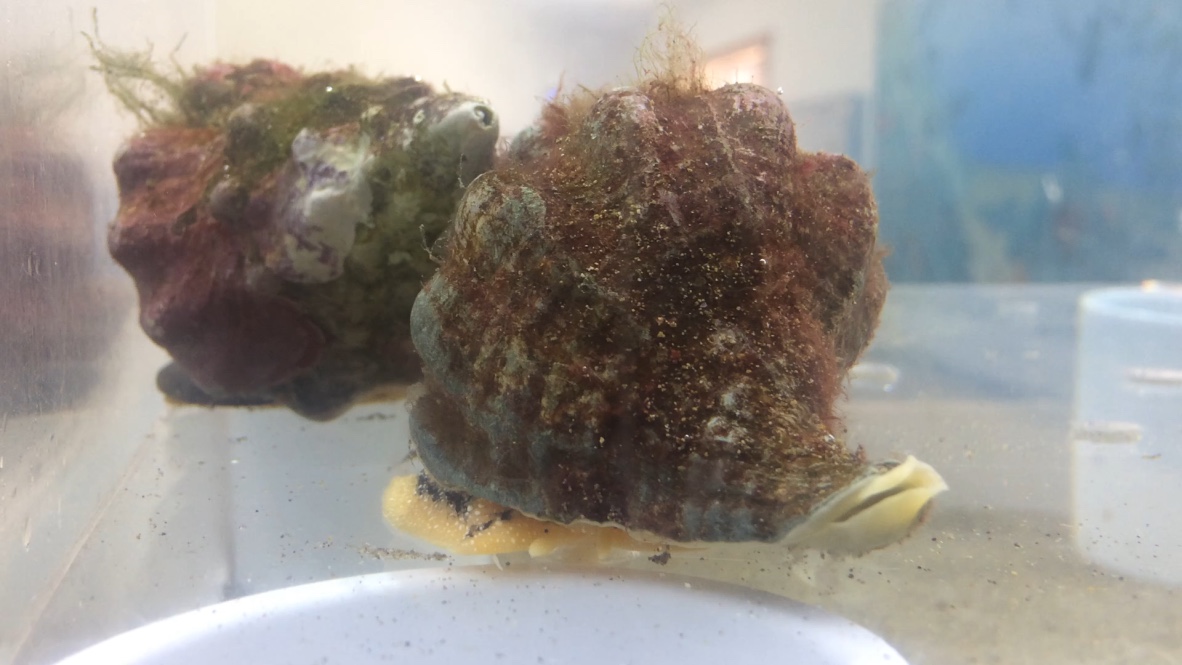
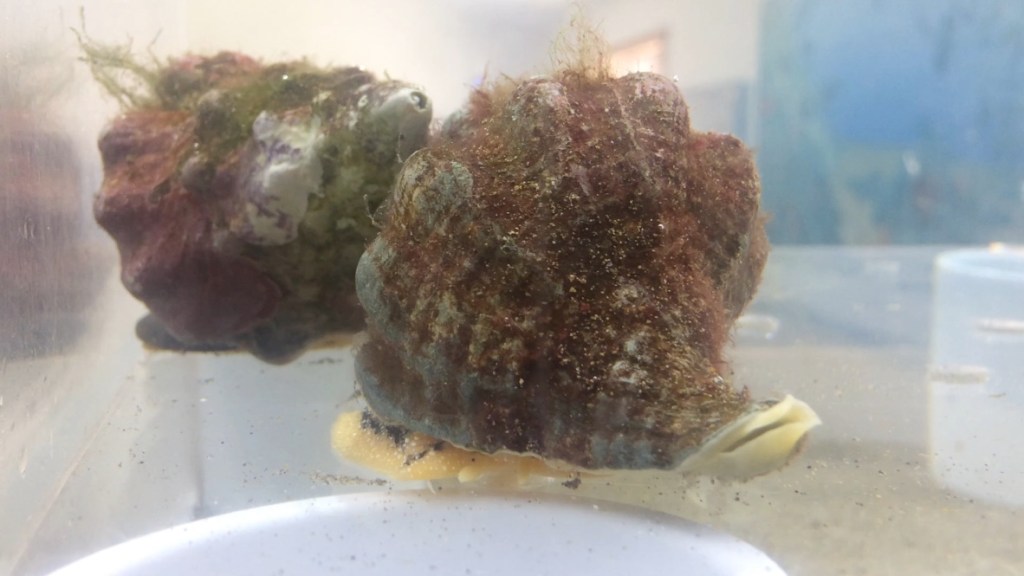
Kellet’s whelks in invertebrate lab. The algae growing on their shells provides excellent camouflage.
 

thumb_img_7170_1024

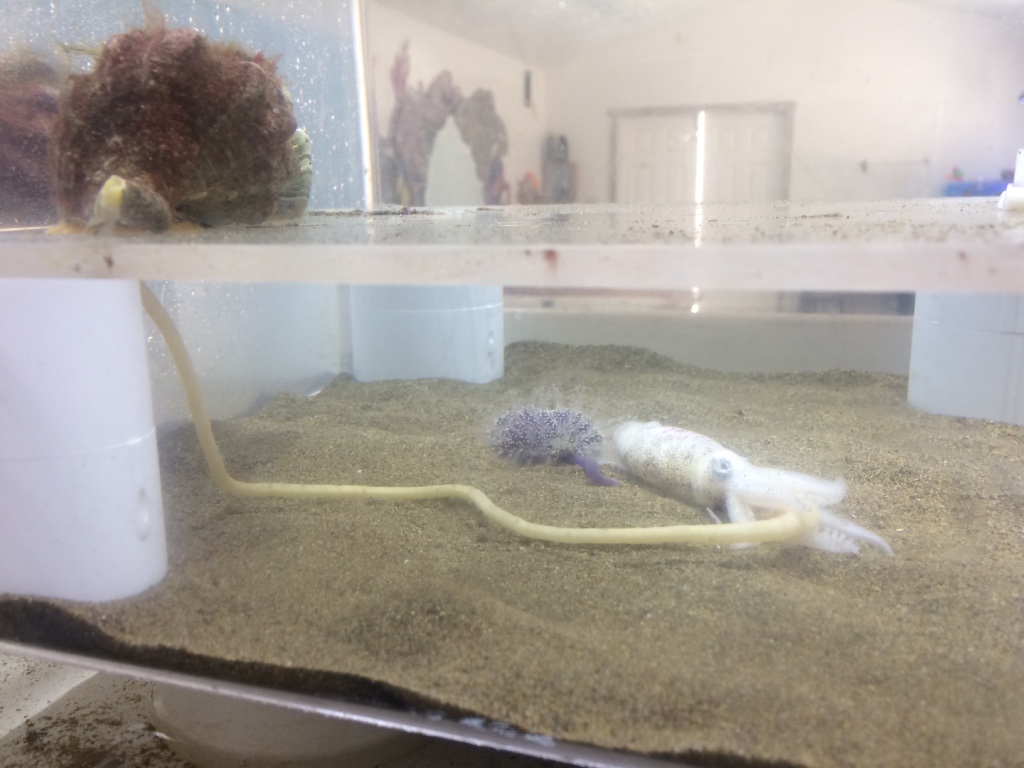
A Kellet’s whelk uses its massive proboscis to feed on a tasty squid. Incredible!


thumb_img_7174_1024

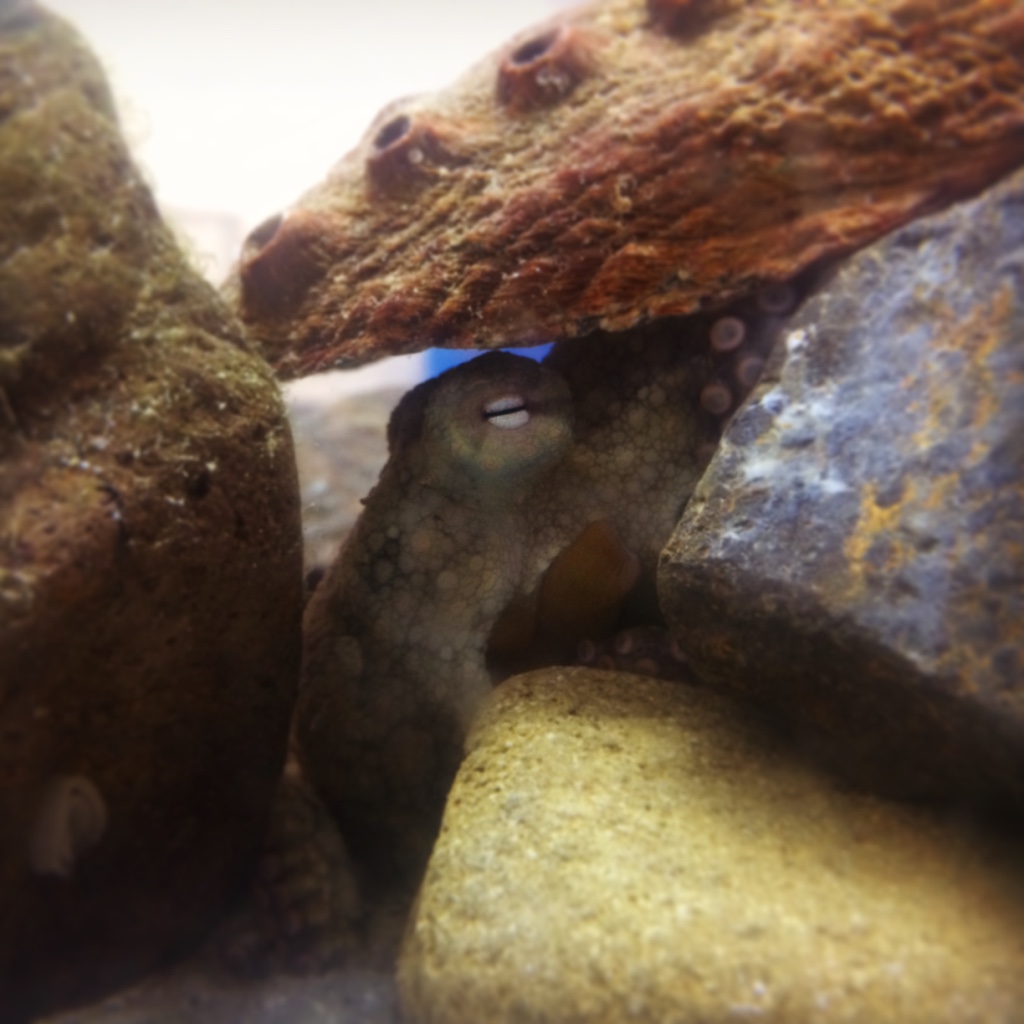
Seemingly annoyed yet curious, a two-spot octopus peers out of her den.
 

thumb_img_7181_1024

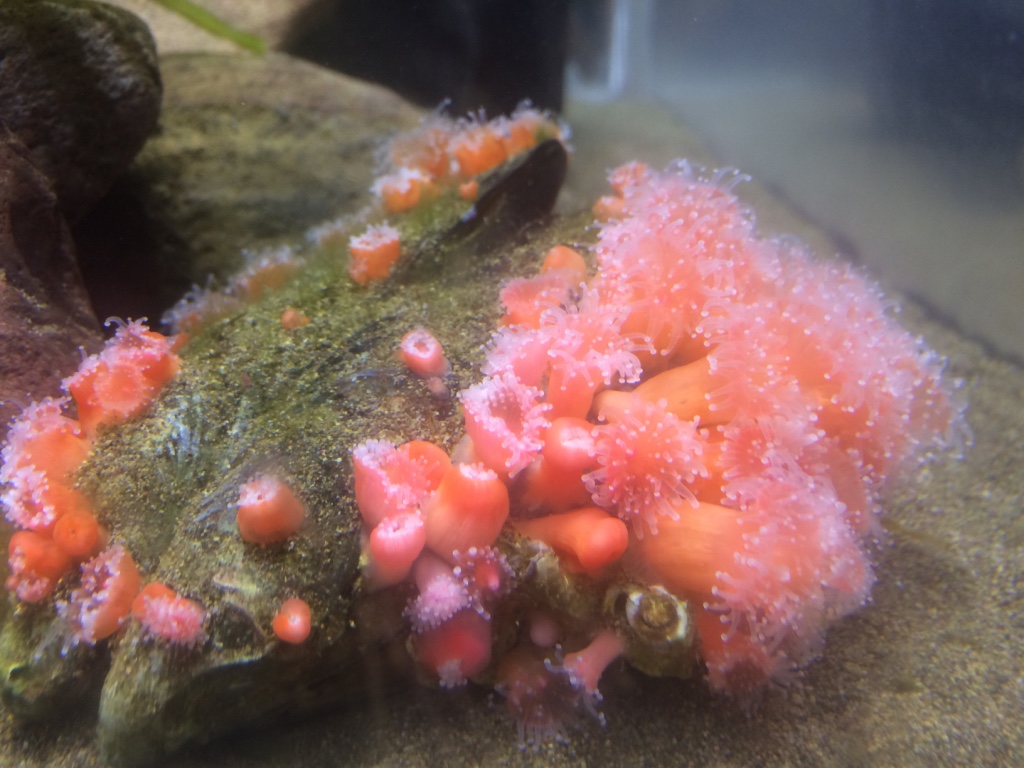
A cluster of strawberry anemones add a lovely burst of color to the tanks.


thumb_img_7180_1024

One of our grumpier residents – a southern kelp crab feasts on codium, a green algae.


thumb_img_7183_1024

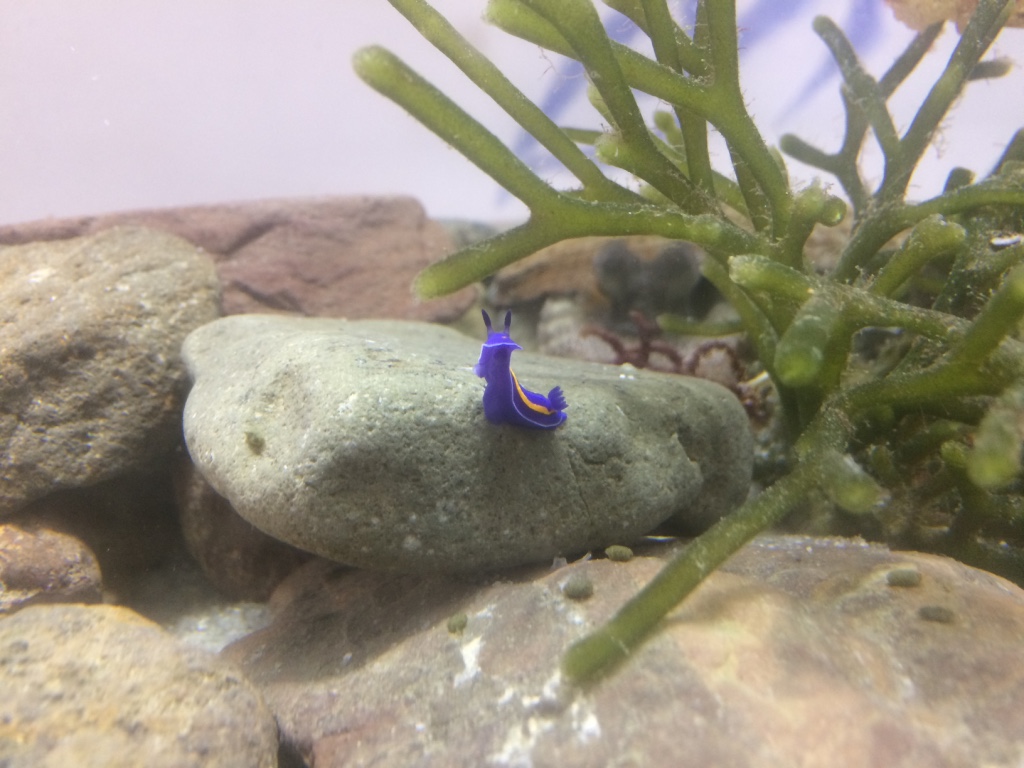
Seemingly on high alert, this nudibranch actually has no eyes or ears. They can sense light and dark, but primarily use their senses of touch, taste, and smell to navigate.
 

thumb_img_7204_1024

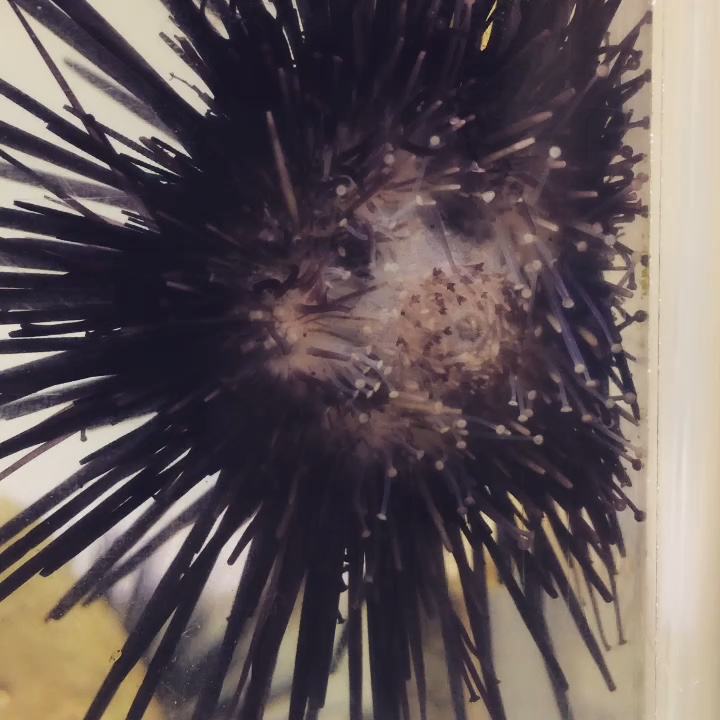
A coronado “crowned” sea urchin uses its tube feet to crawl its way around the tank. In the center, you can see its five-pronged beak, also known as Aristotle’s lantern. They use this magnificent piece of engineering to feed on algae.
 

thumb_img_7202_1024

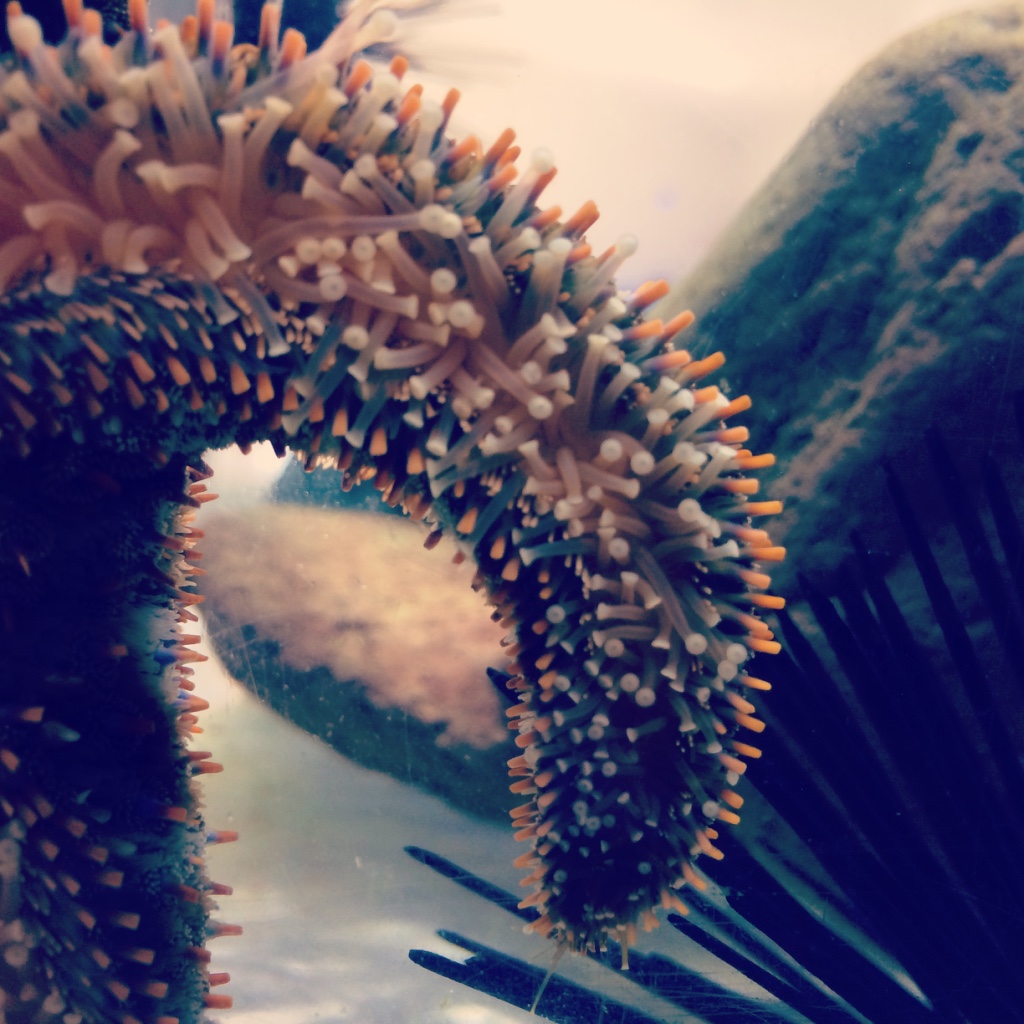
A distant relative of sea urchins, a fragile rainbow star also uses suction cup tube feet for locomotion.

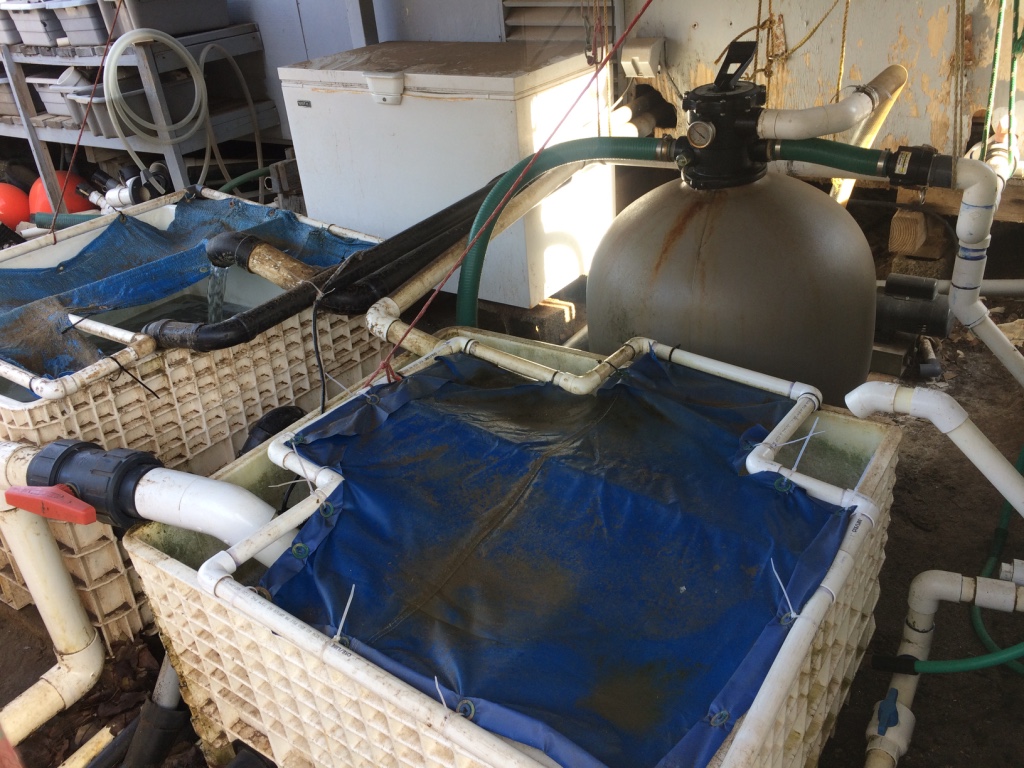
In order to keep all these critters alive, we have a set of pumps pulling water up from 70 ft deep in our bay. The water then runs through a series of sumps (water reservoirs) and a filter before going into the tanks. The water then flows out into our drainage ditch and then back into the ocean. The constant flow of seawater is essential for keeping the animals cool and oxygenated. A big part of our job is maintaining these systems – I’ve learned A TON about plumbing and aquaria!
thumb_img_7185_1024

The glamorous behind-the-scenes of our aquariums. The big tarp-covered boxes are sumps that store water that is pumped through the sand filter (the big round thing) and then into the tanks.

Anyways, back to the animals…
thumb_img_7187_1024

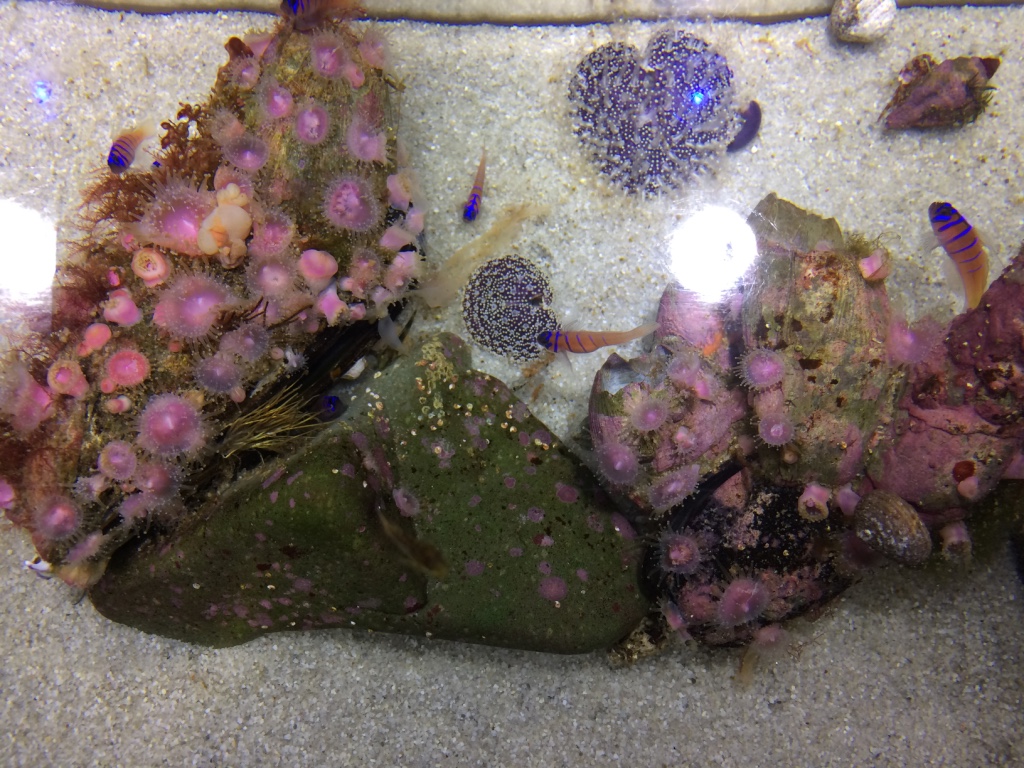
Another shot of Tiny Town and one of my favorite species – Bluebanded Gobies. How many fish can you spot? I count eight.
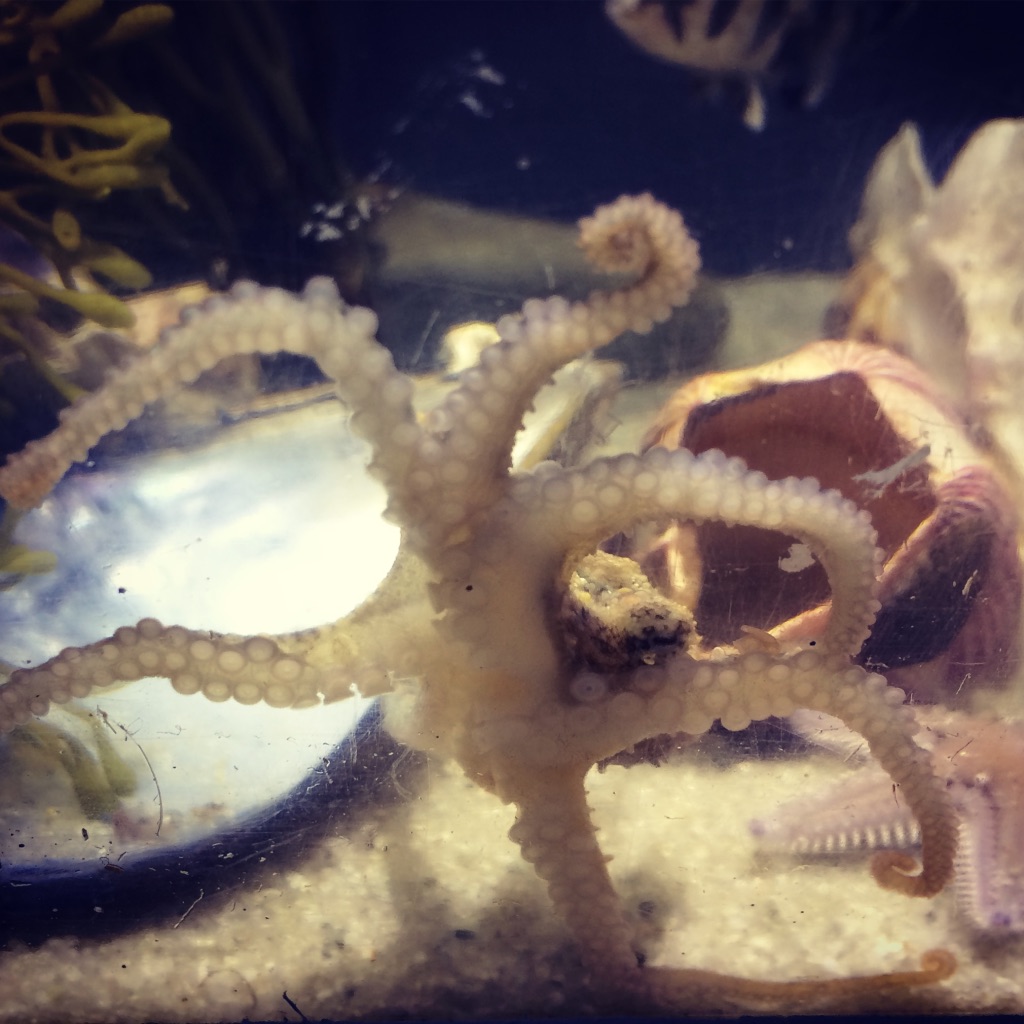
Our baby two-spot octopus, Kala, saying hello.
 

thumb_img_7203_1024

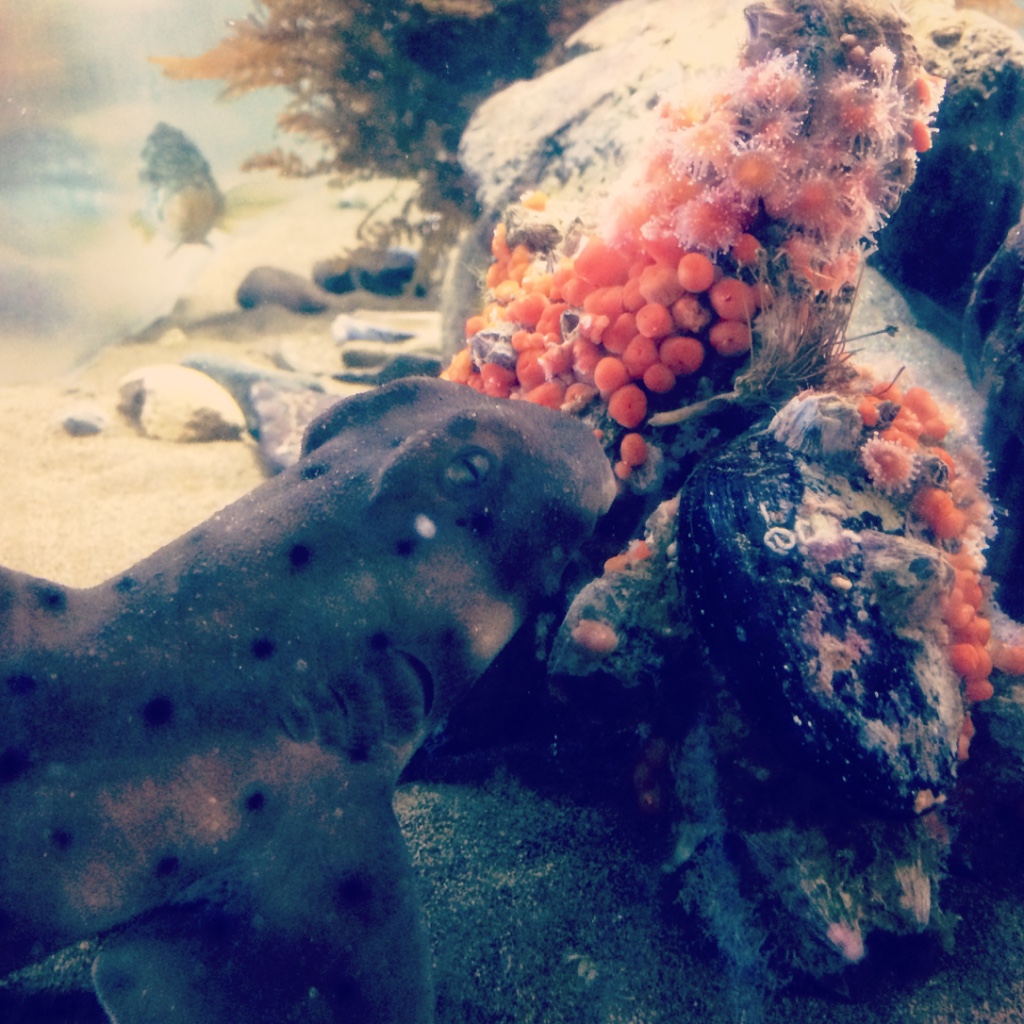
A juvenile horn shark snacking on strawberry anemones.
 

thumb_img_7196_1024

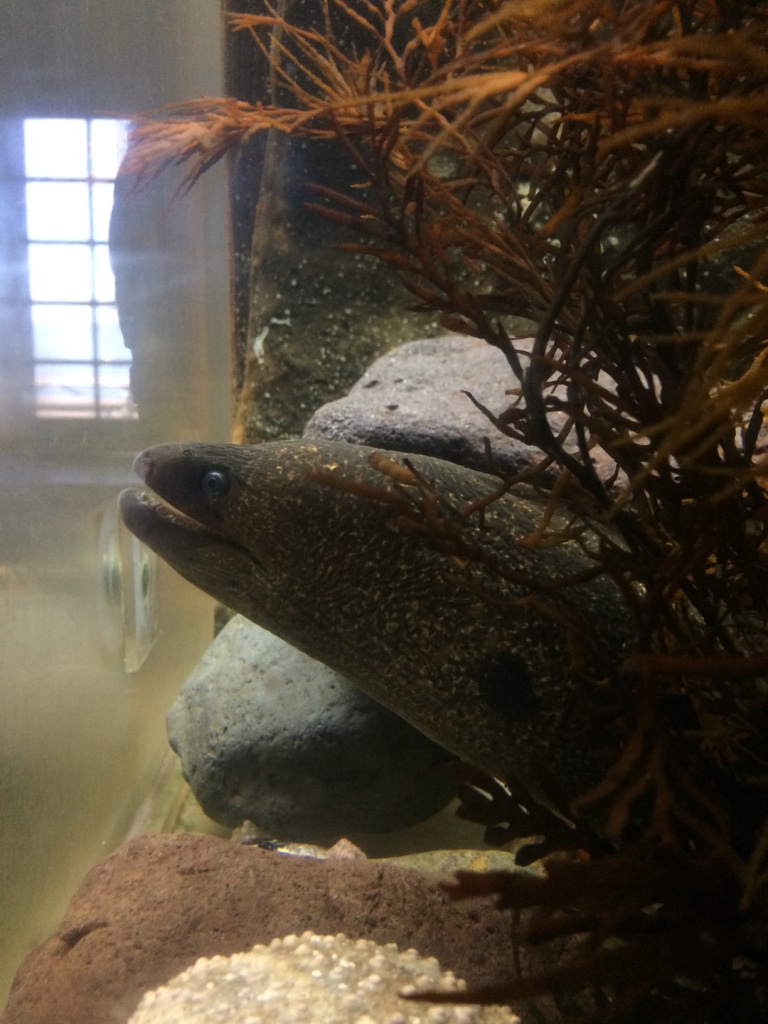
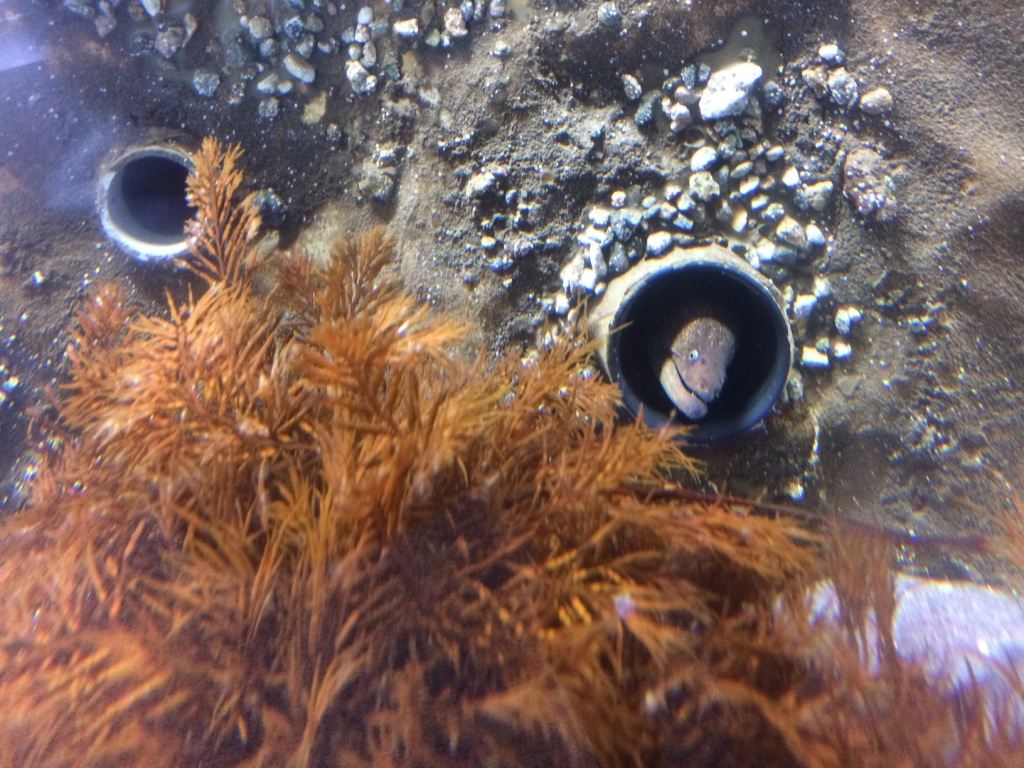
A California Moray Eel peers out from behind some algae.
 

thumb_img_7197_1024

We build habitats to fit the needs of our creatures – our eel tank includes a series of PVC shelters meant to mimic eel’s natural hiding spots.
 

IMG_6959

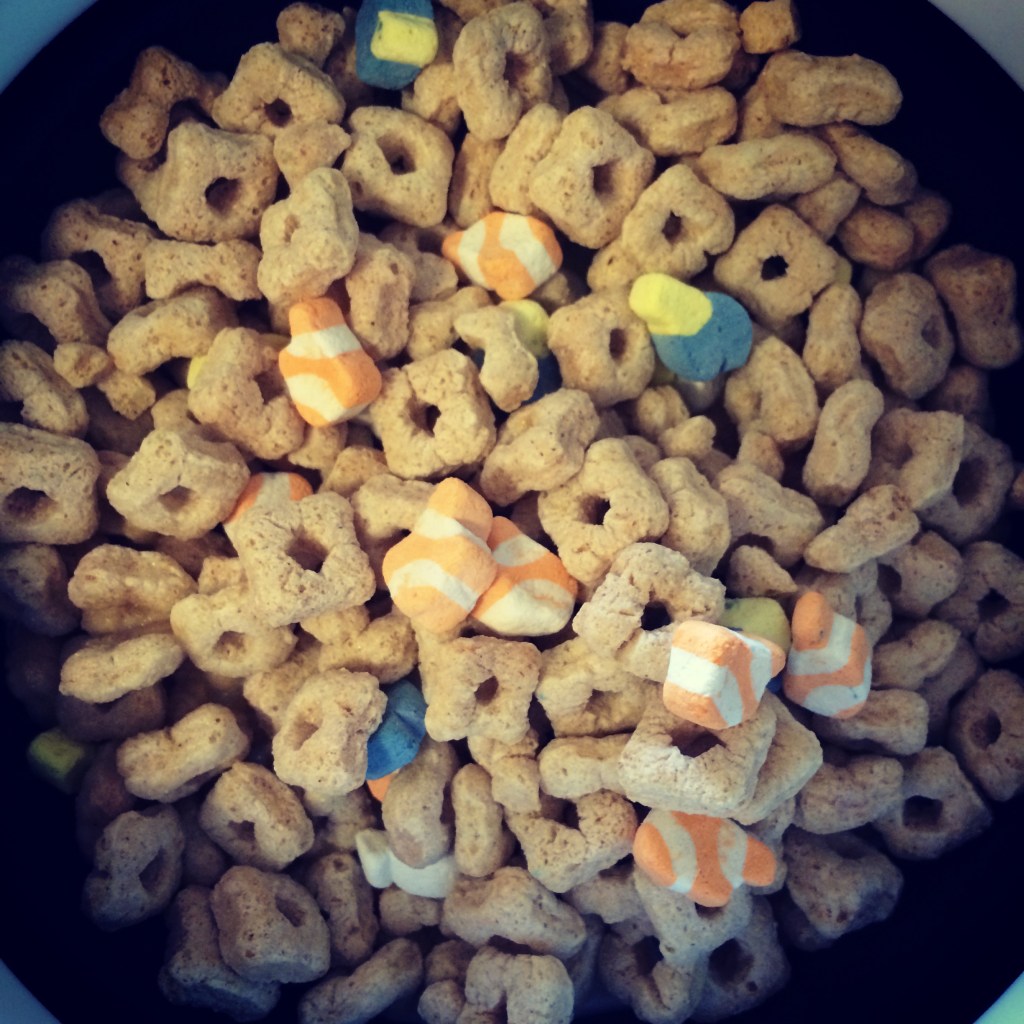
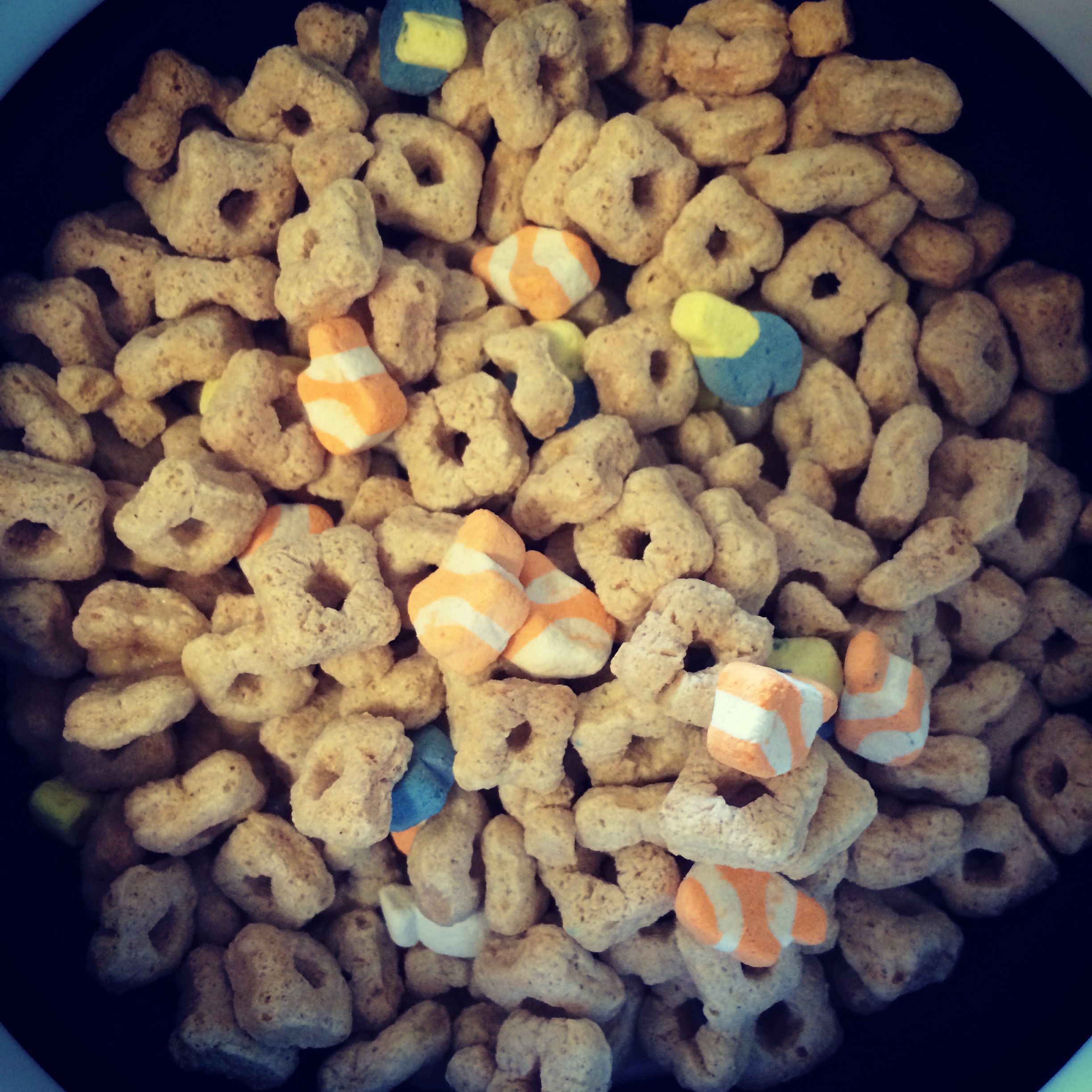
The best way to start the day as an aquarist – with a bowl full of blue tangs and clownfish!
thumb_img_7233_1024

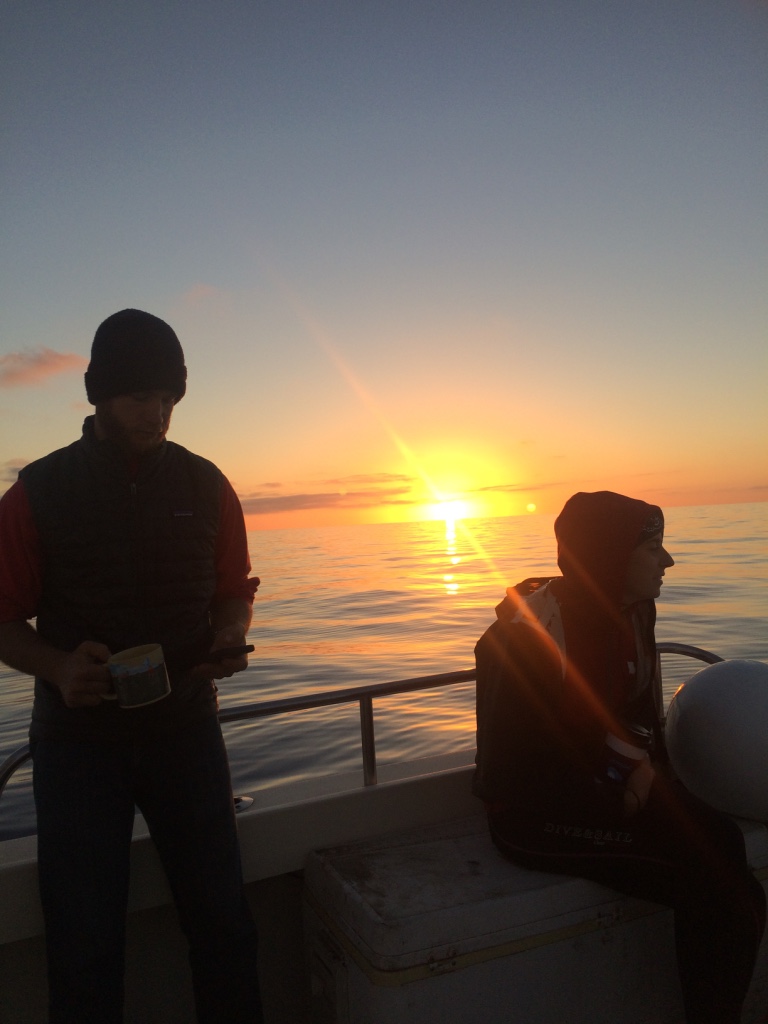
Morgan and Katie enjoying sunrise coffee on the boat – a little Team AQ bonding!
thumb_img_7234_1024

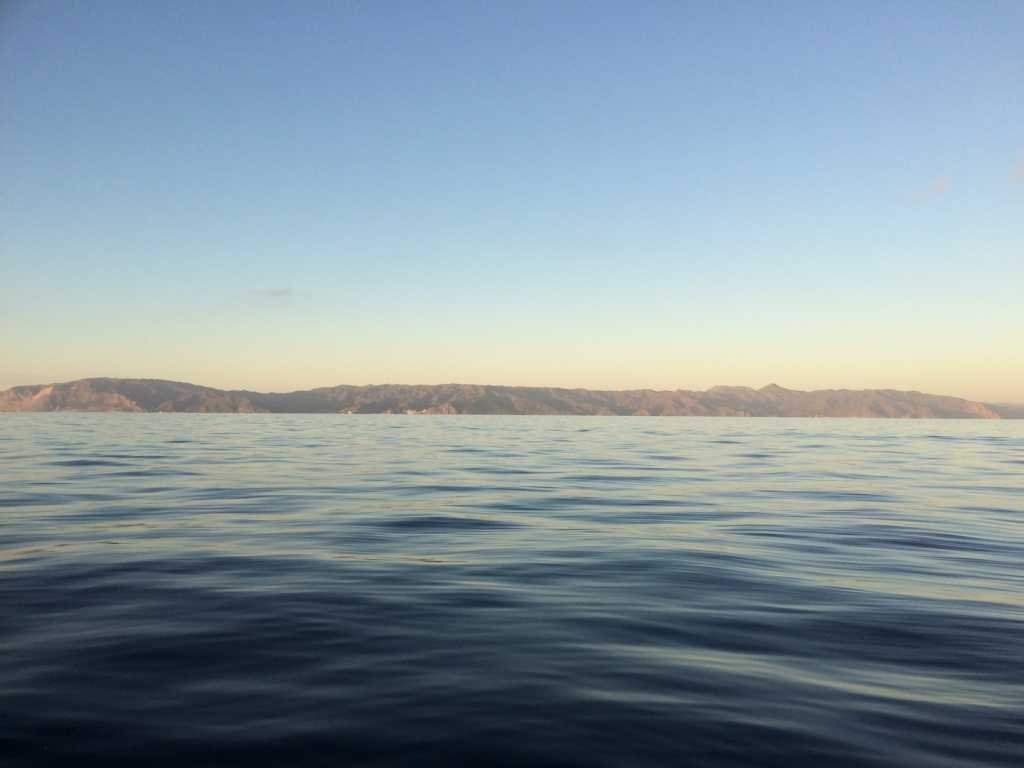
Catalina Island just after sunrise, a few miles off shore.
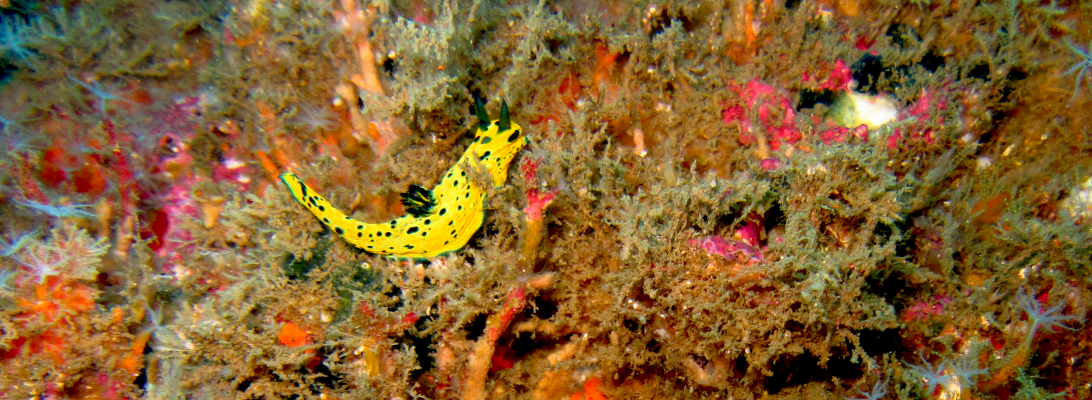
Friday Harbor, WA – Possibly my new favorite place on planet Earth

Hello, everyone! I’ve got a good bit of catching up to do, and the present is the perfect time and place to do it! Get ready for a lot of posts…

After our Seattle adventure at the end of May, Shelby and I parted ways. She headed up to Ketchikan, AK, a few days ahead of me, and I drove up to Anacortes, WA. My final destination was Friday Harbor on San Juan Island. I had heard wonderful things about the region from friends and family who had traveled there and I was interested in checking out the Friday Harbor Laboratories (FHL), part of the University of Washington.

I drove onto the state ferry bright and early at 5:30 AM, and cruised through the calm waters surrounding the relatively undeveloped San Juan Islands. When the ferry arrived at Friday Harbor, a lovely ocean town beckoned through the window. I wish I had a good picture of the town from the water, but I just couldn’t do it justice.

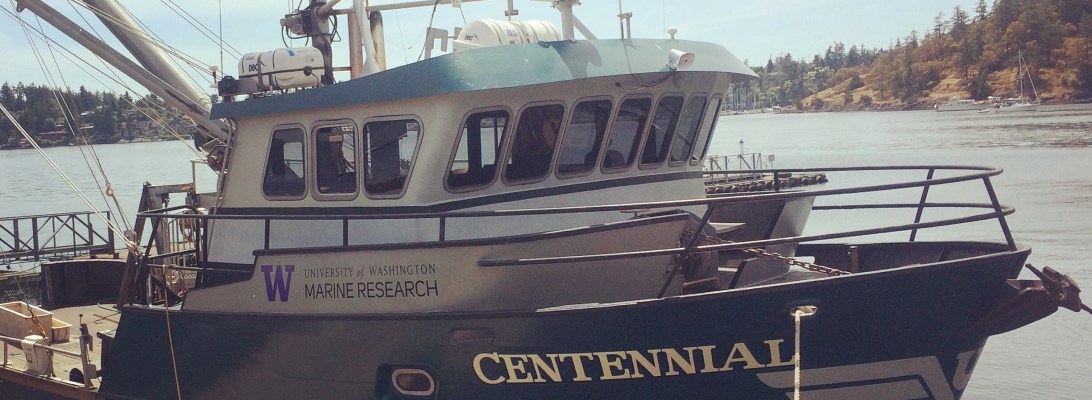
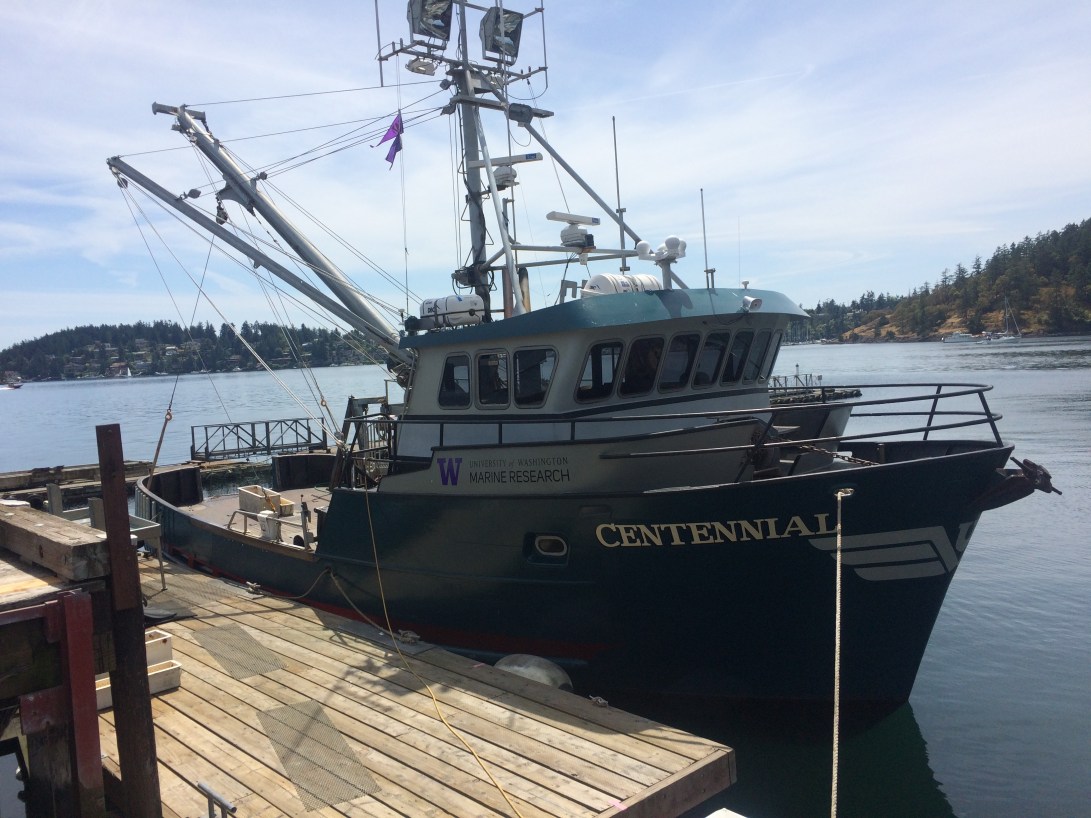
I drove off the ferry and straight down to FHL where I was greeted by the Diving Safety Officer, Pema Kitaeff. Pema welcomed me to the island, handed me a pair or rubber boots, and we hurried on down to the dock to board the Centennial. This fishing ship-turned-research vessel is utilized for a menagerie of marine research and outreach programs by the university.

IMG_6497

The R/V Centennial docked at FHL.

 Pema had invited me to join her and a couple volunteer scuba divers on the Centennial for a few outreach trips for local elementary students. Though these students are raised on the surrounding islands and enjoy boat and kayak access, getting into much less below the local waters is a much bigger deal. The waters here range in the 40’s-50’s F throughout the year – a bit too chilly to spend much time in without specialized gear. Pema and her volunteers were here to introduce these students to the vivacious underwater world of the Pacific Northwest.

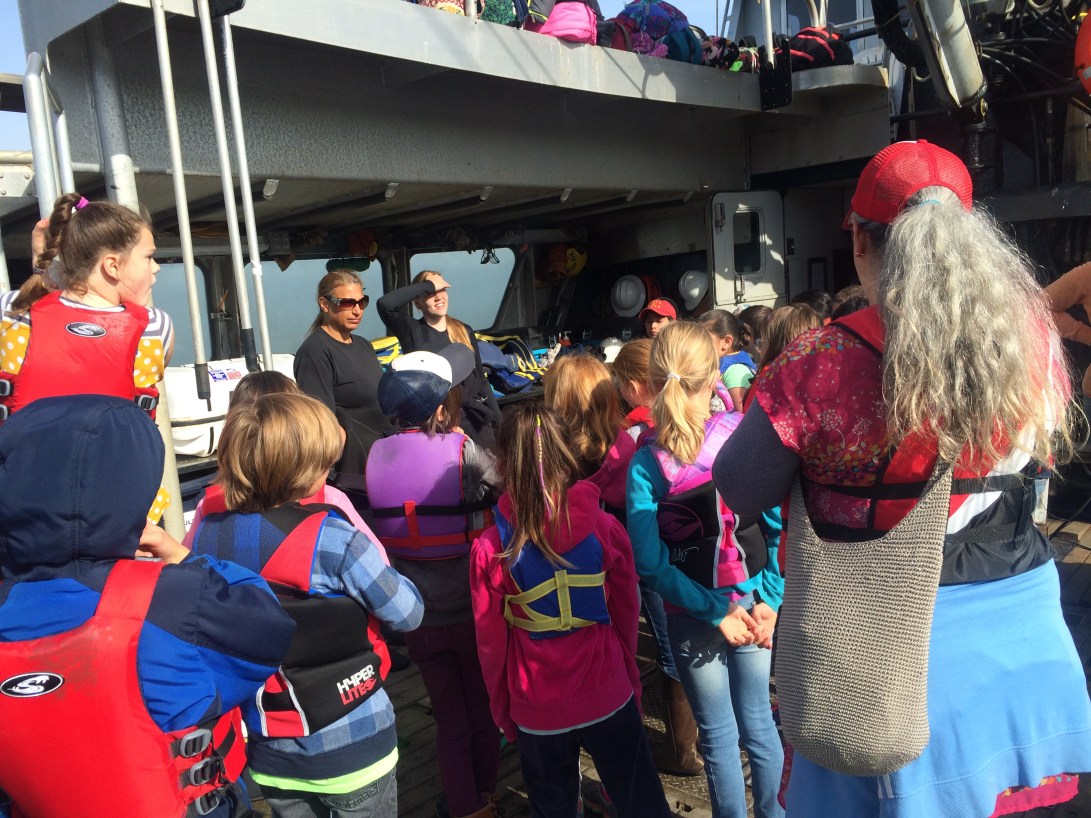
We stopped by the Friday Harbor Marina to load up the students, teachers, and chaperones, and then we were off! On the short ride over to the dive site, the two volunteer divers, Rhoda and Jess, told the eager group about the scuba dive they were about to embark on. They would both be using standard scuba gear, with a couple specialized pieces of equipment you wouldn’t typically find on a standard recreational dive:

  1. Dry suit: Unlike a wetsuit, which uses a thin layer of water to insulate body heat, a dry suit seals at wrists and neck and keeps the wearer completely dry except for their head. However, being dry isn’t enough to stay warm in these cold waters – the wearer must either wear thermal undergarments underneath the dry suit, or have the suit made out of a thick insulating material (such as neoprene) in order to stay warm.
  2. Full face mask: A bit different than a typical mask (which only covers the eyes and nose), a full face mask also covers the mouth and contains the scuba regulator (which provides air from the tank). These divers had specialized face masks that were equipped with communication devices (or “comms” in dive slang) including a speaker and microphone so the divers could converse with everyone on the ship in real time.
  3. Tethered video camera: Used to transmit a live feed of video from the divers up to the ship. Students were able to view what the divers were seeing in real time, accompanied by live audio.

IMG_6494

Volunteer divers Rhoda and Jess talk about their equipment to the eager students.

IMG_6496

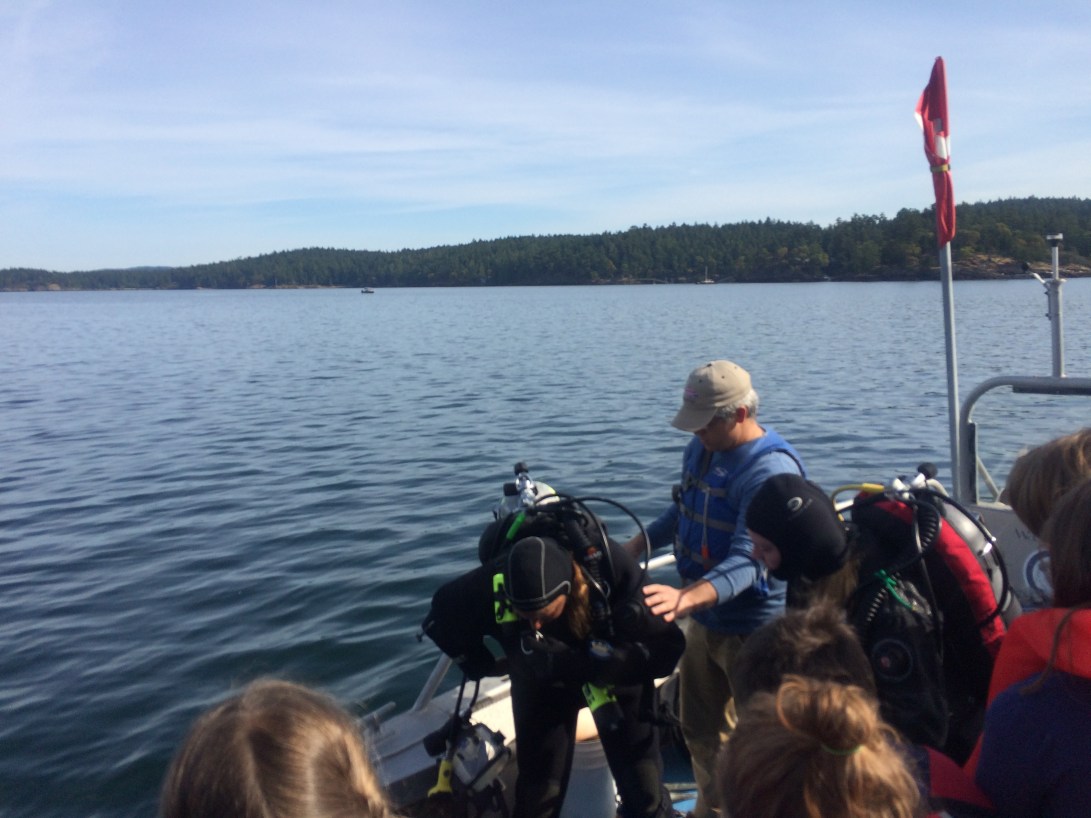
Getting prepped for hopping in the cold water!

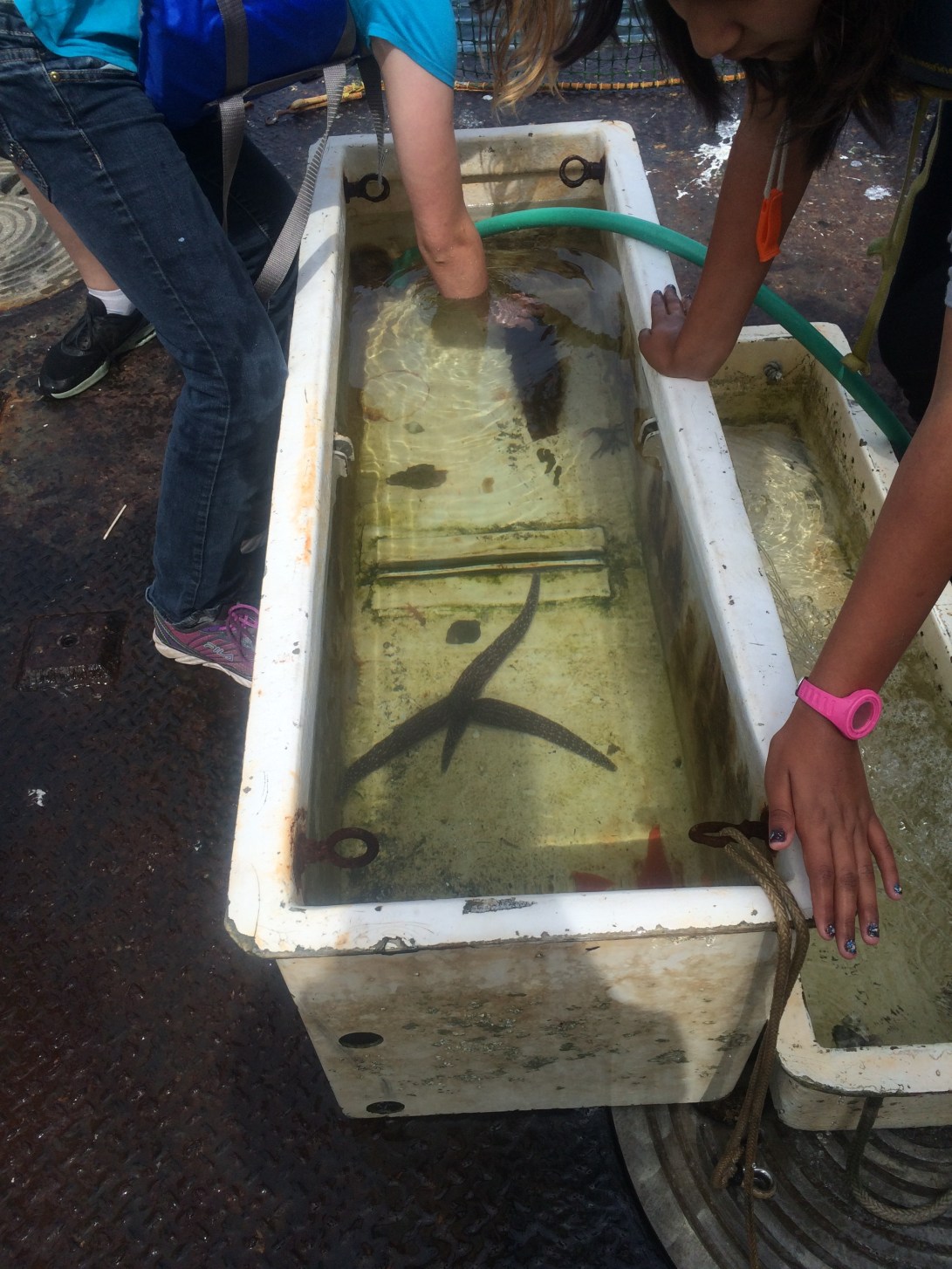
During the dive, Rhoda and Jess collected several species from the ocean floor and brought them up to the ship for the students to experience hands on! Here you can see a sea cucumber (the lumpy one being petted), a kelp crab to its right, some sea slugs scattered throughout the bin, what appears to be a mottled star (hard to ID from the picture), and the bright orange arms of a vermilion star are peaking out near the bottom.

IMG_6509

All of these are fairly common Pacific Northwest species, and I even found these all the way up into Southeast Alaska!

The students gleefully inspected all of the creatures in the tank, asked many wonderful questions, and then enjoyed the ride back, using the Centennial as their exciting new playground. They reminded me of my own curious students back at CIMI – I mean, who wouldn’t squeal about petting a lumpy little sea cucumber?

That afternoon I took the opportunity to join a graduate student and one of the volunteer divers, Jess, on a scientific dive. We motored out away from San Juan Island through calm, quiet waters. The surrounding islands were dense with spruce, cedar, and many plants I didn’t recognize, being an East-coaster. We reached the site after a few minutes: an undeveloped island with forests of  bull whip kelp gently bobbing at the surface. The kelp itself was the object of study – underwater sets of quadrants were laid, dividing the rocky bottom into different sections. The divers were going to survey the growth and proliferation of the bull whip kelp throughout those quadrants, as they had been doing as part of an ongoing study. The boat driver (also a volunteer – Friday Harbor runs on them!) and myself stayed topside, keeping an eye on the streams of bubbles coming to the surface from the divers. After only diving recreationally for the last few months, it was nice to be back in the scientific diving world. When the divers surfaced, we carefully helped them and their heavy gear back onto the boat, chatted about the dive conditions, and headed back to the labs.


IMG_6498

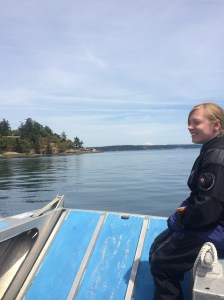
Jess at the bow of the dive boat.

Though it was peaceful and relaxing topside, it’s not so much on the flipside. Scientific diving takes much focus and training, the ability to remain calm underwater (even when science and nature don’t want to cooperate), and significant dive experience. Anything can happen underwater, and our time below the surface is unfortunately always limited by the laws of chemistry and physics. Efficiency is key! Despite the stress of underwater tasks, it’s pretty hard to complain when your office is made of saltwater and your officemates are fish and creatures of all shapes and colors.

In addition to exploring the scientific side of the San Juans, I also took the opportunity to explore the island and its flora and fauna…

Clockwise from top left: Island coastline as viewed from the Centennial, rocky coastline with a bull whip kelp forest at low tide, “Hey, I can see Canada from here!” – Victoria Island in the distance.

Clockwise from top left: Foxgloves grow wild all around the PNW – Highly toxic, they are used to make cardiac medications. Wild salmonberries (similar in flavor to tart blackberries) growing wild by the FHL dorms. The trunk of a Pacific Madrone, a beautiful tree with bark that naturally peels away to reveal the bright green growth beneath. Oh look, it’s the coastline again! Let’s pretend I didn’t post that picture twice.

 I made my way over to Lime Kiln State Park, on the western side of San Juan Island, hailed as the best park for whale watching in the world. At this point the only whales I had seen in the wild were various species of dolphins and two grey whales, so I was full of high hopes for seeingthe local pods of orcas. Unfortunately, me standing in the rain for three hours made no difference to the orcas, as they never decided to show up (I did get to see a couple Dall’s porpoises though… I’ll take it).

IMG_6521

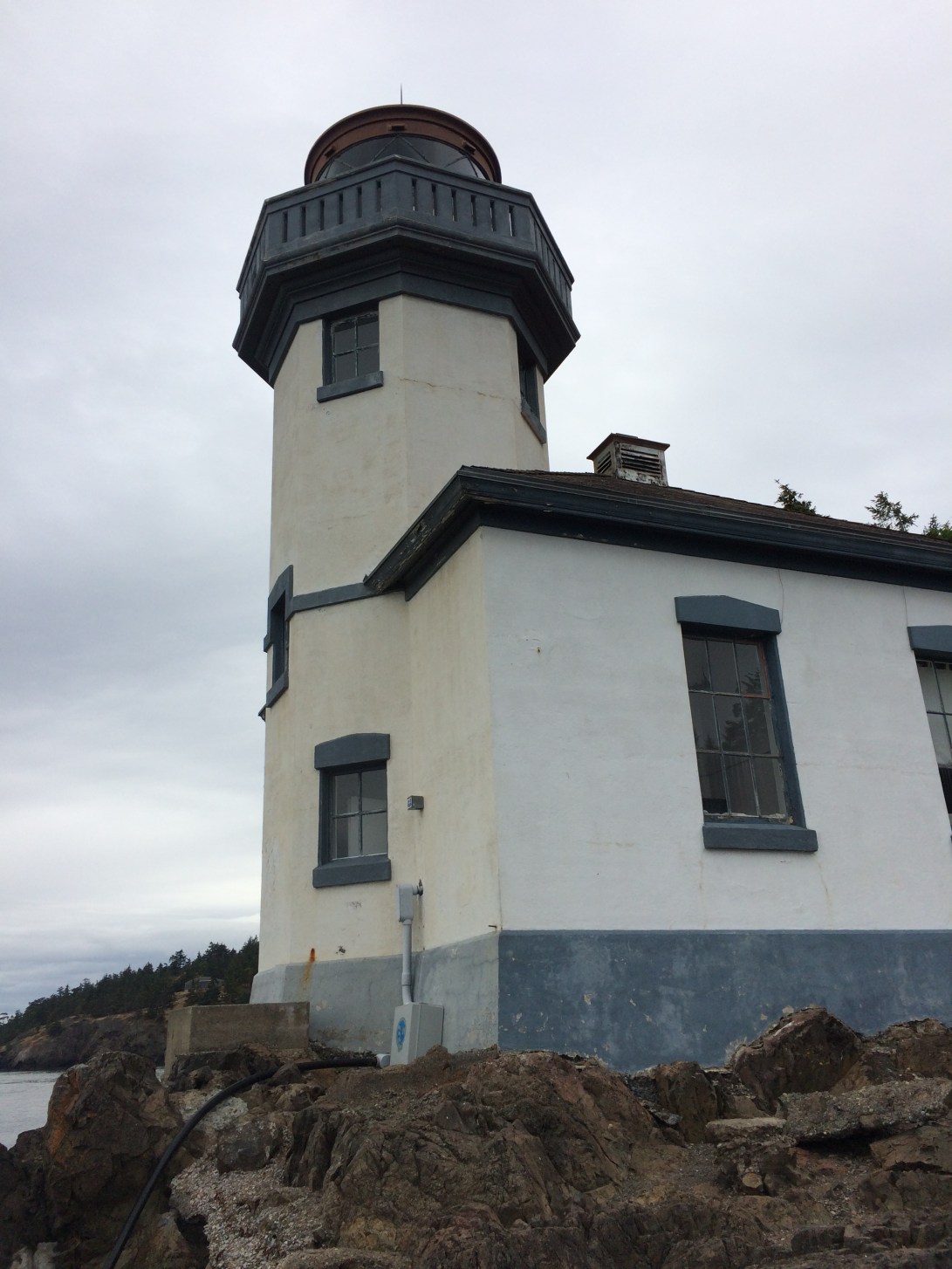
The lighthouse at Lime Kiln State Park.

 Luckily for me, I love invertebrates just as much as I love marine mammals! When I finally accepted that the whales probably weren’t going to show, I went exploring and found some gorgeous tide pools! The creatures that are found in and around tidepools are known as intertidal species. This means that as the tides change and the water level rises and falls, these animals are commonly stuck high and dry for a few hours at a time. They’re specially equipped to survive these extreme conditions – some, like the anemones, only live in spots where they will still be in water when the tide recedes, or some even hold onto gravel and sand to shield themselves from the hot sun and wind so that they don’t dry out. Other creatures, such as mussels or barnacles, close up tight, seal in any water, and simply wait for the tide to come back in. All of these intertidal animals survive relatively extreme conditions everyday! Imagine if your house was on a hill above the ocean most of the time, but twice a day the ocean rose and completely covered it for a couple hours. That’s what it’s like to be an intertidal creature!

Clockwise from top left: A massive group of unidentified anemones in a tide pool, close up of some of the anemones in the pool, another unidentified species of anemone, gooseneck barnacles at low tide.

Even though I didn’t see any whales, all in all Friday Harbor was an extraordinary place. Everyone both at FHL and in the town was incredibly kind and welcoming, and FHL was brimming with curious minds, smiling faces, and legions of volunteers who are there simply because they absolutely love what they’re doing. I have a feeling I’ll be making my way back to Friday Harbor… Whether it’s as a student, volunteer, or someone simply on vacation remains to be seen. Until then, these fins will keep on wandering!

Seattle adventures (in 48 hours)!

I decided early on after I found out I’d be working in Ketchikan, AK for the summer that I had to make a stop in Seattle. I’d heard so much about this fabled city from friends and family who had either lived there or visited previously! …And they all made it clear that it was somewhere I needed to go!

So, my friend and coworker, Shelby and I arranged to fly from LA up to Seattle for a few days before beginning work in Alaska. She had been previously to visit family,  and I wanted to check all the “must-see” places off my list in addition to visiting Friday Harbor and the San Juan Islands.

After a long day of travel (golf cart -> ferry -> car -> plane -> car) we arrived in the evening, stopped by Elysian Brewing (a cornerstone of craft brewing in Seattle) and hit the sack early to prepare to dive into Seattle!

Of course, the obvious first place to stop was…IMG_6385

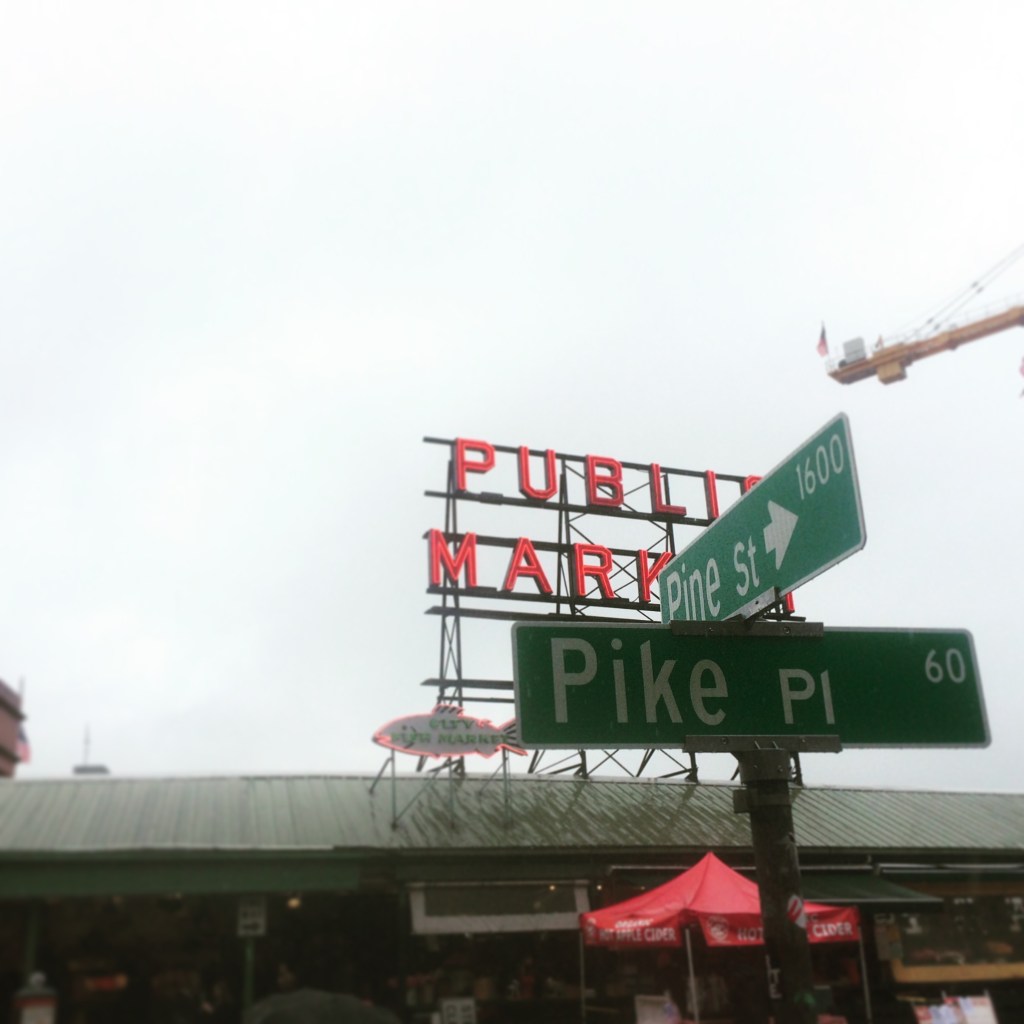
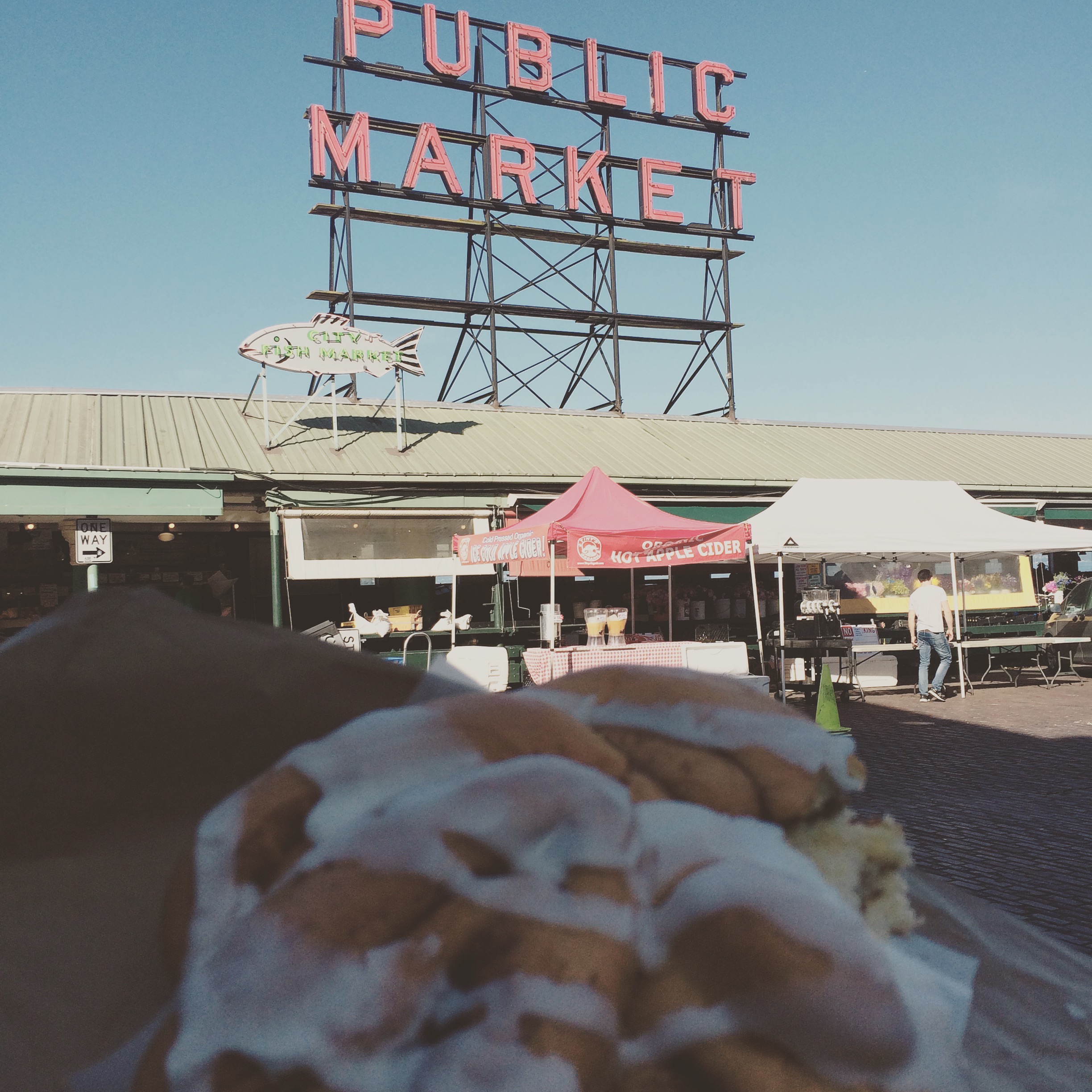
Pike Place Market of course! The first morning we slept in a bit, and the market was already crowded with hoards of people milling around and trying to take shelter from the rain. But oh, the RAIN! After months of being on dried-up Catalina in extreme drought conditions, it was truly incredible to feel steady rain coming down. I think I grinned uncontrollably the entire way down the highway from the airport to our lodging because of how incredibly green and lush the vegetation was everywhere I looked. I didn’t realize how much the lack of greenery (green cacti don’t count) had worn on me.

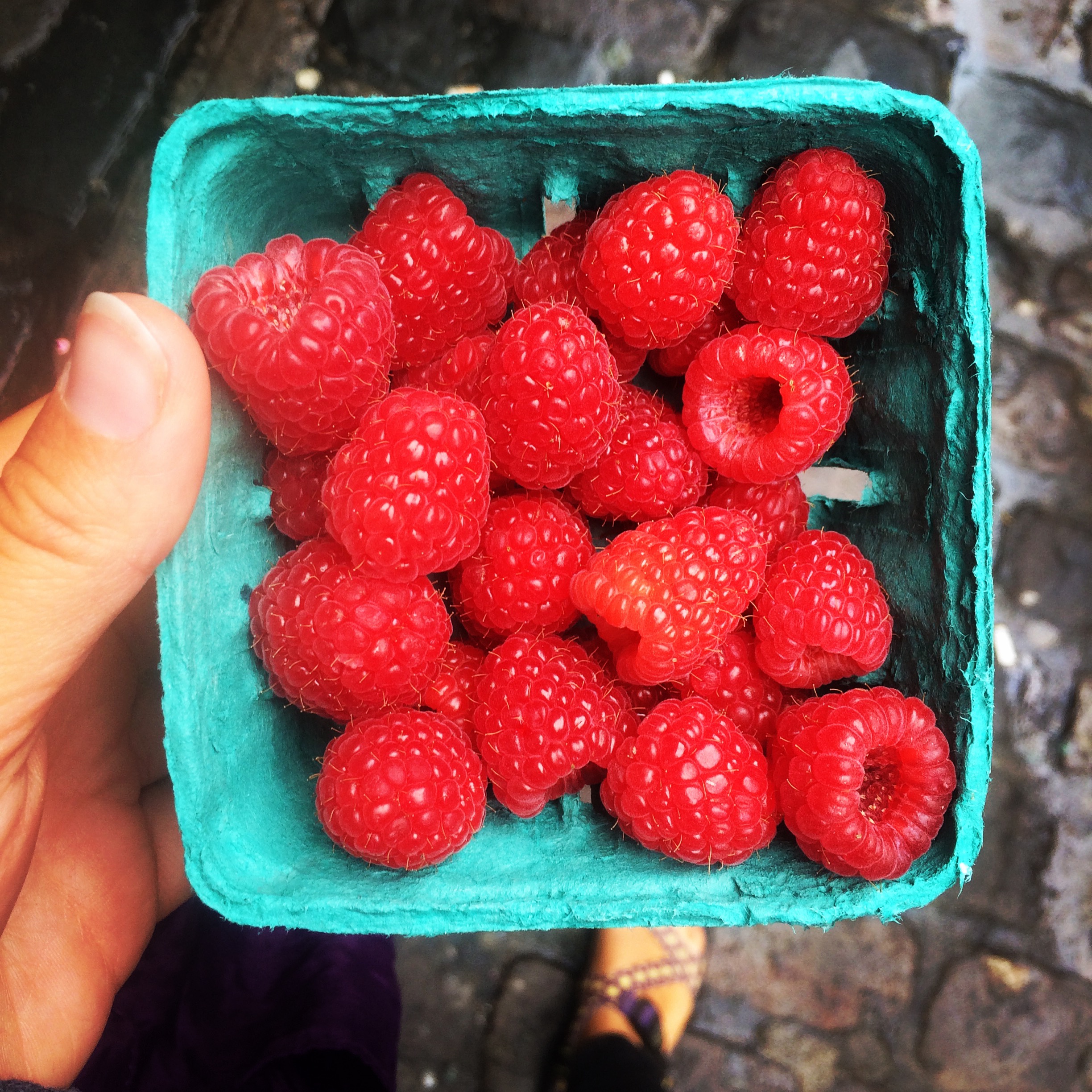
Which brings me to the miracle of having farm-fresh berries… If I could live off berries alone, I would. One of the most unfortunate things about living on an island are the delays and gaps for produce to be delivered. These berries were my very own delicious miracle that morning.


IMG_6386


And, I mean, if you start buying one thing from a market, you just keep going…

IMG_6454


Quite possibly the most delicious cinnamon roll I’ve ever had.


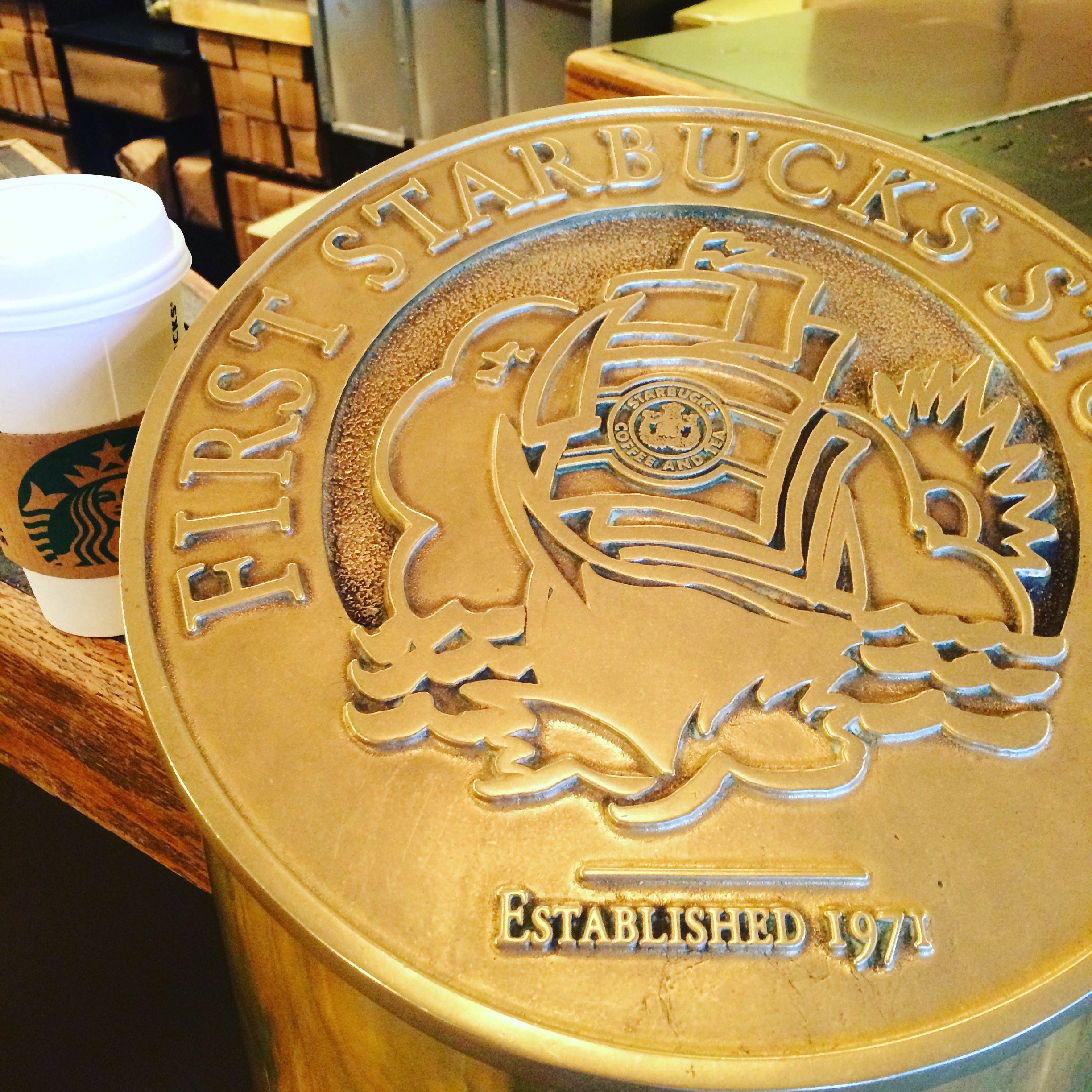
The throngs of tourists beat us to the original Starbucks on day 1, but on day 2, we were ready and there at 6 AM when they opened – no other tourists in site! I got the obligatory drip coffee and a picture. Say what you will about Starbucks, but they really were the driving force behind the incredible coffee culture still present and strong in Seattle. I definitely over-caffeinated this entire trip. Worth it.
IMG_6447


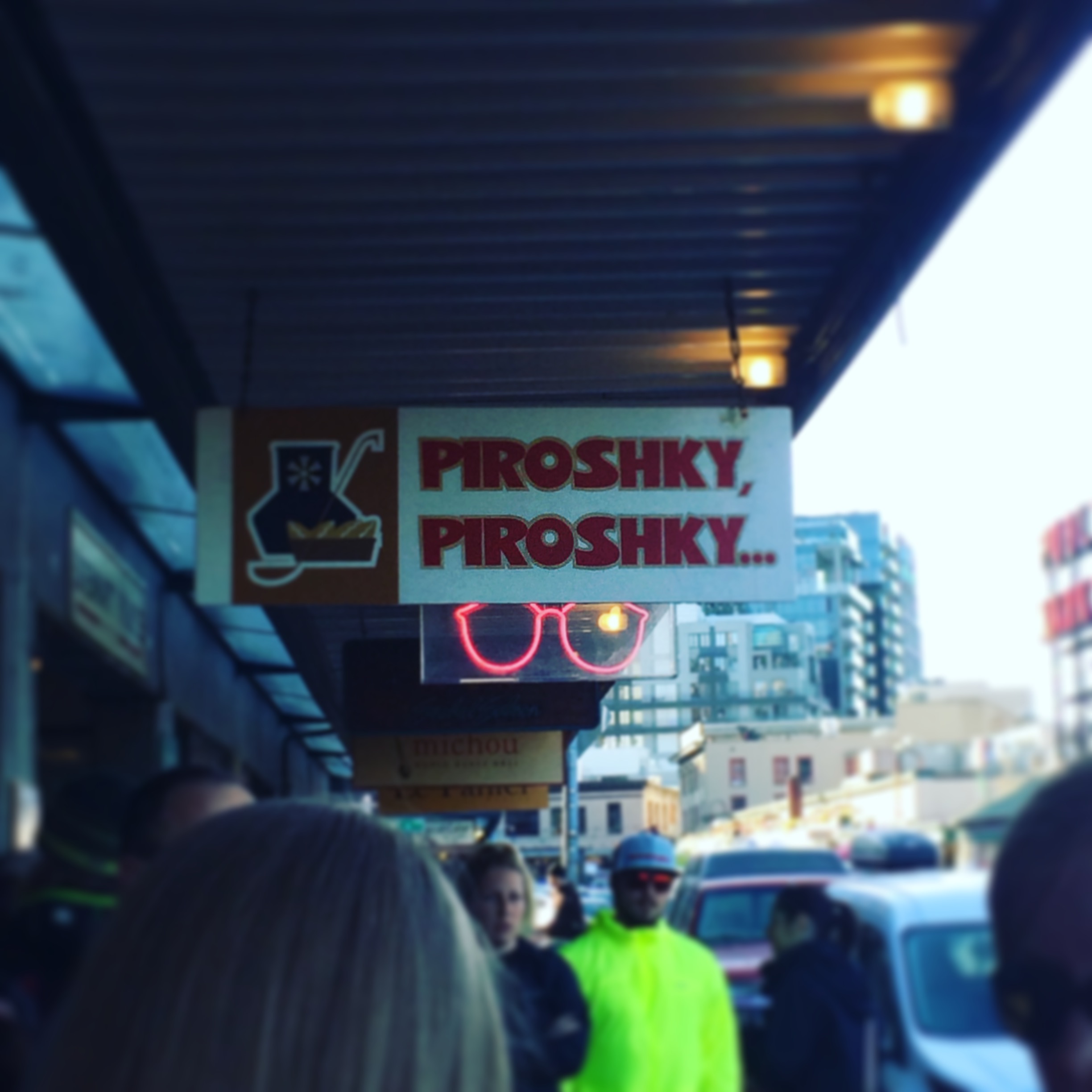
On day 1, I also noticed that a little bakery near the Starbucks had a line even longer! Day 2, curiosity got the better of me, and I had to figure out what on earth a piroshky was. Turns out they are a delicious traditional Russian fried dough pastry! It was delilious! I definitely recommend going there (and getting in line early) if you’re ever in that part of Seattle.

IMG_6455

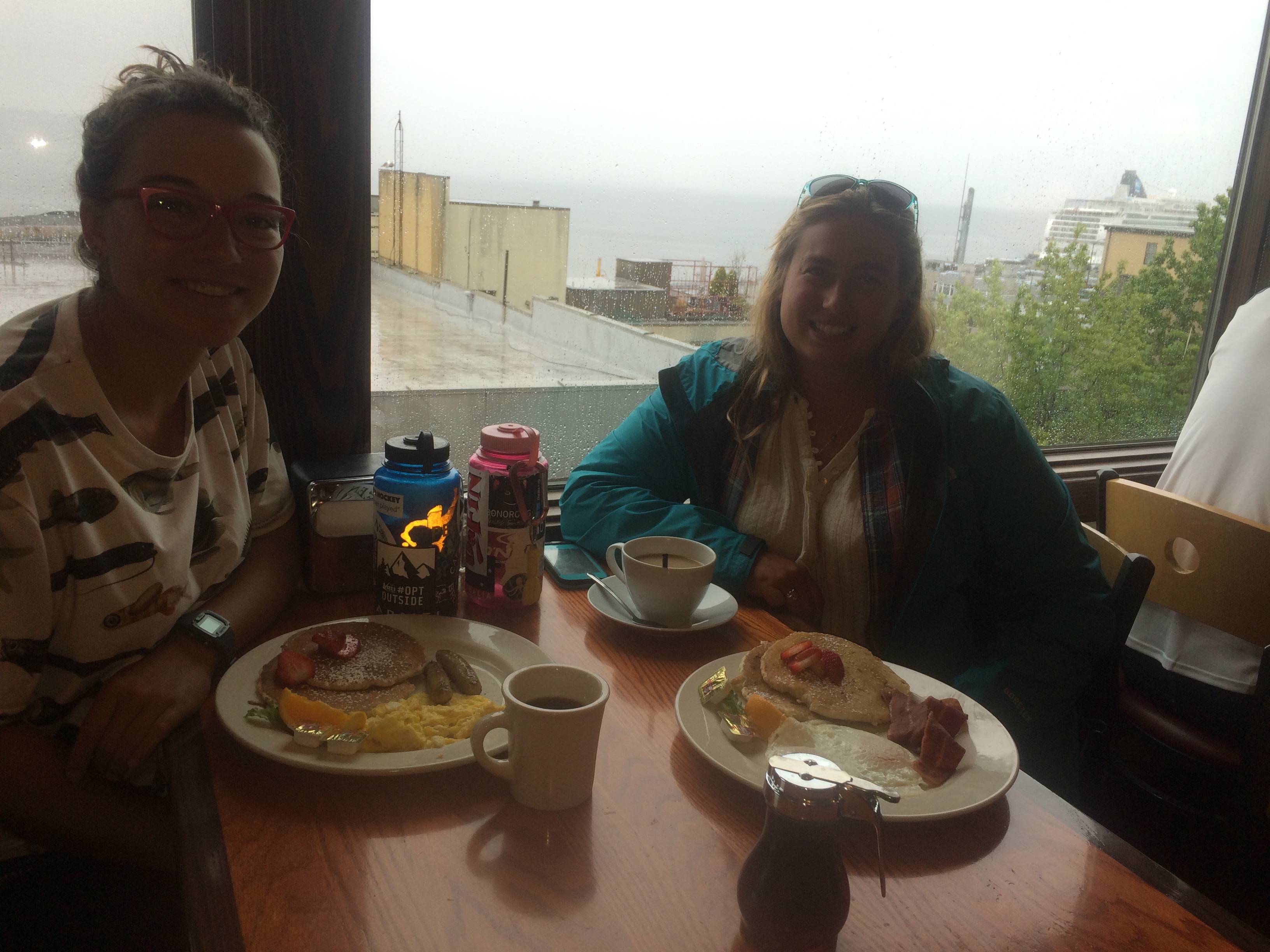
Okay, I promise I’ll stop typing about food now… Just one more picture… My friend, coworker, and travel buddy, Shelby, and I having a fantastic breakfast at the Sound View Cafe at Pike Place overlooking the sound. The picture really doesn’t do the delightfully rainy view of the Puget Sound justice!


IMG_6379

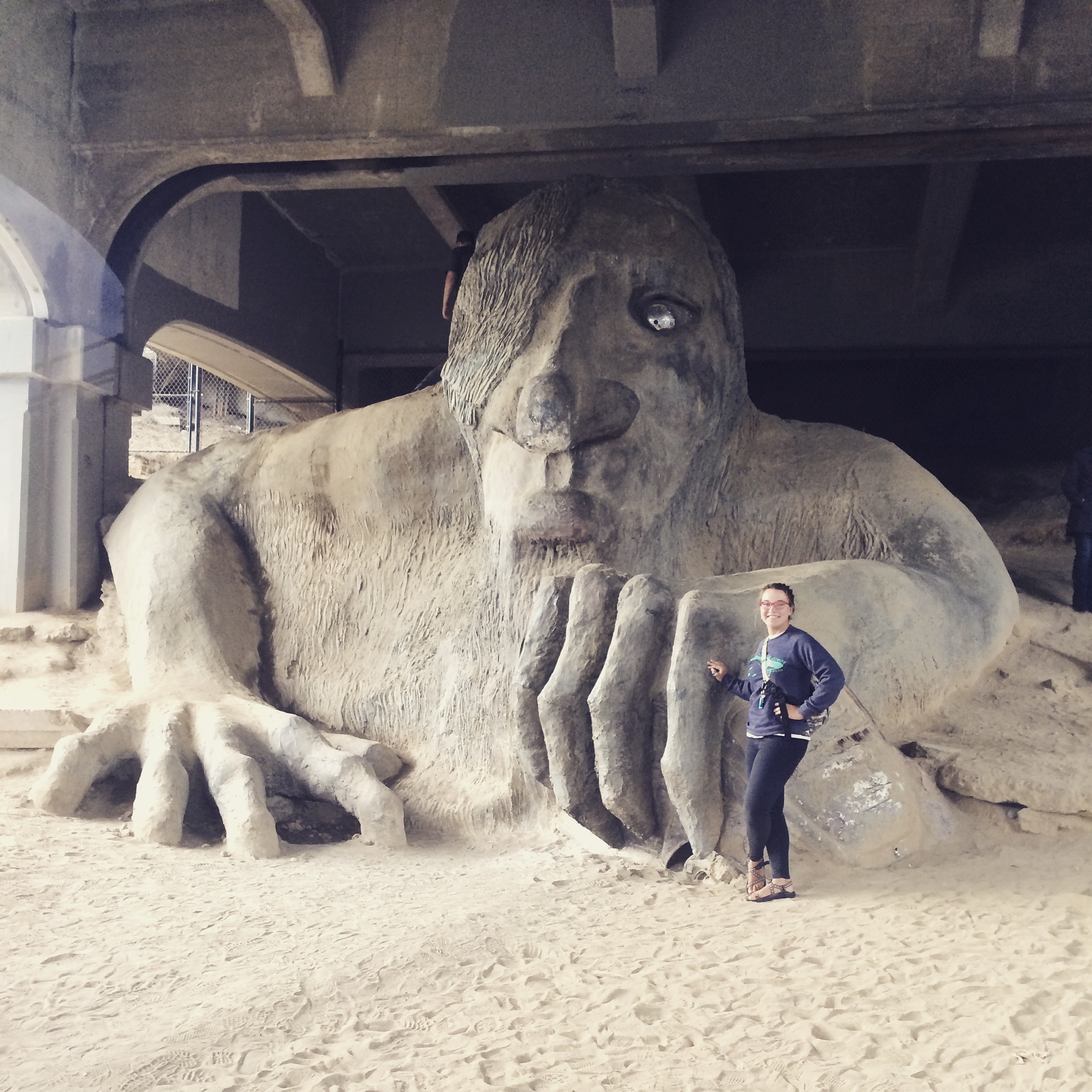
Then we ran all over downtown Seattle seeing all the sights we could! Here’s the Fremont Troll, an unbelievable art instillation under a bridge at the so-called “center of the universe”. The scale of this piece is incredible – the VW bug in its left hand is an actual car!


IMG_6431

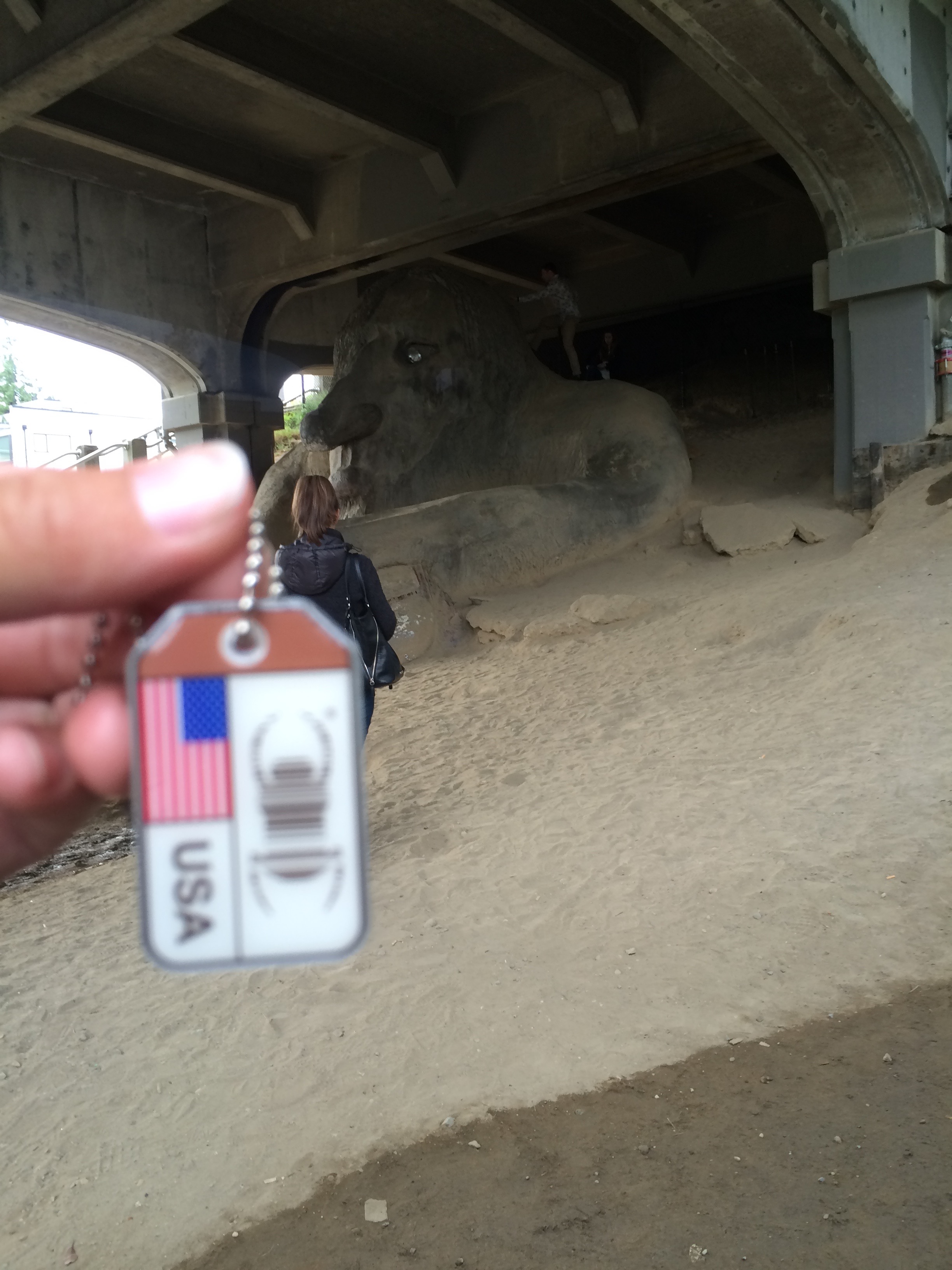
And what did I find by the troll? A geocache of course!

IMG_6427

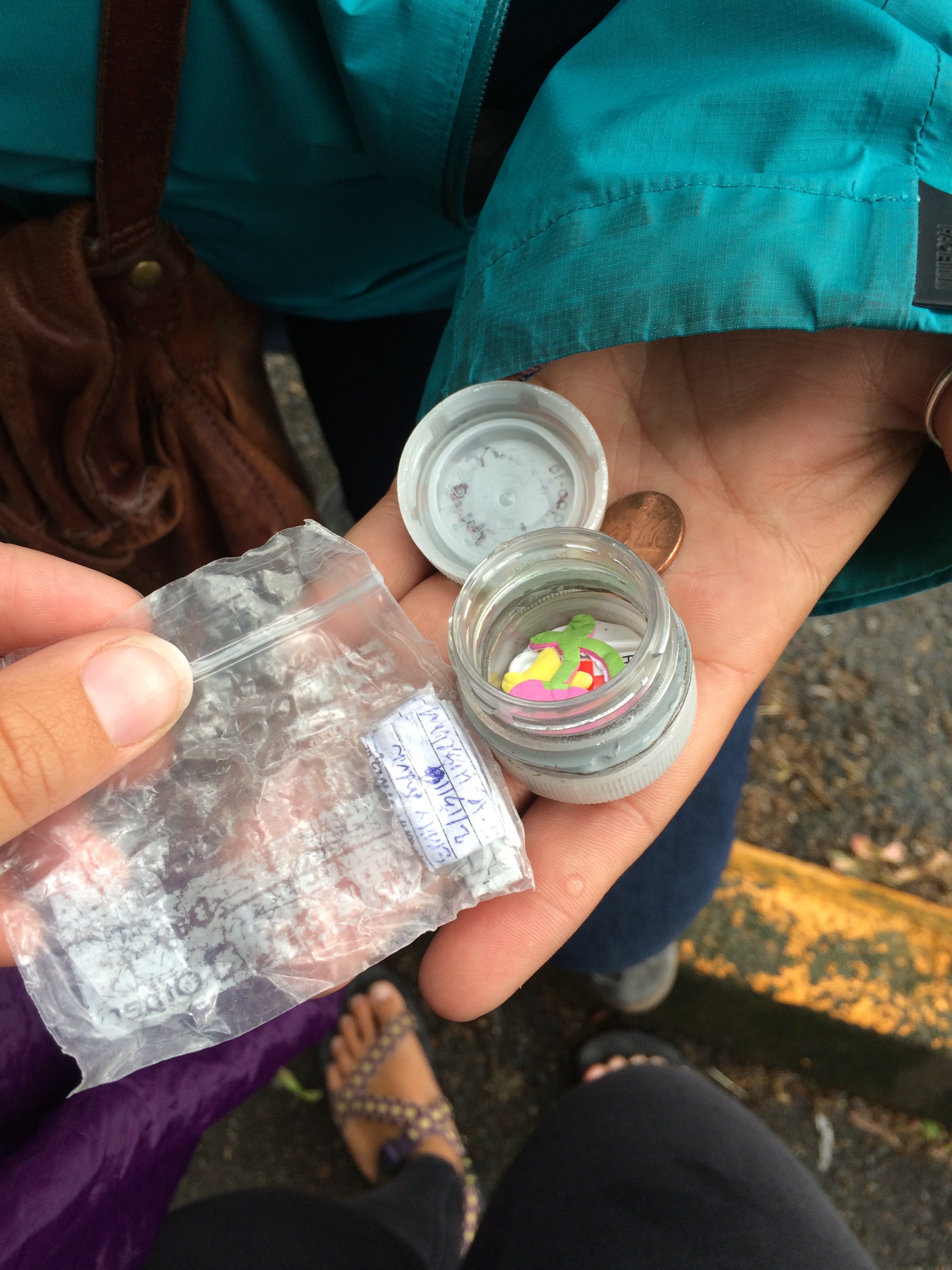
If you don’t know what Geocaching is, it’s a world-wide treasure hunt of sorts that has become my favorite hobby! Using the Geocaching website and a smartphone or GPS, anyone can search for remarkably well-hidden “caches” all over the world. Most are like a puzzle – your GPS or phone will get you close to the location, and then you have to figure out where the cache is using a few hints. Some containers are puzzles themselves, requiring some ingenuity to retrieve or open the container, and other ones are just incredibly well-camouflaged in plain sight! Here’s a typical geocache:

IMG_6384

Every cache contains a log for the finder to sign with their geocaching name and the date, and some have room to trade out trinkets or other goods.

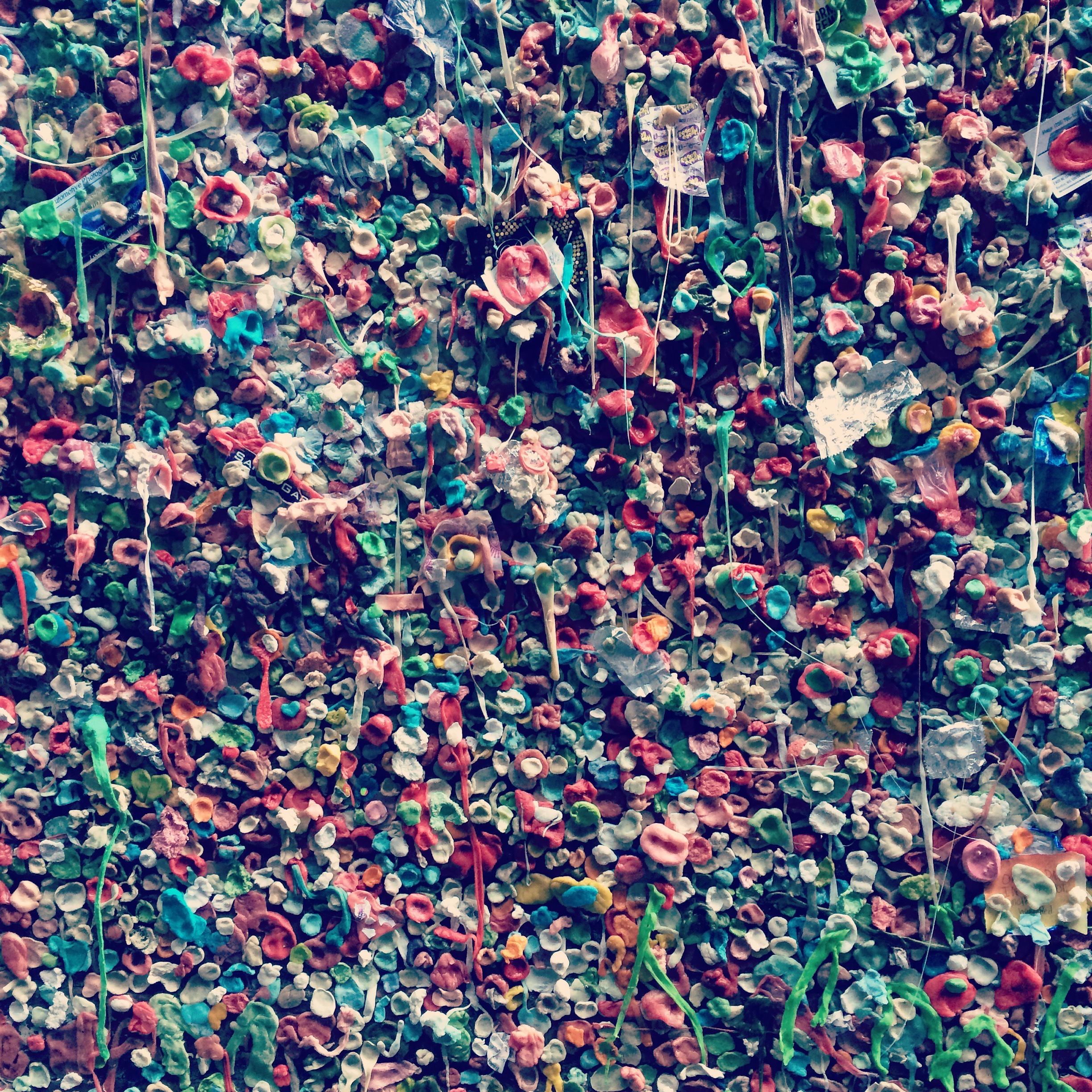
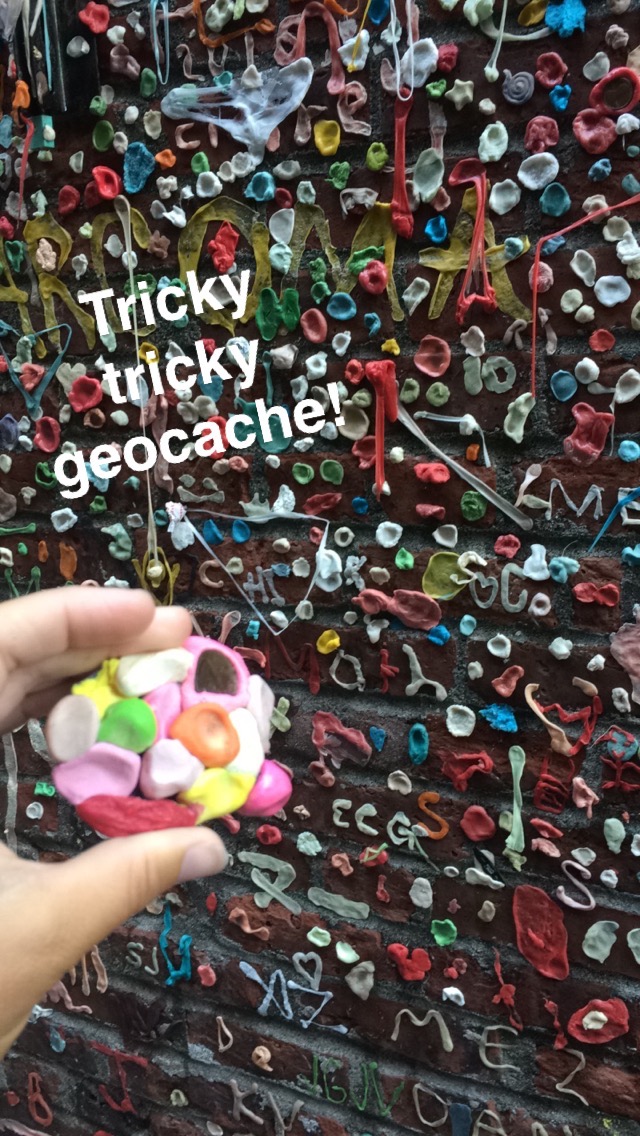
One of my favorite finds was in Post Alley off of Pike Place, notorious for it’s bubble gum wall:

IMG_6469

And after some unfortunate accidental sticky contact, Shelby and I found the cache!

IMG_6450

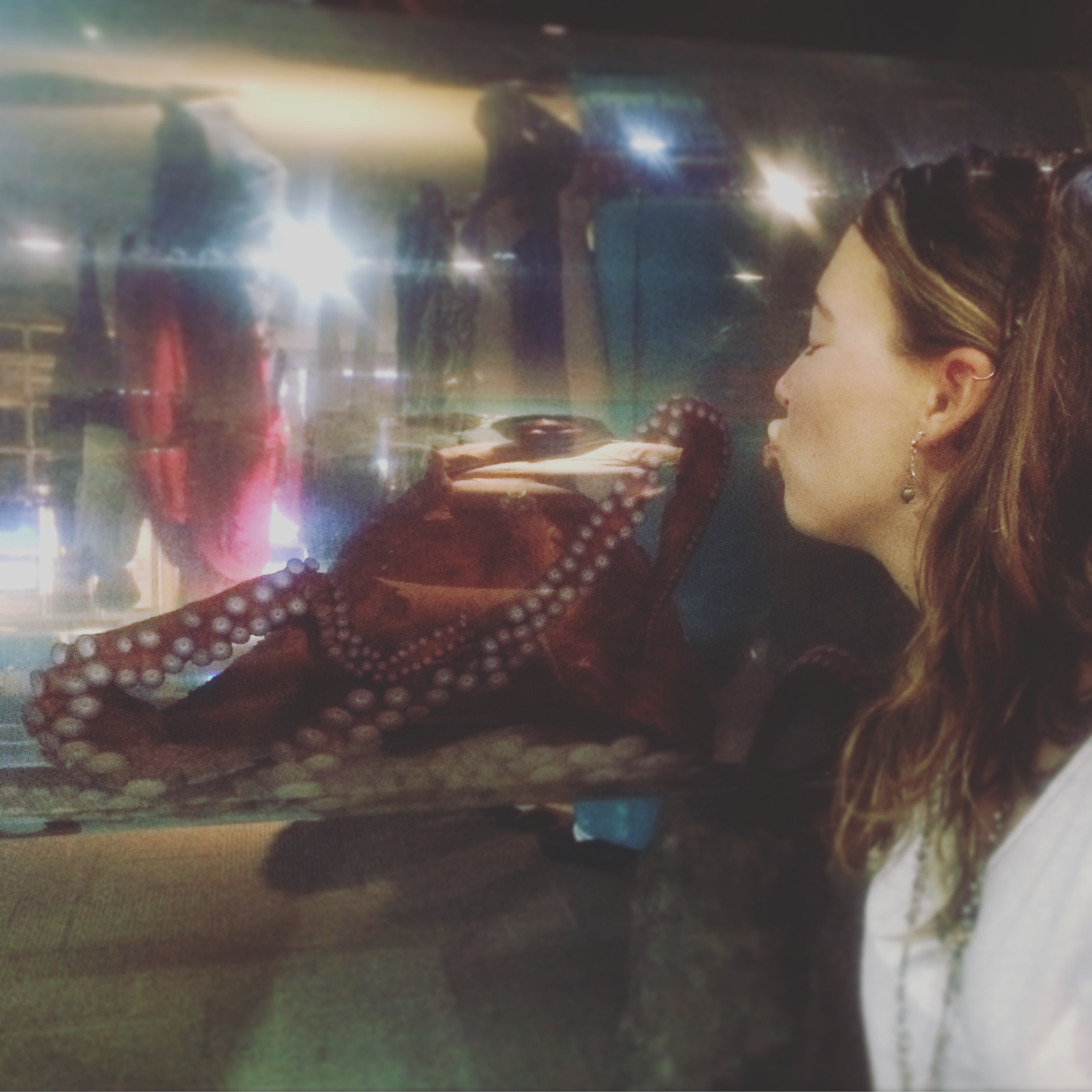
But, not all of our adventures were cache-centered! We made our way over to the Seattle Aquarium, and I got to hang out with their two lovely Giant Pacific Octopuses (note: the plural of octopus is not technically octopi, but I’ll forgive you if you still use it). This amazing species is accepted as the largest octopus species in the world! They can change both color and texture, and have the intelligence of a 3-year-old human child. They can solve puzzles, recognize faces, engage in play, and trained. If you’re looking for an interesting read on octopus intelligence, I recommend The Soul of an Octopus, which I finished last month. It’s much more so a naturalist than a scientist’s perspective, but is an incredible read overall.

IMG_6487


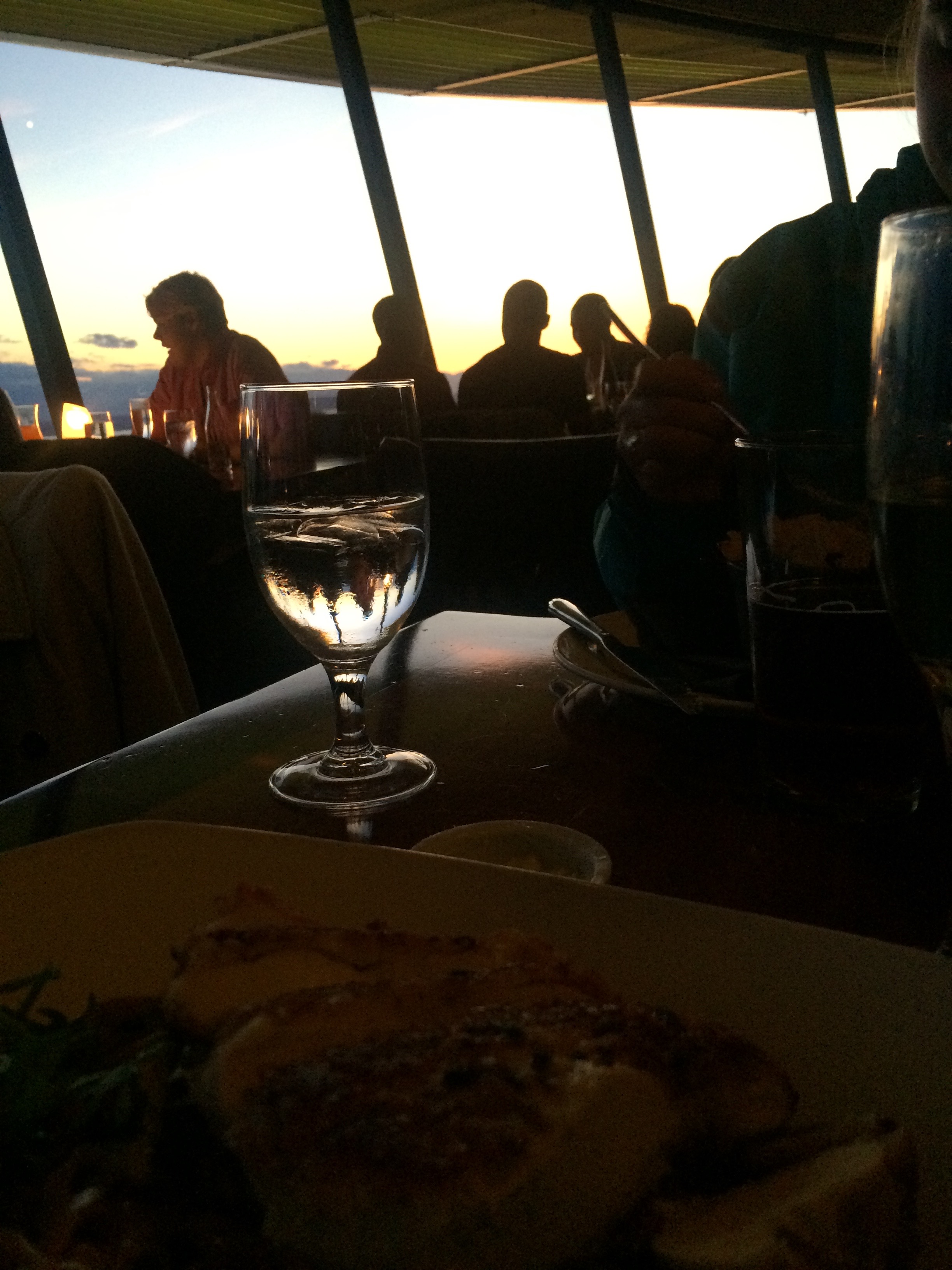
Shelby and I also had a wonderful dinner on top of the Space Needle! The dining area slowly rotates 360 degrees every hour, and we were lucky enough to squeeze in without a reservation and catch the sunset. I would have loved to get a picture that would do the view justice, but I don’t think the people in the outer ring of tables would have appreciated me climbing over their dinners for a photo!

IMG_6439

And, of course, there’s no way I could visit Seattle without getting a picture of the Space Needle from the outside!

IMG_6465

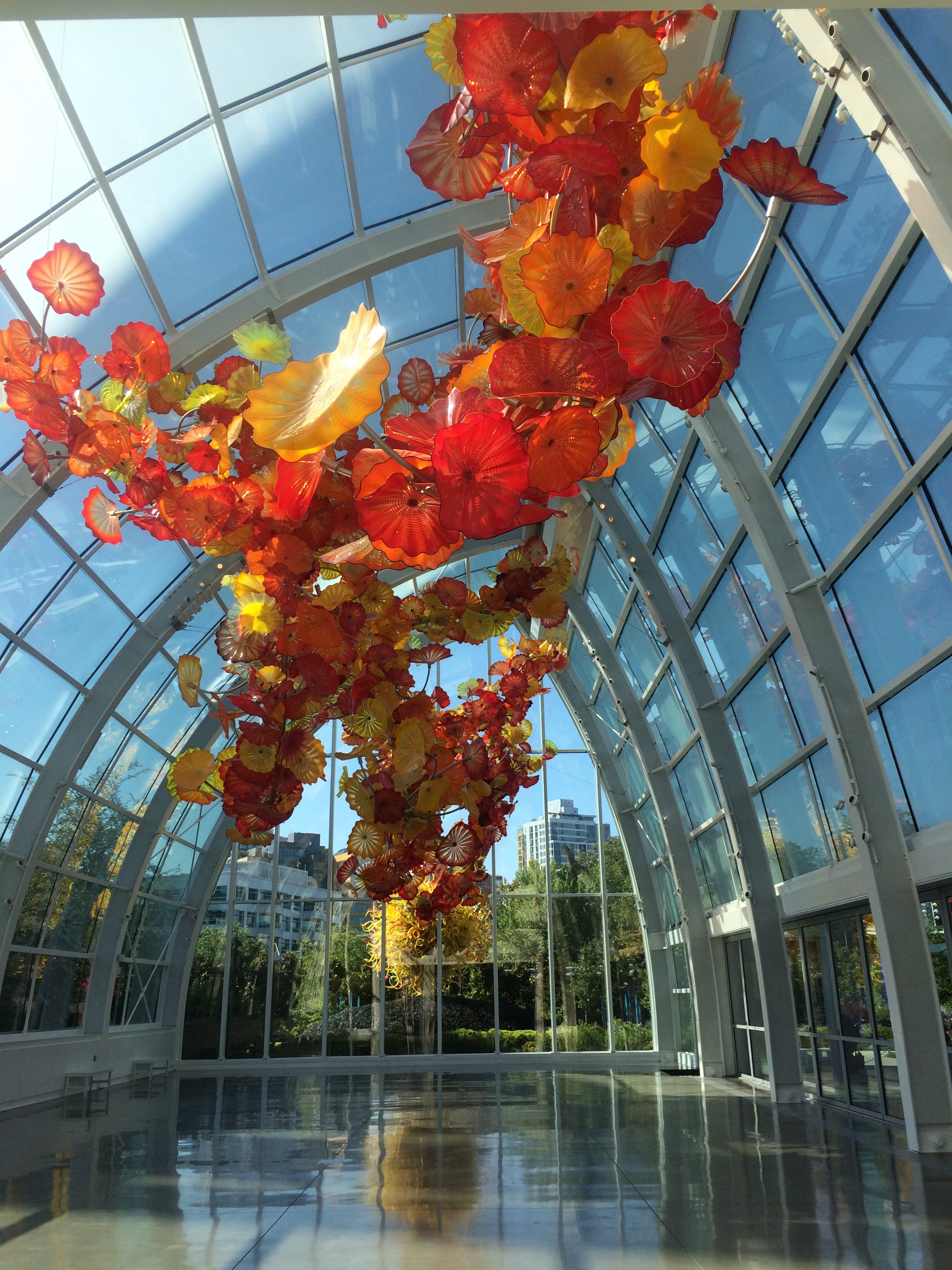
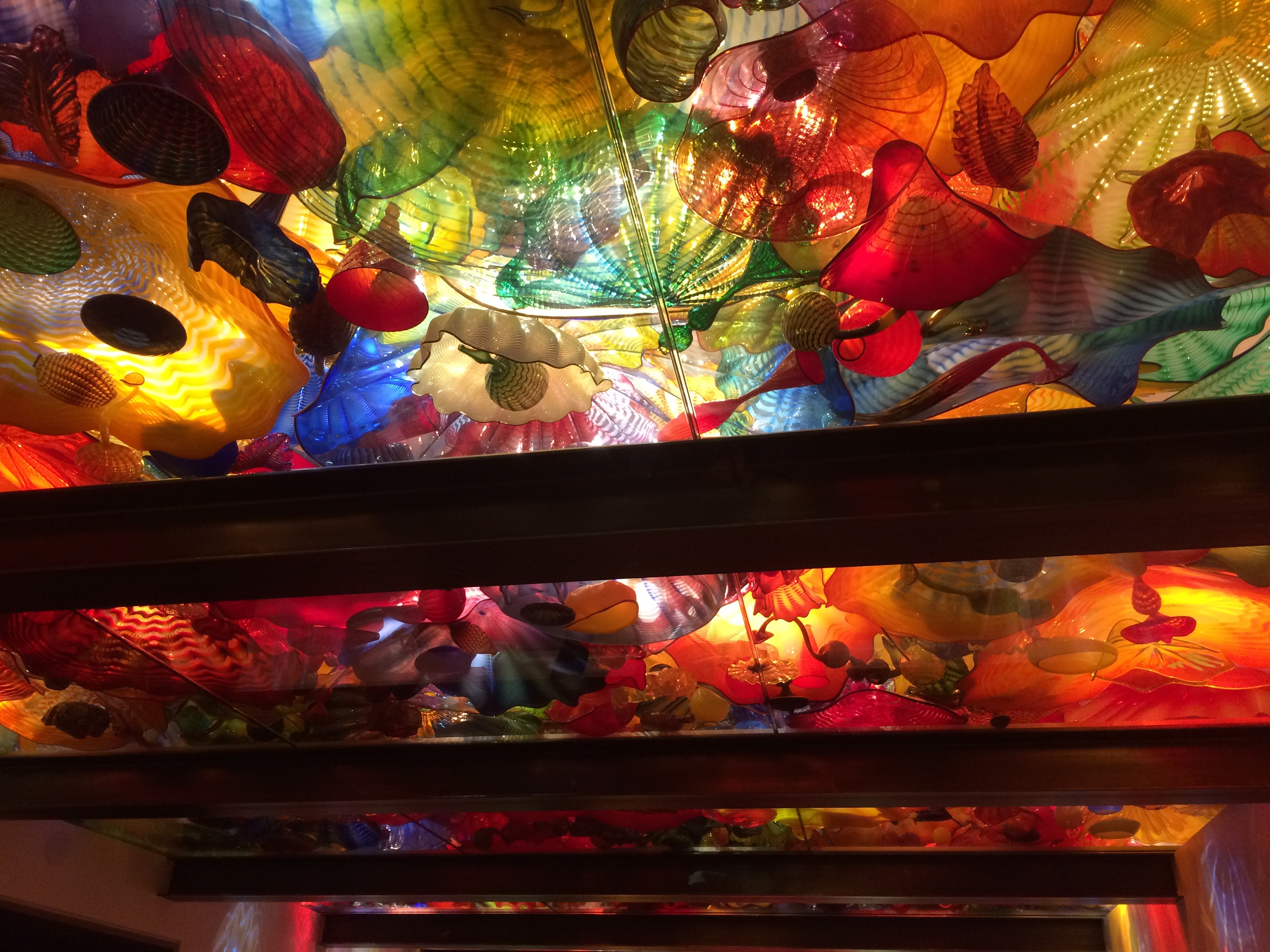
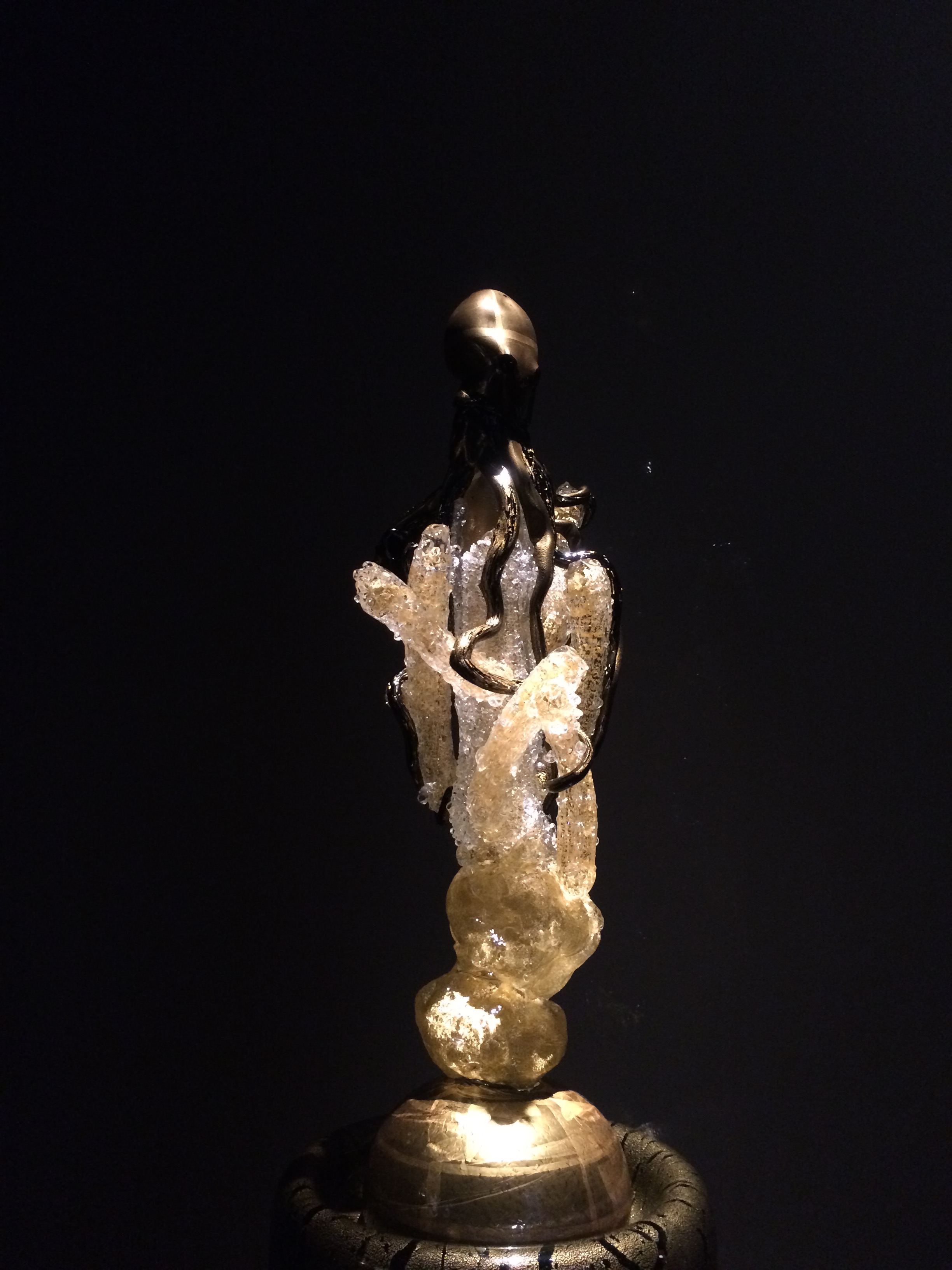
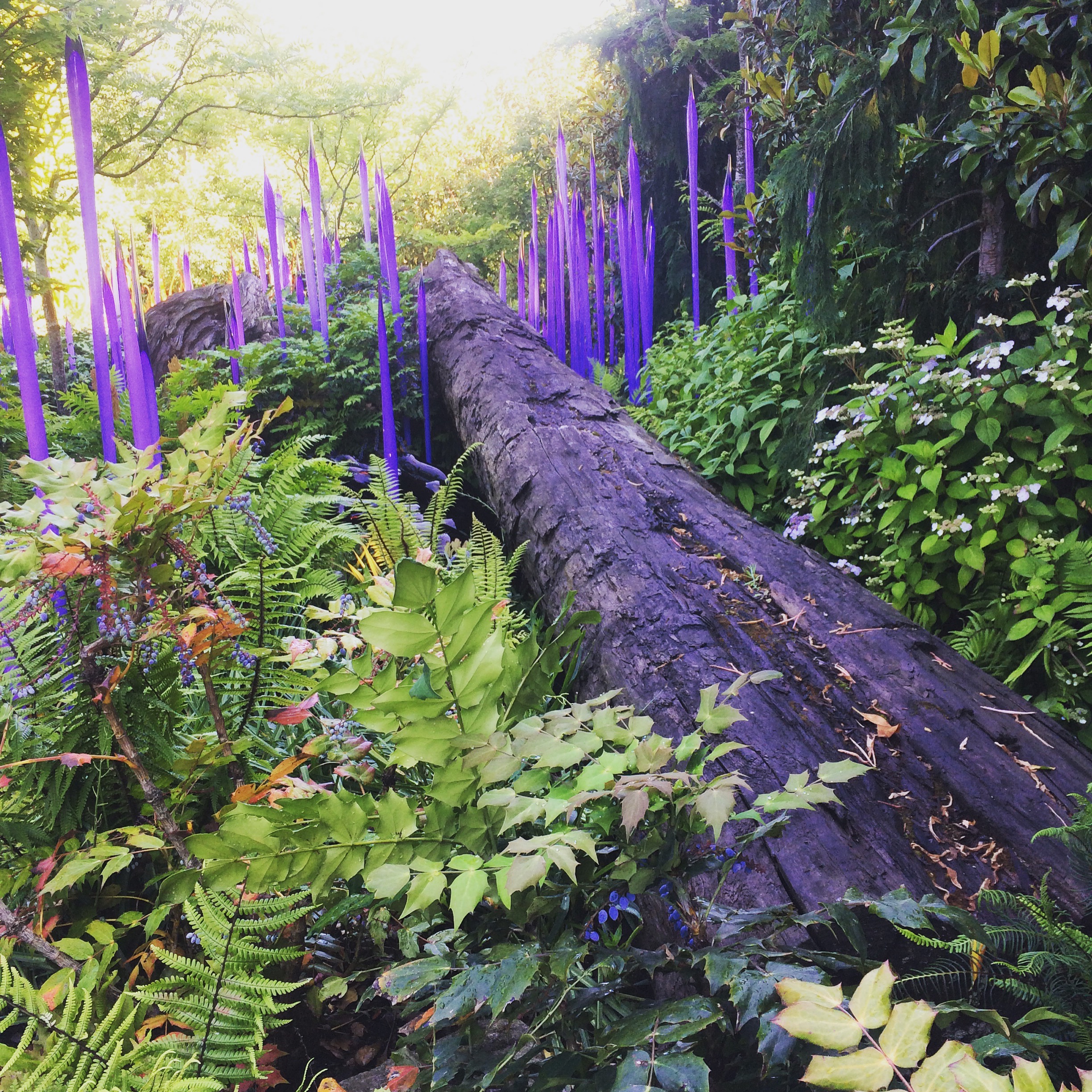
I took this picture from the Chihuly Garden and Glass, and incredible museum at the base of the Space Needle. All of the artwork – most of it consisting of hundreds of pounds of glass and metal – is the brainchild of one individual, Dave Chihuly. Working with a team of glassblowers and many other workers, he has permanent and temporary installations all over the world.

IMG_6462


IMG_6460


IMG_6457

I think this was my favorite piece:

IMG_6467

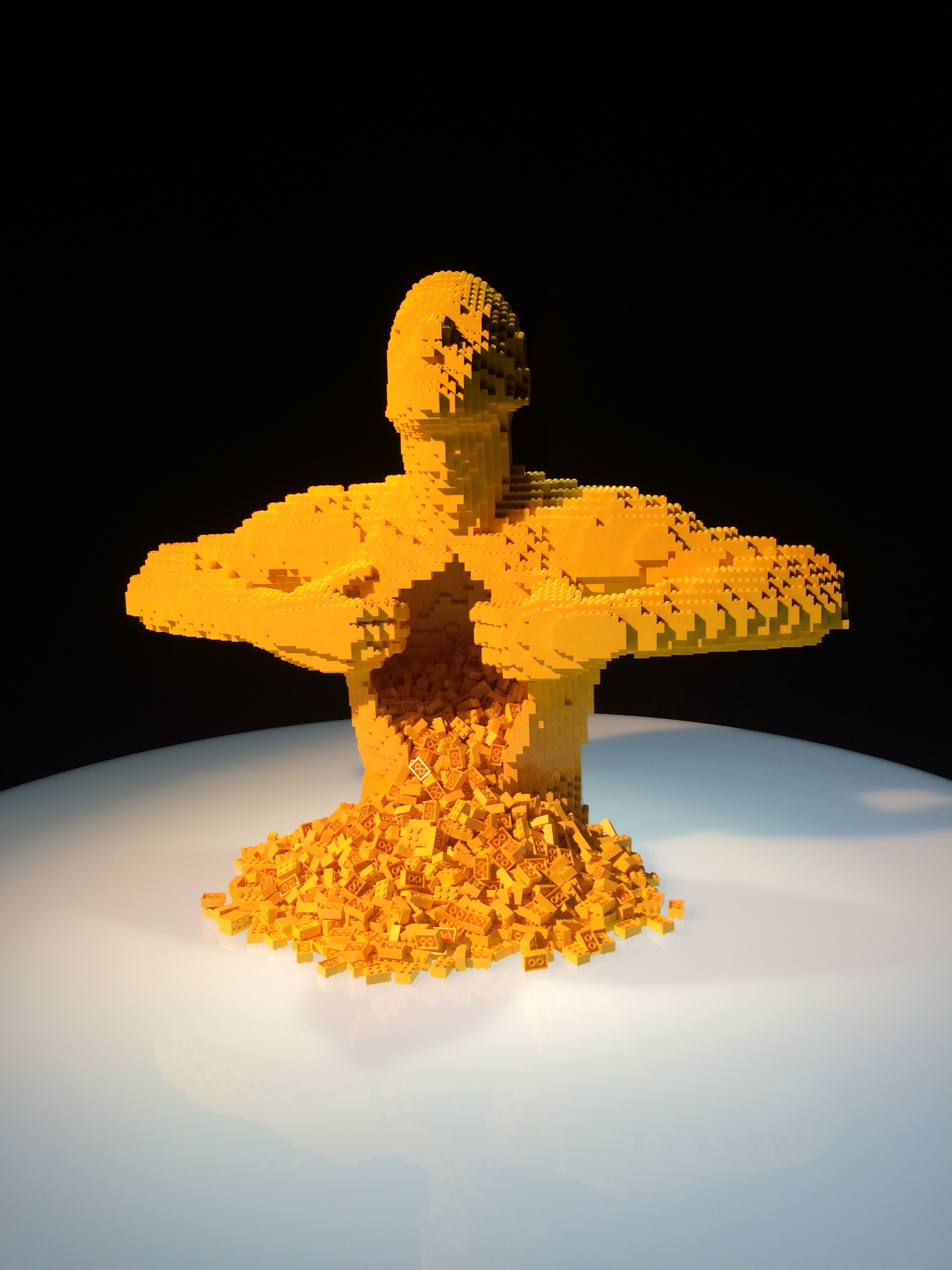
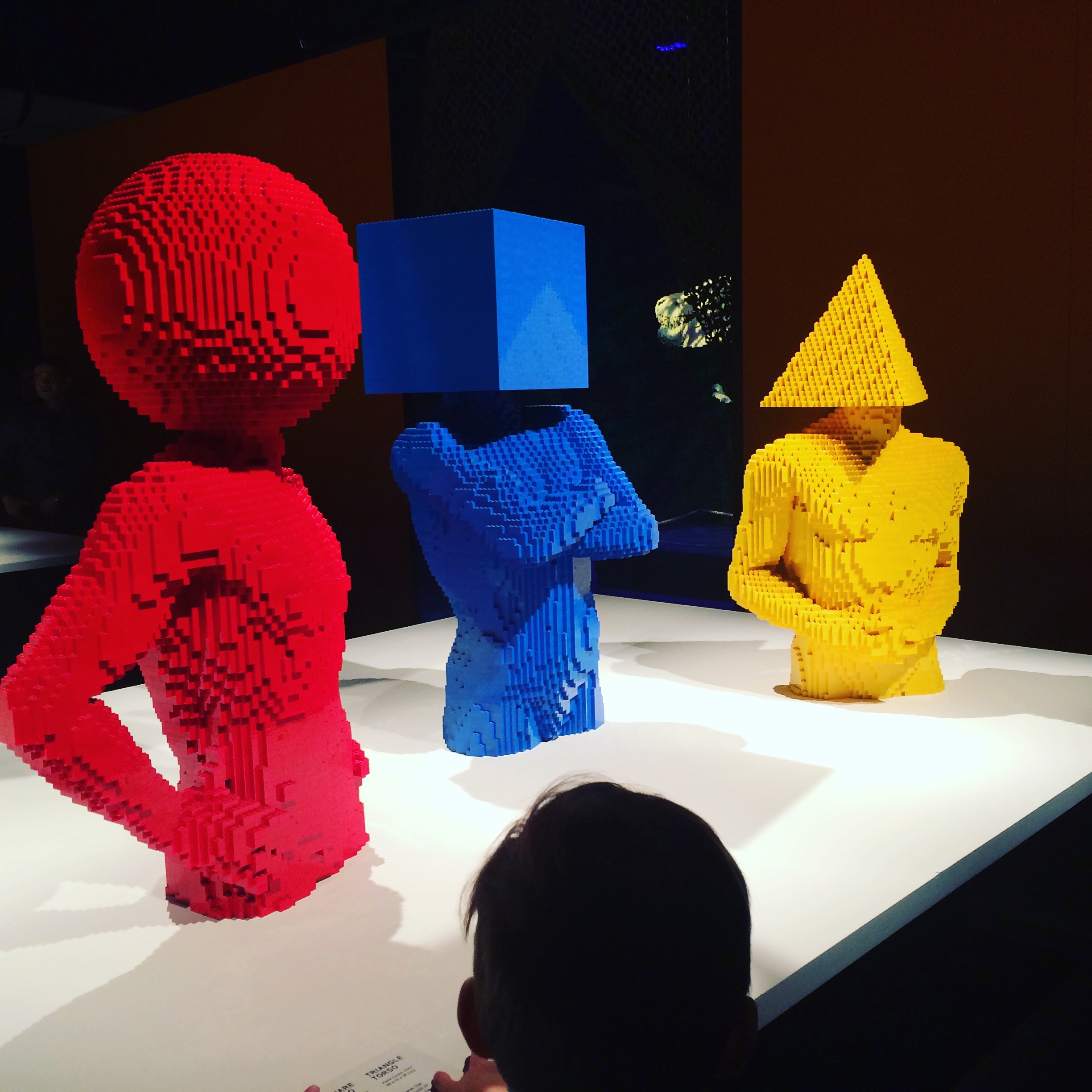
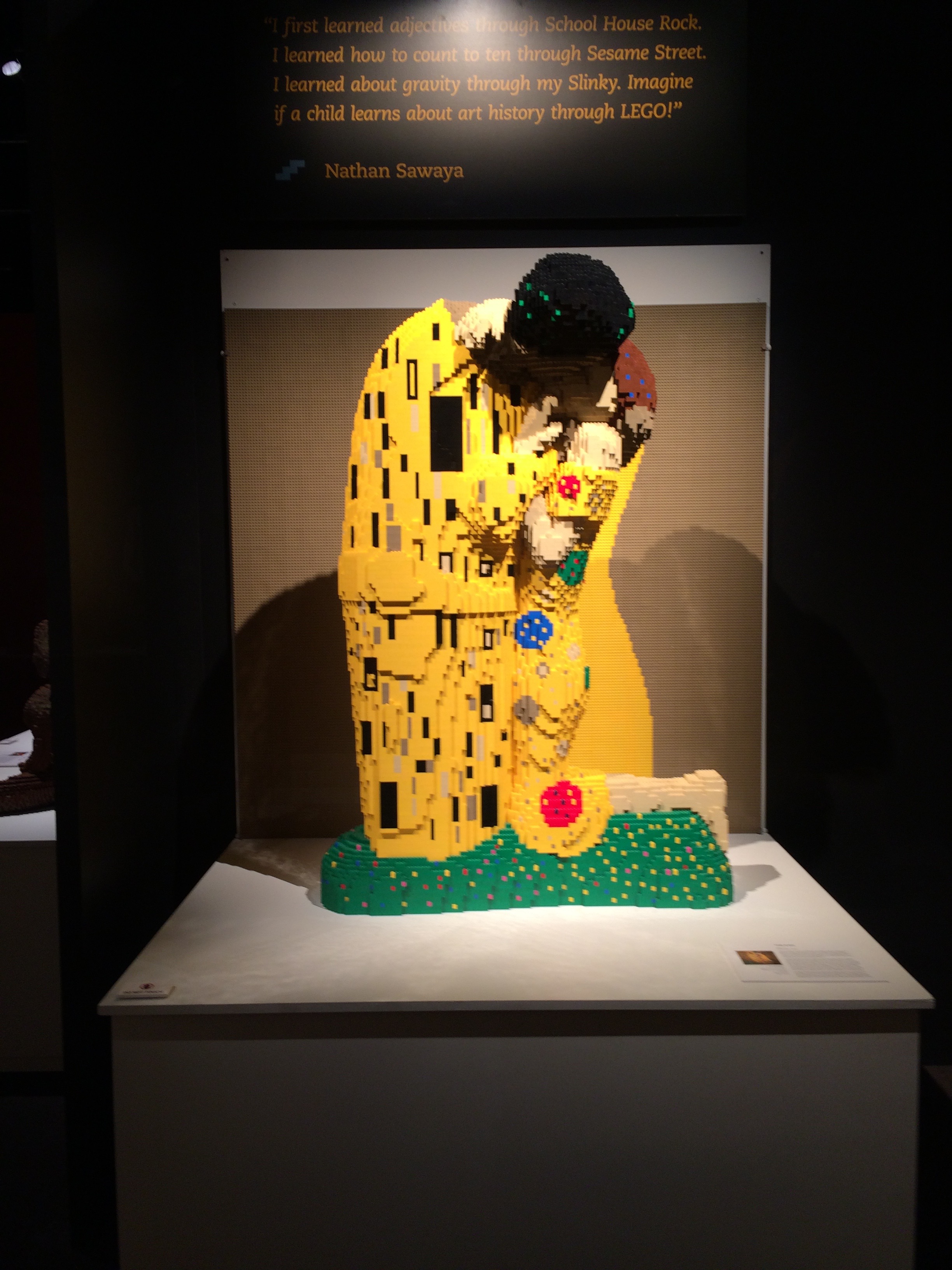
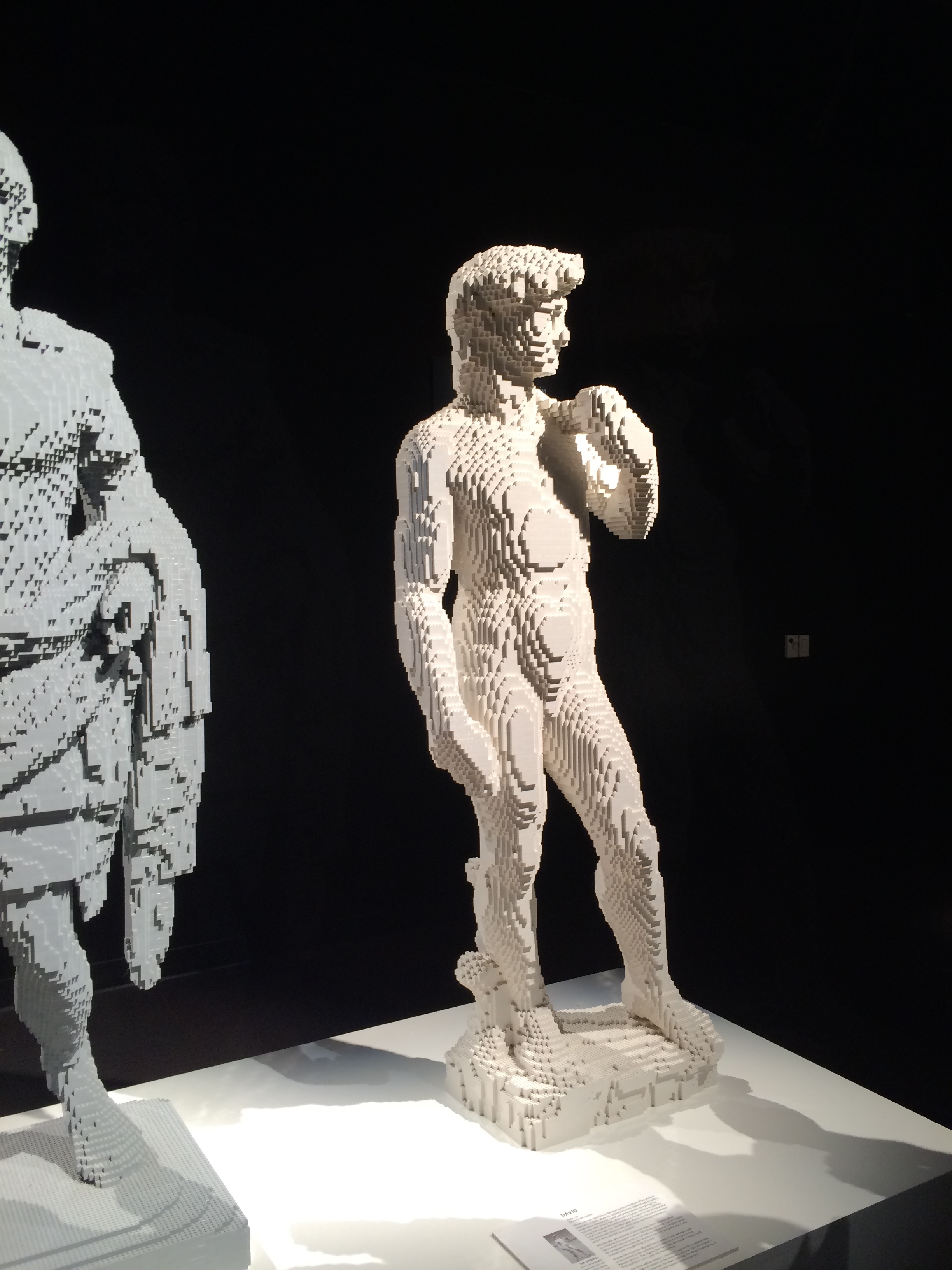
And the museum adventures didn’t stop there! We headed to the Pacific Science Center to check out a travelling exhibit, The Art of the Brick, consisting of art made completely out of LEGOs. The artist, Nathan Sawaya, used to work as a lawyer and built with LEGOs to relax after work, and eventually his LEGO art turned into a full-time career! The pieces were often larger-than-life, and unbelievable:

IMG_6405


IMG_6441

In addition to original creations, the exhibit featured some 3-dimensional takes on classic works of art:

IMG_6393


IMG_6395

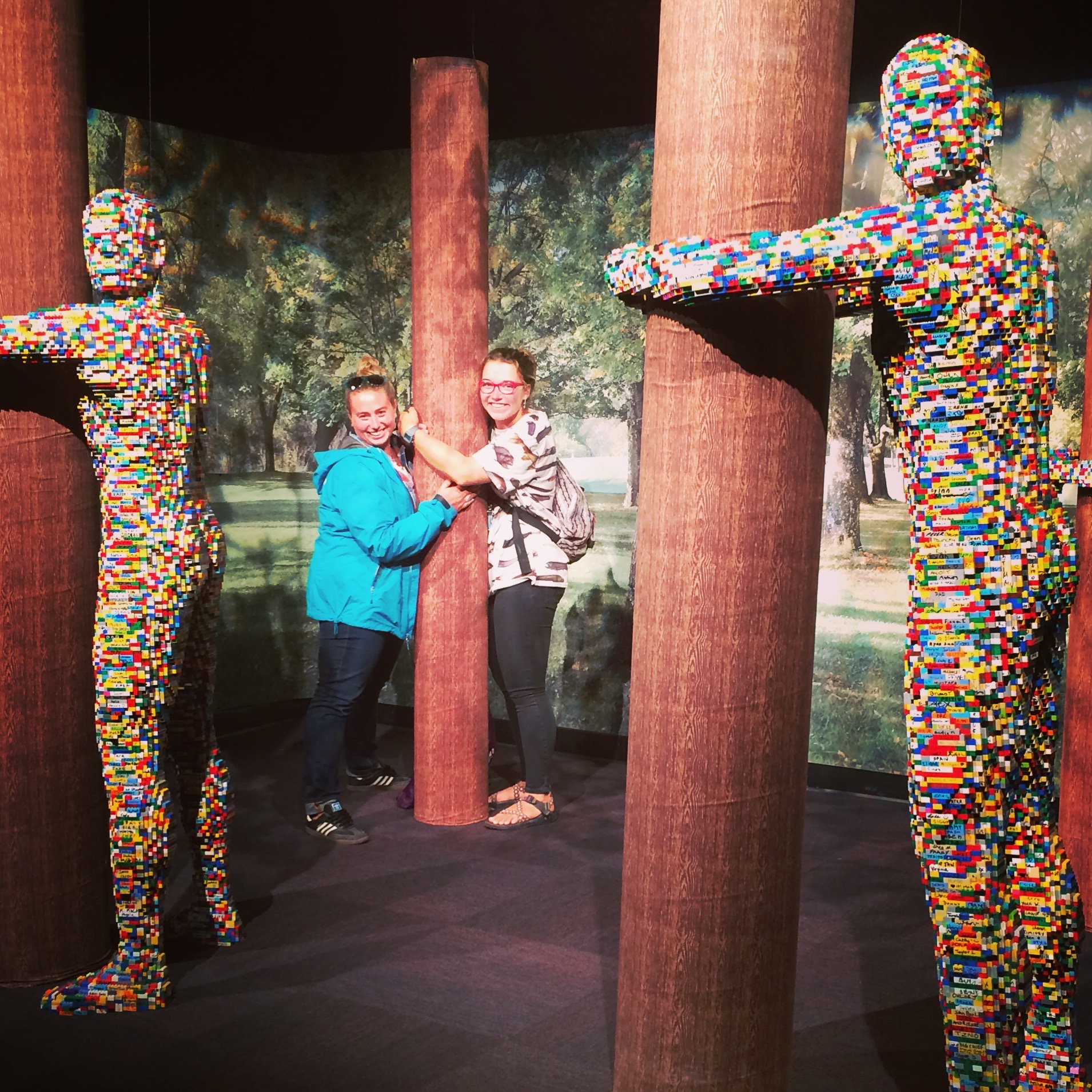
We got to be a part of the artwork, too!

IMG_6443

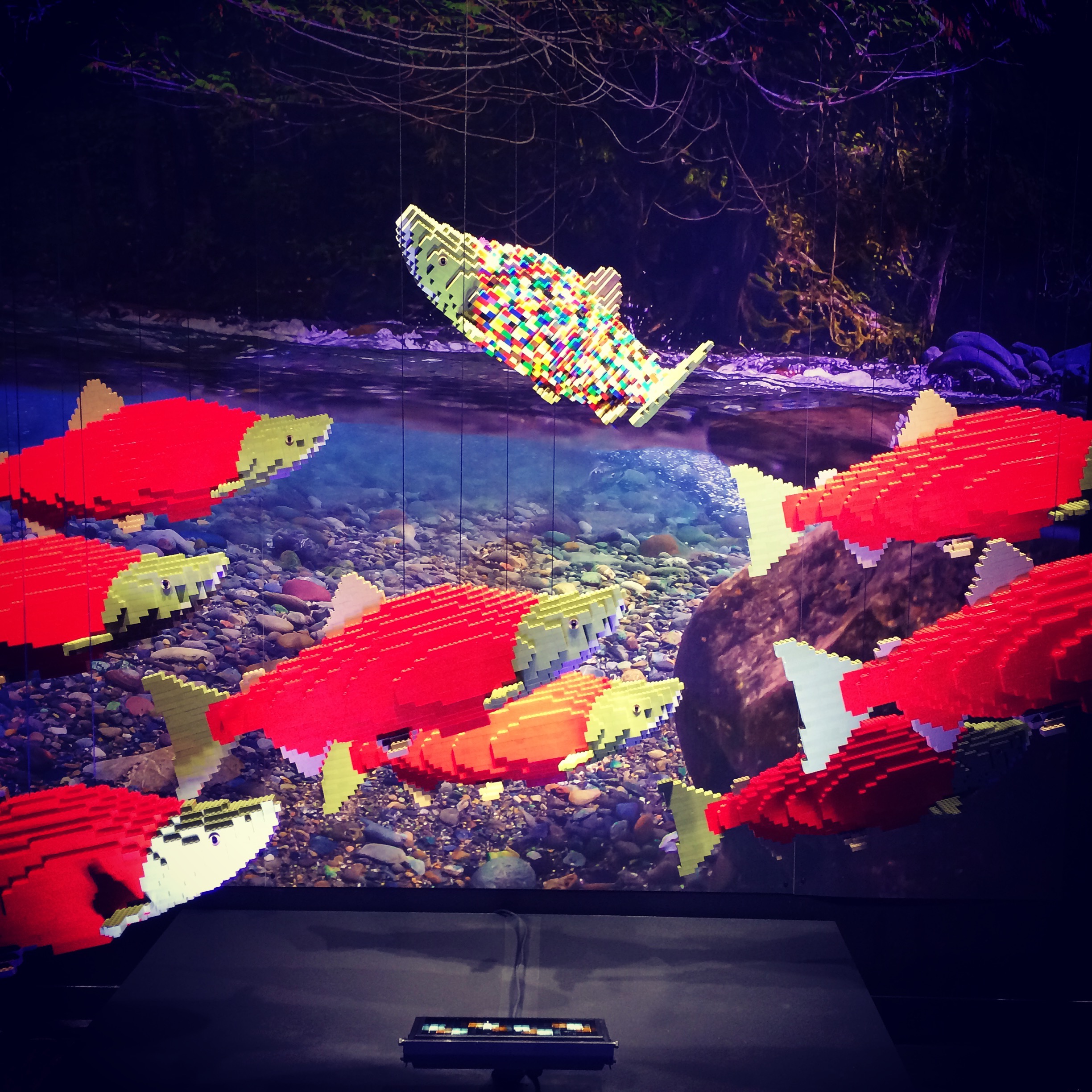
I really loved this “be different” piece (despite the cheesiness), as I was heading to Ketchikan, Alaska, the salmon capital of the world, in just a few days!

IMG_6442