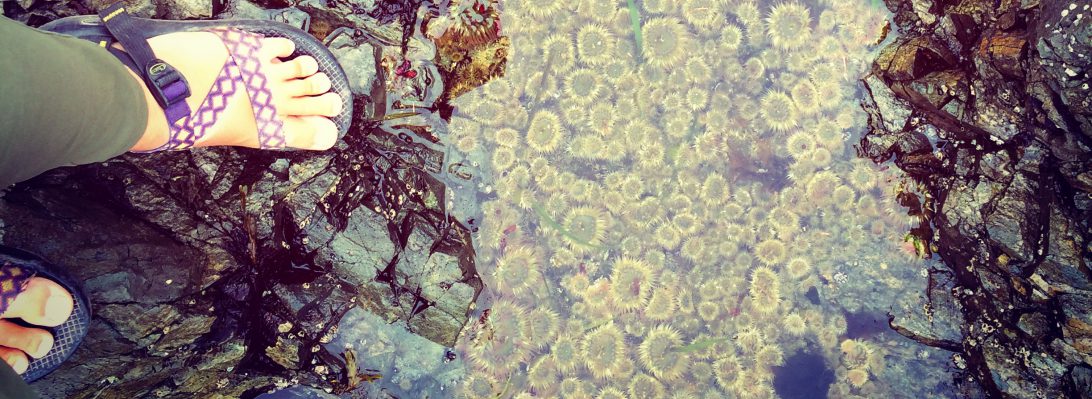
I’ve made it to beautiful Catalina Island, 26 miles across the sea! Catalina Island has a very interesting past, so here’s a brief history of the island for you to enjoy!

The west side of Santa Catalina Island; from www.catalinachamber.com
Now, lets go back. Way back. As in about 119 million years ago, when the Farallon plate collided with the North American continental plate, a process known as subduction (I swear this isn’t all a geology lesson, bear with me).

Now, you see right where those two plates are meeting? Right where there’s a greenish line between them? All that geologic material scraped off from the collision of the plates are the foundation of Catalina Island. And all that mountainous volcanic action happening to the right? Those are the Sierra Nevada mountains, also formed by the collision of these plates. This scraping and subduction continued until about 20 million years ago, when the last of the Fallon plate was subducted. At this point, igneous volcanic material made its way into the rocks of Catalina, and formed a volcanic archipelago off what is now the California coast. The late Miocene Epoch (23.7-5.3 million years ago) ushered in an intense period or extensional and wrench faulting that moved the island about 156 miles north, and also rotated it by about 60 degrees. This also resulted in major shifts in sea level and vertical movement, some of which are still occurring today.
These dramatic forces resulted in a dramatic landscape and a beautiful array of geological structures and life on the island. Fun fact: There are 8 plant species that exist only on Santa Catalina Island.
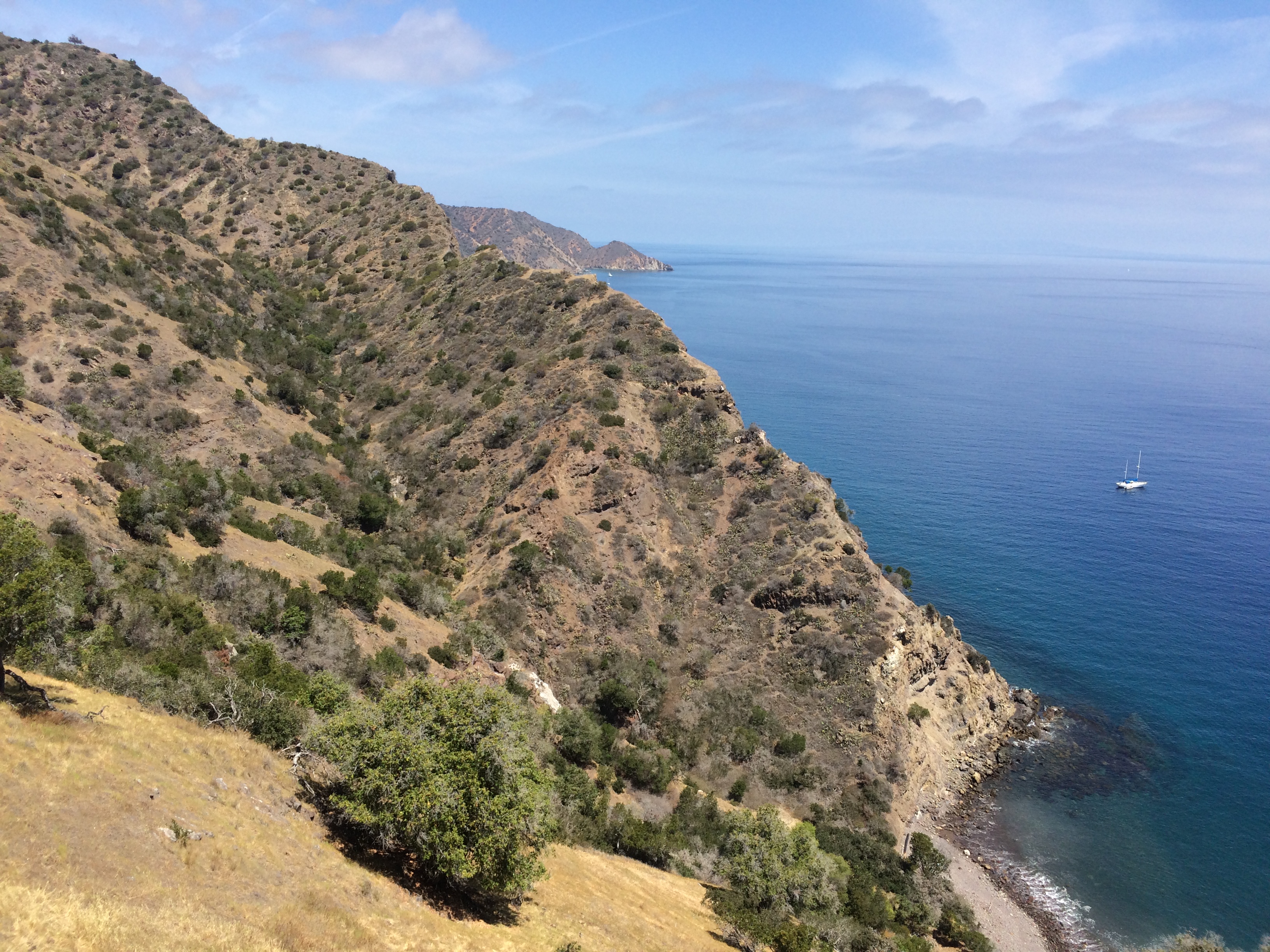
Lets fast forward a bit. People have been living on the island for over 7000 years. The indigenous people, later dubbed the Gabrielino, survived on the island by gathering plants and sea life. This harmonious lifestyle supported a population of about 1500 people on the island. The island was a trade and religious center, and the trade of soapstone and soapstone goods supported a trading network all along the California coast. I have found it difficult to find other information about the native peoples of Catalina.
In 1542 the explorer Juan Rodriguez Cabrillo “discovered” and claimed the island for Spain, naming it San Salvador. In 1602 Sebastian Viscaino reclaimed the island, naming it Santa Catalina in honor of St. Catherine’s Feast Day. Under Spanish control, the indigenous peoples were forcibly removed to the mainland in the 1820’s to Mission San Gabriel, ranchos, and other missions farther south.
In 1822 Mexico revolted against Spain and Californian territories, including Catalina, came under Mexican control. In 1846 the island was awarded in a land grant by the governor to its first private owner. The ownership of the island changed hands several times and was eventually taken over by the army during 1864 during the Civil War. Barracks were built, but the island never saw any action. Eventually the army left the island to an absentee owner and the island was used primarily for ranching.
Another major shift in Catalina’s history occurred in 1887 when the island was purchased by the entrepreneur George Shatto, who planned to turn the island into a resort community with other areas utilized for ranching and mining.

George Shatto; wikimedia commons
Shatto and his team planned the town of Avalon – which his sister-in-law named after a Lord Alfred Tennyson poem – and constructed the Hotel Metropole. completed in 1888. He also purchased a steamer which made daily passenger runs to and from the island. Eventually financial troubles forced Shatto to turn over the island to the Banning Brothers, who had operated the cross-channel transportation to the island for many years.

The Hotel Metropole circa 1902 after renovations by the Banning Brothers; source
The Banning Brothers continued to renovate and improve the island, filling the hotel and campgrounds around Avalon in the summers. Several families also moved to the island as permanent residents; consequently the island’s first public school was constructed in 1902. This was also a time of growth for tourist attractions, including glassbottom boats, sportfishing, an incline railway, stagecoaching, public bath houses, and even early aviation.

Catalina Island may have had the first documented glass-bottom boats in the world, recorded as early as 1899; source
A severe fire, started near the back of the Hotel Metropole, cause unknown, in 1915 destroyed half of Avalon. Though devastating, it provided a clean slate for the construction of new buildings and attractions.
In 1919, William Wrigley Jr., of Wrigley’s Chewing Gum, decided to purchase stock in the island with several other investors. After visiting the island himself and envisioning the massive tourism potential Catalina had, he bought out all of the other investors and began to transform the island. He improved the infastructure on the island, created a new steamship line, and built several beautiful buildings that are still in use, including the famous Casino:
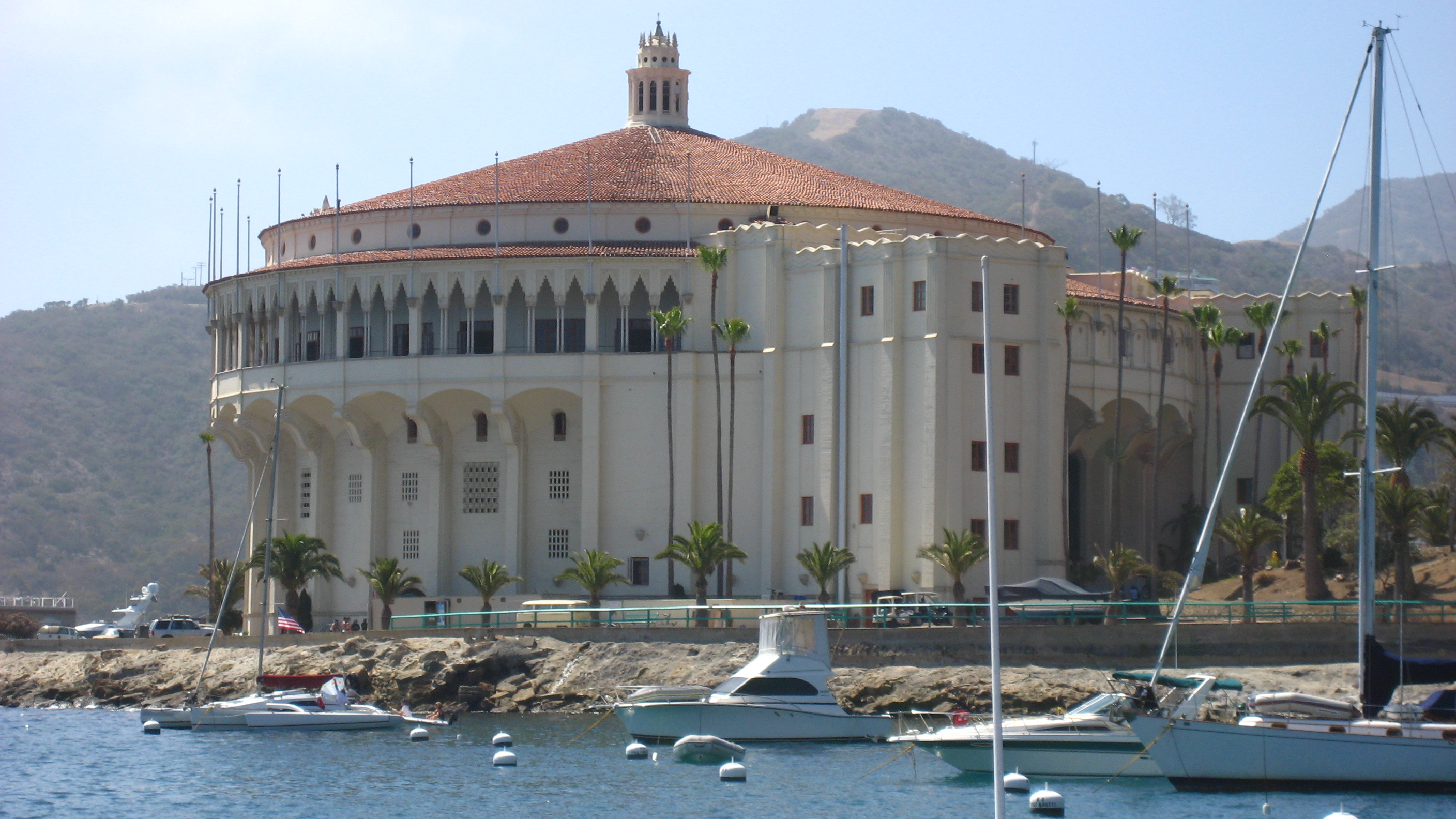 From wikimedia commons
The island remained a bustling tourist attraction until the start of World War II.
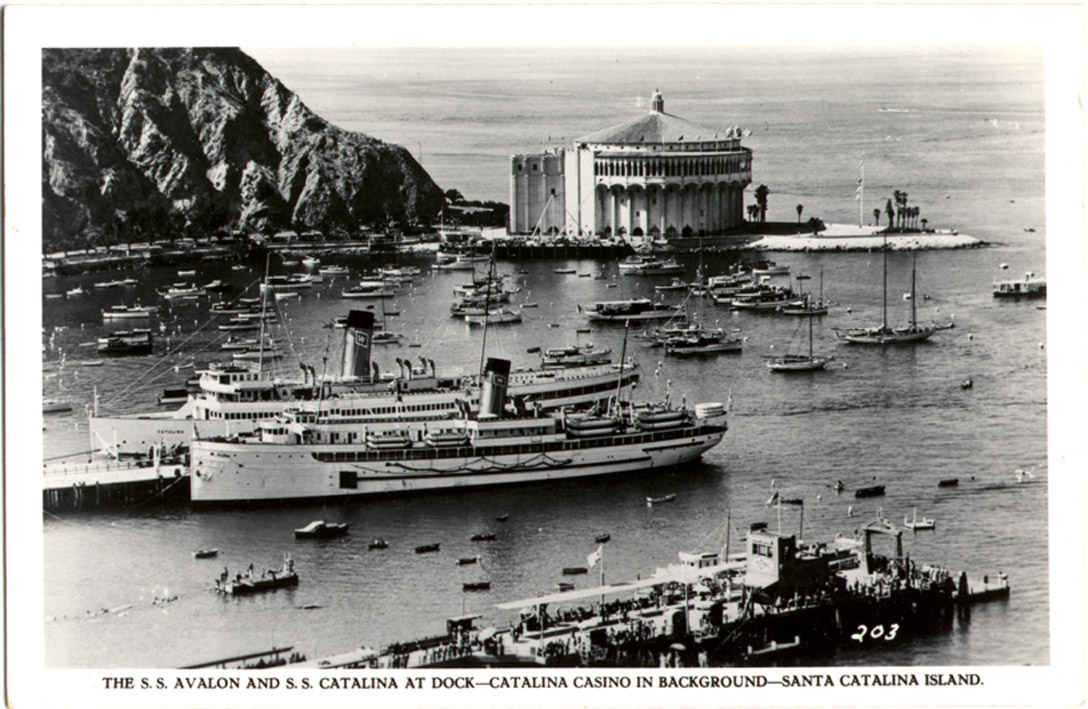
At this time the Federal Government took over the island in 1943, transforming the island to a strategic base in case of an attack by Japanese forces on the west coast. But, really, if you look at a lot of the pictures from that time period, it really looks like all the soldiers were having a grand ol’ time on the island! The place where I’m situated on the island, Toyon Bay, was the home base for the Office of Strategic Services (now known as the CIA) at this time.
After WWII, Catalina returned to its role as a tourist mecca. The CIMI facilities at Toyon Bay, originally constructed as a private boarding school for boys in 7-12th grade in the 1920’s, was reestablished as two separate resorts and later returned to being a boy’s school in the 1960’s. In the 1980’s, it was bought by Guided Discoveries and transformed into the camp it now is. These nearly 100-year-old beautiful facilities are now my home and work place.
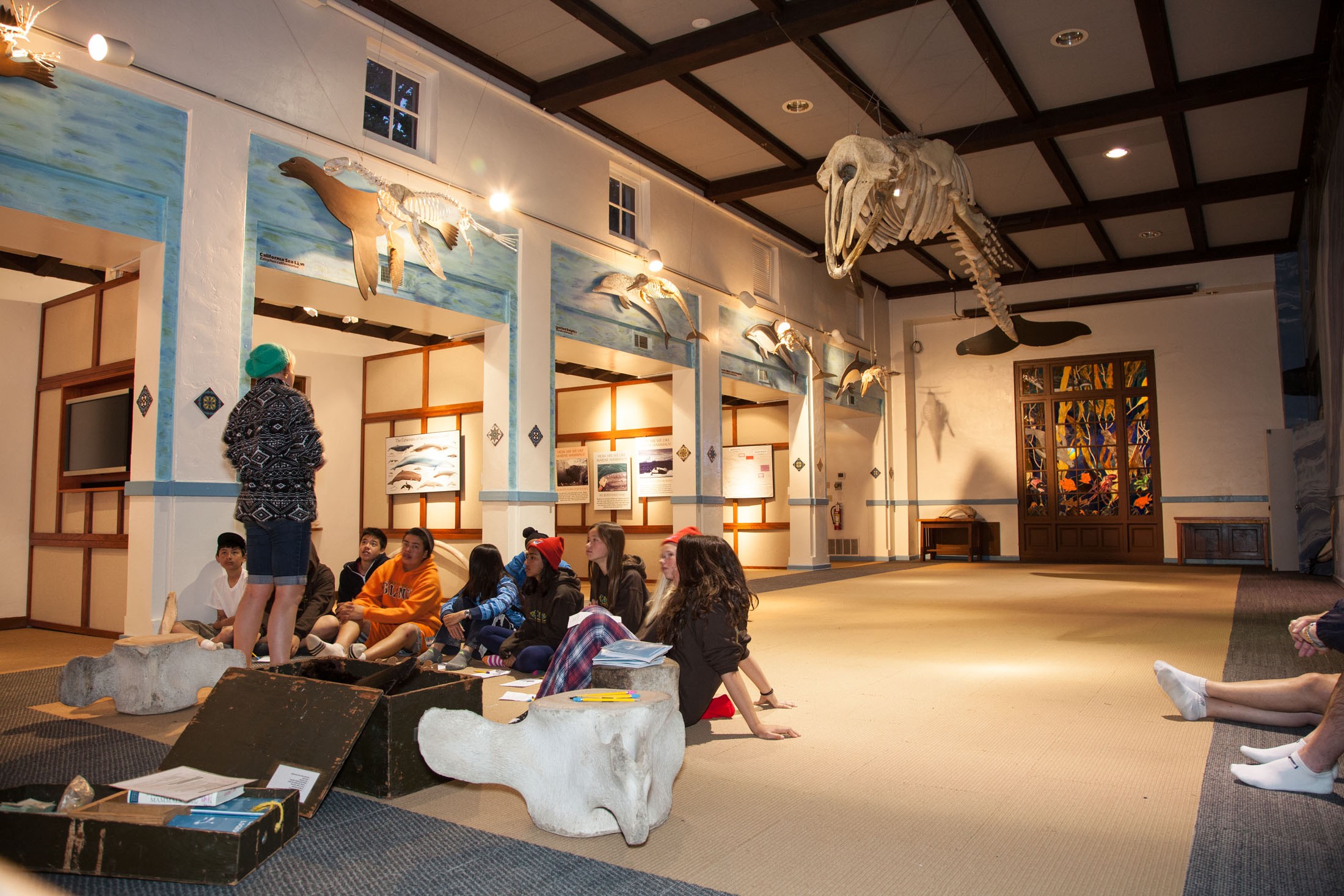
The Marine Mammal Hall at CIMI Toyon Bay. Source










 Wandering Fins

